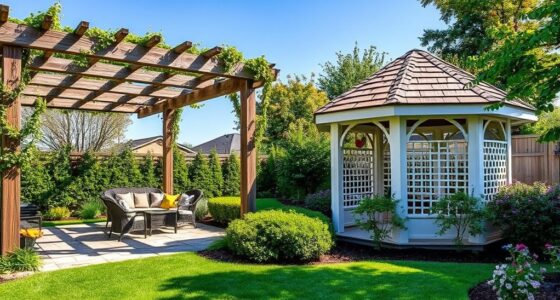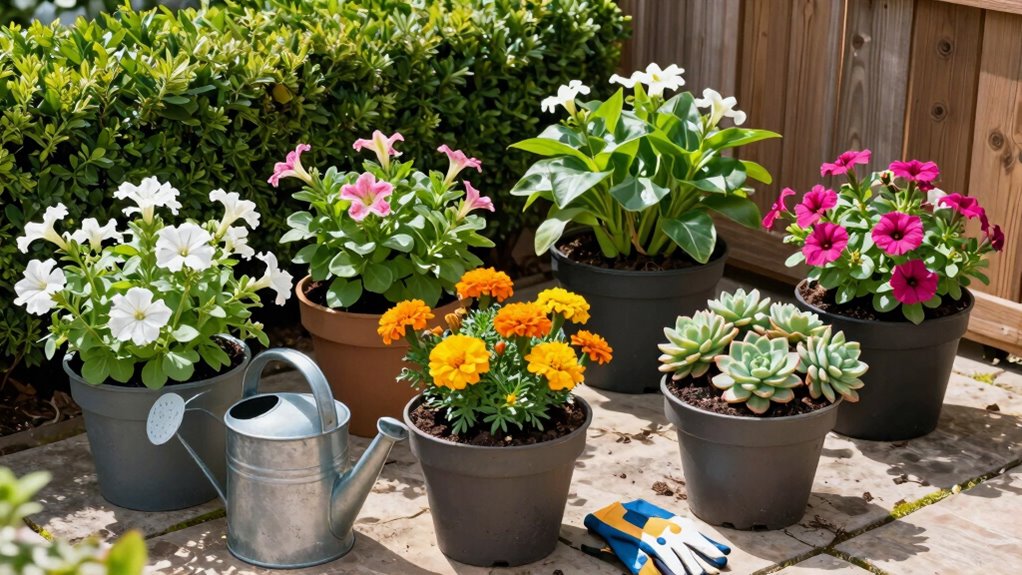

To keep outdoor planters looking good longer, regularly clean them and remove debris to prevent deterioration. Prune plants to encourage healthy growth and improve air circulation. Position your planters in sheltered, well-ventilated areas and protect them from harsh weather with covers. Choose durable, weather-resistant materials and guarantee proper drainage to avoid root rot. Consistent maintenance, along with thoughtful placement, helps your planters stay vibrant and attractive season after season—discover more tips to prolong their beauty.

Get furniture and decor delivered free with Prime
- Fast, free delivery on millions of items
- Prime Video, Amazon Music and more included
- Member-only deals all year
Key Takeaways
- Regularly prune and remove dead or overgrown foliage to maintain shape and promote healthy growth.
- Use planters with proper drainage and durable, weather-resistant materials to prevent damage and waterlogging.
- Inspect for pests frequently and treat early with natural remedies to reduce plant stress and maintain appearance.
- Protect planters from harsh weather by moving them to sheltered spots or covering them during extreme conditions.
- Keep planters clean and well-ventilated to prevent dirt buildup, mold, and pest attraction.

Outdoor planters can add charm to your space, but they often face harsh weather and environmental factors that can cause them to deteriorate quickly. To keep your planters looking fresh and vibrant, you need to take proactive steps that safeguard them from damage. Regular maintenance is key, and that includes practices like seasonal pruning and pest prevention. Seasonal pruning helps your plants stay healthy and encourages new growth, which keeps your planters looking lush. When you prune, remove dead or diseased branches, and trim back overgrown stems to improve air circulation. Doing this at the right time of year prevents your plants from becoming leggy or crowded, which can make the container look untidy. Plus, pruning allows sunlight to reach more parts of your plants, promoting even growth and vibrant foliage.
Pest prevention is equally important if you want your outdoor planters to stay in top shape. Pests like aphids, spider mites, and whiteflies can quickly infest your plants, causing leaves to yellow, stunt growth, or even kill the plant. To prevent this, regularly inspect your plants for signs of pests and take action early. You can use natural remedies like neem oil or insecticidal soap, which are effective yet gentle on your plants and the environment. Keeping your planters clean also helps prevent pest issues. Remove fallen leaves, debris, and any rotting material that can harbor pests or disease. Additionally, placing your planters in well-ventilated areas reduces humidity, making it less inviting for pests to settle. Proper plant health practices, including adequate watering and fertilization, also strengthen your plants’ resistance against pests. Using appropriate plant choices tailored to your climate can further enhance their resilience and longevity.
Another tip to extend the life of your outdoor planters is to pay attention to their positioning and protection. During winter, you might need to move them to sheltered spots or cover them with weather-resistant fabric to shield them from frost and heavy rain. Proper drainage is crucial, too. Ensure your planters have enough drainage holes and avoid overwatering, which can lead to root rot and other problems that shorten the lifespan of both your plants and containers. Choosing durable materials for your planters, like ceramic, metal, or high-quality plastic, also helps them withstand the elements better. Regularly cleaning your planters with mild soap and water removes dirt and grime buildup, which can deteriorate the material over time. Additionally, understanding the material durability of your planters can help you select the best options for longevity and weather resistance. Being aware of weather-resistant features in your containers can further protect your plants from environmental damage.
outdoor planter covers weather-resistant
As an affiliate, we earn on qualifying purchases.
As an affiliate, we earn on qualifying purchases.
Frequently Asked Questions
How Often Should I Water Outdoor Planters?
You should water outdoor planters when the top inch of soil feels dry to the touch. Your watering schedule depends on weather conditions and planter drainage; during hot, dry days, you may need to water daily, while cooler days require less. Always make certain your planters have good drainage, so excess water escapes and roots don’t rot. Regular watering helps keep plants healthy and vibrant, extending the life of your outdoor display.
What Is the Best Soil Mixture for Planters?
You might think a simple garden soil works, but the best soil mixture for planters actually boosts soil nutrients and drainage improvement. Mix equal parts of compost, perlite, and potting soil to guarantee your plants get essential nutrients and avoid waterlogging. Irony strikes when you realize that adding these components helps your plants thrive, proving that a thoughtful soil blend is your secret weapon for vibrant, healthy outdoor planters.
How Can I Prevent Pests in Outdoor Planters?
To prevent pests in outdoor planters, you’ll want to implement effective pest control strategies. Use natural repellents like neem oil, garlic spray, or companion planting to deter pests without harming your plants. Regularly inspect your planters for signs of pests, and remove any infested leaves promptly. Keeping your planters clean and healthy reduces pest attraction, ensuring your plants stay vibrant and pest-free longer.
Are There Specific Plants That Last Longer Outdoors?
Did you know some plants, like succulents and lavender, last longer outdoors due to their drought tolerance? These hardy plants can withstand dry conditions, making them perfect for outdoor planters. For seasonal planting tips, choose plants suited to your climate, and consider their drought tolerance to guarantee longevity. By selecting resilient varieties, you’ll enjoy vibrant, low-maintenance outdoor planters all year round, saving you time and effort.
How Do I Protect Planters From Harsh Weather?
To protect your planters from harsh weather, start by moving them to sheltered locations during winter to provide winter protection. Use windbreaks like fences or screens to prevent wind damage, which can topple or damage plants. Apply a layer of mulch or insulating material to insulate roots from freezing temperatures. Regularly check for damage, and consider covering plants with frost cloths during cold snaps, ensuring they stay healthy and vibrant.
Conclusion
With these tips, your outdoor planters can stay vibrant and inviting longer than you might expect. But remember, every season brings new challenges—what works now might need tweaking later. Keep an eye on your plants, stay attentive to weather changes, and don’t be afraid to experiment with different care routines. The secret to lasting beauty lies in your hands. So, are you ready to discover what your planters can truly become?
Halloween Picks
halloween
As an affiliate, we earn on qualifying purchases.