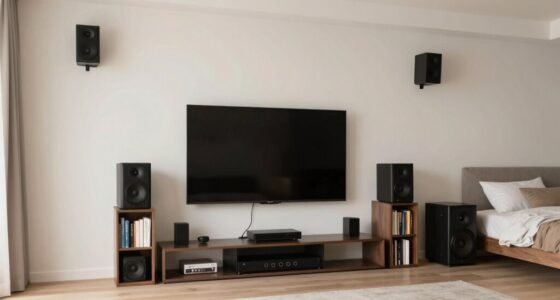
A well-thought-out room plan is key to getting the most out of your whole-home audio system. It helps you position speakers strategically, preventing dead spots and ensuring even sound coverage. Combining proper calibration and placement minimizes issues like echoing and sound imbalance, while wireless connectivity simplifies setup and future upgrades. When you plan your space carefully, you create a balanced, immersive listening environment throughout your home. Keep going to discover how these steps come together for seamless sound.

Get furniture and decor delivered free with Prime
- Fast, free delivery on millions of items
- Prime Video, Amazon Music and more included
- Member-only deals all year
Key Takeaways
- A room plan ensures strategic speaker placement for even sound coverage and minimizes dead spots.
- It helps optimize acoustics by accounting for furniture and obstacles, enhancing sound quality.
- Combining room planning with calibration prevents sound imbalances and echoing issues.
- A well-designed room plan simplifies wireless setup, upgrades, and system control.
- Integrating a room plan with wireless technology creates a seamless, immersive audio experience throughout the home.
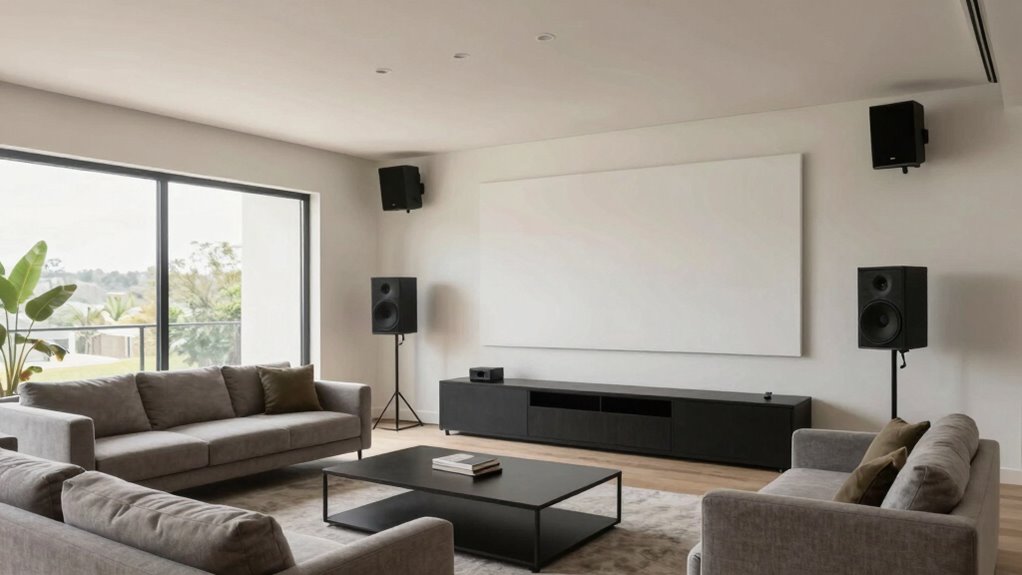
Creating a whole-home audio room plan is essential for seamless sound throughout your house, whether you’re hosting a party or relaxing with music. When you have a clear plan, you can guarantee the audio system delivers consistent quality and volume in every room. One of the key elements in this planning is speaker calibration. Proper speaker calibration adjusts each speaker’s output to match the room’s acoustics and placement, preventing issues like sound imbalance or echoing. Without calibration, some areas might sound muffled, while others could be too loud or distorted. When you take the time to calibrate your speakers, you’re optimizing your listening experience, making sure every corner of your home gets clear, balanced sound. speaker calibration is especially important because it ensures your audio system adapts to the unique acoustics of your space.
Wireless connectivity plays an important role in creating a flexible and reliable whole-home audio system. Modern wireless technology means you don’t need messy wires running everywhere, which makes your setup cleaner and easier to manage. With wireless connectivity, you can control your music from anywhere in your house using your smartphone or a dedicated app. You can easily switch between rooms, play different playlists, or synchronize music across multiple speakers. This flexibility allows you to design your space without worrying about cable limitations, giving you more freedom to position speakers where they sound best. Additionally, wireless technology enhances the overall ease of system upgrades and troubleshooting, making your setup more adaptable over time. Incorporating wireless connectivity also reduces interference and signal loss, ensuring consistent sound quality throughout your entire home. A strong understanding of wireless range can help you optimize speaker placement for the best performance. Being aware of potential interference sources can further improve your system’s reliability and clarity.
A well-thought-out room plan also considers how sound travels within your home. You want to avoid dead spots—areas with little to no sound—and overly loud zones that can be uncomfortable. To do this effectively, you’re going to need a combination of calibrated speakers and smart placement. Using a room plan helps you determine the best locations for each speaker, ensuring even coverage and high-quality sound throughout. The plan also accounts for furniture, walls, and other obstacles that can affect sound quality. When you combine proper speaker calibration with strategic placement, your whole-home audio becomes immersive and balanced.
Wireless connectivity simplifies setup and future upgrades, making it easy to add new speakers or adjust settings as your needs evolve. By integrating this with a detailed room plan, you’re creating a system that’s not just powerful but also intuitive to control. This combination guarantees that your music always sounds its best, no matter where you are in your home. Ultimately, a thoughtful room plan with calibrated speakers and reliable wireless connectivity ensures your whole-home audio system works seamlessly, giving you effortless control and superior sound quality in every room.
whole home wireless audio system
As an affiliate, we earn on qualifying purchases.
As an affiliate, we earn on qualifying purchases.
Frequently Asked Questions
How Do I Choose the Right Speakers for My Room?
You choose the right speakers by considering your room’s size, shape, and layout. Focus on strategic speaker placement to guarantee even sound distribution, avoiding corners and obstructions. Incorporate acoustic treatment, like rugs or panels, to improve sound quality and reduce echoes. Test different positions to find the best sound experience, and select speakers that match your room’s acoustics, ensuring clear, balanced audio throughout your space.
Can I Upgrade My Existing Home Audio System Easily?
Yes, upgrading your existing home audio system is often straightforward. You can add wireless connectivity-enabled speakers and optimize speaker placement to enhance sound quality without rewiring your entire home. Coincidentally, upgrading becomes easier when your current setup already supports modern tech. Just guarantee your new speakers are compatible, and you’ll enjoy seamless integration, better sound, and a more immersive experience with minimal effort.
What Is the Average Cost of a Whole-Home Audio System?
The average cost of a whole-home audio system varies based on wireless connectivity features and speaker placement options, typically ranging from $1,000 to $5,000. You’ll find affordable setups with basic wireless speakers, but premium systems with high-quality sound and seamless integration can cost more. Remember, proper speaker placement enhances sound quality and system efficiency, so investing in a well-planned layout guarantees you get the best value for your money.
How Do I Control Audio in Different Rooms Simultaneously?
To control audio in different rooms simultaneously, you simply need to select the multi-room synchronization feature on your system. Use your app control options to easily manage and match the music across all zones. This setup allows you to effortlessly orchestrate soundscapes, switch tunes, and tailor volume levels in every room, giving you total control and a seamless listening experience, all at your fingertips.
What Are the Best Brands for Reliable Whole-Home Audio?
You’ll find brands like Sonos, Bose, and Denon offer reliable whole-home audio systems with excellent wireless connectivity. They prioritize smart speaker placement, ensuring even sound distribution across your rooms. These brands are known for their seamless integration, ease of control, and durable hardware. Investing in their products guarantees a dependable setup, letting you enjoy synchronized music or audio in multiple rooms without interruptions, no matter where you are.
Conclusion
Without a well-thought-out room plan, your whole-home audio system is basically a musical disaster waiting to happen—like a symphony of chaos drowning in dead spots and uneven sound. But with a smart plan, you can turn your entire house into a seamless sound oasis, where music flows perfectly from room to room, making you feel like you’re living inside a concert hall. Don’t settle for noise—design your space and let your audio dreams come true!
Halloween Picks
halloween
As an affiliate, we earn on qualifying purchases.