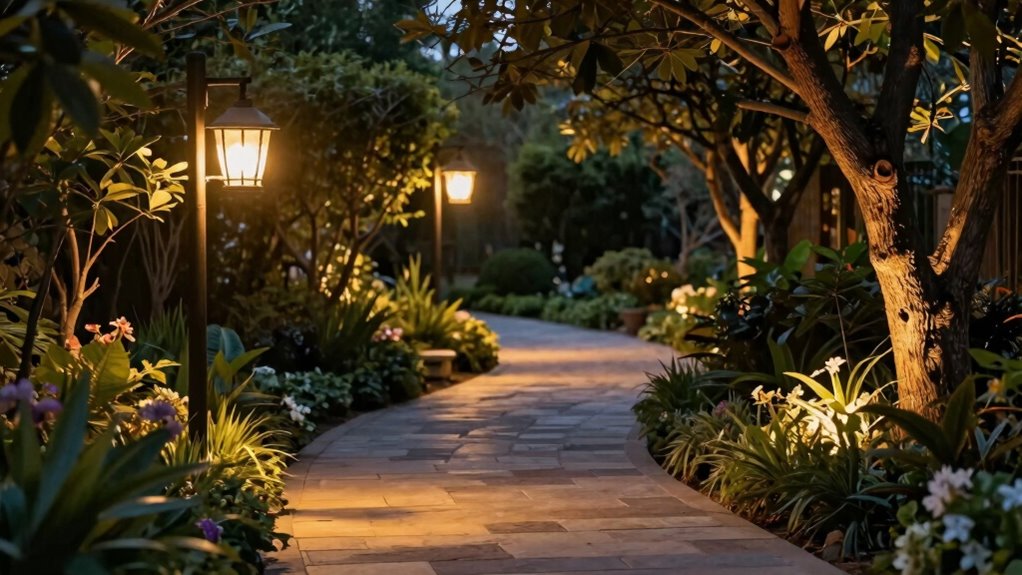

To plan outdoor lighting for safety and mood, focus on strategic placement of fixtures to highlight pathways, stairs, and key features, making certain safe navigation after dark. Use warm, soft lights to create a relaxed atmosphere, and choose energy-efficient options like LEDs or solar lights to reduce environmental impact. Incorporate smart controls and dimmers for flexibility, and guarantee your lights minimize glare and light pollution. Keep exploring to learn how thoughtful design can balance beauty, security, and eco-friendliness.

Get furniture and decor delivered free — and shop member deals
- Fast, free delivery on millions of items
- Access to Prime Big Deal Days deals on October 6–7
- Prime Video, Amazon Music and more included
Key Takeaways
- Use layered lighting with pathway, ambient, and accent lights to balance safety and mood.
- Prioritize soft, warm fixtures to enhance natural beauty and create a relaxing atmosphere.
- Incorporate motion sensors and timers for safety and energy efficiency.
- Position lights strategically to illuminate walkways, stairs, and key features without causing glare.
- Select eco-friendly, low-glare fixtures and use smart controls to adjust lighting levels for different settings.

Are you ready to transform your outdoor space into a welcoming and functional area? Planning outdoor lighting is your first step toward creating a safe and inviting environment. When you focus on lighting, you enhance your landscape aesthetics, highlighting features like trees, pathways, and water elements that make your yard unique. But it’s not just about beauty; thoughtful lighting also improves safety by illuminating walkways, stairs, and entry points, preventing accidents after dark. To achieve this, consider the placement carefully, guaranteeing each light serves a purpose while blending seamlessly with your landscape design. Avoid harsh, glaring lights that disrupt the natural beauty of your yard. Instead, opt for fixtures that cast a soft, warm glow, emphasizing your landscape aesthetics without overwhelming it.
Transform your outdoor space with strategic, gentle lighting that enhances beauty and ensures safety after dark.
Another key aspect to think about is energy efficiency. Incorporating LED lights and solar-powered fixtures can considerably reduce your energy consumption and lower your utility bills. LEDs are long-lasting and produce less heat, making them safer and more sustainable. Solar lights are especially useful for areas where running electricity is difficult or unsightly. They harness sunlight during the day and automatically turn on at dusk, providing illumination without additional wiring. When planning your outdoor lighting, balance efficiency with effectiveness; you want enough light to ensure safety without creating a brightly lit space that detracts from the natural ambiance. Dimmers are a smart addition, allowing you to adjust brightness levels for different moods or activities.
You should also think strategically about the types of lighting you choose. Path lights are excellent for guiding visitors and defining walkways, while spotlights can highlight architectural features or specimen plants. Ambient lighting, such as string lights or lanterns, adds warmth and a relaxed atmosphere, perfect for entertaining or unwinding. Be mindful of light pollution—aim to direct light downward and avoid spillage into the night sky or neighboring properties. This not only preserves the tranquility of your surroundings but also supports energy efficiency by reducing unnecessary light output. Additionally, understanding the role of biodiversity in your landscape can help you select fixtures that minimize ecological disruption and promote a healthy environment. Incorporating proper fixture placement can further enhance both safety and ecological balance. Furthermore, using smart controls can optimize your lighting system by adjusting brightness and timing based on your needs, reducing waste and improving convenience. Proper lighting design takes into account the natural environment, ensuring your outdoor space remains sustainable and ecologically friendly. Being aware of lighting regulations in your area can help you avoid potential fines or neighborhood disputes.
Finally, plan your outdoor lighting with flexibility in mind. Use timers or smart controls to automate your lights, ensuring they turn on and off at appropriate times. Regular maintenance, like cleaning fixtures and replacing bulbs, keeps your lighting effective and safe. When you put thought into your outdoor lighting plan, you create a space that’s both beautiful and practical—one that invites you outside after dark while keeping safety and energy efficiency at the forefront.
As an affiliate, we earn on qualifying purchases.
Frequently Asked Questions
How Do I Choose the Right Outdoor Light Bulbs?
To choose the right outdoor light bulbs, consider their bulb lifespan and color temperature. Opt for bulbs with longer lifespans to reduce replacements, especially for hard-to-reach fixtures. For a warm, inviting atmosphere, select bulbs with a lower color temperature (around 2700K-3000K). If you want brighter, more energetic lighting, go for higher color temperatures (around 5000K). Balance durability and ambiance to create a safe, cozy outdoor space.
What Are the Best Fixtures for Energy Efficiency?
Think of your outdoor lighting as a wise guardian. Energy-efficient fixtures, like those with solar panels, act as the sun’s loyal emissaries, harnessing daylight to shine at night. Motion sensors serve as vigilant sentinels, activating lights only when needed. These fixtures conserve energy, reduce costs, and enhance safety, creating a smart, eco-friendly ambiance for your outdoor space that responds to your presence and the environment.
How Can I Control Outdoor Lighting Remotely?
You can control outdoor lighting remotely by using smart technology equipped with remote control capabilities. Install smart bulbs or fixtures that connect to your Wi-Fi network, allowing you to adjust brightness, colors, and schedules via a smartphone app or voice commands. With these devices, you can easily manage your outdoor lighting from anywhere, enhancing security and ambiance effortlessly. Just make certain your smart system integrates seamlessly with your existing setup for smooth operation.
What Safety Regulations Apply to Outdoor Lighting?
You need to follow local solar regulations that dictate the placement and power of outdoor lights to guarantee safety and compliance. Be mindful of light pollution, which can disturb neighbors and wildlife, so use shielded fixtures and low-intensity bulbs. Check zoning laws and electrical codes, especially if installing new wiring or fixtures. Proper adherence prevents accidents, legal issues, and helps preserve the night environment.
How Often Should Outdoor Lights Be Maintained?
You should inspect and maintain your outdoor lights at least once a year, especially around garden pathways and security zones. Regular checks ensure bulbs are working, fixtures are clean, and wiring remains secure. During maintenance, replace any damaged bulbs or fixtures promptly. Proper upkeep enhances safety by illuminating pathways clearly and deterring intruders in security zones, creating a safer and more inviting outdoor space.
Conclusion
By thoughtfully planning your outdoor lighting, you enhance safety and create a welcoming atmosphere. Remember, well-placed lights can reduce accidents by up to 50% and deter intruders. Keep in mind that layering different types of lighting—ambient, task, and accent—can transform your outdoor space into a charming, secure retreat. With careful planning, you’ll enjoy both peace of mind and a beautiful environment after sunset. So, start designing your perfect outdoor lighting today!
Fall Picks
fall essentials
As an affiliate, we earn on qualifying purchases.