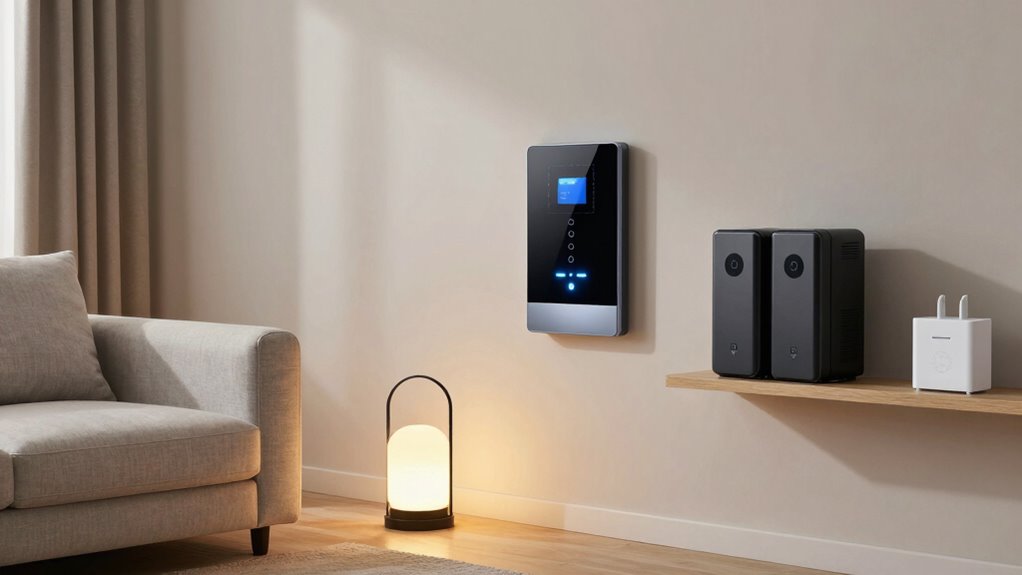

To keep your smart home safe during power outages, guarantee you have backup power sources like UPS systems or generators for critical devices. Evaluate which devices support essential functions, and prioritize energy-efficient options to extend backup runtime. Protect equipment from surges with surge protectors and manage power usage smartly. Regularly test and update your plans to ensure everything works smoothly when outages occur. Continue exploring how to prepare your smart home for any power disruption.
Key Takeaways
- Use backup power sources like UPS, generators, or solar batteries to maintain critical smart home functions during outages.
- Prioritize essential devices and functions, and regularly test backup systems for reliability.
- Implement surge protectors and voltage regulators to safeguard devices from power fluctuations.
- Schedule routine maintenance, outage simulations, and updates to ensure preparedness and system resilience.
- Keep backup devices charged, accessible, and monitored to extend backup duration and prevent system failures.
How Can I Protect My Smart Home During Power Outages?

Power outages can disrupt your smart home’s functionality and leave you vulnerable if you’re not prepared. To protect your home automation and smart security, consider investing in a reliable backup power source like an uninterruptible power supply (UPS) or a generator. These devices keep critical systems operational during outages, ensuring your smart locks, cameras, and alarm systems stay active. Regularly test your backup power to confirm it works when needed. Also, enable notifications on your smart security apps to alert you if the power goes out, so you can respond quickly. By taking these steps, you maintain control over your smart home, keeping it secure and functional despite power interruptions. Proper power management and routine maintenance are essential to ensure your backup systems work effectively when needed. Preparing in advance minimizes risks and keeps your home safe. Additionally, understanding your home automation system’s capabilities can help you optimize its performance during outages. Implementing energy-efficient devices can also prolong backup power duration and improve overall system resilience. Being familiar with backup power protocols can facilitate quick troubleshooting and maintenance if issues arise during an outage. Staying informed about smart home security best practices can further enhance your home’s safety during unexpected outages.
Evaluate Your Devices’ Power Needs and Critical Functions

Understanding which devices are most vital to your smart home’s security and operation is essential before selecting backup solutions. Start by listing your devices and evaluating their power needs, focusing on those that support security, lighting, and climate control. Check device compatibility to ensure backup power sources can handle their demands without damage or malfunction. Prioritize energy efficiency by identifying devices that consume less power but deliver significant function, helping you maximize backup time. Consider which functions must stay active during an outage and which can be temporarily offline. This evaluation helps you allocate backup power effectively, ensuring critical systems remain operational while avoiding unnecessary strain on your backup solutions. Conducting a comprehensive assessment of your smart home’s power requirements, including power consumption patterns, ensures your backup plan addresses all essential devices and functions. Performing an energy audit can further optimize your backup strategy and improve overall efficiency. Regularly reviewing your power needs and usage patterns can help you adapt your backup plan as your smart home evolves, ensuring continued reliability and safety. Incorporating energy-efficient devices can also extend backup capacity and reduce overall power consumption, keeping your smart home resilient during outages. Accurate appraisal keeps your smart home running smoothly during power interruptions.
Choose the Best Backup Power Options for Your Smart Home

Choosing the right backup power options guarantees your smart home stays functional during outages. You might consider battery backups, generators, or power banks based on your needs and budget. Let’s explore these options to find the best fit for your setup. Additionally, utilizing load‑planning tools can help ensure your chosen system adequately supports your home’s essential devices. Assessing your generator sizing needs is crucial to provide reliable power without overspending or underpowering your system. Understanding your power consumption habits can also help optimize your backup system and extend its effectiveness during outages.
Battery Backup Options
When a blackout hits, having reliable battery backup options can keep your smart home running smoothly. Choosing the right system guarantees your devices stay powered and your security remains intact. Consider these options:
- Uninterruptible Power Supplies (UPS): Ideal for short-term needs, providing immediate backup for essential devices. They are commonly used for computers and networking equipment to prevent data loss. A UPS can also protect sensitive electronics from power surges when power is restored.
- Energy Storage Systems: Large batteries that store excess energy from solar panels for extended outages. Proper sizing and backup capacity are crucial to meet your home’s energy demands during prolonged outages. Incorporating sauna and cold-plunge systems into your backup plan ensures comfort and safety even during power interruptions. Proper system integration enhances reliability and simplifies management. These systems often include smart monitoring to optimize performance.
- Solar Panel Integration: Combining solar panels with energy storage reduces reliance on the grid and increases backup capacity.
- Smart Battery Packs: Compact, portable batteries that can be easily integrated into your smart home network. Proper Power management is a crucial aspect to ensure your backup system functions effectively during outages. Utilizing energy efficiency measures can help extend backup duration and conserve power.
Generator Considerations
Selecting the right generator for your smart home involves weighing factors like power capacity, fuel type, and installation requirements. You’ll want a generator that reliably supports your essential devices without overloading. Regular generator maintenance is vital to guarantee it operates smoothly during outages, so establish a maintenance schedule and check for issues regularly. Fuel storage is another key consideration; determine how much fuel you’ll need and plan for safe storage, whether it’s gasoline, propane, or diesel. Keep in mind that some fuels have storage limitations or specific handling needs. Proper generator maintenance and fuel management help extend your generator’s lifespan and guarantee it’s ready when you need it most. Additionally, understanding low light office plants can help you optimize your smart home environment for energy efficiency and air quality. Being aware of power outage preparedness tips can further ensure your home remains functional during unexpected blackouts. Incorporating professional services for installation and consultation can also enhance your backup power setup, ensuring it aligns with your home’s specific needs. Choosing the right generator with these factors in mind will keep your smart home powered and protected during outages.
Power Bank Strategies
Power banks have become an essential part of a smart home’s backup power strategy because they provide immediate, portable energy during outages. To maximize their effectiveness, choose options that support solar charging and portable power. Consider these strategies:
- Select high-capacity power banks for longer usage during outages.
- Opt for models with solar charging capabilities to recharge using sunlight.
- Use portable power banks compatible with your smart devices for quick, on-the-go energy.
- Keep multiple units charged and ready to extend backup time when needed.
- Be aware of the net worth of key figures related to smart home technology trends to understand market influences and innovations, which can impact future developments in backup power solutions.
- Additionally, understanding the cryptid mysteries associated with local folklore can offer insights into regional legends that sometimes influence community culture and perceptions of the unknown, paralleling the unpredictability of power outages and the importance of reliable backup options.
Protect Devices From Power Surges and Fluctuations

Power surges and voltage fluctuations can quickly damage your smart home devices if you’re not prepared. To safeguard your equipment, use surge protectors on outlets connected to sensitive devices like smart hubs and security systems. These devices absorb sudden spikes, preventing them from reaching your electronics. Additionally, consider installing voltage regulators for critical devices or entire circuits. Voltage regulators maintain a steady voltage level, filtering out fluctuations that can cause malfunction or damage over time. Regularly check and replace surge protectors, as their effectiveness diminishes after power surges. By taking these precautions, you minimize the risk of costly repairs or replacements and ensure your smart home remains operational during power irregularities. Proper protection keeps your devices safe, even during unpredictable power events.
Develop a Power Usage and Emergency Communication Plan
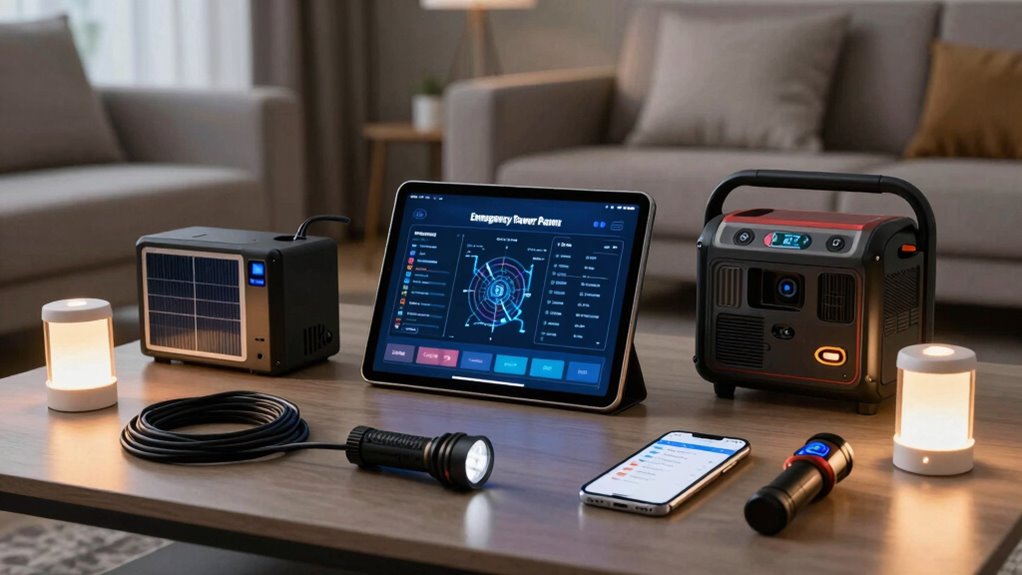
To stay prepared during a power outage, you need to monitor your energy use consistently and know your backup power options. Setting up clear communication protocols guarantees you can stay connected with family or emergency services when needed. By planning these steps ahead, you’ll be ready to manage your smart home efficiently and stay safe.
Monitor Energy Consumption Regularly
Have you ever wondered how your smart home’s energy use impacts your ability to stay connected during a blackout? Regular energy monitoring helps you identify consumption patterns and optimize device automation for efficiency. By tracking energy use, you can:
- Detect unusual spikes that may indicate device issues or potential failures
- Adjust device automation to reduce power draw during outages
- Prioritize essential devices to conserve battery life and maintain critical functions
- Plan for backup power needs based on real-time energy data
Consistently monitoring energy consumption enables you to make informed decisions during outages, ensuring crucial devices stay operational. It also helps prevent overloads and preserves your backup power resources, keeping your smart home resilient and connected when it matters most.
Store Backup Power Sources
Storing backup power sources is essential for maintaining your smart home’s functionality during outages. Battery storage units, like uninterruptible power supplies (UPS), ensure your key devices stay operational, preventing data loss or damage. When selecting backup power, prioritize models with built-in surge protection to shield your equipment from voltage spikes that often accompany power fluctuations. Keep batteries fully charged and readily accessible, and regularly test your backup systems to confirm they’re working properly. Consider integrating renewable options like solar-powered batteries for sustainable backup. By having reliable battery storage and surge protection in place, you minimize disruption and protect your smart home systems, ensuring they remain functional and safe during unexpected outages.
Establish Communication Protocols
Establishing clear communication protocols is essential to guarantee your smart home remains responsive during power outages. You need a solid plan for how to stay connected and relay critical information. First, identify your emergency contacts, including neighbors, family, and local authorities. Second, assign roles for each household member to handle different communication tasks. Third, implement security protocols that protect your data and devices during outages, such as encrypted messages or secure channels. Fourth, prepare alternative communication methods like battery-operated radios or walkie-talkies. These steps assure you can quickly share updates, request assistance, and maintain safety. A well-structured plan minimizes confusion and keeps your smart home functioning smoothly even without power.
Test Your Outage Preparedness and Keep It Up to Date

Regularly testing your outage preparedness guarantees your smart home remains dependable during emergencies. Schedule routine maintenance and system updates to ensure everything functions smoothly. Conduct periodic simulations, such as power outage drills, to identify weaknesses. Keep a checklist to verify backup power sources, internet connectivity, and device responses. Document test results and adjust your plan as needed. Stay proactive by reviewing your plan monthly and after any system update or change. Here’s a quick overview:
| Action | Frequency | Focus Area |
|---|---|---|
| Run outage simulations | Monthly | Backup systems, connectivity |
| Perform routine maintenance | Quarterly | Hardware, software updates |
| Review and update plan | After system updates | Communication protocols, settings |
Frequently Asked Questions
How Often Should I Review and Update My Power Outage Plan?
You should review and update your power outage plan at least twice a year, aligning with your maintenance schedule. Regular plan review frequency guarantees your strategies stay current and effective. After any significant changes in your smart home setup or if new devices are added, update your plan promptly. This proactive approach keeps your system resilient, minimizes disruptions, and ensures your smart home remains protected during outages.
Can I Use Solar Panels as Backup Power for My Smart Home?
Yes, you can use solar panels as backup power for your smart home. To guarantee reliability, perform regular solar panel maintenance and check your battery storage options. Battery systems like lithium-ion batteries can store excess energy generated during sunny days, providing power during outages. Keep your batteries charged and well-maintained, and consider consulting a professional to optimize your system’s efficiency and ensure your smart home stays powered when needed.
What Should I Include in My Emergency Communication Plan?
Your emergency communication plan is your lifeline during chaos. You should include key emergency contacts like family, neighbors, and local services, along with clear notification procedures. Make sure everyone knows how to reach each other quickly. Keep a printed list accessible, and test your communication methods regularly. Remember, in an emergency, your plan can be the difference between chaos and calm—be prepared to stay connected and safe.
Are There Specific Smart Home Devices More Vulnerable to Power Fluctuations?
Yes, some smart home devices are more vulnerable to voltage surges due to their sensitivity. Devices like smart thermostats, security cameras, and smart hubs often have delicate electronics that can be damaged by power fluctuations. To protect them, use surge protectors or uninterruptible power supplies (UPS). This helps manage voltage surges, ensuring your devices stay safe and functional during power fluctuations or outages.
How Do I Ensure My Smart Home Remains Secure During an Outage?
Think of your smart home like a delicate ecosystem—you need to safeguard it. To keep everything secure during an outage, use battery backups for critical devices and surge protectors for all. I once saw a smart security system stay online during a storm because of a reliable UPS, preventing a break-in. These measures ensure your devices stay powered and safe, even when the power’s out.
Conclusion
Now that you know the essentials, are you ready to safeguard your smart home before the next blackout hits? A single overlooked detail could leave your devices vulnerable or your home unresponsive in an emergency. Take action now—test your plan, secure backup power, and stay prepared. The unexpected can strike at any moment. Will your smart home be resilient enough when it matters most? The choice is yours—don’t wait until it’s too late.