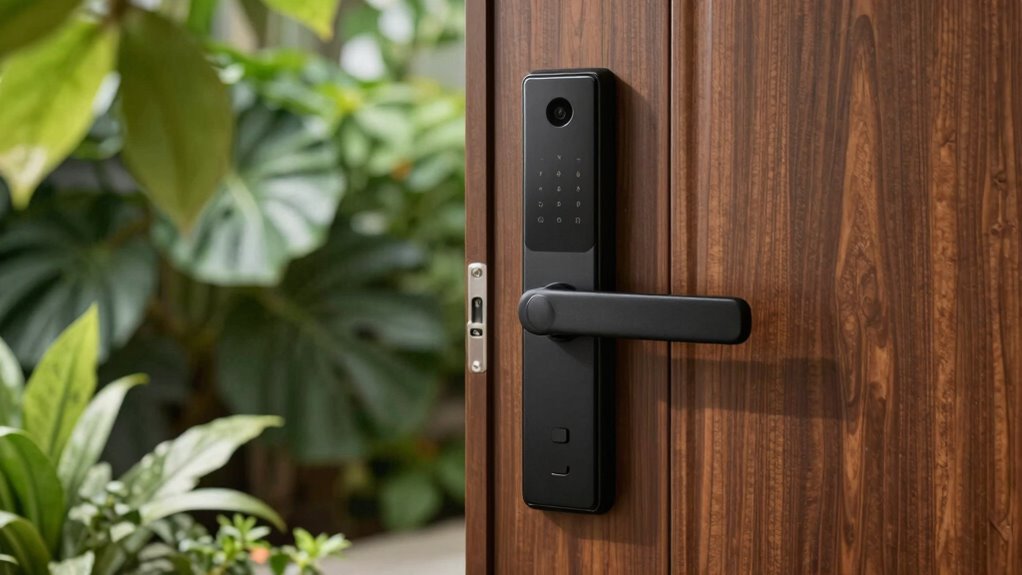

To create a more private smart entry setup, focus on strengthening biometric security by using advanced, spoof-resistant systems with liveness detection. Implement robust encryption protocols like end-to-end encryption and WPA3 for your Wi-Fi. Regularly update your firmware and disable unnecessary features to minimize vulnerabilities. Adopt layered security with multi-factor authentication and monitor access logs for suspicious activity. By following these steps, you’ll better protect your system’s privacy—and more tips await if you keep exploring.

Get furniture and decor delivered free with Prime
- Fast, free delivery on millions of items
- Prime Video, Amazon Music and more included
- Member-only deals all year
Key Takeaways
- Use advanced biometric systems with liveness detection and regularly verify their security functionality.
- Implement end-to-end encryption and secure Wi-Fi with WPA3, avoiding default or weak passwords.
- Regularly update firmware and enable auto-updates to patch vulnerabilities promptly.
- Incorporate multi-factor authentication combining biometrics with PINs or app approvals.
- Disable unused features and remote access options to minimize potential attack surfaces.
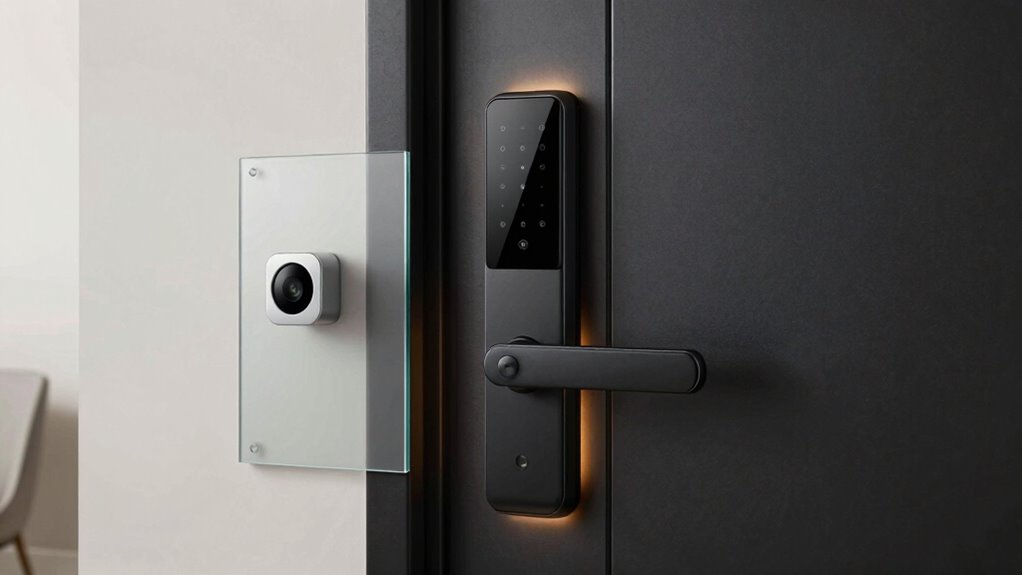
With smart entry systems becoming increasingly common, protecting your privacy is more important than ever. These systems offer convenience and quick access, but they also carry risks if not properly secured. To create a more private smart entry setup, you need to focus on strengthening your security measures, especially around biometric security and encryption protocols. Biometric security, like fingerprint or facial recognition, is convenient but can be vulnerable if not properly protected. You should guarantee that your device uses advanced biometric algorithms that are difficult to spoof or hack. Avoid systems with outdated biometric technology and opt for those that employ liveness detection, which verifies that a real person is present rather than a static image or fake fingerprint.
Prioritize advanced biometric algorithms with liveness detection to enhance security and prevent spoofing or hacking.
Another essential step is to implement robust encryption protocols. Encryption keeps your data safe by converting it into a code that only authorized devices can decode. When setting up your smart entry system, verify that it uses end-to-end encryption for all communications. This means that your data remains secure from the moment it leaves your device until it reaches the system’s servers. Make sure your Wi-Fi network is secured with a strong, unique password and WPA3 encryption, which offers better protection against hacking attempts. Avoid using default passwords or weak security settings, as these are common targets for cyber attackers.
Regularly updating your smart entry device’s firmware is indispensable for maintaining privacy. Manufacturers often release updates to patch security vulnerabilities and improve encryption methods. Set your system to auto-update if possible, so you don’t miss critical security patches. You should also consider disabling unnecessary features or remote access options that you don’t use, as these could serve as entry points for intruders. A minimal, streamlined setup reduces the attack surface and makes it easier to manage your system’s security. Additionally, understanding the importance of encryption protocols can help you make more informed security choices. Staying informed about emerging cybersecurity threats can also help you adapt your security measures proactively. Incorporating layered security strategies can further enhance your protection by combining multiple security measures in a cohesive manner.
Additionally, think about creating a layered security approach. Use multi-factor authentication, such as pairing biometric login with a PIN or app-based approval, to add extra barriers against unauthorized access. Keep a close eye on access logs and notifications, so you’re aware of any suspicious activity. Limiting access rights to only trusted users and regularly reviewing permissions also helps prevent unauthorized entry.
In essence, creating a private smart entry setup involves a combination of strong biometric security, up-to-date encryption protocols, and diligent management. By taking these steps, you greatly reduce your risk of privacy breaches and guarantee your home remains a safe, secure space.
Products Worth Considering

Ring Alarm 14-Piece Wireless Security System Kit
Google Nest Cam Indoor Security Camera, 3-Pack

Levoit Eleva 300X HEPA Air Purifier for Home and Bedroom
As an affiliate, we earn on qualifying purchases.
Frequently Asked Questions
Can Smart Entry Systems Be Hacked Remotely?
Smart entry systems can be hacked remotely, especially if they lack robust encryption protocols. Hackers exploit remote vulnerabilities, gaining access through weak Wi-Fi security or outdated firmware. To protect yourself, make certain your system uses advanced encryption and regularly updates its software. Be cautious of open networks and consider additional security measures, like two-factor authentication, to reduce the risk of remote hacking and keep your smart entry system secure.
What Are the Best Privacy-Focused Smart Lock Brands?
Did you know 78% of smart lock users prioritize privacy? For the best privacy-focused smart lock brands, look for options with strong encryption protocols and multi-factor user authentication. Brands like Yale and August emphasize security features that protect your home data. These brands use advanced encryption to prevent hacking and require multiple authentication steps, ensuring your smart entry remains private and secure against unauthorized access.
How Do I Prevent Neighbors From Accessing My Smart Entry?
To prevent neighbors from accessing your smart entry, guarantee your access code encryption is strong and unique, making it harder for others to guess or hack. Additionally, implement physical lock safeguards like sturdy locks and tamper alarms. Regularly update your codes and avoid sharing them. Keep your smart lock’s firmware current and disable any guest access features when not needed, reducing the risk of unauthorized entry.
Are There Legal Concerns With Recording Entry Activity?
Imagine your smart entry camera capturing every visitor’s face—are you aware of the legal concerns? Yes, recording entry activity can raise privacy policy issues and legal regulations, especially if you record public areas or without consent. You should review local laws and privacy policies to guarantee your setup complies. Always inform visitors if they’re being recorded to avoid potential legal risks, keeping privacy a top priority.
How Often Should I Update My Smart Lock Firmware?
You should update your smart lock firmware whenever a new security protocol update is released, ideally as soon as possible. Regular firmware updates guarantee your device stays protected against emerging threats and vulnerabilities. Check your smart lock manufacturer’s app or website monthly for updates. Keeping your firmware current maintains peak security, prevents potential breaches, and ensures your smart lock functions smoothly with the latest features and security enhancements.
Conclusion
By implementing these privacy-enhancing strategies, you’re taking a page from the privacy-conscious book of Socrates, who valued introspection and guarded his thoughts. Just as he sought to protect his inner world, you’ll safeguard your smart entry system from prying eyes. Remember, a well-guarded home is like a fortress of serenity—resilient and private. Stay vigilant, and let your smart setup reflect your commitment to privacy, much like a well-guarded secret whispered only to those you trust.