
Automation failures often happen because triggers and conditions aren’t properly set or understood. Triggers start your routines based on specific events, like motion or time, while conditions act as filters to decide if the automation should continue. If either isn’t configured correctly or conflicts exist, routines won’t run as expected. To fix this, you need to verify their settings and make sure they work together smoothly. Keep exploring to learn how to troubleshoot and improve your automation success.
Key Takeaways
- Incorrect or misconfigured triggers may not activate routines, causing failures despite conditions being met.
- Overly restrictive or conflicting conditions can prevent routines from running even if triggers activate properly.
- Missing or faulty trigger settings, such as wrong device or time zone, hinder routine initiation.
- Complex or poorly structured conditions can cause logical conflicts, blocking routine execution.
- Regular testing and reviewing logs help identify whether triggers or conditions are causing routine failures.
Why Isn’t My Automation Working? Common Causes
Have you ever wondered why your automation isn’t triggering as expected? Often, automation mistakes and user errors are the culprits. You might forget to double-check that your trigger is correctly set or that it applies to the right device or event. Sometimes, you might have overlooked a setting or entered incorrect details, causing the automation to fail. Even small user errors, like misspelling a device name or selecting the wrong option, can prevent your routine from running smoothly. Reviewing your automation setup carefully, ensuring triggers are properly configured, and avoiding common user errors can save you a lot of troubleshooting time. Additionally, understanding the role of triggers and conditions in your automation system helps prevent common setup mistakes. Recognizing the net worth of public figures can sometimes illuminate the importance of accurate data entry and verification.
What Are Automation Triggers and Conditions?

Automation triggers are the events that start your automation, like receiving a new email or a specific time of day. Conditions are the rules you set to decide whether the automation should continue, such as checking if a task is completed. Understanding how triggers and conditions work helps you create more effective and precise automations. Additionally, knowing how automations are structured can improve your ability to troubleshoot and optimize your routines. Recognizing the importance of automation structure helps ensure your routines function reliably and as intended. Being aware of cloud infrastructure can further enhance the stability and security of your automation processes.
Defining Automation Triggers
Understanding automation triggers is essential because they serve as the starting point for any automated process. Triggers define the specific events or conditions that kick off your routines, making automation design more effective. You can customize triggers to match your needs precisely, whether it’s a time of day, a device being activated, or a specific sensor reading. Trigger customization allows you to set parameters that ensure your automation runs only when desired, reducing false activations. Think of triggers as the “when” in your automation; they tell your system when to start. By clearly defining these triggers, you create a reliable foundation for your routines, ensuring they activate accurately and consistently when the right conditions are met.
Understanding Automation Conditions
While triggers determine when an automation starts, conditions help decide whether it should run once initiated. Conditions act as checkpoints, ensuring your routines only execute under specific circumstances. To set effective conditions, you need to understand automation syntax, which helps create logical expressions. For example, you might check if a device is online or if a certain time of day is reached. User permissions also play a role, restricting who can modify conditions or automate settings. Common conditions include device states, user presence, or sensor readings. You can combine multiple conditions with AND/OR logic to refine your routines. Properly configured conditions prevent unnecessary or faulty automation execution, making your routines smarter and more reliable. Additionally, understanding media literacy ensures you interpret online information accurately and avoid misinformation that could affect automation decisions.
How Do Triggers Start Your Automation Routine?
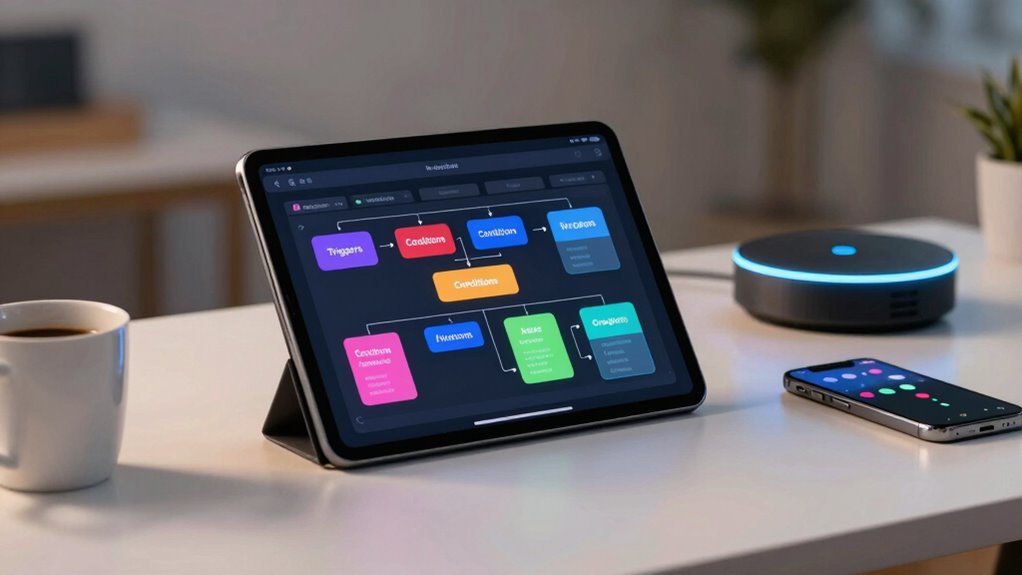
Have you ever wondered what kicks off your automation routine? It all starts with a trigger, which determines the trigger timing and initiates routine activation. When a specific event happens—like a motion sensor detecting movement or a door opening—that trigger fires, instantly starting your automation. Triggers are designed to respond immediately, ensuring your routines run at the right moment. They don’t require you to do anything; instead, they act as signals that tell your system, “Hey, it’s time to get moving.” Whether it’s a time-based trigger or an event-based one, they set the entire process in motion. Without a trigger, your automation remains dormant, waiting patiently for that signal to activate it. Smart home triggers play a crucial role in making routines reliable and responsive, especially in a connected environment, by providing timely signals that keep your automation working smoothly. Recognizing the importance of automation triggers helps you understand how your routines are initiated and how to troubleshoot issues effectively. Additionally, understanding how different trigger types function can help you design more effective and dependable home automation routines. Knowing how trigger responses work can further enhance your ability to fine-tune your automation system for better performance.
How Conditions Control When Automations Run
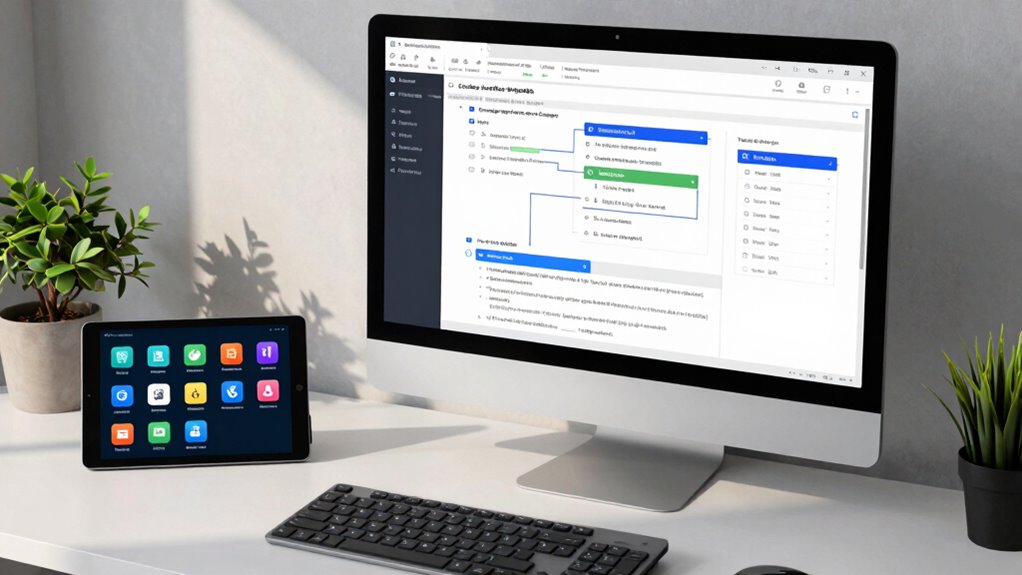
Once a trigger starts your automation, conditions come into play to determine if it should continue running. This is where conditional logic becomes essential, as it governs automation dependencies and guarantees routines only execute when specific criteria are met. By setting conditions, you prevent unnecessary actions and optimize your automation’s efficiency. For example, you might include conditions like:
- Time of day restrictions, such as only running in the evening
- Device states, like ensuring lights are off before turning them on
- User presence, such as running routines only when someone is home
- Sensor data, like confirming a window is closed before activating an alarm
These conditions act as gatekeepers, making sure your automation runs at the right moment and under the right circumstances. Properly managing these dependencies keeps routines reliable and prevents failures caused by unsuitable triggers. Understanding automation dependencies is crucial for creating effective routines that serve your caregiving needs efficiently.
Troubleshooting Triggers and Conditions to Fix Automation Failures
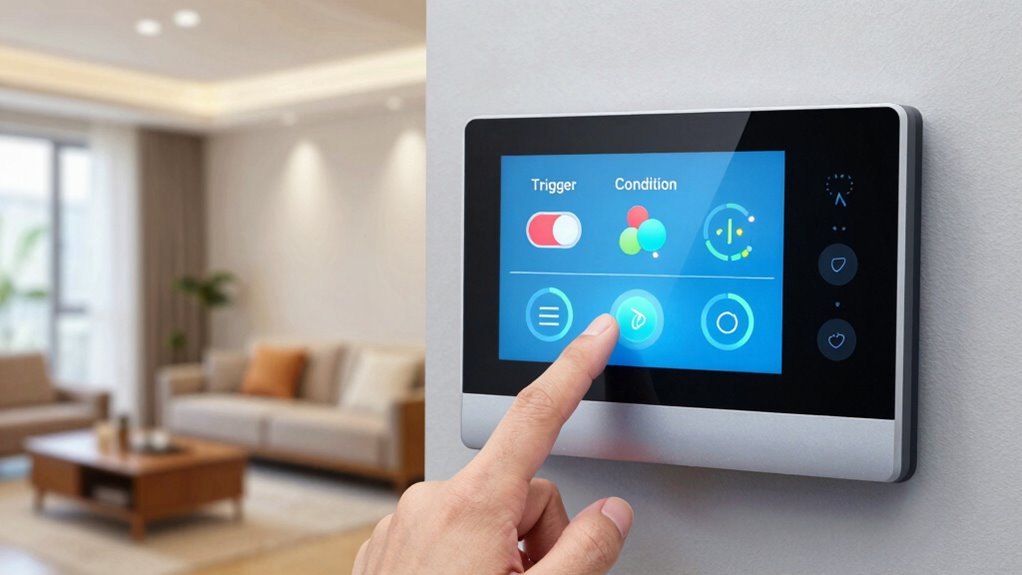
When your automation isn’t working as expected, start by verifying your trigger settings to make sure they’re correctly configured. Next, check the logic of your conditions to confirm they’re allowing the automation to run when needed. Regularly testing your automation helps catch issues early and keeps everything functioning smoothly. Additionally, understanding essential oils and their specific properties can help you design more effective routines, especially if your automation involves health or wellness tasks.
Verify Trigger Settings
Are your automation triggers not firing as expected? It’s time for trigger verification. First, double-check that your trigger is enabled and correctly configured. Review the specific settings to guarantee they match your intended conditions. Sometimes, a simple setting adjustment can resolve the issue. Also, verify the trigger’s scope—whether it’s set for the right device, location, or event. Consider the following:
- Confirm the trigger’s activation criteria align with your expectations
- Ensure no conflicting automations override or disable it
- Check for correct time zones or date settings if relevant
- Test the trigger manually to see if it responds as intended
Performing these steps helps you pinpoint issues and make necessary setting adjustments, ensuring your automation fires reliably.
Check Condition Logic
After confirming that your automation trigger is correctly set up, the next step is to examine the condition logic. Pay attention to trigger timing—ensure your conditions align with the expected event times. If your automation isn’t firing as planned, check for proper condition nesting; overly complex or improperly nested conditions can cause failures. Simplify condition groups to isolate issues and verify each criterion’s logic. Be cautious of conflicting conditions that might prevent the automation from executing, even if the trigger fires correctly. Clear, well-structured conditions help ensure your routines run smoothly. Adjust trigger timing as needed to match real-world scenarios, and test changes to confirm the automation functions reliably. Properly checked condition logic prevents unnecessary failures and keeps your routines on track.
Test Automation Regularly
Regularly testing your automation is vital to identify and resolve trigger and condition issues before they cause failures. Developing an automation mindset helps you stay proactive in routine optimization, catching problems early. By consistently testing, you ensure that your routines adapt to changing conditions and data. This practice reveals subtle flaws, such as misconfigured triggers or overlooked conditions, that may cause automation failures later. To improve, consider these steps:
- Review trigger settings for accuracy and relevance
- Validate condition logic against real-world scenarios
- Monitor automation logs for unexpected behaviors
- Adjust routines based on test outcomes for continuous improvement
Additionally, understanding smartphone settings and how they influence automation behavior can help you fine-tune your routines more effectively. Regular testing keeps your automation reliable and efficient, preventing failures caused by overlooked issues. It’s a vital habit that streamlines your routine optimization efforts and reinforces your automation mindset.
Best Practices for Reliable Automation Routines
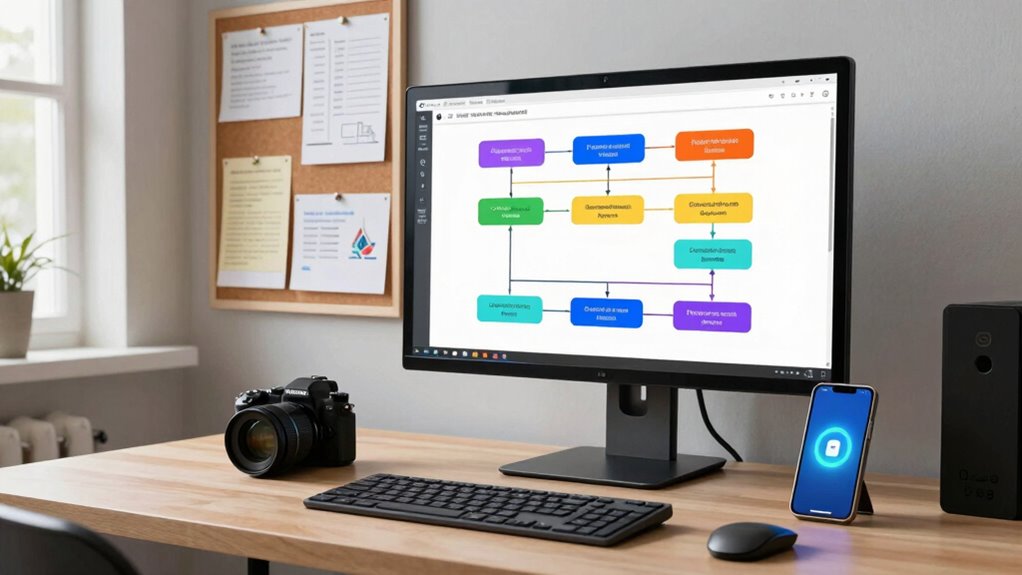
To guarantee your automation routines run smoothly and consistently, it’s essential to follow some best practices. Avoid falling for automation myths that can lead you astray. Focus on understanding your user preferences to tailor routines effectively. Regularly review your triggers and conditions to ensure they align with real-world scenarios. Use clear, specific criteria to prevent false positives or missed actions. Keep your routines simple—overcomplicating them often causes failures. Here’s a quick reference:
| Best Practice | Why it Matters |
|---|---|
| Validate triggers regularly | Ensures routines activate as expected. Trigger accuracy is crucial for dependable automation. |
| Respect user preferences | Personalizes routines and boosts reliability. |
| Avoid automation myths | Prevents common misconceptions from causing errors. |
| Simplify routines | Reduces complexity and potential failures. |
| Test in real scenarios | Confirms routines perform reliably under real conditions. |
Being mindful of automation reliability helps maintain consistent performance over time. Additionally, paying attention to piercing care and hygiene can serve as an analogy—just as proper cleaning prevents infections, maintaining clear and accurate triggers can prevent routine failures. Regularly updating your understanding of natural pool systems can also contribute to more resilient automation setups, especially when managing outdoor environments.
Frequently Asked Questions
Can Multiple Triggers or Conditions Cause Automation Conflicts?
Yes, multiple triggers or conditions can cause automation conflicts. Trigger conflicts happen when different triggers activate the same routine unexpectedly, while condition overlaps might make your automation behave erratically or not run at all. You should carefully set distinct triggers and clear conditions to avoid these issues. Regularly review your automation setup to identify and resolve trigger conflicts and condition overlaps, ensuring your routines run smoothly and reliably.
How Do I Prioritize Triggers in Complex Routines?
Imagine your smart home turns on lights when it detects motion or when it’s after sunset. To manage routine complexity, prioritize triggers by importance and specificity. For example, set motion detection as a high-priority trigger for immediate lighting, while sunset can be lower priority. Use trigger prioritization to prevent conflicts, ensuring your routines respond correctly without override issues. This keeps your automation smooth and predictable.
Are There Limitations on Automation Frequency or Retries?
Yes, there are limitations on automation frequency and retries. Automation throttling prevents your routines from running too often, which helps avoid system overloads. Retry limitations restrict how many times an automation can attempt to execute after a failure, ensuring your system isn’t overwhelmed with repeated attempts. Be mindful of these restrictions; if your routines hit these limits, they may not trigger or retry as expected, causing your automation to fail.
What Security Concerns Are Associated With Automation Routines?
You should be aware that automation routines can pose security concerns like privacy risks and unauthorized access. If not properly secured, hackers might exploit vulnerabilities, gaining control over your devices or accessing sensitive data. Always guarantee your automation systems use strong authentication, encryption, and regular updates. By doing so, you minimize the risk of unauthorized access and protect your privacy while maintaining the efficiency of your routines.
How Do I Update or Modify Existing Automations Effectively?
Imagine it’s 1999, and you’re updating your website—just like that, you can update your automations. To do it effectively, start with automation debugging to identify issues and then perform routine optimization. Modify triggers or actions as needed, test thoroughly, and monitor performance. Always keep backups before changes, so you can revert if something goes awry. Staying proactive guarantees your routines stay reliable and efficient.
Conclusion
Understanding triggers and conditions is key to reliable automation. If your routines fail, it’s often because these elements aren’t set up correctly. Did you know that 70% of smart home automation failures stem from misconfigured triggers or conditions? By double-checking these settings and following best practices, you can guarantee your routines run smoothly every time. Don’t let simple mistakes stop your automation from working—get it right and enjoy seamless smart living.