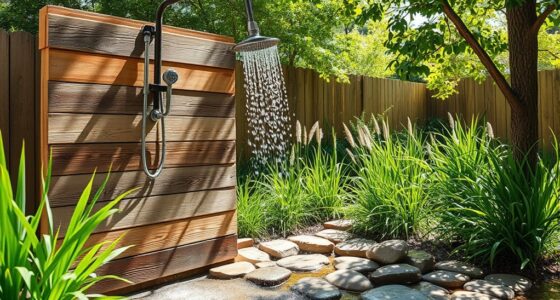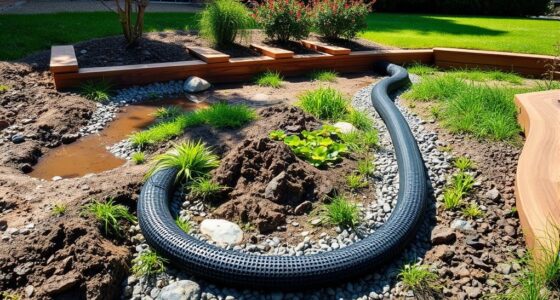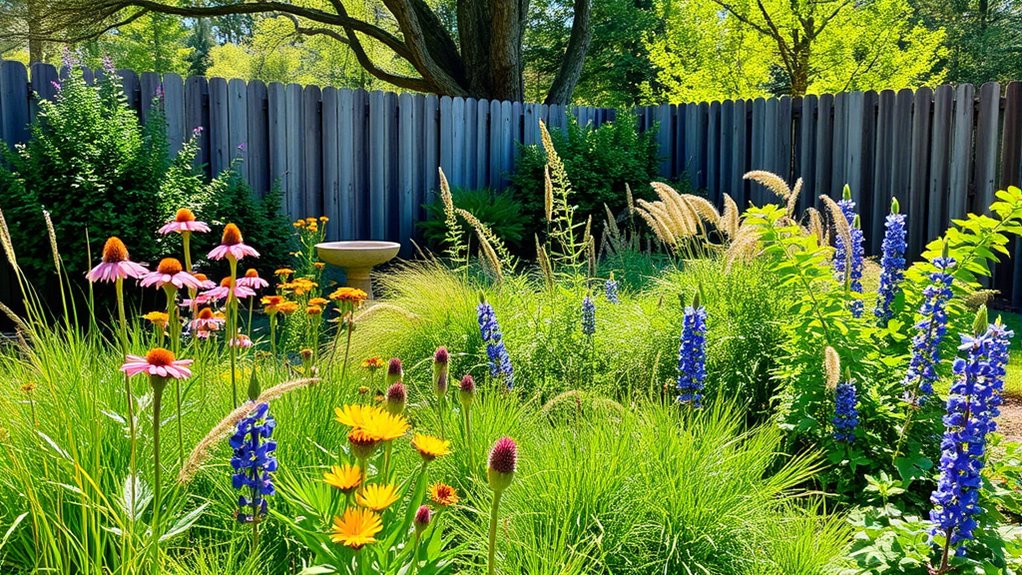
To create wildlife-friendly landscaping, choose native plants that support local birds and pollinators, as they’re easier to maintain and require less water and chemicals. Incorporate water-saving techniques like drip irrigation, mulching, and rain barrels to conserve resources. Add diverse habitat layers with shrubs, grasses, and water features to attract and shelter wildlife. By making these choices, you’ll develop a sustainable, eco-friendly garden that benefits the environment—and if you explore further, you’ll discover even more ways to enhance your outdoor space.
Key Takeaways
- Choose native plants to support local wildlife and reduce maintenance needs.
- Incorporate diverse layers of vegetation, including shrubs, grasses, and flowering perennials.
- Use water conservation techniques like drip irrigation, mulching, and rain barrels.
- Add wildlife features such as birdbaths, small ponds, and nesting sites.
- Minimize chemical inputs to protect ecosystems and promote resilient, eco-friendly gardens.
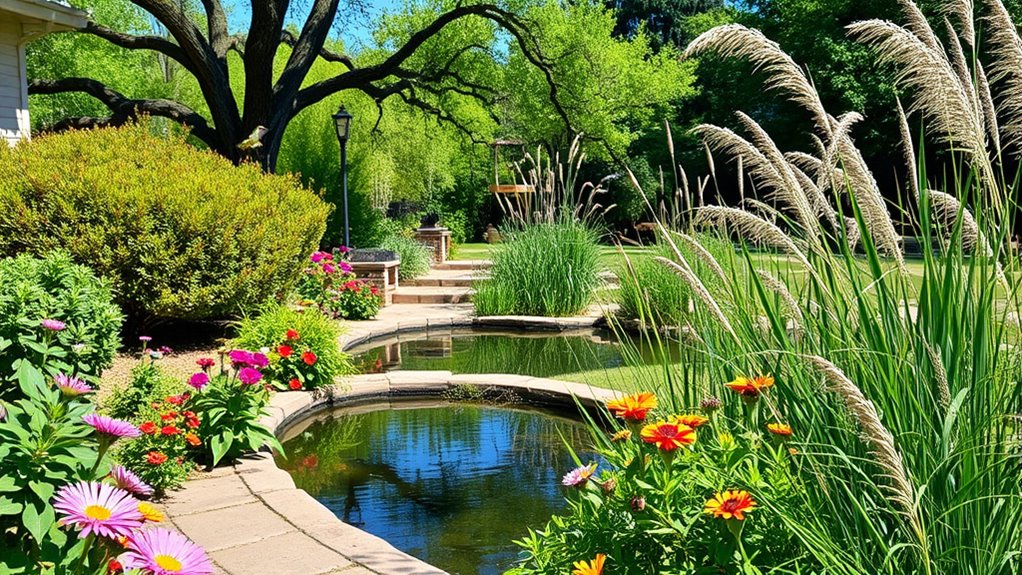
Creating a wildlife-friendly landscape is one of the best ways to support local ecosystems while enhancing your outdoor space. When you focus on native plant selection, you provide essential habitat and food sources for local wildlife, including birds, butterflies, and pollinators. Native plants are adapted to your region’s climate and soil conditions, making them easier to grow and maintain. They typically require less water and fewer chemical inputs, which benefits your garden’s health and the environment. By choosing native species, you create a sustainable landscape that naturally attracts wildlife and reduces your water consumption.
Native plants support local wildlife and simplify garden maintenance.
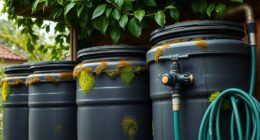
Water conservation techniques are crucial when designing your wildlife-friendly yard. Implementing strategies like drip irrigation, soaker hoses, and watering early in the morning minimizes evaporation and ensures that plants get the moisture they need without wasting resources. Mulching around plants also helps retain soil moisture, reducing the frequency of watering. Consider grouping plants with similar water needs together so you can water more efficiently, avoiding over- or under-watering certain areas. Installing rain barrels to collect runoff from your roof provides an additional water source for your landscape, especially during dry spells. These practices not only conserve water but also promote healthier plants, which in turn support more robust wildlife populations.
Incorporating native plant selection and water conservation techniques into your landscape design creates a harmonious environment where wildlife can thrive. Native plants often require less fertilizer and pesticides, which helps keep local waterways clean and safe for aquatic life. By reducing chemical use, you create a safer habitat for birds and pollinators that are sensitive to pesticides. Additionally, native plants tend to be more resilient to local pests and diseases, reducing the need for chemical interventions and making your garden more eco-friendly. Moreover, maintaining proper air purifier care ensures that indoor air quality remains healthy, benefitting both your living environment and your ability to enjoy your outdoor space.
As you develop your wildlife-friendly landscape, think about creating layered habitats by including a variety of plant heights and types—such as shrubs, grasses, and flowering perennials. This diversity provides shelter, nesting sites, and food throughout the year. Water features like small ponds or birdbaths can further attract wildlife, offering drinking and bathing spots that encourage birds and insects to visit. Remember, the goal is to design a space that supports the needs of local species while minimizing your environmental footprint. With thoughtful plant choices and water-saving practices, you can enjoy a vibrant, sustainable landscape that benefits both your outdoor enjoyment and the health of your local ecosystem.
Frequently Asked Questions
How Can I Identify Native Plants for My Area?
To identify native plants for your area, start with regional plant guides specific to your location. These guides help you with native plant selection by highlighting species that naturally thrive in your climate and soil. Visit local botanical gardens or native plant nurseries, where knowledgeable staff can assist. You can also check online resources or consult conservation groups focused on native landscaping. This guarantees you choose plants that support local wildlife and ecosystems.
What Are the Best Bird-Friendly Planting Options?
Your yard can become a bird paradise with the best bird-friendly planting options! Focus on native plant selection, which provides natural food and shelter. Incorporate bird-friendly shrubs like serviceberry, elderberry, and viburnum, offering berries and cover. Include native grasses and flowering plants to attract insects and pollinators. These choices create a haven that supports local birds and transforms your landscape into a lively, thriving sanctuary.
How Do I Create a Wildlife Pond Safely?
To create a wildlife pond safely, start by installing a gentle slope for easy access and exit, ensuring pond safety for birds and other animals. Incorporate native aquatic plants like reeds and water lilies to provide shelter and food. Avoid steep edges, and consider a shallow zone for small creatures. Regularly maintain the pond by removing debris, and keep a watchful eye on water quality to support healthy aquatic life.
Which Landscaping Tools Are Eco-Friendly?
You can use eco-friendly landscaping tools like composting practices and organic pest control methods. These tools, unlike traditional chemicals and plastic equipment, help nurture wildlife and protect the environment. Think of composting as recycling nutrients back into your soil, while organic pest control keeps pests at bay without harmful chemicals. By choosing these sustainable options, you create a healthier landscape that supports local wildlife and reduces your ecological footprint.
How Can I Maintain Wildlife Habitats Year-Round?
You can maintain wildlife habitats year-round by selecting native plants that thrive in your area and provide food and shelter throughout seasons. Regular seasonal habitat maintenance, like pruning, mulching, and removing invasive species, keeps habitats healthy. You should also leave some leaf litter and dead wood, as these offer nesting sites and food sources for wildlife. Consistent care guarantees your landscape supports local wildlife all year long.
Conclusion
By adopting wildlife-friendly landscaping, you can create a vibrant habitat that supports local ecosystems. Did you know that gardens with native plants attract 30% more pollinators than traditional yards? Your efforts not only beautify your space but also play an essential role in conserving wildlife. So, start incorporating native plants, provide water sources, and reduce chemicals—your garden can become a thriving sanctuary, making a meaningful difference for local wildlife.