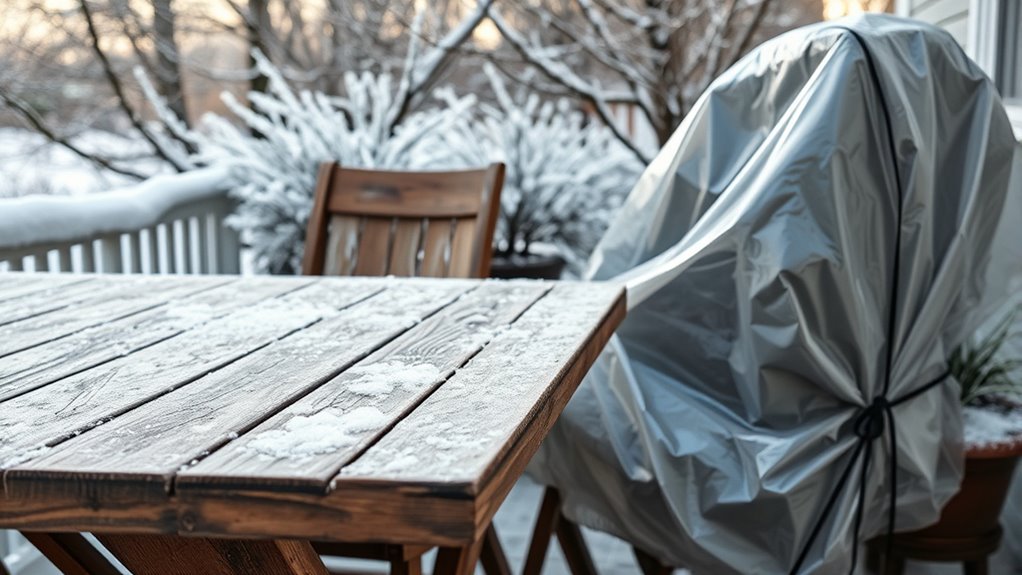

To care for your outdoor furniture through winter, start by thoroughly cleaning and inspecting it for damage. Apply rust-proof coatings on metal, weatherproof finishes on wood, and repair loose wicker strands. Use high-quality waterproof covers or store items indoors, especially cushions and fabric pieces. Regularly remove snow and ice gently, and allow everything to dry completely before covering. Keeping up these steps will help extend your furniture’s lifespan—continue for more tips on winterizing your outdoor space.

Get furniture and decor delivered free with Prime
- Fast, free delivery on millions of items
- Prime Video, Amazon Music and more included
- Member-only deals all year
Key Takeaways
- Clean and inspect furniture thoroughly before winter, sealing or weatherproofing materials to prevent damage.
- Use high-quality waterproof covers that fit snugly to protect furniture from moisture and snow.
- Store cushions and fabric pieces indoors or in a dry, protected area to prevent mold and fading.
- Gently remove snow and ice with a soft brush, avoiding sharp tools that can damage surfaces.
- Regularly check and maintain furniture during winter for early detection of wear or damage.

Outdoor furniture adds comfort and style to your outdoor space, but it requires proper care to stay looking its best. When winter approaches, it’s essential to prepare your furniture to withstand the harsher weather conditions. One of the first steps is implementing effective weatherproofing techniques. This means thoroughly inspecting your pieces and treating any vulnerable areas. For metal furniture, consider applying a rust-resistant coating or a protective sealant to prevent corrosion. Wooden furniture benefits from sealing or applying a weatherproof finish that repels moisture. For wicker or rattan pieces, ensure they are tightly woven and repair any loose strands before covering or storing them. Cushions and fabric-covered furniture should be treated with fabric protectors that repel water and stains, extending their lifespan.
Creating a cleaning schedule tips as part of your winter care routine is vital. Before covering or storing your furniture, give each piece a gentle but thorough cleaning. Use mild soap and water to remove dirt, dust, and debris accumulated over the season. For stubborn stains or mold, a mixture of vinegar and water works effectively without damaging the material. Allow everything to dry completely to prevent mold and mildew from developing during the off-season. Regular cleaning not only keeps your furniture looking fresh but also helps identify issues like chips, cracks, or loose fittings that could worsen if left unattended.
Regular cleaning and drying prevent mold and detect damage early.
When winter weather hits, consider covering your furniture with high-quality, waterproof covers designed specifically for outdoor use. These covers shield your furniture from snow, rain, and icy winds, reducing exposure to moisture that can cause damage. Make sure covers fit snugly and are secured properly to prevent them from blowing off during storms. If space allows and you prefer extra protection, store your furniture in a shed, garage, or basement. This is especially advisable for cushions and fabric pieces, which are prone to mold and fading if left outside in damp conditions. Additionally, outdoor furniture maintenance can significantly extend the lifespan of your investment.
Throughout winter, keep an eye on weather forecasts and check your furniture periodically. Even with covers, snow accumulation or ice buildup can cause stress on furniture joints or fabrics. Clear snow gently with a broom or soft brush, avoiding sharp tools that could scratch surfaces. By sticking to these weatherproofing techniques and cleaning schedule tips, you guarantee your outdoor furniture remains durable and attractive, ready to be enjoyed once spring arrives. Proper winter care preserves your investment, so your outdoor space stays inviting and stylish year after year.
outdoor furniture waterproof cover
As an affiliate, we earn on qualifying purchases.
As an affiliate, we earn on qualifying purchases.
Frequently Asked Questions
How Often Should I Clean Outdoor Furniture During Winter?
You should clean your outdoor furniture at least once a month during winter for proper winter maintenance. Regular cleaning removes dirt, debris, and moisture that can cause damage or mold growth. If there’s heavy snowfall or rain, clean more often to prevent buildup. Keep an eye on your furniture, especially after storms, and wipe it down to maintain its condition and prolong its lifespan through the cold months.
Can I Leave Outdoor Cushions Outside Year-Round?
Did you know that over 60% of outdoor cushions get damaged from weather exposure? You can leave outdoor cushions outside year-round if you properly cushion weatherproofing and outdoor cushion maintenance. Use waterproof covers or store cushions in a dry place during harsh weather. Regularly clean and inspect them to prevent mold and mildew. This way, your cushions stay fresh and vibrant, ready for use whenever you need them.
What Are the Best Storage Options for Outdoor Furniture?
You should store your outdoor furniture in indoor storage or use weatherproof covers when not in use. Indoor storage offers the best protection from the elements, keeping your furniture safe and prolonging its life. If indoor storage isn’t an option, invest in high-quality weatherproof covers to shield your furniture from rain, snow, and sun damage. This way, you’ll maintain the furniture’s condition and ensure it lasts through many seasons.
How Do I Prevent Rust on Metal Furniture?
Rust on metal furniture can turn your beautiful piece into a rusty nightmare overnight. To prevent this, you should regularly clean and dry your furniture to avoid moisture buildup. Apply a rust-resistant coating or paint for extra protection. Use rust prevention products specifically designed for metal maintenance, and consider covering your furniture when not in use. These simple steps keep your outdoor furniture looking pristine and extend its lifespan.
Is It Necessary to Cover Furniture if Kept in a Shed?
You don’t need to cover furniture kept in a shed if it’s made of materials like plastic or resin, which resist weather damage. However, for metal or wooden furniture, covering is wise to prevent dust and moisture buildup. Make certain your shed has good ventilation to avoid humidity, which can cause rust or mold. Proper ventilation helps keep your furniture in good shape, even when stored indoors during winter.
Conclusion
As winter’s icy breath settles in, think of your outdoor furniture as a loyal friend needing your gentle care to weather the storm. With a little effort, you shield it from nature’s harsh whispers, allowing it to rest peacefully through the cold. When spring awakens, it’ll be ready to bloom anew, standing tall and proud—your dedication a silent promise that beauty endures beyond winter’s grasp, like a steadfast guardian awaiting the sun’s warm embrace.
Columbus Day / Indigenous Peoples' Day Picks
long weekend sales
As an affiliate, we earn on qualifying purchases.