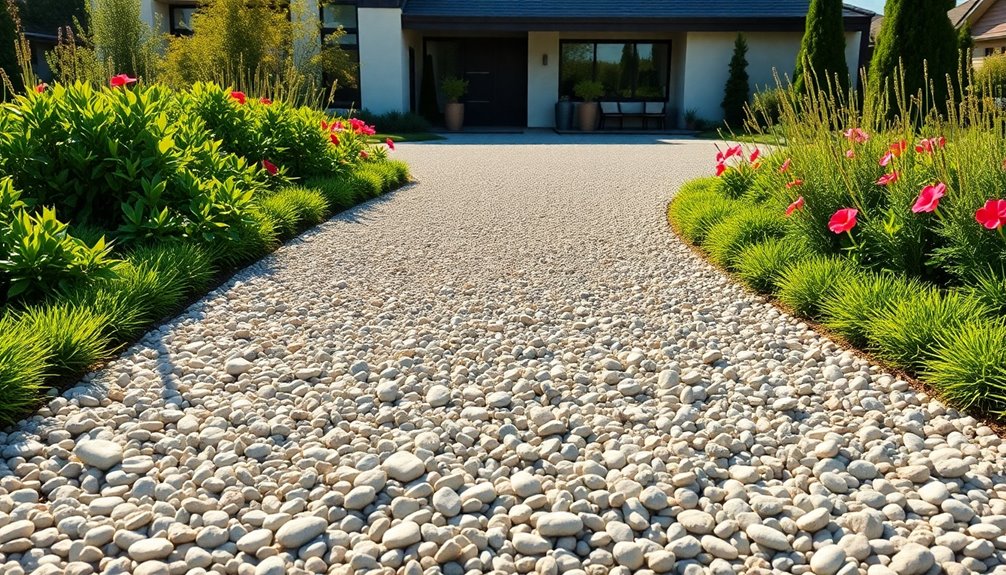

Choosing the right gravel for your driveway involves balancing durability, appearance, and affordability. The best overall pick is the Granite Gravel, 3/4 inch, 40 lbs, known for its strength and long-lasting surface. The Crushed Limestone Gravel offers superior drainage, making it ideal for wet climates, while the Natural Pea Gravel provides a softer, more decorative finish. Each option has tradeoffs: some are more affordable but less durable, others provide better aesthetics but at a higher cost. Continue reading for a full breakdown of these top contenders and how to choose the best gravel for your driveway needs.
Complete the kit


Key Takeaways
- Durability and size of gravel significantly impact driveway longevity and maintenance needs.
- Higher-quality materials like granite generally last longer but cost more upfront.
- Drainage features are crucial in wet climates to prevent erosion and pooling.
- Smaller, rounded gravel offers a softer look but may require more frequent topping-up.
- Price points vary widely; balancing budget with performance is key for a successful choice.
| All Purpose Pea Gravel 50 lb |  | Best for Versatility & Multi-Use Applications | Weight: 50 lbs | Use Cases: Landscaping, gardening, patios, rooftops | VIEW ON AMAZON | See Our Full Breakdown | |
| 40 lbs Grey Pea Gravel – Landscape Rocks, Drainage, Gardening, 3/8 inch |  | Best for Drainage & Pathways | Weight: 40 lbs | Size: 3/8 inch | Color: Grey | VIEW ON AMAZON | See Our Full Breakdown |
| Granite Gravel, 3/4 inch, 40 lbs, Gray |  | Best for Durability & Decorative Ground Cover | Size: 3/4 inch | Weight: 40 lbs | Color: Bluish gray | VIEW ON AMAZON | See Our Full Breakdown |
| Crushed Limestone Gravel – 1.5-inch Angular Stone for Driveways, Drainage, and Construction – 40 lbs |  | Best for Stability & Construction Use | Size: 1.5 inches | Weight: 40 lbs | Material: Limestone | VIEW ON AMAZON | See Our Full Breakdown |
| Natural Pea Gravel for Landscaping, 3/8-1/4 Inch, 40 lbs |  | Best for Attractive, Natural Look | Size Range: 3/8 inch to 1/4 inch | Weight: 40 lbs | Color: Gray, blue, tan | VIEW ON AMAZON | See Our Full Breakdown |
| Pea Gravel – 1/2 inch Smooth Rounded Stone for Landscaping, Walkways, and Drainage |  | Best for Aesthetic Landscaping and Small-Scale Projects | Size: 1/2 inch | Weight: 20 lbs | Material: Natural stone | VIEW ON AMAZON | See Our Full Breakdown |
| gravel for driveway | Weight | Size | Color |
|---|---|---|---|
| All Purpose Pea Gravel 50 lb | 50 lbs | — | — |
| 40 lbs Grey Pea Gravel | 40 lbs | 3/8 inch | Grey |
| Granite Gravel | 40 lbs | 3/4 inch | Bluish gray |
| Crushed Limestone Gravel | 40 lbs | 1.5 inches | — |
| Natural Pea Gravel for Landsca | 40 lbs | — | Gray, blue, tan |
| Pea Gravel | 20 lbs | 1/2 inch | — |
More Details on Our Top Picks
All Purpose Pea Gravel 50 lb
This all-purpose pea gravel excels in offering a flexible solution suitable for landscaping, gardening, patios, and even rooftop projects, making it ideal for those needing a multi-use gravel. Unlike specialized options like the Granite Gravel, it lacks specific size or material details, which could impact its performance in precise applications such as driveways or drainage systems. Its ease of spreading combined with durability makes it appealing for DIY projects, though potential weed growth indicates it might require additional preparation or weed barriers. Overall, this pick best suits homeowners seeking a decorative yet functional gravel for varied uses, but it may fall short for projects demanding precise material specifications or long-term stability.
Pros:- Suitable for multiple landscaping and gardening uses
- Easy to spread and install
- Durable and decorative
Cons:- No specific size or material details provided
- Limited information on coverage and weight
- Potential for weed growth if not properly installed
Best for: Homeowners and DIYers needing a versatile, decorative gravel for multiple projects without strict size or performance requirements.
Not ideal for: Professionals or contractors requiring detailed material specs or gravel engineered specifically for driveways or drainage systems.
- Weight:50 lbs
- Use Cases:Landscaping, gardening, patios, rooftops
Our verdict“This all-purpose pea gravel is best for flexible, decorative projects where ease of use outweighs detailed specifications.”
40 lbs Grey Pea Gravel – Landscape Rocks, Drainage, Gardening, 3/8 inch
This grey pea gravel offers a manageable size (3/8 inch) that’s ideal for drainage, garden beds, and pathways, making it a practical choice for landscape projects. Compared to larger gravel options like the Crushed Limestone Gravel, its smaller size makes it easier to pack and spread in tight spaces, though it may require replenishment more frequently in high-traffic areas. Its lightweight nature simplifies handling, but this also means it can shift over time if not maintained, especially in areas with frequent foot or vehicle traffic. Best suited for gardeners and homeowners focusing on drainage or aesthetic pathways, it may not be the best option for long-term driveway stability or high-traffic routes.
Pros:- Versatile for landscaping and drainage
- Easy to use for pathways and garden beds
- Lightweight and manageable
Cons:- May require frequent replenishment
- Limited color options
- Can shift over time in high-traffic areas
Best for: Homeowners installing decorative pathways or improving drainage in garden beds and around plants.
Not ideal for: Heavy-duty driveway projects or areas with frequent vehicle traffic where gravel shifting could compromise stability.
- Weight:40 lbs
- Size:3/8 inch
- Color:Grey
Our verdict“This gravel is an excellent choice for decorative pathways and drainage but less suited for high-traffic driveways due to shifting concerns.”
Granite Gravel, 3/4 inch, 40 lbs, Gray
This granite gravel stands out for its durability and natural appearance, making it suitable for landscaping, garden borders, and decorative ground cover. Its 3/4 inch size offers a balance between stability and drainage, but this limits its use in projects requiring finer gravel or very small pathways. Compared with the smaller Natural Pea Gravel, it provides a more robust, long-lasting surface that can withstand foot and light vehicle traffic. The bluish gray color adds a natural aesthetic, though the limited size range may restrict its use in detailed or fine-grain applications. This makes it a solid pick for those prioritizing longevity and natural beauty in outdoor areas.
Pros:- Durable and long-lasting
- Effective drainage
- Ready to use without additional prep
Cons:- Limited to 3/4 inch size, not suitable for fine pathways
- Natural variation in color and texture
Best for: Landscapers and homeowners seeking durable, natural stone ground cover for gardens and decorative features.
Not ideal for: Projects needing fine gravel or detailed pathways where smaller sizes are essential for smooth surfaces or compacted areas.
- Size:3/4 inch
- Weight:40 lbs
- Color:Bluish gray
Our verdict“Ideal for durable, natural ground cover where longevity and aesthetic appeal are priorities, but less suited for fine-detail projects.”
Crushed Limestone Gravel – 1.5-inch Angular Stone for Driveways, Drainage, and Construction – 40 lbs
This crushed limestone gravel offers angular stones designed to interlock, providing excellent stability for driveways, drainage layers, and structural bases. Its 1.5-inch size makes it less suitable for delicate pathways or decorative uses, but it excels in creating a firm, load-bearing surface. Compared to finer gravel like the All Purpose Pea Gravel, it offers superior stability, especially in driveways and construction projects, though it might develop some dust during shipping. Its natural variation in color and shape means it may require grading for best results, but it remains a reliable choice for projects demanding strength and durability.
Pros:- Provides stability and reduces shifting
- Versatile for residential and commercial projects
- Easy to spread and grade
Cons:- Stone gradation may vary slightly
- Natural color and texture variation
- May produce light dust during shipping
Best for: Homeowners and contractors needing a stable, interlocking gravel for driveways or structural bases.
Not ideal for: Fine pathways or decorative features where small, smooth stones are preferred over angular, heavy stones.
- Size:1.5 inches
- Weight:40 lbs
- Material:Limestone
- Type:Crushed gravel
- Uses:Driveways, drainage, base layer, construction
Our verdict“This gravel is best suited for driveways and structural bases where stability and load-bearing capacity are critical, but it’s less ideal for decorative or fine pathways.”
Natural Pea Gravel for Landscaping, 3/8-1/4 Inch, 40 lbs
This natural pea gravel combines stones in shades of gray, blue, and tan, offering an attractive, multi-colored appearance ideal for decorative landscaping, pathways, and drainage. Its small size range (3/8 to 1/4 inch) makes it easy to apply in detailed areas, providing a smooth, rounded surface that enhances visual appeal. Compared with the more uniform 40 lbs Grey Pea Gravel, this option adds a touch of natural variation that many homeowners find appealing. However, the limited size range restricts its use in projects requiring larger or more stable gravel, and it may require periodic replenishment due to shifting or compaction over time.
Pros:- Natural, attractive color blend
- Versatile for multiple landscaping uses
- Consistent size for easy application
Cons:- Limited to small size range
- May not be suitable for driveways or pathways with vehicle traffic
Best for: Gardeners and homeowners seeking a natural, colorful ground cover for pathways and decorative beds.
Not ideal for: Driveways or high-traffic areas where larger, more stable gravel would perform better over time.
- Size Range:3/8 inch to 1/4 inch
- Weight:40 lbs
- Color:Gray, blue, tan
- Source:California riverbeds
Our verdict“This gravel is perfect for adding natural beauty to landscaping projects but less suited for driveways or heavy-use pathways.”
Pea Gravel – 1/2 inch Smooth Rounded Stone for Landscaping, Walkways, and Drainage
This 20-pound bag of pea gravel excels in adding natural charm to landscaping, walkways, and planters. Its smooth, rounded stones provide a softer look compared to the more angular Crushed Limestone Gravel, making it ideal for decorative features. While it offers excellent drainage and reduces erosion, its light dust from shipping can be a minor inconvenience, requiring rinsing before use. Compared to larger gravel options, its finer size makes it less suitable for driveways that need structural support. Its natural variations in color and texture enhance visual appeal but may be inconsistent for uniform landscaping. Overall, this pick makes the most sense for homeowners prioritizing aesthetics and drainage in small projects, not heavy traffic areas.
Pros:- Attractive, natural appearance with color variation
- Excellent for drainage and erosion control
- Versatile for indoor and outdoor projects
- Easy to handle and spread due to small size
Cons:- Light dust may develop during shipping, requiring rinsing
- Color and texture vary due to natural sourcing
- Not suitable for structural support in load-bearing driveways
Best for: Homeowners creating decorative walkways, planters, or small garden beds seeking natural appeal.
Not ideal for: Those needing a durable material for high-traffic driveways or heavy loads, where larger, angular gravel would perform better.
- Size:1/2 inch
- Weight:20 lbs
- Material:Natural stone
- Use:Drainage, walkways, patios, planters, landscaping
Our verdict“This pea gravel is best suited for aesthetic landscape features rather than functional driveways requiring stability.”

How We Picked
To determine the best gravel for driveways, I evaluated each product based on durability, size consistency, ease of installation, and overall value. Durability was a primary factor because a driveway needs to withstand weather and daily wear. I also looked at the gravel’s size and shape, which influence compaction, drainage, and aesthetic appeal. Cost was considered alongside quality to identify options that offer good performance without overpaying. The ranking reflects a balance between these factors, favoring products that deliver durability and ease of use while considering budget options for different buyer needs.| gravel for driveway | Color |
|---|---|
| All Purpose Pea Gravel 50 lb | — |
| 40 lbs Grey Pea Gravel | Grey |
| Granite Gravel | Bluish gray |
| Crushed Limestone Gravel | — |
| Natural Pea Gravel for Landsca | Gray, blue, tan |
| Pea Gravel | — |
Factors to Consider When Choosing Gravel For Driveway
Choosing the best gravel for your driveway involves understanding several key factors that influence performance and longevity. Beyond just picking a material, you should consider the size, shape, drainage capabilities, and cost implications. Making a well-informed choice can mean the difference between a driveway that lasts for years and one that needs frequent repairs. Here are the main factors to evaluate:Size and Consistency
Gravel size impacts how well it compacts and stabilizes your driveway. Larger gravel, around 3/4 inch or bigger, offers more stability and fewer shifts under traffic, making it suitable for heavily used driveways. Smaller gravel, like pea gravel, provides a softer appearance and easier compaction but may require more frequent replenishing. Consistent sizing ensures even distribution and reduces gaps that can cause erosion or uneven surfaces. When choosing, consider the expected traffic and maintenance willingness.
Shape and Texture
Angular gravel tends to lock together better, creating a more stable surface that resists shifting. Rounded gravel, such as pea gravel, offers a smoother ride and a decorative look, ideal for aesthetic purposes or light traffic. The shape also affects drainage; angular stones typically allow for better water flow because they interlock, whereas rounded stones may allow water to pass but can shift over time. Think about your driveway’s use and appearance preferences when selecting shape and texture.
Drainage and Erosion Control
Proper drainage is essential to prevent erosion, pooling, and frost heave. Gravel with good drainage properties, like crushed limestone, helps water flow away from the surface, reducing maintenance and repair costs. If your driveway is in a wet climate or on a slope, prioritize gravel that allows water to pass easily. Incorrect drainage planning can lead to costly repairs and a shortened driveway lifespan, so consider your local weather and soil conditions carefully.
Cost and Long-Term Value
Initial investment varies widely among gravel types, with higher-quality materials like granite costing more upfront but lasting longer. Cheaper options, such as basic pea gravel, may seem attractive but can require frequent replenishment and maintenance. Balancing cost with durability and aesthetic preference is key. Sometimes, spending more initially reduces overall costs over the driveway’s lifespan, especially if you want a low-maintenance solution that endures harsh conditions.
Installation and Maintenance
Ease of installation depends on gravel size and shape; larger, angular stones are easier to compact, while smaller, rounded gravel may require more effort to stabilize. Proper preparation, including a solid base and edging, enhances longevity. Maintenance involves periodic raking, replenishing, and ensuring drainage paths stay clear. Investing in the right type of gravel and installation process reduces long-term repairs and keeps your driveway looking good for years.
Frequently Asked Questions
How do I choose the right gravel size for my driveway?
The size of gravel depends on the level of stability and drainage you need. For heavy traffic or long-lasting durability, larger gravel like 3/4 inch or 1.5 inches is preferable because it compacts tightly and resists shifting. For light use or decorative purposes, smaller gravel such as pea gravel (around 3/8 inch) can work, but it may require more frequent topping-up. Always consider your climate and soil conditions, as these influence how well different sizes perform over time.
Is rounded gravel suitable for a driveway?
Rounded gravel, like pea gravel, provides a softer appearance and smoother ride, making it attractive for aesthetic purposes. However, because it tends to shift more easily, it may not be ideal for heavily used driveways unless stabilized with proper edging and compaction. Rounded gravel typically requires more maintenance to prevent spreading and to keep the surface level. For a more stable, low-maintenance driveway, angular gravel is usually a better choice.
How important is drainage when choosing gravel for my driveway?
Drainage is a critical factor because poor water flow can cause erosion, frost heave, and muddy conditions. Gravel with good drainage properties, such as crushed limestone or gravel with angular stones, helps water pass through easily, minimizing damage. If your driveway is on a slope or in a wet climate, prioritizing drainage capabilities can significantly extend its lifespan and reduce repair costs. Proper drainage planning, combined with suitable gravel selection, prevents common issues like pooling and erosion.
Can I mix different types of gravel for my driveway?
Mixing gravel types can be done but requires careful planning. Combining different sizes or shapes may improve stability or aesthetics but can also lead to shifting and uneven surfaces if not properly compacted. For example, mixing angular and rounded gravel might create a visually appealing surface but could compromise stability unless an effective base and compaction process are used. Generally, sticking to one type or size simplifies installation and maintenance, ensuring a more durable driveway.
How often should I top up my gravel driveway?
The frequency of topping up depends on the gravel type, driveway usage, and maintenance practices. Light-use driveways with high-quality gravel like granite may need replenishing every few years, while smaller or rounded gravel could require annual additions to maintain a level surface. Regular maintenance, such as raking and compacting, extends intervals between top-ups. Monitoring your driveway for signs of erosion, sinking, or unevenness helps determine when fresh gravel is needed to keep it in good condition.
Conclusion
For most homeowners seeking a durable, low-maintenance driveway, the Granite Gravel, 3/4 inch offers the best overall performance, combining strength with ease of installation. Those on a tighter budget may prefer the Crushed Limestone Gravel, which delivers excellent drainage and affordability. Beginners or DIY enthusiasts will find the Natural Pea Gravel easy to spread and smooth, making it ideal for quick upgrades. For high-end projects or long-term investment, the premium options like specialized angular gravel provide superior longevity. Ultimately, your choice should align with your driveway’s expected traffic, weather conditions, and aesthetic preferences.