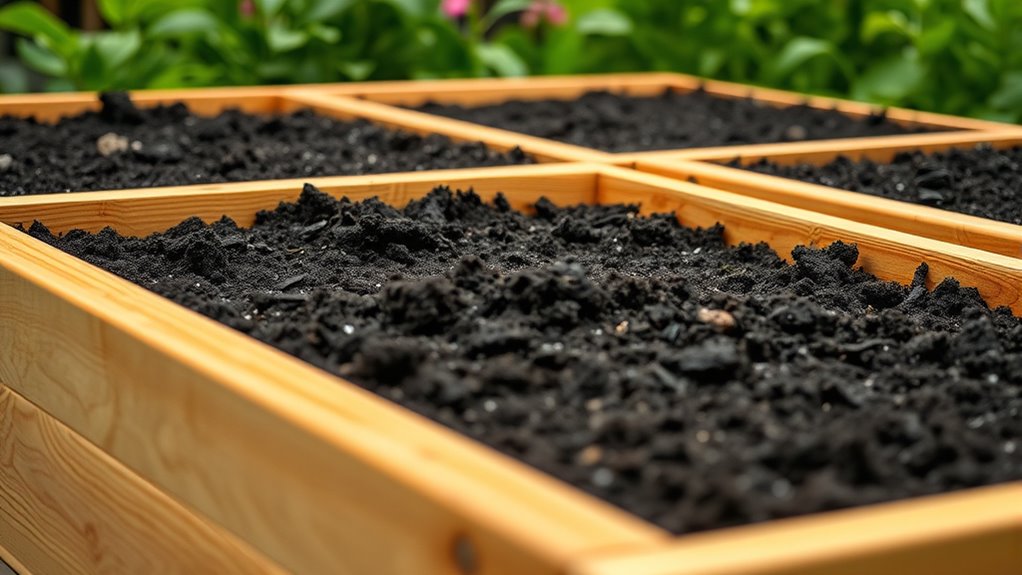
To create successful raised garden beds, focus on using rich, well-draining soil mixed with compost for ideal nutrients. Make certain your bed is at least 12 inches deep, ideally up to 24 inches, to support healthy root growth and drainage. Incorporate coarse gravel or small stones at the base to improve water flow and prevent pooling. Designing your beds with these guidelines can lead to thriving plants—and if you keep exploring, you’ll find plenty of tips to perfect your setup.
Key Takeaways
- Use a rich, well-draining soil mix incorporating compost for optimal plant health.
- Ensure a minimum depth of 12 inches, ideally up to 24 inches, for proper root growth and drainage.
- Add a drainage layer with gravel or small stones at the bed’s base to prevent water pooling.
- Design raised beds with physical barriers or companion planting to enhance pest control.
- Proper depth and drainage improve aeration, reduce soil compaction, and support healthy root systems.

Raised garden beds are a popular choice for gardeners looking to improve soil quality and simplify maintenance. When you build a raised bed, you gain control over the soil environment, making it easier to create ideal conditions for your plants. One of the key factors to consider is soil composition. You want a rich, well-draining mixture that retains moisture without becoming waterlogged. Incorporating compost into your soil is essential, and understanding composting techniques helps you produce nutrient-dense organic matter to enhance plant growth. Regularly adding compost ensures your soil stays fertile and healthy, reducing the need for synthetic fertilizers.
Raised beds improve soil quality with compost, enhancing plant growth and reducing fertilizer needs.
Depth is another vital element. Most vegetables and flowers thrive in beds that are at least 12 inches deep, but deeper beds—up to 24 inches—can provide even better drainage and root space. Deeper beds allow roots to grow freely, access more nutrients, and tolerate drought better. The extra depth also helps prevent soil compaction, which can be a common problem in traditional garden beds. When planning your bed depth, consider the types of plants you’re growing and their root requirements, making sure they have enough space to develop fully.
Drainage is essential in preventing water from pooling at the roots, which can lead to rot and disease. To improve drainage, you should start with a base of coarse gravel or small stones at the bottom of your bed before adding soil. This layer acts as a natural drainage system, guiding excess water away from plant roots. Additionally, selecting the right soil mix—one that’s light and airy—further enhances drainage. Aeration also plays a role in maintaining healthy roots, so avoid compacting the soil when filling the bed.
Pest control methods in raised beds are generally more straightforward because you can design your space to be more resistant to pests. Using physical barriers like row covers or netting helps keep insects and larger pests away, reducing the need for chemical treatments. Companion planting can also be effective—planting herbs or flowers that repel pests near your vegetables creates a natural defense. Regular monitoring and early intervention are key; if you notice pests, removing them manually or employing organic pesticides prevents infestations from escalating.
Frequently Asked Questions
What Are the Best Materials for Constructing Raised Garden Beds?
You should choose durable materials like cedar, composite wood, or recycled plastic for your raised garden beds. These options guarantee good materials selection and bed durability, standing up well to weather and soil contact. Cedar is naturally rot-resistant, while composite and recycled plastic are long-lasting and low-maintenance. Avoid cheaper, untreated wood that may decay quickly. Picking the right material helps your garden bed stay sturdy and functional for years.
How Often Should I Replace or Amend the Soil in My Raised Beds?
You should replace or amend your soil at least once a year, especially if your plants show signs of nutrient deficiency. Regular soil testing helps determine nutrient levels and pH balance, guiding you when to add compost or other amendments. Trust this approach—healthy soil fosters healthy plants. By consistently testing and enriching your soil, you ensure your raised bed remains productive and vibrant season after season.
Can Raised Beds Be Built on Uneven or Sloped Terrain?
You can build raised beds on uneven or sloped terrain by first performing terrain leveling and slope stabilization. Use retaining walls or terracing techniques to create a flat, stable foundation, preventing soil erosion and water runoff. Properly stabilizing the slope makes certain your raised beds stay secure and level. This approach allows you to enjoy gardening even on challenging terrain, maximizing space and productivity while maintaining bed integrity.
What Are Common Pest Issues Specific to Raised Garden Beds?
You’ll often face pests like aphids, slugs, and beetles in raised garden beds. To manage these, practice pest control by regularly inspecting plants and removing affected leaves. Use organic deterrents such as neem oil, diatomaceous earth, or companion planting to keep pests at bay. Staying vigilant and maintaining healthy soil helps reduce pest problems, ensuring your garden thrives without relying on harmful chemicals.
How Do I Prevent Waterlogging in My Raised Garden Beds?
Think of your raised bed as a sponge—without proper care, it can become waterlogged. To prevent this, use smart irrigation techniques like drip or soaker hoses that deliver water slowly. Also, improve soil aeration by mixing in compost or coarse materials, creating tiny air pockets. These steps allow excess water to drain away, keeping roots healthy and plants thriving.
Conclusion
By choosing the right soil, depth, and drainage for your raised garden beds, you set yourself up for a thriving garden. Did you know that raised beds can increase yields by up to 50% compared to traditional gardening? With proper planning, you’ll enjoy healthier plants and easier maintenance. So, invest a little extra effort now, and watch your garden flourish—it’s worth it for those bountiful harvests ahead!