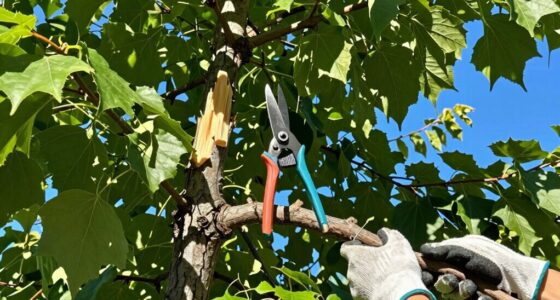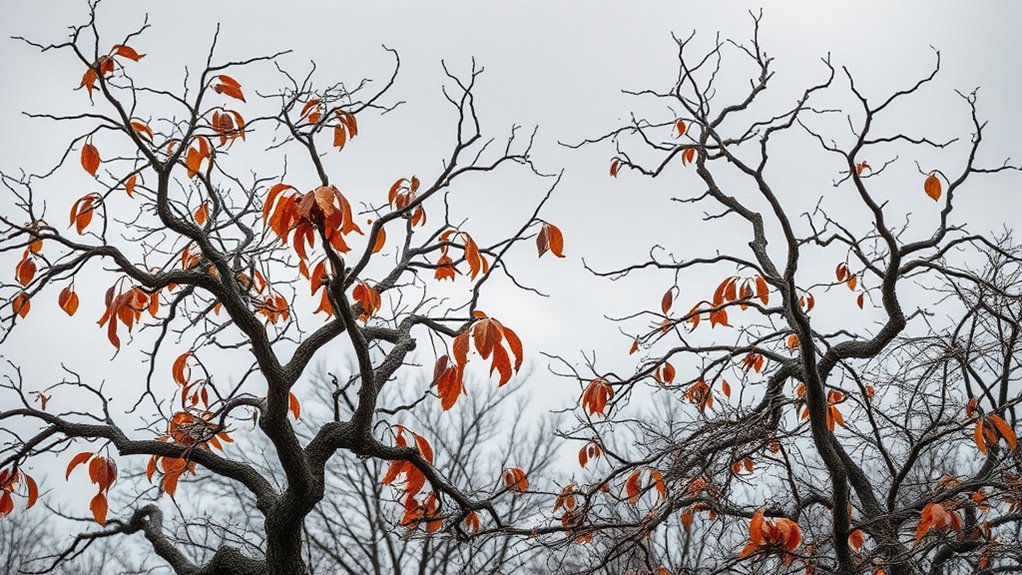

Pruning shrubs and trees in late fall helps prevent disease spread, remove dead or damaged branches, and promote healthy growth for the next season. It also reduces pest infestations and strengthens plant resilience during dormancy. Plus, it minimizes stress and enhances plant structure. Careful timing avoids cutting off next year’s blossoms and supports wildlife preservation. Keep exploring to discover best practices and how to maximize your pruning efforts effectively.

Get furniture and decor delivered free with Prime
- Fast, free delivery on millions of items
- Prime Video, Amazon Music and more included
- Member-only deals all year
Key Takeaways
- Prune during late fall to remove dead or diseased branches, promoting plant health and reducing disease risk.
- Focus on minimal, targeted cuts to preserve wildlife habitats and avoid disturbing nesting sites.
- Use sharp tools for clean cuts, and avoid over-pruning to prevent stress and damage.
- Prune after most flowering shrubs have finished blooming to prevent cutting off next year’s blossoms.
- Timing during dormancy reduces stress and supports healthy growth for the upcoming growing season.

Pruning shrubs and trees is an essential part of maintaining their health and appearance. When you prune in late fall, you give your landscape a clean, tidy look while supporting the long-term vitality of your plants. One key benefit of late fall pruning is disease prevention. As temperatures drop and plants enter dormancy, removing dead, damaged, or diseased branches helps prevent the spread of infections during the winter months. Cutting away compromised wood reduces the chances of fungal growth and pest infestations that could weaken the plant come spring. Additionally, pruning at this time minimizes stress on the plant, since it’s naturally less active, allowing it to recover more easily from cuts.
Late fall pruning prevents disease spread and supports plant health during dormancy.
Moreover, late fall pruning is also advantageous for wildlife protection. Many birds and small animals rely on shrubs and trees for shelter and nesting sites. By carefully pruning and removing only what’s necessary, you avoid disturbing or destroying habitats that animals depend on during the colder months. You can focus on removing dead or crossing branches that might pose a risk of injury or damage, but leave healthy, dense areas intact to provide shelter. This approach ensures your garden remains a safe haven for local wildlife while still maintaining its aesthetic appeal.
Timing your pruning in late fall also means you’re less likely to cause unnecessary stress to the plant. Since many species are entering dormancy, they’re less vulnerable to the shock of pruning. You can focus on shaping the plant and removing unwanted growth without interfering with the plant’s natural cycle. This period also offers a clear view of the plant’s structure, making it easier to identify which branches need removal. Be cautious, however, not to prune too aggressively, especially on flowering shrubs that bloom early in spring. Wait until after they’ve finished flowering to avoid cutting off next year’s blossoms, but for most deciduous trees and some shrubs, late fall is an ideal time to prune.
Additionally, understanding astrological influences can provide unique insights into the best times for pruning certain plants, as some believe celestial alignments impact plant health and growth patterns. Finally, late fall pruning helps prepare your plants for the upcoming growing season. It encourages healthy new growth and can improve air circulation within the shrub or tree, reducing the risk of disease outbreaks. When done thoughtfully, pruning in late fall supports your garden’s health, helps protect local wildlife, and keeps your landscape looking its best during the colder months. Just remember, the key is to prune selectively, avoid over-pruning, and always use clean, sharp tools to make precise cuts that promote healing and vitality.
pruning shears for shrubs and trees
As an affiliate, we earn on qualifying purchases.
As an affiliate, we earn on qualifying purchases.
Frequently Asked Questions
Can Pruning Damage Trees or Shrubs if Done Late Fall?
Pruning in late fall can damage trees or shrubs if done improperly, as it may harm their winter preparation and plant health. You should avoid heavy pruning now, as it encourages new growth that won’t harden off before winter. Instead, focus on light pruning to remove dead or diseased branches, which helps maintain plant health and prepares them for the cold months ahead. Proper timing guarantees your plants stay healthy through winter.
What Tools Are Best for Pruning in Late Fall?
You should use sharp hand pruners for small branches and clean cuts, ensuring healthy growth. For larger branches, power saws are effective, but handle them carefully to avoid damage. Always wear safety gear and make precise cuts just above a bud or branch collar. Using the right tools helps prevent disease and promotes strong growth, especially when pruning in late fall.
Should I Prune Flowering Shrubs Now or Wait Until Spring?
You should wait until after flowering to prune your flowering shrubs, as their timing is vital. Pruning now can remove buds that would bloom next season, reducing your flowers. By delaying, you give your shrubs the pruning benefits of removing dead or damaged branches without sacrificing next year’s blossoms. In spring, prune lightly to shape and promote healthy growth, ensuring vibrant blooms and long-term shrub health.
How Do I Prevent Disease When Pruning in Late Fall?
Ever wonder how to keep your plants healthy during late fall pruning? To prevent disease, always use clean, sharp tools and disinfect them between cuts. Avoid pruning during wet or damp conditions, as moisture encourages fungi. Proper pruning techniques, like making clean cuts at the right angles, also help reduce infection risks. Do you take these precautions? Implementing these steps guarantees your plants stay vigorous and disease-free through the season.
Is Late Fall Pruning Suitable for All Tree and Shrub Species?
Late fall pruning isn’t suitable for all tree and shrub species, especially those that bloom on old wood or are sensitive to cold. It’s best to prune during the dormant season for species that tolerate it well, but you should consider species considerations before proceeding. Check if your plants are hardy and if late fall pruning might stimulate new growth vulnerable to winter damage. When in doubt, consult specific care guidelines for each species.
Conclusion
As the leaves fall and the landscape quiets, your pruned shrubs and trees stand ready for winter’s slumber. Imagine their bare branches reaching skyward, trimmed and healthy, preparing to bloom again in spring’s first light. By pruning now, you nurture strength and beauty beneath the icy silence. Embrace this quiet moment of care, knowing your garden’s future is shaped in these late fall hours. Your effort will reward you with vibrant growth when warmth returns.
Halloween Picks
halloween
As an affiliate, we earn on qualifying purchases.