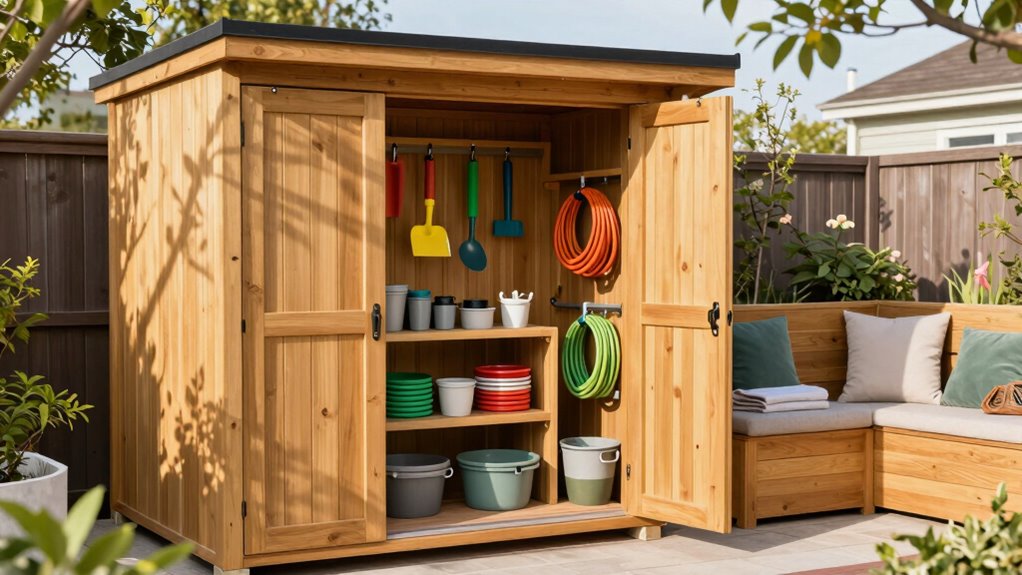

To plan storage for your garden and patio equipment, start by choosing the right shed size, materials, and placement to fit your outdoor space and needs. Organize inside with shelves, hooks, and labeled bins to keep tools accessible and tidy. Maximize vertical and horizontal space with racks and workbenches. Protect your items from weather with secure, watertight doors and proper ventilation. Keep the area neat and enhance your space’s functionality by following these key tips. More details await you.
Key Takeaways
- Assess your equipment’s size, frequency of use, and storage needs to determine appropriate shed size and organization strategies.
- Choose weatherproof, low-maintenance materials like resin, metal, or treated wood for durability and ease of upkeep.
- Maximize space with shelves, hooks, bins, and wall-mounted racks to keep tools organized and accessible.
- Position the shed for easy access, ensuring it integrates well into your outdoor layout and provides protection from weather.
- Regularly evaluate and adjust storage solutions to prevent clutter, maintain order, and prolong equipment lifespan.
Planning effective storage for your garden and patio equipment is essential to keep your outdoor space organized and guarantee your tools stay in good condition. You want a space that’s easily accessible, safe from the elements, and streamlined to maximize your yard’s potential. A well-designed garden shed often becomes the centerpiece of outdoor organization, providing a dedicated area to store everything from shovels and rakes to lawnmowers and garden furniture. When choosing a garden shed, consider the size you need—large enough to hold bulky equipment but not so big that it consumes too much space or becomes difficult to maintain. Materials matter, too; a weatherproof, durable shed made from wood, metal, or resin can withstand the elements and require minimal upkeep.
A well-chosen garden shed keeps tools organized, protected, and easily accessible, enhancing your outdoor space’s functionality and appeal.
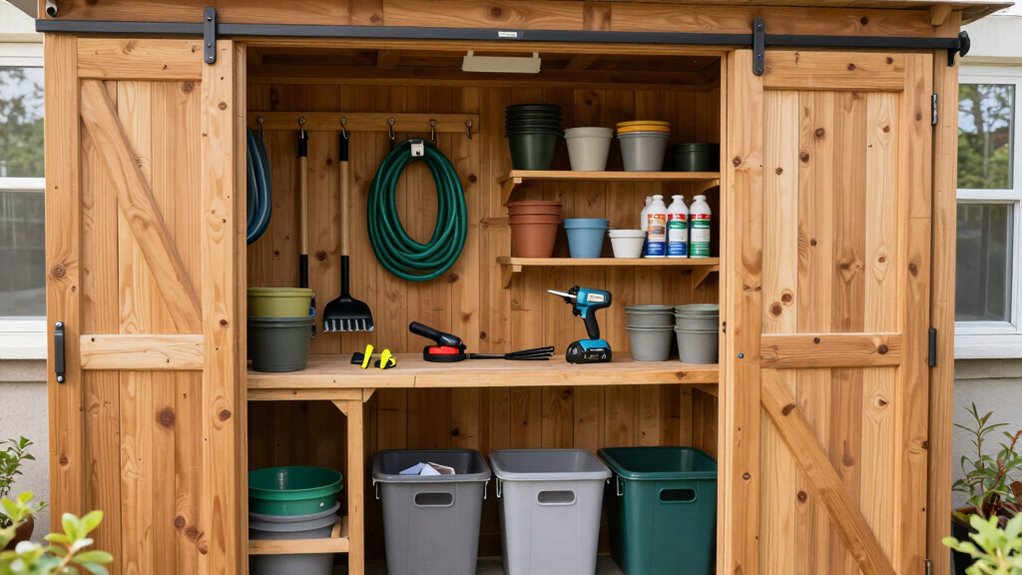
Next, think about how you’ll organize inside your shed. Shelving units, wall-mounted hooks, and storage bins help keep smaller tools and supplies in order, so you’re not constantly digging through clutter. Labeling these containers can save you time and frustration by making it easy to find what you need quickly. Incorporating storage solutions that maximize vertical and horizontal space can greatly improve the efficiency of your outdoor storage. For larger equipment, consider installing a pegboard or wall-mounted racks to keep tools off the ground and accessible. You might also invest in a workbench or countertop space for potting or minor repairs, which keeps your outdoor organization efficient and functional. Understanding storage techniques and how they can be tailored to your needs is key to creating an effective outdoor storage system. Incorporating proper organization techniques can further enhance your outdoor space’s functionality and help maintain order over time. Additionally, selecting appropriate materials for your storage solutions can extend their lifespan and reduce maintenance. Proper planning of storage capacity ensures you have enough space for all your tools without feeling overwhelmed or cramped.
Your storage solution should also factor in the frequency of use. Items you need regularly, like garden gloves or pruning shears, should be within arm’s reach, while seasonal tools can be stored higher up or in less accessible corners. If space allows, adding a small outdoor storage box nearby can be perfect for quick-access items like watering cans or seed packets. To protect your equipment from weather, make certain your garden shed has a secure, watertight door and good ventilation, preventing rust and mold.
Finally, consider integrating your garden shed into your overall outdoor design. Keep it tidy and visually appealing by placing it in a convenient spot that complements your yard’s layout. Use pathways, mulch, or gravel around the shed to prevent mud and make it easy to walk to and from your tools. When you plan your outdoor organization carefully, you not only preserve your equipment’s longevity but also create an inviting, functional outdoor space that encourages you to spend more time in it. Proper storage planning means less clutter, less stress, and more enjoyment of your garden and patio areas.
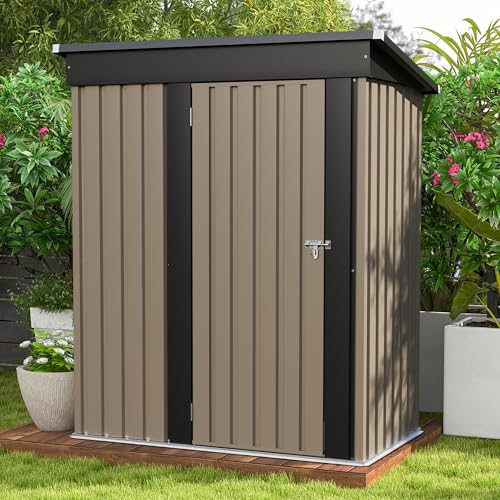
Patiowell 5×3 FT Outdoor Storage Shed, Tool Shed with Sloping Roof and Lockable Door, Metal Shed for Backyard Garden Patio Lawn, Brown
- Versatile Usage: Fits backyard, garden, or patio
- Durable Construction: Galvanized steel, waterproof, UV resistant
- Weatherproof Design: Overlapped wallboard resists moisture
As an affiliate, we earn on qualifying purchases.
As an affiliate, we earn on qualifying purchases.
Frequently Asked Questions
What Are the Best Materials for Outdoor Storage Units?
The best materials for outdoor storage units combine material durability and aesthetic appeal. Opt for weather-resistant materials like resin, vinyl, or treated wood, which withstand elements and last longer. Metal options such as galvanized steel add strength while maintaining a sleek look. Consider your space’s style and your maintenance preferences to choose a material that’s both durable and visually appealing, ensuring your storage stays functional and attractive over time.
How Can I Secure My Garden Tools From Theft?
Worried about theft? You can safeguard your garden tools effectively by installing secure locks on your storage units and investing in camera surveillance. Use high-quality padlocks or deadbolts to deter intruders, and position cameras where they cover all access points. This combination not only discourages theft but also helps catch anyone trying to break in. Regularly check your locks and camera footage to guarantee ongoing security for your garden equipment.
Are There Eco-Friendly Storage Options Available?
Yes, eco-friendly storage options are available. You can choose recycling options like repurposed wooden crates or metal bins made from recycled materials. Biodegradable containers are also great for organizing small tools or seeds, as they break down naturally and reduce waste. These options help you keep your garden tidy while minimizing environmental impact, making your storage both practical and sustainable.
How to Organize Small Hand Tools Efficiently?
Did you know that the average gardener owns 10-15 small hand tools? To organize them efficiently, dedicate a specific space like a wall-mounted pegboard or a small drawer with divided sections. Prioritize tool maintenance by cleaning and sharpening tools before storage. This approach maximizes space optimization, keeps your tools accessible, and extends their lifespan, making gardening chores less frustrating and more enjoyable.
What Is the Optimal Ventilation for Outdoor Storage?
You should aim for ideal ventilation by maintaining good airflow in your outdoor storage. To do this, guarantee vents or windows are unobstructed and consider installing adjustable vents for airflow improvement. Regular ventilation maintenance prevents moisture buildup and mold, protecting your tools and equipment. Adequate airflow helps dry out damp items quickly, reducing corrosion and damage, and keeps your storage area fresh and safe for your garden and patio tools.
Conclusion
By organizing your storage thoughtfully, you turn chaos into order, transforming your yard into a sanctuary rather than a cluttered shed. Remember, a well-planned space isn’t just about keeping tools tidy; it’s about creating harmony between your outdoor oasis and everyday life. So, don’t let clutter rule your garden—seize control and let your storage space be a reflection of your care and creativity. After all, isn’t a beautiful garden worth a beautiful space to enjoy it?