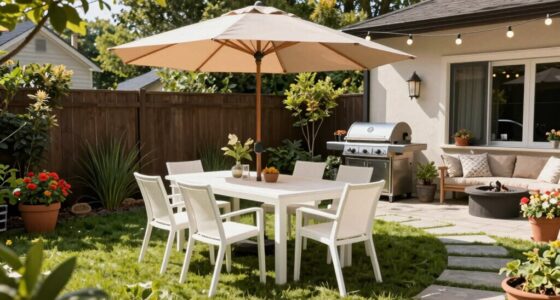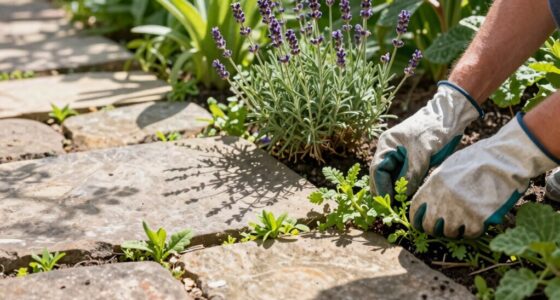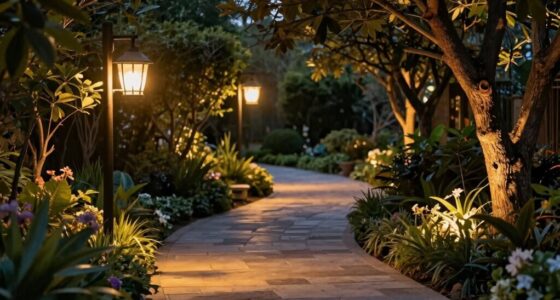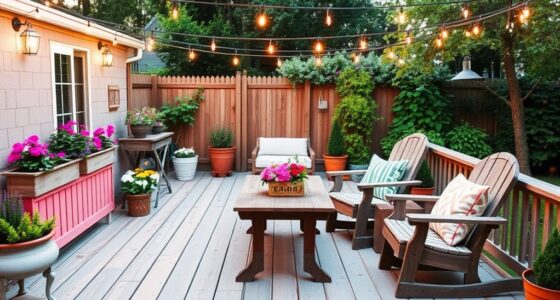
To build an easy-to-maintain garden zone, start by choosing native plants that suit your climate, reducing water and care needs. Install efficient drip irrigation and create zones for plants with similar water requirements. Simplify your layout with mulching and easy pathways to cut down on upkeep. Incorporate sustainable practices like composting to keep soil healthy naturally. Focusing on these steps makes garden chores simpler, and ongoing tips will help you guarantee your garden stays low-maintenance and beautiful.

Get furniture and decor delivered free — and shop member deals
- Fast, free delivery on millions of items
- Access to Prime Big Deal Days deals on October 6–7
- Prime Video, Amazon Music and more included
Key Takeaways
- Select native plants suited to your climate for low water and minimal care needs.
- Design with simple pathways and durable materials to facilitate maintenance and navigation.
- Use mulch around plants to conserve moisture and reduce weed growth.
- Implement efficient irrigation systems like drip or soaker hoses with timers for consistent watering.
- Incorporate composting and organic pest control to minimize chemical use and promote plant health.
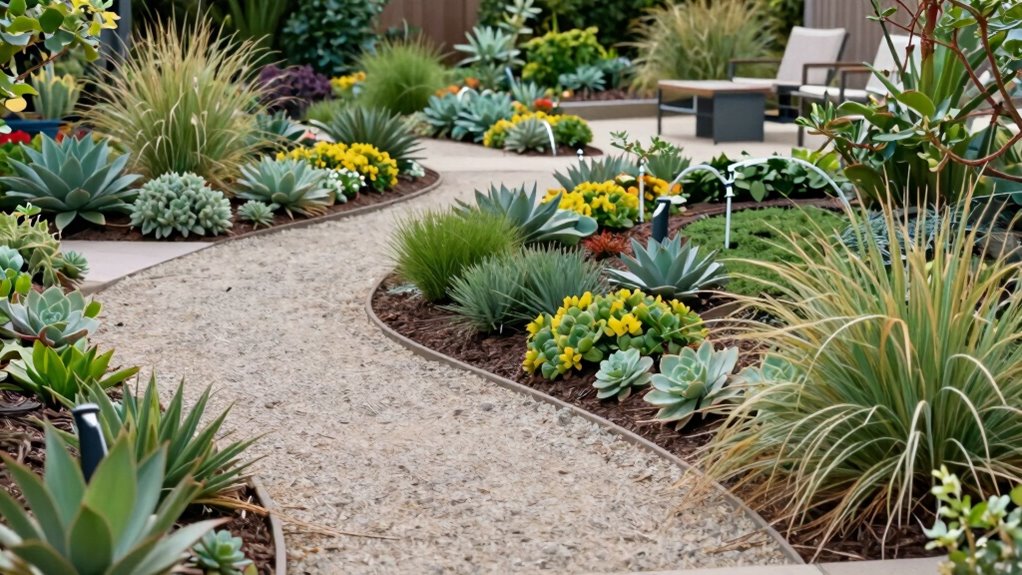
Creating a garden zone that feels easy to maintain starts with thoughtful planning and smart choices. You want a space that requires minimal effort while still offering beauty and function. To achieve this, focus on selecting native plants, which are well-adapted to your local climate and soil conditions. Native plants typically need less water, fertilizer, and pest control because they are naturally resilient, reducing your overall maintenance time. When choosing plants, consider their growth habits and how much sunlight they need, ensuring you place them in the right spots to thrive without constant intervention.
Choose native plants for a low-maintenance, resilient, and beautiful garden that thrives with minimal effort.
Next, invest in an efficient irrigation system. Drip irrigation or soaker hoses are excellent options because they deliver water directly to the roots, minimizing waste and evaporation. Automated systems with timers take the guesswork out of watering, ensuring your plants get consistent moisture without you having to remember daily schedules. Proper irrigation not only saves water but also keeps your plants healthy, reducing the need for extra care or corrective measures. When installing your irrigation system, map out your garden zones carefully, grouping plants with similar water needs together to optimize efficiency. Additionally, understanding native plants can help you make better choices for a low-maintenance garden. Incorporating water-efficient systems can further enhance your garden’s sustainability and ease of upkeep.
In addition, keep your garden design simple. Use mulch around plants and in flower beds to retain soil moisture, suppress weeds, and regulate soil temperature. A well-mulched garden reduces watering frequency and keeps maintenance tasks like weeding and soil aeration to a minimum. Incorporate pathways that are easy to navigate, and avoid overly complex layouts that can make routine upkeep cumbersome. Opt for durable, low-maintenance materials for garden furniture, borders, and other features, so they don’t demand frequent repairs or replacements. Incorporating smart gardening techniques like composting can further reduce the need for chemical fertilizers and promote healthier soil with less effort. Regularly evaluating your garden’s layout and plant choices can help you identify areas where simplification could save time and effort.
Another key step is to establish a regular but manageable maintenance routine. Set aside a specific time each week for basic tasks like pruning, deadheading, and inspecting your irrigation system for leaks or clogs. Keeping plants pruned and deadheaded prevents overgrowth and encourages healthy blooms, reducing the need for more intensive pruning later. Also, stay vigilant for pests and diseases, addressing issues early with organic solutions that are less labor-intensive than chemical treatments. This proactive approach helps keep your garden healthy and vibrant with minimal effort.
native plants for low maintenance garden
As an affiliate, we earn on qualifying purchases.
As an affiliate, we earn on qualifying purchases.
Frequently Asked Questions
What Are the Best Low-Maintenance Plants for a Garden Zone?
You should choose native species and drought-tolerant plants for a low-maintenance garden zone. Native plants adapt well to your local climate, requiring less water and care. Drought-tolerant plants, like succulents and certain grasses, thrive with minimal watering once established. These options reduce your gardening effort, save water, and create a sustainable, beautiful landscape that stays vibrant with little intervention.
How Often Should I Water My Easy-To-Maintain Garden?
You should water your easy-to-maintain garden about once a week, adjusting based on rainfall and plant needs. Using drip irrigation helps deliver consistent moisture directly to the roots, reducing your watering frequency. Mulch maintenance is also essential; it prevents evaporation and keeps weeds out. Check the soil moisture regularly, and add more mulch when needed to keep your garden healthy and low-effort.
What Soil Types Are Ideal for Low-Maintenance Gardens?
For low-maintenance gardens, opt for well-draining soil with good soil quality, such as loamy or sandy soils. These types support healthy plant growth with less fuss. Enhance your soil by incorporating composting techniques, like adding finished compost, to improve fertility and structure. This reduces the need for frequent fertilizing and watering, making your garden easier to care for while ensuring plants thrive.
How Can I Control Weeds Naturally in My Garden?
You can control weeds naturally by practicing companion planting, which helps suppress weed growth by densely planting beneficial species together. Applying mulch benefits your garden by blocking sunlight, preventing weed seeds from germinating, and retaining soil moisture. Regularly mulching around plants and choosing companion plants that outcompete weeds creates a natural, low-maintenance weed control system, making your garden easier to care for and more productive over time.
What Tools Are Essential for Maintaining an Easy Garden Zone?
You’ll need essential tools like a hose with an automatic irrigation system to keep your garden consistently watered without hassle. A good pair of pruners helps maintain plant health, while a pest control spray keeps unwanted bugs at bay naturally. Also, consider a garden fork and trowel for soil care. These tools make maintenance smoother, ensuring your garden stays healthy and easy to manage.
Conclusion
By choosing low-maintenance plants, smart layout, and practical features, you can create a garden zone that truly feels easy to maintain. Remember, a well-planned garden is like a well-oiled machine—less trouble, more enjoyment. Don’t bite off more than you can chew; start small and build as you go. With patience and a strategic approach, you’ll reap the rewards of a beautiful, manageable outdoor space that’s a joy to tend.
Fall Picks
fall essentials
As an affiliate, we earn on qualifying purchases.