If your yard is constantly soggy, consider installing drainage solutions like rain gardens or French drains to effectively redirect water. Rain gardens absorb runoff and filter pollutants, while French drains use trenches and perforated pipes to channel water away from problem areas. Proper planning, including evaluating your yard’s slope and drainage patterns, ensures these systems work best. To discover more ways to transform your soggy yard, keep exploring these helpful solutions.
Key Takeaways
- Install rain gardens to absorb excess surface water and filter pollutants naturally.
- Use French drains with perforated pipes and gravel trenches to redirect water away from problem areas.
- Assess yard drainage patterns and slopes before installation for optimal water flow management.
- Combine rain gardens and French drains for comprehensive drainage and erosion control.
- Consult professionals to ensure proper placement and effective drainage system design.
Are you tired of standing water and soggy landscapes around your property? If so, you’re not alone. Excess water can damage your yard, create muddy patches, and even threaten your home’s foundation. Luckily, there are effective drainage solutions you can implement to fix these issues. One popular option is installing a rain garden. A rain garden is a shallow, planted basin designed to absorb runoff and reduce water pooling. You select native plants that thrive in wet conditions, which helps absorb excess water and filters pollutants before they reach groundwater or nearby streams. When you create a rain garden, you fundamentally give water a designated place to go, preventing it from spreading across your yard and causing sogginess.
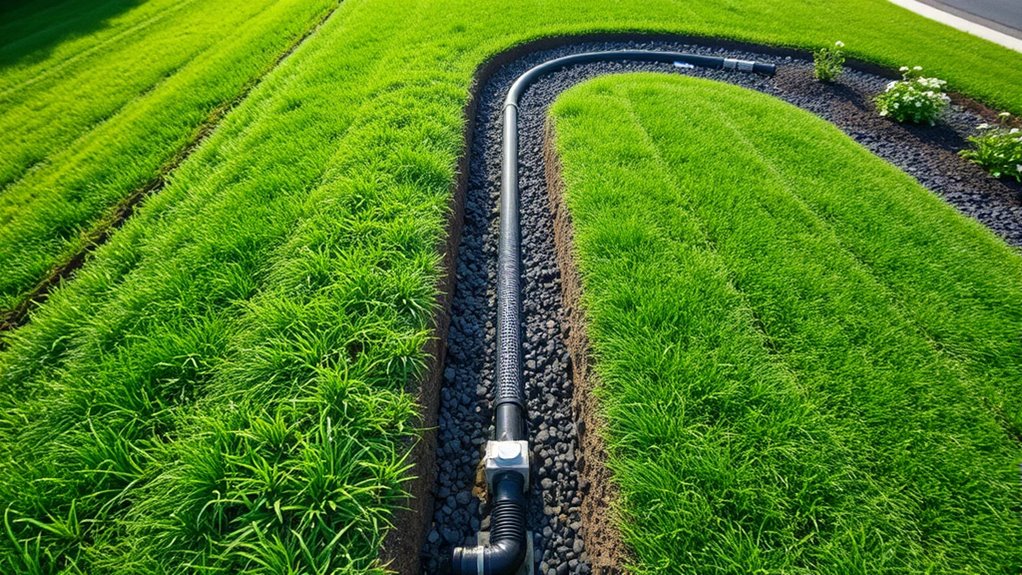
Alongside a rain garden, a French drain can be a game-changer. This system involves digging a trench, lining it with gravel, and laying perforated pipe inside to direct water away from problematic areas. When you install a French drain, water flows into the pipe through the perforations, then gets channeled to a safe drainage point, such as a dry well or storm sewer. This prevents water from lingering in your yard and reduces the risk of erosion or damage to your foundation. French drains are especially useful in areas with poor drainage or heavy clay soil, where water tends to sit and cause problems.
Both solutions work best when you assess your yard’s specific drainage patterns. For example, if you notice water pooling in a particular spot, that’s a prime location for a French drain or rain garden. Combining these methods often yields the best results—using a rain garden to handle surface runoff and French drains for subsurface water movement. When planning these projects, consider the slope of your yard to ensure water flows naturally toward your drainage features. Proper installation is key; a poorly placed or constructed French drain might not function as intended, so consulting with a professional can make a big difference.
Frequently Asked Questions
How Much Does Professional Yard Drainage Installation Typically Cost?
Professional yard drainage installation typically costs between $1,500 and $5,000, depending on your yard’s size and the installation process. You should consider a cost comparison to find the best option for your budget. The process involves evaluating the area, installing proper drainage systems like French drains or swales, and testing the setup. Investing in quality installation helps prevent future water issues and protects your landscape.
Can Drainage Solutions Increase My Property’s Value?
Yes, drainage solutions can boost your property’s value by improving landscape aesthetics and preventing water damage. When you install effective drainage, your yard looks better and stays healthier, making your home more appealing during property appraisal. Potential buyers see a well-maintained yard as a valuable feature, so investing in drainage not only solves your soggy yard issues but also increases your home’s overall worth.
Are There Environmentally Friendly Drainage Options Available?
Yes, there are environmentally friendly drainage options you can consider. Installing a rain garden helps absorb excess water naturally, reducing runoff and promoting plant growth. Permeable paving allows water to seep into the ground instead of pooling on surfaces, preventing sogginess. Both options are eco-friendly, enhance your yard’s sustainability, and contribute to improving local water quality while effectively managing drainage issues.
How Long Does It Take to See Results From Drainage Improvements?
You’ll typically see results from drainage improvements like installing a rain garden or French drain within a few weeks to a few months, depending on your yard’s conditions. Remarkably, rain gardens can reduce runoff by up to 30%, making them effective quickly. As the system settles, you’ll notice less pooling and sogginess. Keep in mind, consistent maintenance speeds up the process and ensures long-term drainage success.
What Maintenance Is Required for Installed Drainage Systems?
You need to regularly inspect your stormwater management and erosion control systems to guarantee they’re functioning properly. Clear debris from catch basins and clean out any clogs in pipes. Check for signs of erosion or pooling and make repairs promptly. Maintain the grading around your yard to prevent water from pooling. Proper upkeep keeps your drainage system effective, reduces erosion, and protects your landscape from water damage.
Conclusion
Think of your yard as a garden pond struggling to stay clear. With the right drainage solutions, you become the skilled gardener, guiding excess water away and allowing your landscape to flourish. Just like a gentle stream finds its path, your yard will find harmony, transforming soggy chaos into a thriving oasis. Embrace these methods, and soon your yard will flow with beauty, not puddles—turning soggy frustration into a well-tended paradise.