
TL;DR
A good Thanksgiving table centerpiece decor plan starts with the table: keep the focal point low, leave room for serving dishes, and repeat a small palette such as rust, cream, and greenery. Use pumpkins, fruit, foliage, flowers, or unscented candles in stable vessels, then adjust the arrangement to suit your table shape and guests.
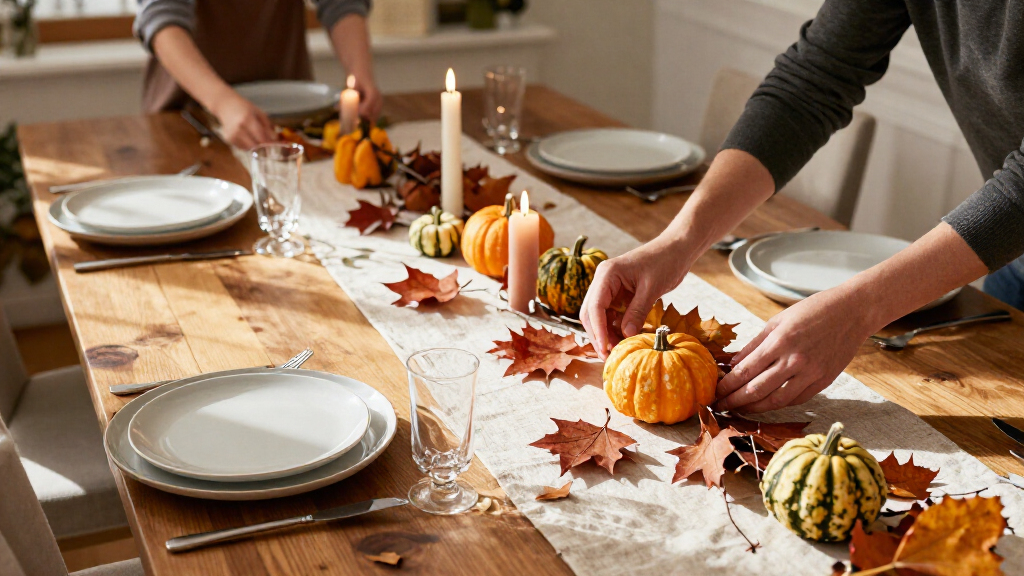
The turkey may get the grand entrance, but your centerpiece sets the mood before anyone takes a bite. A row of copper leaves, soft candlelight, and little pumpkins can make an ordinary dining table feel like Thanksgiving; a towering bouquet can make it hard to see your cousin across the gravy boat.

Get furniture and decor delivered free with Prime
- Fast, free delivery on millions of items
- Prime Video, Amazon Music and more included
- Member-only deals all year
This guide helps you choose Thanksgiving table centerpiece decor that looks welcoming and works during the meal. You’ll find ideas for different table shapes, simple ways to use flowers and seasonal finds, and practical tips for keeping serving space, sightlines, and safety in mind. The goal is a table that feels festive without making dinner a game of Tetris.
Think of the centerpiece as the table’s host: it should set a warm tone, then make room for everyone. A few thoughtful choices can do more than a crowded pile of decorations, especially when your table also needs plates, glasses, and serving dishes.
Keep the centerpiece low enough that seated guests can see and talk across the table.
Use one compact grouping on a small round table and several movable, low groupings on a long table.
Repeat a small palette or material to make pumpkins, foliage, fruit, flowers, and candles feel cohesive.
Protect the table with a runner or tray, and keep open flames away from dried materials and napkins.
Build around the serving plan; a centerpiece should leave clear space for plates and serving dishes.
Keep the Centerpiece Low Enough for Easy Conversation
Thanksgiving table centerpiece decor works best when guests can see one another without leaning around flowers or candles. That clear view is part of how a shared meal works: people read expressions, pass dishes, and join conversations across the table. A low arrangement keeps those exchanges easy and leaves the table feeling open, even when the meal brings a parade of dishes. As a practical starting point, keep the main display below seated eye level; if you choose height, make it narrow and check the view from both ends of the table.
For example, a shallow wooden bowl with three small pumpkins, a few pears, and scattered leaves gives a round table a clear focal point without becoming a wall. On a long table, try three small arrangements spaced down the middle instead of one tall vase. The repeated shapes create a rhythm, while the gaps preserve sightlines and give serving dishes somewhere to land. You can also lift one grouping out when the mashed potatoes need a spot, which is harder to do with a single large display.
Ask yourself: will your guests be able to talk across the table? Sit in a chair and test the arrangement before setting the plates. A display that looks modest while you’re standing may block faces once you sit down, because your viewing angle changes. Checking from the seats catches that problem before dinner, when moving a centerpiece is still simple.
Quick test: Sit at the table and look toward the person opposite you. If the centerpiece hides their face, lower it, narrow it, or split it into smaller pieces.
Height also depends on the occasion. A narrow branch arrangement may suit a formal dinner where the table is less crowded, but it can still interrupt conversation if the branches spread across the view. A household with young children or pets may prefer stable, low pieces that are harder to bump or pull down. The tradeoff is straightforward: a taller display can add drama, while a low, sturdy one usually makes conversation and serving easier.
Products Worth Considering

Dyson Cyclone V10 Origin Cordless Vacuum

Shark Pet Cordless Stick Vacuum, 40-Minute Runtime, Lightweight, IX141

Dyson V9 Motorbar Cordless Vacuum
As an affiliate, we earn on qualifying purchases.
Choose a Seasonal Look You Can Build from What You Have
Thanksgiving table centerpiece decor can feel rich and seasonal with just a few repeated colors and textures. Start with a small palette—such as rust, cream, and greenery—then combine familiar harvest materials like leaves, branches, pinecones, apples, pears, and pumpkins. Repeating a color or material helps mixed finds feel like a plan instead of a collection of unrelated objects. It also gives you a useful limit: when every new item must fit the palette, it is easier to edit the display and keep it from crowding the table.
Picture a cream table runner with two small orange pumpkins, dark green leaves, and a bowl of red apples. The matte pumpkin skins, glossy fruit, and soft cloth create texture without needing expensive decorations. At home, you might already own a ceramic serving bowl or a glass vase that can anchor the arrangement; seasonal finds can fill it out. Familiar vessels help the objects feel connected to the room, and using them again after the holiday means the display does not depend on buying a matching set.
For a more restrained look, use neutral ceramics, a few dried grasses, and one branch with interesting curves. For a classic harvest style, mix gourds and colorful leaves. Either way, leave room for serving dishes and choose pieces that can move easily if dinner needs more space. A restrained palette makes individual shapes stand out; a richer harvest mix creates abundance, but needs more editing so the table does not read as cluttered.
Natural materials offer flexibility, but clean them before placing them near food. Brush dirt from pumpkins and branches, and keep edible fruit separate from anything dusty or treated. This matters because a centerpiece sits close to plates and serving dishes, where loose dirt or residue can transfer. Cleaning and separating items preserves the natural look while making the arrangement more practical around a meal.
- Rust and cream: Use leaves, pale pumpkins, and a linen runner.
- Green and wood: Pair foliage with a wooden tray and pears.
- Neutral and modern: Group dried grasses with simple ceramic vessels.
There’s no single look every table needs. Let the room and the dishes you already own guide the palette, then repeat one detail—like brass, greenery, or a warm orange—to tie everything together. That repetition is more useful than matching every object: it creates coherence while leaving room for the varied textures that make a seasonal display feel personal.
Match the Arrangement to Your Table and Serving Plan
The right centerpiece depends on the shape of your table and where the meal will go. A round table often suits one compact grouping in the center, while a long table can handle a low line of small accents or several separate clusters. When the table will carry many bowls and platters, put decorations at the ends or choose pieces you can move in seconds. This is a space-planning choice as much as a style choice: decorations compete with the food for the same surface, so deciding where dishes will sit first prevents the centerpiece from becoming an obstacle.
Imagine a family-style meal with a roast turkey, stuffing, vegetables, and three casseroles. A long runner with small pumpkins and a pair of low candleholders may look lovely, but it needs gaps where the serving dishes will land. If those gaps are missing, guests may have to pass hot dishes over decorations or rearrange the table mid-meal. If you’re hosting a buffet, a small vase and a few leaves can dress the table without competing with the food line; keeping decor to one end also protects the clear route people need to serve themselves.
Use this quick comparison before you arrange anything:
| Table or meal | Arrangement that fits | Why it helps |
|---|---|---|
| Small round table | One compact bowl or vase | Leaves a clear ring for plates and glasses |
| Long family table | Several low groupings | Creates a rhythm and lets you open space between pieces |
| Serving-heavy dinner | Decor at the ends or movable accents | Keeps central space available for platters |
| Buffet table | Small display at one end | Leaves a clear route for serving |
For a small apartment table, one mini pumpkin and a bud vase may be all you need. That’s not a compromise; it’s a scale choice. A centerpiece should fit the meal, not force the meal to fit around it. A smaller arrangement can look intentional when it leaves the table usable, while a larger one may have more visual impact but can make an already tight meal feel cramped.
Add Flowers and Candlelight Without Competing with Dinner
Flowers and candlelight add color and warmth when you choose them with the meal in mind. Chrysanthemums and dahlias are popular seasonal choices, while roses and foliage can add softer shapes and variety; what’s available depends on your location and timing. A low vase or several small vessels keeps blooms from blocking conversation, and unscented candles let the aromas of roast vegetables, herbs, and pie take center stage. The scale and scent both affect the meal: blooms that rise into sightlines interrupt conversation, while strong fragrance can compete with the food guests are trying to enjoy.
For instance, a host might arrange a few golden chrysanthemums and leafy stems in a squat glass vase, then place two votives beside it. The result has a gentle glow without a wall of flowers. If the flowers arrive early, trim their stems and set them in clean water in a cool spot away from heat and direct sun until guests arrive. Keeping stems hydrated helps them stay fresh; keeping the vase low and compact preserves the table space the meal will need.
Candles need stable holders and breathing room. Keep open flames away from dried grasses, leaves, napkins, and sleeves; battery-operated candles give you a similar glow when flames are unsuitable. Edible displays can share the table too, but keep fruit and nuts clean and well clear of flame. Stability and spacing matter because a crowded centerpiece is more likely to be bumped as dishes pass, and an open flame near dry decor leaves little margin for error.
Want a centerpiece that feels lively but still lets people taste the food? Choose unscented candles and keep fragrant flowers modest. Strong perfume can crowd the rich, savory smell of dinner, much like loud music makes a quiet conversation harder to follow. A soft glow and restrained scent preserve the atmosphere without asking guests to choose between enjoying the decoration and enjoying the meal.
Safety note: Place candles in stable holders, keep them away from dried decor and anything flammable, and never leave a lit candle unattended.
Build a Flexible Centerpiece in Five Simple Steps
You can build a practical Thanksgiving centerpiece in five steps: clear the table, pick a base, choose a focal point, add a few supporting details, and test the space while seated. This order keeps you from falling in love with an arrangement that leaves no room for dinner. It also works whether your supplies come from a florist, a craft drawer, or the yard. Starting with the table’s actual open space makes each later choice answer a practical question: what fits, what draws the eye, and what can move when the food arrives?
- Measure the usable space. Place a few plates or serving bowls where they’ll go, then note the open area left in the middle. This turns a guess about available room into a visible boundary for the display.
- Lay down protection. Use a washable runner, tray, or placemats to catch water, wax, and soil. A defined base also gathers small objects visually, so scattered seasonal finds look like one arrangement.
- Choose one focal piece. Try a bowl of fruit, a low vase, or a cluster of mini pumpkins. One anchor gives the eye somewhere to land and prevents every small accent from competing for attention.
- Repeat two or three details. Add leaves, small candles, or matching vessels, keeping the colors consistent. Repetition connects the pieces, while limiting the number of details keeps the centerpiece from consuming the space reserved for dinner.
- Test the view and movement. Sit down, look across the table, and lift a piece to confirm it’s easy to make room. This checks both conversation and serving access, the two things a display has to support once guests arrive.
Consider a last-minute host who has apples, a ceramic bowl, and a few clean leaves. The bowl becomes the anchor; the apples add warm color; the leaves make a simple edge. A runner protects the wood underneath, and the entire display can move to a counter when the turkey arrives. Each item has a clear role, so the arrangement feels complete without needing extra purchases.
Many arrangements can be assembled the day before. Add fresh flowers or water-sensitive pieces closer to mealtime, and keep edible items refrigerated promptly if you plan to serve them afterward. Planning ahead reduces the work on the holiday, while delaying delicate elements helps them stay fresh. Flexibility is the secret: a centerpiece earns its place when it can shift as the meal unfolds.
Make a Small Budget Feel Generous
A memorable centerpiece doesn’t require a shopping cart full of decorations. Combine a few seasonal finds with vessels you already own, then use spacing and repetition to make the display feel deliberate. One bowl, three small pumpkins, and a handful of leaves can look more polished than a crowded assortment of new items. The difference is often in the editing: a limited number of objects gives each one room to show its shape and color, while too many can make the table feel busy regardless of their price.
For a budget-friendly example, use a glass jar as a vase, clip a few branches from a suitable source, and add pears or apples from the kitchen. If you already have a runner, candleholders, or a wooden tray, bring those in too. Vary the heights slightly, but keep the overall arrangement low so it still serves the table. Using household pieces saves money and makes the display easier to adapt, though a jar or tray should be stable enough for its contents and safe around any candles.
Reusable pieces make the effort worthwhile beyond one holiday. Neutral ceramics, sturdy trays, and fabric runners can return for winter dinners or everyday meals. After Thanksgiving, compost suitable plant material, save durable items, and refrigerate edible decor that you intend to eat. Reuse spreads the cost across many occasions, while choosing durable, cleanable pieces means they are more likely to be ready when you need them again.
It helps to shop your home first. A small collection of objects in the same color family—say, a brass candlestick, a cream bowl, and green leaves—can feel cohesive even if none of them came as a set. The trick is to edit: choose a few pieces that work together and let the tablecloth show through. That visible space acts like a pause between objects, helping modest materials read as intentional rather than unfinished.
Some seasonal displays use several individual objects rather than a store-bought Thanksgiving centerpieces set. That gives you room to adapt the arrangement to your table and reuse the pieces separately. The tradeoff is that individual items may take more thought to coordinate, but repeating a color or material solves much of that problem. Start with what you have, then buy only the missing item that solves a real problem, such as a low vase or a tray that protects the table.
Frequently Asked Questions
How tall should a Thanksgiving centerpiece be?
A low centerpiece is the easiest choice for conversation because guests can see one another across the table. If you use a taller display, keep it narrow and test the view while seated before dinner.
How do I decorate a small table for Thanksgiving?
Choose one compact focal point, such as a small vase, a shallow bowl, or a few mini pumpkins. Leave clear space around it for plates, glasses, and serving dishes; a single thoughtful accent often looks better than several cramped ones.
What flowers work well for Thanksgiving?
Chrysanthemums and dahlias are popular seasonal choices, while roses and foliage can add variety. Availability depends on where you live and when you shop, so choose fresh stems that suit your palette and arrange them low enough to preserve sightlines.
Are scented candles a good choice at the dinner table?
Unscented candles are usually more comfortable during a meal because strong fragrances can compete with the smell of the food. Use stable holders, keep flames away from dried leaves and grasses, and consider battery-operated candles when open flames don’t suit the setting.
Can I prepare a Thanksgiving centerpiece the day before?
Yes. Assemble durable pieces, the runner, and dry accents ahead of time, then add fresh flowers or water-sensitive elements closer to dinner. Keep flowers in clean water in a cool spot away from heat and direct sunlight.
Conclusion
Choose a centerpiece that fits the table you actually have and the meal you plan to serve. Keep it low, repeat a few seasonal colors, and make every piece easy to move when the platters arrive.
A bowl of apples, a little greenery, and warm candlelight can make the table glow like late-afternoon autumn. Then let the food—and the people around it—take their place.