TL;DR
Luxury velvet throw pillows pair a light-catching pile fabric with thoughtful construction, but “luxury” has no standardized grade. Compare fiber content, seams, closures, insert, and care instructions, then choose colors and sizes that suit your room and how you use it.
At noon, a deep green pillow can look almost black on one side and bright emerald on the other. Run your hand across it, and the velvet shifts again. That little change is part of the charm—and a useful clue when you shop.

Get furniture and decor delivered free with Prime
- Fast, free delivery on millions of items
- Prime Video, Amazon Music and more included
- Member-only deals all year
Luxury velvet throw pillows can bring color, softness, and a polished finish to a sofa, bed, or armchair. Yet “luxury” is not a standardized grade. A hefty price tag alone cannot tell you whether the fabric suits daily use, whether the seams will hold, or whether you can care for the cover at home.
This article walks you through what velvet is made of, which details reveal good construction, how to style different colors and textures, and what to check before cleaning. You’ll also see how a removable cover or a different insert can change the way a pillow looks and feels. The aim is simple: help you choose a pillow you’ll enjoy using, not just admiring in a shop window.
“Luxury” has no universal grade; compare fiber, finish, workmanship, insert, and care details.
Velvet’s pile shifts in the light, so test a sample in your room if you can.
Choose feather, down, or synthetic inserts based on the feel, allergies, and upkeep you prefer.
Pair velvet with matte fabrics such as linen, wool, or cotton for a balanced arrangement.
Read the care label before cleaning, since velvet types have different needs.
Know What You’re Paying For Before You Buy
Luxury velvet throw pillows are pillows made with a pile fabric and a considered mix of material, finish, construction, and design; the word “luxury” itself has no universal grade. Start with the fiber label, because cotton, silk, linen, viscose, polyester, and blends can all be made into velvet. Each changes the feel, sheen, cost, durability, and care needs.
Velvet’s pile is the short, upright surface that catches light. Brush it one way and a blue cover may look inky; brush it the other and the same cover flashes brighter. That shifting color is part of the appeal, but it can surprise you if you expect a flat, uniform shade from a product photo.
Consider a rust-colored pillow for a reading chair beside a window. If the room gets strong afternoon sun, the pile may look coppery at one angle and muted brown at another. A small fabric sample, when available, can show you more than a polished studio image.
There are also crushed, embossed, and patterned velvets. They give you more texture, while a smooth velvet makes a quieter statement. For example, a ribbed cover can add a clear pattern to a neutral sofa without introducing another color.
Judge the details, not the label. Fiber, pile, construction, and care tell you more about a pillow’s likely fit than “luxury” on a hangtag.
Products Worth Considering

Roborock Qrevo S Pro Robot Vacuum and Mop with Multifunctional Dock

Ring Alarm 14-Piece Home Security Kit

Dyson Airwrap i.d. Multi-Styler with Bluetooth Connectivity
As an affiliate, we earn on qualifying purchases.
Spot the Construction Details That Make a Pillow Feel Finished
You can spot a well-made velvet pillow by checking for even seams, secure closures, neatly finished edges, and a cover that sits smoothly over its insert. These practical details shape how the pillow looks after you fluff it, lean on it, or move it from a sofa to a bed.
Check the corners first. They should look shaped rather than lumpy, and the stitching should follow a steady line without loose threads. A zipper should open and close without catching the velvet. On a pillow with contrast piping, look for clean joins where the trim meets at each corner.
Imagine you’re buying two 45-centimeter covers for a charcoal sofa. One has an exposed zipper and puckered seams; the other has tidy edges and a discreet closure. Even if both fabrics feel soft, the second is likely to hold a more polished shape when you arrange the pair.
Think about the insert as part of the construction. Feather or down inserts tend to look soft and can be reshaped with a quick squeeze. Synthetic fills are often easier to maintain and suit shoppers avoiding animal products. Neither works for everyone: your preferred firmness, allergies, and care routine all matter.
A removable cover gives you flexibility. You can store a seasonal color, swap styles, or follow the cover’s cleaning instructions without treating the whole insert. Still, removable does not mean machine washable, so read the care label before purchase.
- Inspect the seams for straight, secure stitching.
- Test the closure and check whether it sits neatly.
- Ask what’s included: cover only, insert only, or both.
Choose an Insert That Suits Your Sofa and Your Habits
The right insert gives a velvet pillow the shape and firmness you want while matching your comfort and care preferences. A feather or down fill usually creates a soft, relaxed silhouette you can reshape by hand; a synthetic fill often offers a lower-maintenance option. Check the maker’s sizing recommendation, since covers vary in construction.
Many decorators use an insert slightly larger than the cover to create a fuller look. For instance, a 45-centimeter cover may pair with a slightly larger insert, but the ideal fit depends on the fabric, seams, and your taste. If you prefer a casual pillow that sinks into the sofa, a snug, firm insert may feel too stiff.
Picture a family room where pillows get pulled onto the floor for movie night. A synthetic insert may be easier to live with if you want a simpler routine, while a softer feather fill may appeal if you like plumping and reshaping cushions. If someone in your home has allergies, check the fill materials and care details before deciding.
When shopping online, confirm whether the listed dimensions describe the cover or the finished pillow. A square cover that measures 50 centimeters may look different once stuffed, especially if it has a tight weave or firm seams. If you can, compare the maker’s photos with a pillow you already own.
Comfort counts as much as appearance. Test whether the pillow supports your back or merely decorates the chair; an attractive cushion that keeps sliding off your favorite seat may not earn much use.
Make Velvet Color Work With the Rest of Your Room
Velvet color works best when you balance its sheen with quieter, matte textures and give each pillow enough space to stand out. Linen, wool, and cotton make useful partners because they soften the light-catching surface. Mixing a few sizes and textures often adds more depth than lining up identical pillows.
Try a jewel-toned velvet against a pale linen sofa. A single emerald pillow can anchor the seating area, while a smaller cream cotton cushion keeps the arrangement from feeling heavy. Earthy shades such as rust, olive, and tobacco can bring warmth without the formal look some people associate with jewel tones.
A luxury velvet throw can echo a pillow’s color while adding another broad patch of texture across the sofa. Keep the palette simple: for example, pair a navy throw with a muted blue cushion and one patterned cream pillow. The surfaces can vary while the colors still speak to each other.
For a layered look, choose pillows that combine a smooth velvet with a nubby linen or woven cotton. One small lumbar pillow in patterned velvet can break up a row of square cushions. That mix lets the room feel collected rather than as if everything arrived in one matching set.
Before you commit to a strong shade, view a fabric sample in morning light and after dark. The same plum cover can feel vivid beside a window and almost brown under a warm lamp. This is where “catching fabric with” a glint of light becomes a design feature—and why a screen image is only a starting point.
Use decorative details and contrast piping sparingly if the rest of the room already has bold patterns. A simple solid pillow can give your eye a place to rest.
Compare Materials and Upkeep Before Settling on a Price
Velvet’s suitability for everyday use depends on its fiber, finish, location, and care instructions, so compare those details before you judge its value. Some velvets show pressure marks, lint, or water spots more readily than others. A high price by itself does not establish quality.
Think of a pillow on a formal guest-room bed differently from one on a busy family sofa. The first may see little handling; the second might pick up pet hair, snack crumbs, and flattened spots every evening. Ask the retailer what the product’s performance claims cover, and read the care label rather than assuming all velvet can be washed at home.
| What to compare | Why it matters | Example check |
|---|---|---|
| Fiber content | Changes feel, sheen, durability, and care needs. | Check whether the cover is cotton, polyester, viscose, or a blend. |
| Construction | Affects shape and how finished the pillow looks. | Inspect seams, edge finish, and closure. |
| Insert | Shapes comfort, firmness, and upkeep. | Confirm whether down, feather, or synthetic fill is included. |
| Care guidance | Sets realistic cleaning expectations. | Read the label before treating a spot. |
For routine care, gentle brushing or vacuuming with an upholstery attachment may help remove dust, but follow the maker’s instructions. A spill or water mark can be harder to handle; rubbing may disturb the pile and make the patch more noticeable. When in doubt, ask the manufacturer or a professional cleaner for fabric-specific advice.
Recycled polyester and other lower-impact claims also appear on the market. Check what a specific certification or statement covers: it may refer to the cover fiber, packaging, or another part of the product. That detail makes your comparison more useful than a broad green label.
Build a Pillow Arrangement You’ll Actually Use
A useful pillow arrangement balances comfort, available seating space, and the scale of your furniture; there is no fixed number that suits every room. A sofa crowded with cushions may look plush in a photograph but leave nowhere to sit. Choose a small group with distinct roles: softness, color, and texture.
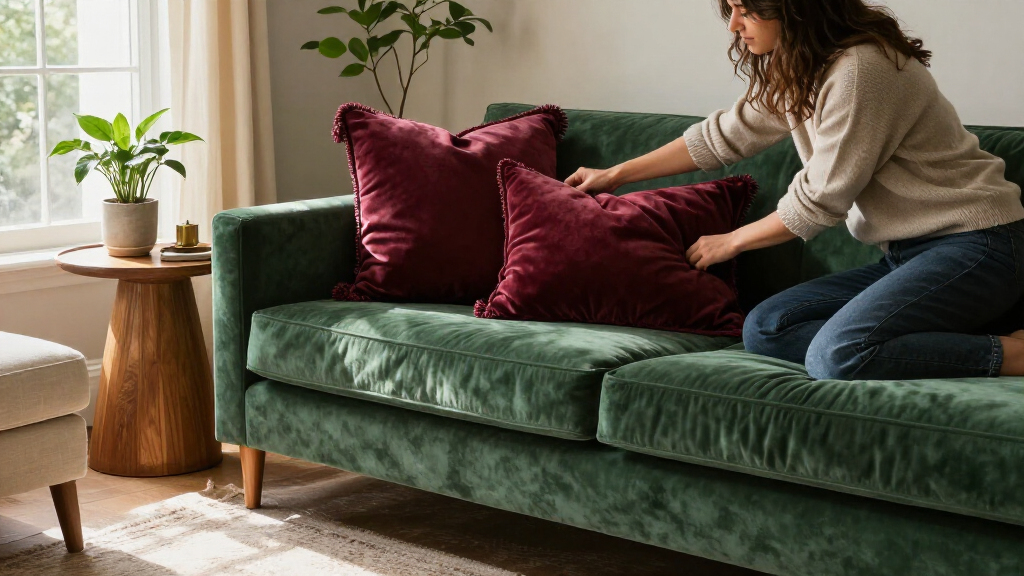
Start with this simple sequence. On a three-seat sofa, you might use two larger square pillows at the ends and one smaller lumbar pillow near the middle. For a compact loveseat, two pillows may be enough; on a bed, you can layer velvet in front of sleeping pillows rather than covering the whole surface.
- Check the furniture scale. A small chair usually needs one modest cushion, not an oversized pillow that pushes you forward.
- Choose a base texture. Use linen or cotton as the quiet backdrop, then add velvet for sheen.
- Vary shape or size. Pair a square cushion with a lumbar pillow so the arrangement has a clear rhythm.
- Leave room to sit. Move a pillow aside and test whether the seat still feels natural.
For example, a narrow apartment sofa might take one olive velvet square at one end and a cream lumbar pillow at the other. The arrangement adds color without swallowing the seat. In a larger living room, two velvet accents in different sizes can repeat the same hue across the sofa and an armchair.
Velvet can work in warm-weather rooms, too. Keep it as a small accent and pair it with breathable-looking cotton or linen. A single warm blush pillow can give a bright summer room texture without making the space feel winter-only.
Know When Velvet Is a Poor Fit for Your Home
Velvet may be a poor fit when you need a pillow that can take frequent spills, heavy pet use, or rough handling without much care. The pile can attract lint or show pressure marks, and some fabrics are harder to clean than others. That does not rule velvet out; it means the pillow’s location and your routine should shape the choice.
Imagine a curious cat who claims the armchair every afternoon. A pale velvet cover may show fur quickly, while a deeper color could hide some lint but still collect it. Check the fiber and care instructions, and look for tested performance claims if the seller provides them. Don’t assume that a dark shade solves every maintenance problem.
For a child’s playroom, you might reserve velvet for a high shelf or a less-used reading nook and choose an easier-care fabric for the main floor cushions. A removable cover can make storage and rotation simpler, but it still needs cleaning that suits its fabric.
Marks from pressure or shifting pile can often change as you smooth the surface, though the result depends on the velvet. Treat that variation as part of the material’s character, not automatically as damage. If you want a perfectly uniform surface, a matte woven pillow may better match your expectations.
Match the fabric to the life happening around it. The best pillow for a quiet guest room may not be the best one for a sofa shared with pets, children, and movie-night snacks.
Frequently Asked Questions
What makes a velvet pillow “luxury”?
The label has no standard definition. Look at the fiber, finish, stitching, closure, insert, and care instructions together. A well-made pillow should feel and function well for the way you plan to use it.
Is velvet durable enough for an everyday sofa?
It can be, but durability depends on the fiber, weave, finish, and how you use the pillow. Check the maker’s care guidance and any tested performance claims, especially for a busy family room.
How should I clean velvet throw pillows?
Follow the care label. Gentle brushing or vacuuming with an upholstery attachment may help with routine dust, but don’t assume you can wash every velvet cover at home. For a stain or water mark, ask the maker or a professional cleaner for advice.
Why does my velvet pillow look lighter in some places?
The direction of velvet’s pile changes how it reflects light, so the surface can look lighter or darker as you brush it or view it from another angle. Pressure can flatten the pile and create temporary shading as well.
What size insert should I buy?
Some decorators choose an insert slightly larger than its cover for a plump shape, but the best fit depends on the cover’s construction and your preferred firmness. Check the manufacturer’s sizing recommendation and whether the listed dimensions refer to the cover or the filled pillow.
Conclusion
Choose velvet by the details you can verify: fiber content, tidy construction, a suitable insert, and care instructions that fit your home. Then check the color in your own light and give the pillow a job in the room, whether that means warming a reading chair or adding one rich note to a pale sofa.
A good velvet pillow should feel inviting when you reach for it, not precious enough to keep untouched. Let the light move across the pile—and make sure the seat still has room for you.