
After travel, create a calming wind-down routine by focusing on gentle activities like stretching, listening to relaxing music, or practicing mindful breathing. Use herbal remedies such as chamomile or lavender to signal your body to relax and support sleep. Dim the lights, keep the room cool, and eliminate noise to create a restful environment. Pair these habits with consistent cues and routines to ease your shift to sleep—stay with us for more helpful tips.

Get furniture and decor delivered free — and shop member deals
- Fast, free delivery on millions of items
- Access to Prime Big Deal Days deals on October 6–7
- Prime Video, Amazon Music and more included
Key Takeaways
- Dedicate 30-60 minutes before bed to calming activities like gentle stretches or listening to relaxing music.
- Incorporate meditation techniques such as mindful breathing or guided meditation to promote relaxation.
- Use herbal remedies like chamomile or lavender to signal your body that it’s time to wind down.
- Optimize your sleep environment by dimming lights, lowering the temperature, and eliminating noise.
- Develop a consistent routine to reinforce relaxation cues and help reset your sleep patterns after travel.
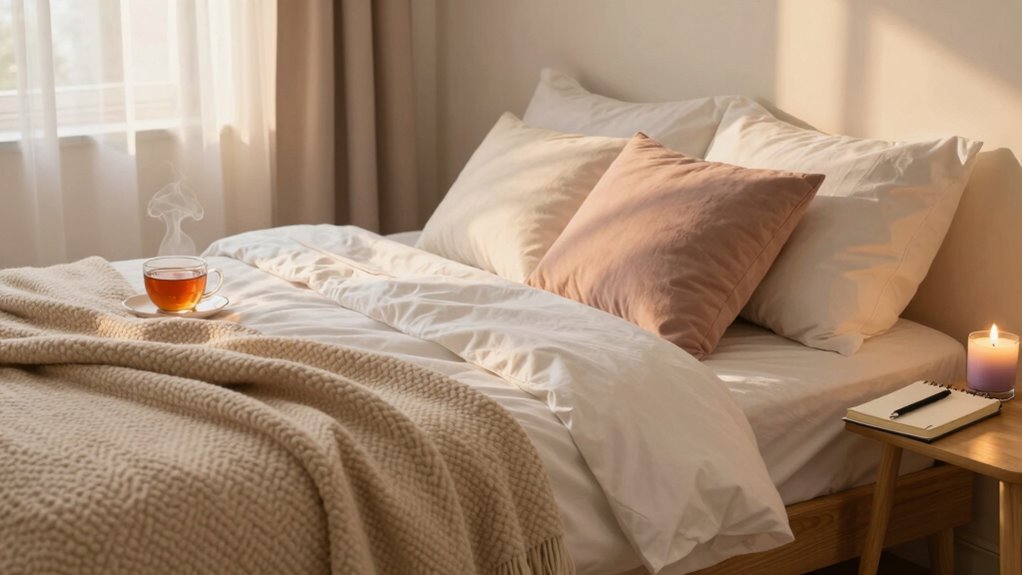
After a busy trip, winding down can feel challenging, but establishing a better routine helps your body and mind reset quickly. The key is to gradually shift from the hectic travel mode to a calm, restorative state. One effective way is to incorporate meditation techniques into your evening routine. Even just a few minutes of mindful breathing or guided meditation can help release the tension accumulated during travel. Focus on deep, slow inhalations and exhalations, letting your thoughts drift away. This practice calms your nervous system and prepares you for restful sleep. Avoid screens during this time, as the blue light can interfere with melatonin production, making it harder to unwind.
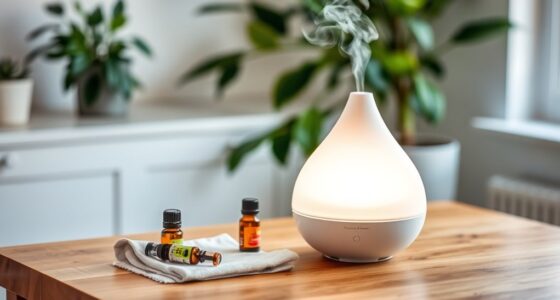
Along with meditation, herbal remedies can be powerful allies in your wind-down process. Herbs like chamomile, valerian root, and lavender have natural calming effects that promote relaxation and improve sleep quality. You can brew a cup of chamomile tea or add a few drops of lavender essential oil to a diffuser. These simple steps create a soothing environment that signals to your body it’s time to relax. Using herbal remedies consistently after travel helps retrain your body to associate these calming cues with rest, especially if travel has disrupted your normal sleep patterns. Incorporating biodiversity-friendly herbs in your herbal remedies can also support local ecosystems and promote sustainable harvesting practices. Additionally, choosing herbs grown with sustainable methods ensures that your wellness routine aligns with environmental conservation. Developing a mindful transition from travel stress to relaxation can further enhance the effectiveness of your wind-down routine. Incorporating natural remedies that are aligned with eco-friendly practices can deepen the connection between your health and the environment. Moreover, integrating smart home technology, such as smart lighting or climate control, can help create an optimal environment for relaxation.
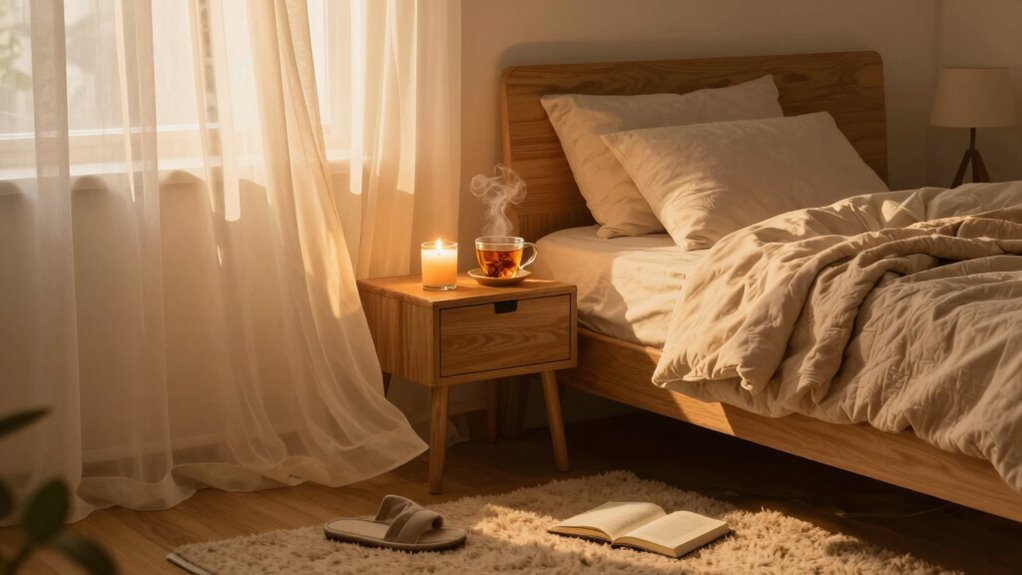
Creating a consistent routine is crucial. Dedicate the last 30 to 60 minutes before bed to calming activities, avoiding exposure to stressful stimuli or strenuous exercise. Instead, opt for gentle stretches, reading, or listening to relaxing music. Incorporate meditation techniques into this time frame, perhaps using an app or a calming playlist to guide your practice. Pairing this with herbal remedies amplifies the effect, making it easier for you to transition from travel fatigue to restful sleep. Be mindful of your environment as well—dim the lights, keep the room cool, and eliminate noise disturbances to enhance your sleep quality.
As an affiliate, we earn on qualifying purchases.
Frequently Asked Questions
How Long Should My Wind-Down Routine Last?
Your wind-down routine should last about 30 to 60 minutes, giving you enough time to relax and prepare for sleep. During this period, prioritize post-travel hydration to rehydrate and avoid dehydration fatigue. Change into comfortable sleepwear to signal your body it’s time to rest. Avoid screens and stimulating activities, allowing your mind to unwind. This gentle routine helps you fall asleep faster and recover from travel fatigue effectively.
Can Specific Scents Help Me Relax After Travel?
Aromatherapy benefits are truly life-changing, and specific scents can profoundly enhance your relaxation after travel. Scent relaxation techniques, like diffusing lavender or chamomile, help calm your nerves and ease jet lag faster. These aromatic cues signal your brain to unwind, making your wind-down routine more effective. Incorporating calming scents into your routine transforms your space into a soothing sanctuary, helping you recover from travel fatigue swiftly and comfortably.
Is It Better to Sleep Immediately or Relax First?
It’s better to relax first before sleeping after travel. You should focus on post-travel hydration and change into comfortable clothing to help your body unwind. Taking time to relax allows your mind and muscles to settle, making sleep more restful. Rushing into sleep might leave you feeling groggy. So, prioritize calming activities, hydrate, and wear comfortable clothes to prepare your body for a smoother shift into restful sleep.
How Can I Reduce Jet Lag During My Wind-Down?
Picture your body as a delicate clock, struggling with jet lag’s dissonance. To restore harmony, focus on sleep hygiene—dim the lights, avoid screens, and keep your room cool. Incorporate relaxation techniques like deep breathing or gentle stretches to calm your mind. These practices help reset your internal clock, reduce fatigue, and ease jet lag’s effects, allowing your body to synchronize with your new time zone more swiftly and comfortably.
Are There Quick Activities to Calm Nerves After Travel?
You can try quick activities like deep breathing exercises or progressive muscle relaxation to calm nerves after travel. These relaxation techniques promote stress relief and help your body unwind fast. Take a few minutes for mindful meditation or gentle stretching to ease tension. Listening to calming music or a guided relaxation app can also quickly soothe your mind. Incorporating these simple activities into your routine makes it easier to reset and feel more relaxed.
Conclusion
When you prioritize a calming wind-down routine after travel, you give your body and mind the chance to reset, reducing stress and improving sleep. Did you know that nearly 70% of travelers report feeling more rested and less anxious when they follow a relaxing routine post-trip? So, take a few minutes to unwind, hydrate, and reflect—you’ll not only feel better physically but also set yourself up for smoother shifts into everyday life.
Halloween Picks
halloween
As an affiliate, we earn on qualifying purchases.