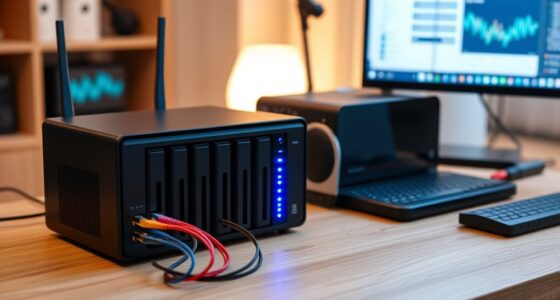
To troubleshoot slow streaming at home, start by checking if multiple devices are consuming too much bandwidth and pause their downloads or uploads. Reset your router to refresh the connection and consider upgrading your internet plan if needed. Make certain your Wi-Fi is positioned well, and keep your network equipment updated for the best performance. Monitoring device usage can also help identify the main culprits. For more tips on optimizing your setup, continue exploring useful solutions.

Get furniture and decor delivered free with Prime
- Fast, free delivery on millions of items
- Prime Video, Amazon Music and more included
- Member-only deals all year
Key Takeaways
- Restart your router and disconnect unnecessary devices to reduce network congestion.
- Pause large downloads or uploads that may be consuming bandwidth.
- Check for and install firmware updates on your network equipment.
- Upgrade your internet plan if bandwidth limitations persist.
- Optimize Wi-Fi placement and use monitoring tools to identify bandwidth hogs.
Ever wonder why your favorite shows buffer endlessly or take forever to load? If so, you’re not alone. Slow streaming can be frustrating, but the good news is that many issues are fixable. One common culprit is network congestion. During peak hours, multiple devices or users might be hogging your internet bandwidth, making it hard for your streaming service to get the data it needs quickly. If your Wi-Fi is slow during the evenings or weekends, it’s likely because your network is overloaded. To troubleshoot, start by disconnecting some devices or pausing downloads and uploads. You can also try resetting your router or upgrading your internet plan to handle more traffic. Making sure your connection is stable and fast enough is crucial for smooth streaming. Additionally, monitoring your network’s bandwidth usage can help identify if specific devices are consuming excessive data, leading to slow streaming speeds. Keep in mind that a high bandwidth demand from multiple devices can significantly impact your streaming quality. Regularly updating your network equipment ensures your hardware can handle increased data loads and maintains optimal performance. Also, consider checking for software or firmware updates, as these can improve network stability and security.
Wi-Fi router with high bandwidth
As an affiliate, we earn on qualifying purchases.
As an affiliate, we earn on qualifying purchases.
Frequently Asked Questions
Can I Fix Streaming Issues Without Restarting My Device?
Yes, you can fix streaming issues without restarting your device. First, check your device settings to guarantee your network connection is stable and optimized. Then, verify if your software is up to date, as updates often include performance improvements. Clearing the app cache or closing background apps can also help. These steps often resolve streaming problems without needing a device restart, making your viewing smoother and quicker.
How Does My Wi-Fi Router Affect Streaming Speed?
Your Wi-Fi router acts as the gatekeeper of your streaming experience, affecting speed through placement and interference. When you place your router centrally, elevate it off the floor, and avoid walls or appliances, you optimize signal strength. Reducing signal interference from other electronics, neighboring networks, or thick walls helps maintain a steady connection. By aligning your router’s position with these strategies, you guarantee fast, reliable streaming without buffering or lag.
Is My Internet Plan Sufficient for High-Quality Streaming?
Your internet plan might not be enough if you experience buffering or low-quality streams. Check your plan’s bandwidth limitations—if they’re too low, high-definition streaming could suffer. Also, consider data caps; exceeding them can throttle your speeds, causing slow streaming. Upgrading to a higher bandwidth package or unlimited data plan can improve your experience, ensuring smooth, high-quality streams without interruptions.
Do Streaming Service Servers Impact My Connection Speed?
Yes, streaming service servers can impact your connection speed. If server load is high, it slows down data transfer, causing buffering. Additionally, the geographic location of the server matters; servers farther away can increase latency, reducing streaming quality. To improve your experience, choose servers closer to your location or try streaming during off-peak hours when server load is lower.
Can Device Age Influence Streaming Performance?
Your device age can definitely influence streaming performance. As devices age, hardware degradation and wear-and-tear can slow processing speeds, cause buffering, or lead to connection issues. A longer device lifespan often means components aren’t functioning at their best anymore. To keep streaming smooth, consider upgrading your device or performing maintenance like software updates and hardware checks. Staying current helps guarantee your device can handle the demands of modern streaming services.
Conclusion
Remember, troubleshooting your slow streaming is like untangling a knot—patience and methodical steps will help you find the cause. By checking your internet speed, restarting devices, and reducing network congestion, you’ll clear the path for smooth viewing. Don’t let buffering be the villain of your movie night. With a little effort, you’ll have your streaming running as smoothly as a well-oiled machine, turning your home into a cozy haven for entertainment.
Halloween Picks
halloween
As an affiliate, we earn on qualifying purchases.