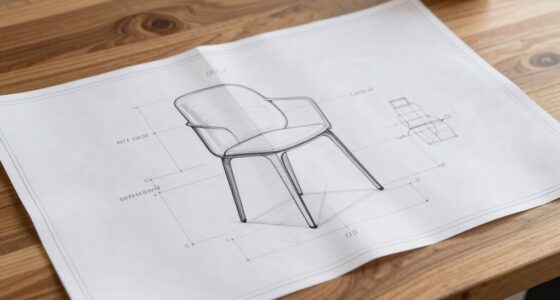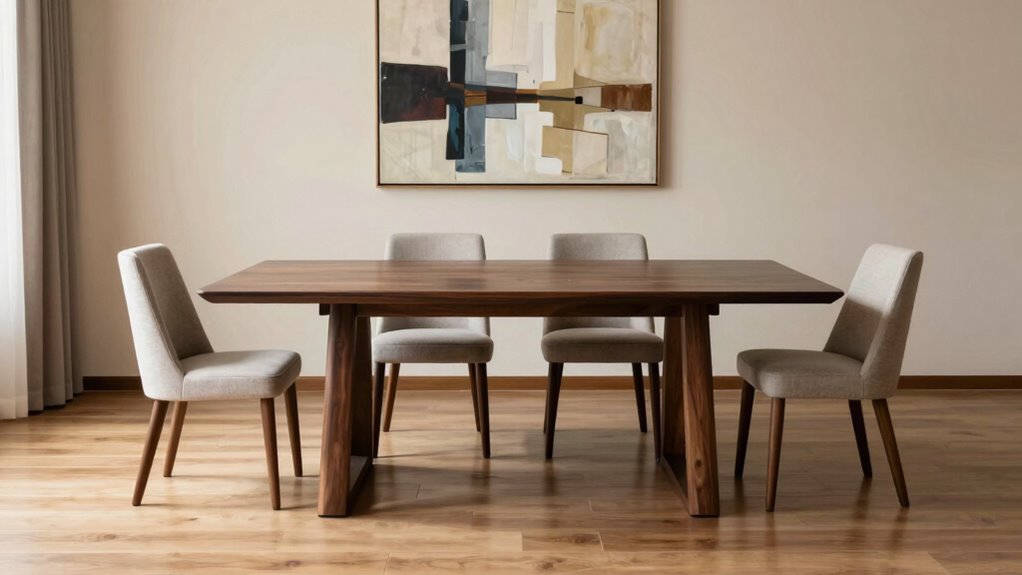

To make a dining table feel proportional to your room, consider its size relative to the space. A table that’s too large can overwhelm, while a small one may seem out of place. Match the style and materials to your decor for harmony, and guarantee there’s enough space for movement. Round tables can make small rooms feel more intimate, and slim designs maximize space in compact areas. If you want to learn more, keep exploring how to create perfect balance.

Get furniture and decor delivered free with Prime
- Fast, free delivery on millions of items
- Prime Video, Amazon Music and more included
- Member-only deals all year
Key Takeaways
- Choose a table size that complements the room’s overall dimensions without overwhelming or appearing too small.
- Maintain appropriate clearance space around the table for comfortable movement and accessibility.
- Match the table’s style and material with the room’s decor to create visual harmony.
- Opt for a table proportional in height and width that balances with other furniture pieces.
- Select a shape that suits the room’s layout, such as round for small spaces to promote intimacy.
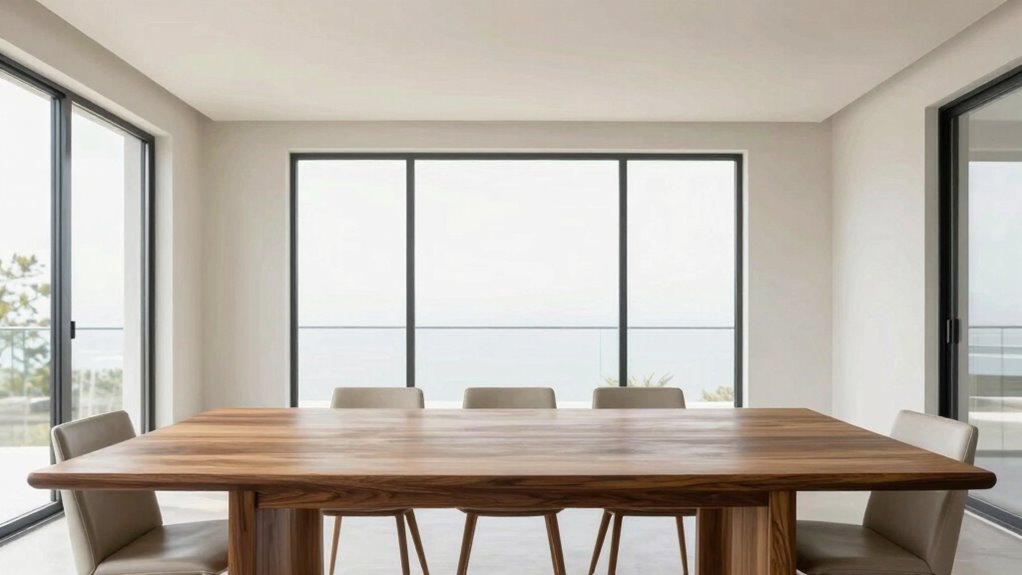
Have you ever struggled to find a dining table that fits perfectly in your space and accommodates your needs? It’s a common challenge, but understanding what makes a dining table feel proportional to the room can make the process much easier. The key lies in considering both material choices and design styles, which together influence how well the table complements your space.
When choosing a material, think about the overall aesthetic of your room. If you have a modern, minimalist space, sleek materials like glass or metal can create a sense of openness and simplicity. For a cozy, rustic vibe, wood with natural finishes adds warmth and character. The material also affects the visual weight of the table. Heavier materials like thick solid wood or marble can make a statement, but they might overwhelm a small room. Conversely, lighter materials, such as thin metal or glass, can make a space feel airier and more balanced. Material choices should align with the room’s size and your style preferences, ensuring the table doesn’t look out of place or feel too dominant. Incorporating sustainable materials can further enhance your design by promoting eco-friendly choices.
Design styles play a crucial role in achieving proportionality. A large, bulky table might look out of scale in a compact apartment, while a slim, streamlined design can maximize space without sacrificing style. For smaller rooms, consider tables with clean lines and simple shapes. Round tables, for example, tend to promote a sense of intimacy and can prevent the space from feeling crowded. In bigger rooms, you can opt for larger, more elaborate tables with decorative legs or intricate details that fill the space without overwhelming it. Matching the design style of your table to your room’s decor creates harmony. A mid-century modern table with tapered legs can blend seamlessly into a contemporary setting, while a farmhouse-style table can add charm to a country-inspired space. Recognizing furniture scale and its impact on room proportions is essential for creating a balanced environment.
Ultimately, proportion is about balance. The size of your table should relate to the room’s dimensions, leaving enough space for movement and other furniture. Too large, and it dominates; too small, and it looks out of place. When you combine thoughtful material choices with a design style that complements your room, your dining table will feel just right—neither overpowering nor insignificant. It’s all about finding that sweet spot where your table enhances the space and meets your needs comfortably. Additionally, understanding biodiversity and sustainable materials can inspire eco-friendly choices in your furniture selection, contributing to a healthier planet.
small round dining table for compact space
As an affiliate, we earn on qualifying purchases.
As an affiliate, we earn on qualifying purchases.
Frequently Asked Questions
How Do Ceiling Height and Lighting Affect Table Proportions?
Ceiling height and lighting effects considerably influence how a dining table feels in a room. If your ceiling is high, opt for a larger table to balance the space, while low ceilings call for smaller, proportionate pieces. Good lighting enhances table proportions by highlighting its size and shape. Bright, focused lighting creates a sense of intimacy, making the table feel cozy, while ample lighting emphasizes its scale within the room.
Can a Round Table Work in a Rectangular Room?
Can a round table fit comfortably in a rectangular room? Absolutely, especially if you choose the right size. It creates a cozy, inviting vibe and works well with various decorative accessories and color schemes. To keep it balanced, make sure there’s enough space around it for movement. Think about pairing it with contrasting decor or vibrant colors to highlight its shape, making your room feel harmonious yet interesting.
What Materials Influence Perceived Table Size?
Materials like fabric textures and color contrasts influence how large a table feels. For example, a table with a smooth, shiny surface might seem smaller, while textured fabrics add visual weight, making it appear more substantial. Darker colors tend to make a table look more prominent, whereas lighter shades give a sense of openness. You can manipulate these elements to guarantee your table feels proportionate to your room’s size.
How Do Room Shape and Furniture Layout Impact Table Choice?
You should consider your room’s shape and furniture layout when choosing a dining table. For rectangular rooms, opt for a table that fits comfortably without crowding, maintaining balance with the artistic style and color coordination of your space. In open layouts, a table with a matching color scheme and proportionate size helps create harmony. Aligning your table with existing furniture enhances flow, making the room feel cohesive and well-designed.
Should Table Size Match Window or Door Dimensions?
Your dining table shouldn’t match window or door dimensions exactly. Instead, focus on color harmony and style consistency with your room’s decor. A table slightly smaller or larger than your window frame can create visual balance without overwhelming the space. Choose a size that complements your room’s proportions, and confirm the style and color harmonize with nearby elements for a cohesive, inviting look.
Conclusion
Remember, choosing the right dining table size can transform your space. Did you know that a well-proportioned table can increase your dining area’s perceived size by up to 30%? When you pick a table that complements your room’s proportions, it not only enhances aesthetics but also creates a more inviting, functional space for family and friends. So, take your time, measure carefully, and enjoy the perfect fit—your room will thank you.
Halloween Picks
halloween
As an affiliate, we earn on qualifying purchases.