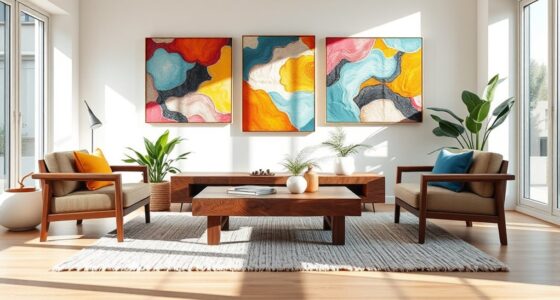
To mix new furniture with vintage pieces effectively, start by choosing a unifying color palette and neutral tones for larger items, then add pops of color through accessories. Balance visual weight by pairing similar-sized items from different eras and use contrast in textures and materials to create visual interest. Pay attention to proportion and scale, ensuring each piece complements the overall layout. Keep it cohesive by blending styles thoughtfully; explore more tips to craft a stylish, personal space.

Get furniture and decor delivered free with Prime
- Fast, free delivery on millions of items
- Prime Video, Amazon Music and more included
- Member-only deals all year
Key Takeaways
- Choose a unifying color palette to seamlessly blend new and vintage pieces.
- Balance visual weight by pairing similar-sized modern and vintage furniture.
- Use contrast in materials and textures to create visual interest and depth.
- Incorporate design principles like proportion and scale for cohesive arrangements.
- Curate a personalized style by blending elements thoughtfully to reflect your personality.
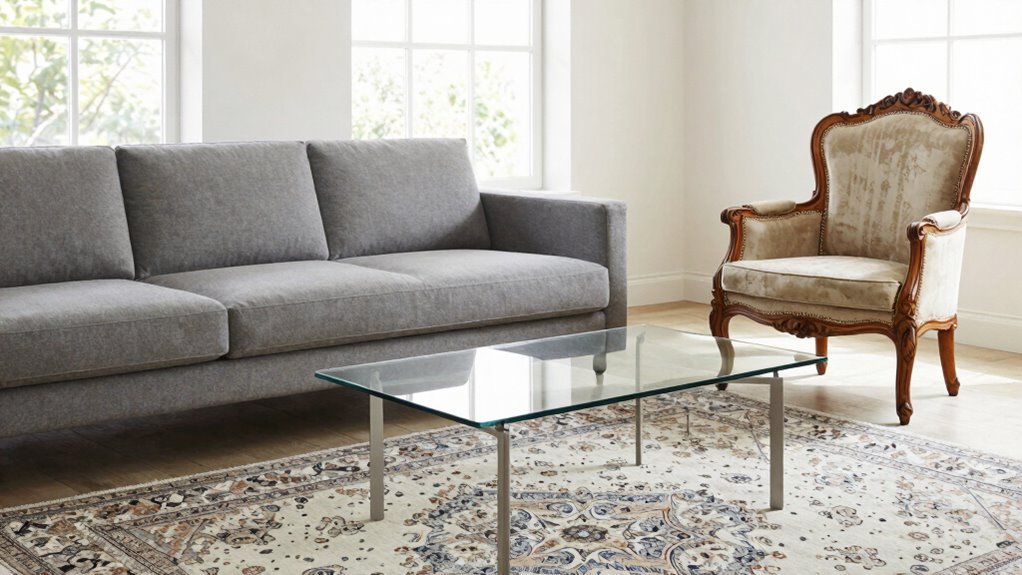
Blending new furniture with vintage pieces can create a stylish, personalized space that feels both fresh and timeless. To do this successfully, you need to pay attention to color coordination, balance, and contrast. These elements help guarantee your room feels cohesive rather than chaotic. Start by choosing a unifying color palette. You might pick neutral tones like whites, grays, or beiges for larger pieces, then add pops of color through accessories or smaller furniture items. This approach keeps the space feeling harmonious while allowing vintage pieces to stand out as focal points. When you coordinate colors carefully, you avoid clashing and make sure each piece complements the others, no matter their style or age. Additionally, considering the visual weight of each piece helps create a more balanced and inviting arrangement. Next, consider how to balance your furniture arrangement. Modern pieces often have clean, simple lines, while vintage items tend to feature intricate details and character. To create visual harmony, place pieces with similar visual weight opposite each other, avoiding clustering all vintage or all new furniture in one corner. For example, pair a sleek contemporary sofa with a vintage armchair of comparable size and presence. This balance prevents your space from feeling top-heavy or unbalanced. Additionally, mixing different styles requires you to be intentional about the proportions. If your vintage piece is large and ornate, anchor it with more subdued, modern accessories around it to keep the focus balanced. Conversely, if your new furniture is minimalistic, let your vintage pieces add character and texture without overwhelming the space. Contrast is your secret weapon in mixing furniture styles. You want enough contrast to make each piece interesting, but not so much that they clash. Use contrast in materials, textures, and shapes. For example, a sleek, glass coffee table paired with a rustic, wooden vintage trunk creates a compelling visual contrast. Similarly, a modern metal lamp can highlight the intricate carvings of a vintage side table. This interplay of contrast adds depth and personality to your room. Keep in mind that contrast should be intentional—if you go too far, you risk creating a disjointed look. An understanding of interior design principles can help guide your choices and ensure cohesion. Recognizing the importance of color harmony can also enhance how well your pieces integrate. Incorporating different design eras thoughtfully can further emphasize the unique charm of each piece and create a layered, curated aesthetic. And, paying attention to proportion and scale ensures that each piece complements the overall layout without overwhelming or underwhelming the space. In the end, blending new furniture with vintage finds is about creating a space that reflects your personality. Color coordination, balance, and contrast are your tools to achieve a look that’s both cohesive and engaging. When you master these elements, your room will feel thoughtfully curated and uniquely yours.
neutral color palette for furniture
As an affiliate, we earn on qualifying purchases.
As an affiliate, we earn on qualifying purchases.
Frequently Asked Questions
How Do I Choose Vintage Pieces That Complement Modern Styles?
To choose vintage pieces that complement modern styles, focus on antique craftsmanship and unique details that add character. Select vintage furniture with clean lines and neutral tones to blend seamlessly, then accent with retro accessories for pops of personality. Mix textures and finishes carefully, balancing modern simplicity with vintage charm. Trust your eye, and don’t be afraid to experiment—this creates a cohesive, stylish space that celebrates both eras.
What Color Schemes Work Best for Mixing Furniture Styles?
Think of your room as a canvas where color blocking sets the scene. Neutral bases like whites, beiges, or grays create harmony, allowing vintage and modern pieces to shine. Add accent colors—bold or muted—to highlight your style. These pops of color act as symbols of personality, uniting diverse styles. Choose a palette that reflects your mood, and use it to bridge the gap between old and new seamlessly.
How Can I Balance the Visual Weight of Vintage and New Furniture?
You can balance the visual weight of vintage and new furniture by strategically pairing antique accessories with modern accents. Place heavier, ornate vintage pieces alongside sleeker, minimalist furniture to create contrast. Use accessories like vintage lamps or mirrors to draw attention without overwhelming. Distribute these elements evenly throughout the space, ensuring neither style dominates, which results in a harmonious, balanced room that highlights both your antique charm and contemporary vibe.
Are There Specific Fabrics or Textures to Consider?
Think of fabric pairing as a dance—mix sleek, modern textiles with vintage textures to create harmony. Opt for smooth velvets or crisp linens alongside textured knits or distressed fabrics. Layer textures thoughtfully to add depth and interest, balancing shiny and matte surfaces. By carefully selecting fabrics that contrast yet complement, you bring your space to life, making vintage and new furniture feel interconnected and inviting.
How Do I Maintain Vintage Furniture Alongside New Pieces?
To maintain vintage furniture alongside new pieces, focus on antique preservation by regularly cleaning and avoiding harsh chemicals. Use protective finishes or wax to preserve wood surfaces. For modern renovation, opt for subtle updates like new hardware or upholstery that complement the antique’s character. Keep a balance between the old and new, ensuring each piece stands out without overwhelming the space. This approach preserves the vintage charm while embracing contemporary style.
Conclusion
By blending bold, beautiful vintage pieces with fresh, fun furniture, you create a space that’s both stunning and soulful. Don’t shy away from experimenting—embrace the eclectic, the unexpected, the extraordinary. With a little patience and playfulness, you’ll craft an enchanting, cozy haven that’s uniquely yours. Remember, the magic lies in mixing and matching, making your home a heartfelt haven filled with history and happiness. Let your style shine and stay inspired!
Fall Picks
fall essentials
As an affiliate, we earn on qualifying purchases.