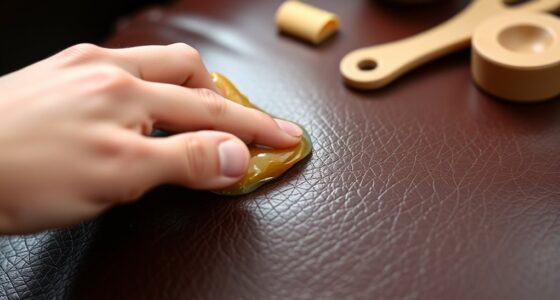
When a spill happens, act within the first 60 seconds to prevent stains from setting. Gently blot the area with a clean cloth or paper towel—don’t rub—to absorb liquids before they penetrate. Use gentle, safe cleaning supplies like water or mild soap, avoiding harsh chemicals. Be careful not to over-wet or scrub, and always consider fabric type. If you want to keep your upholstery looking its best, learn more about effective quick-response techniques.
Key Takeaways
- Act immediately within the first 60 seconds to prevent stain setting and fiber damage.
- Gently blot spills with a clean cloth or paper towel, avoiding rubbing.
- Use minimal moisture to absorb liquids without over-wetting the upholstery.
- Choose safe, natural cleaning solutions like mild soap or vinegar, checking fabric labels first.
- If stain persists or is stubborn, contact professional upholstery cleaners promptly.
Act Fast: The First 60 Seconds to Prevent Upholstery Stains

If a spill occurs on your upholstery, acting within the first 60 seconds can make all the difference. Your fabric fibers are delicate and can quickly absorb liquids, making stains harder to remove later. Understanding stain chemistry helps you respond effectively—certain spills react differently depending on their composition. The moment you notice a spill, gently blot—don’t rub—to lift as much liquid as possible. Use a clean cloth or paper towel to absorb moisture before it penetrates deeper into the fibers. Quick action prevents the stain from setting and minimizes damage. Additionally, knowing fabric fiber properties can guide you in selecting appropriate cleaning techniques to avoid damage. Being aware of stain chemistry can also help you choose the most effective cleaning solutions for different types of spills. Recognizing the common stain types can further improve your response strategies. For example, understanding the chemical composition of spills can help you determine whether to use water-based or solvent-based cleaning methods. Remember, the key is to act swiftly, targeting the spill before it interacts with the fabric’s fibers and stain chemistry, which can make removal more difficult later. Your prompt response is essential for successful stain prevention.
Blot and Absorb: Stop the Spill From Setting in

When a spill occurs, the most important step you can take is to blot and absorb immediately, preventing the liquid from seeping deeper into the fibers and setting the stain. Quickly pressing a clean cloth or paper towel on the spot helps lift the liquid before it embeds. Different fabric fibers respond differently to stain types; some absorb liquids faster, while others resist removal. Use gentle pressure, avoiding rubbing, which can spread the stain or damage fibers. To understand the impact, consider this table:
| Fabric Fiber Type | Response to Stains | Absorption Speed | Recommended Action |
|---|---|---|---|
| Natural fibers | Often absorb quickly | Fast | Blot immediately |
| Synthetic fibers | Resist absorption | Slower | Blot and avoid rubbing |
Additionally, being aware of the fiber response to stains can help you choose the best stain removal approach and avoid unnecessary damage. Recognizing the fabric fibers involved allows for more effective and tailored cleanup techniques. Knowing the cleaning techniques suitable for different fibers can further improve your results and prevent fiber damage. Being familiar with specific stain treatments can also assist in choosing the safest and most effective method for your upholstery.
Choose Safe Cleaning Supplies for Quick Stain Removal

Choosing the right cleaning supplies is key to removing stains quickly and safely. You want to avoid chemical residues that can harm your upholstery or cause skin irritation. Opt for natural remedies whenever possible, like a mixture of mild soap and water or vinegar solutions, which are effective and gentle. Always check labels to ensure the product is safe for your fabric type. Using harsh chemicals can damage fibers and leave residues that attract more dirt later. Keep your cleaning supplies simple, safe, and eco-friendly, especially for quick stain removal. This approach minimizes risks and ensures your upholstery stays in good condition. Considering air quality and safe workspace practices when cleaning can help prevent accidents and promote a healthier environment. Ensuring proper ventilation during cleaning is also essential to reduce exposure to any fumes from cleaning products. Being aware of precious metal IRA markets can also guide you in making smarter choices about investment and safety. Remember, quick and safe choices in cleaning supplies make a significant difference in preserving your furniture’s appearance and longevity.
Common Mistakes to Avoid When Cleaning Upholstery

Many people make the mistake of over-wetting their upholstery, which can lead to mold growth, water stains, and lingering odors. To avoid this, don’t saturate the fabric; instead, use minimal moisture and blot gently. Proper technique can help prevent excess moisture from seeping into the padding and causing damage. Another common error is ignoring equipment safety; using improper tools or unsafe cleaning solutions can cause chemical reactions that damage the fabric or pose health risks. Always check that your equipment is in good condition and suited for upholstery cleaning. Rushing the process or applying too much cleaner can also result in uneven cleaning, leaving behind residue that attracts dirt. Remember, improper handling of cleaning agents and equipment can worsen stains or harm your furniture. Additionally, understanding proper cleaning techniques can make the process safer and more effective. Properly maintaining your cleaning tools ensures consistent performance and reduces the risk of damage. Being aware of safe chemical use is crucial to prevent accidental damage or health hazards during cleaning. Employing effective stain removal methods can significantly improve your results and protect your upholstery’s longevity.
When Should You Call a Professional for Upholstery Stains?

Sometimes, stubborn stains or delicate fabrics require more expertise than DIY remedies can provide. If you notice a stain that’s large, old, or set-in, it’s time to call a professional. Additionally, when stains are caused by chemicals or unknown substances, DIY remedies might worsen the problem or damage your upholstery. Consider contacting a specialist if:
- The stain persists after initial cleaning attempts.
- The fabric is fragile or valuable.
- You’re unsure about the type of stain or material.
- You want to focus on stain prevention for future spills.
- Vetted cleaning methods are recommended for specific fabrics or stains.
Professional cleaning ensures proper stain removal and helps preserve your upholstery’s integrity. Recognizing when to seek expert help can save you time, money, and frustration, especially when DIY remedies aren’t enough.
Frequently Asked Questions
How Do I Identify the Type of Stain on My Upholstery?
To identify the stain on your upholstery, start by observing its color, noting if it’s dark, light, or discolored. Feel the stain’s texture—whether it’s oily, sticky, or dry—and compare it to surrounding fabric. Check for any odor as well. This quick assessment helps you determine if it’s a food, oil, or ink stain, guiding you to choose the right cleaning method promptly.
Can I Use Household Items for All Stain Types?
You can try DIY solutions with household items for some stains, but not all. For common mistakes, avoid using harsh chemicals or excess water, as they can damage upholstery. Always test a small area first. Keep in mind that certain stains, like oil or ink, may require specialized cleaners. While DIY methods work, knowing their limits helps prevent further damage and guarantees your upholstery stays looking fresh.
What Are Signs That a Stain Requires Professional Cleaning?
When in doubt, it’s better to call in the pros. Signs that a stain needs professional cleaning include a stubborn stain that won’t budge after initial attempts, a discoloration in stain color, or a large stain size that covers a significant area. If the stain seems to seep deeply or spreads further with cleaning, it’s time to get experts involved — don’t let the problem snowball.
How Can I Prevent Future Stains on My Upholstery?
To prevent future stains on your upholstery, take preventive measures like applying stain-resistant treatments, which create a protective barrier. Regularly vacuum and clean your furniture to remove dirt and spills before they set. Be cautious with liquids and avoid eating or drinking on upholstery. Using coasters and slipcovers can also help protect your furniture from accidental stains. These proactive steps keep your upholstery cleaner and looking new longer.
Are There Specific Cleaning Techniques for Delicate Upholstery Fabrics?
You must treat delicate fabrics with the utmost care, or risk turning your cherished furniture into a disaster zone! Use gentle cleaning techniques like dab-and-blot, avoid harsh chemicals, and always test a hidden spot first. Apply fabric protection and stain-resistant treatments regularly to keep your upholstery safe. These small steps ensure your delicate fabrics stay pristine, making your furniture look fabulous and well-maintained for years to come!
Conclusion
Remember, the first 60 seconds are your window of opportunity—like catching a fleeting butterfly before it wings away. Act swiftly, blot gently, and choose safe supplies to keep your upholstery’s story pristine. Avoid common pitfalls, and know when to call in the pros. With quick, confident moves, you’re the hero of your furniture’s tale, turning potential stains into mere whispers of the past. Protect your space, and let your upholstery shine bright.