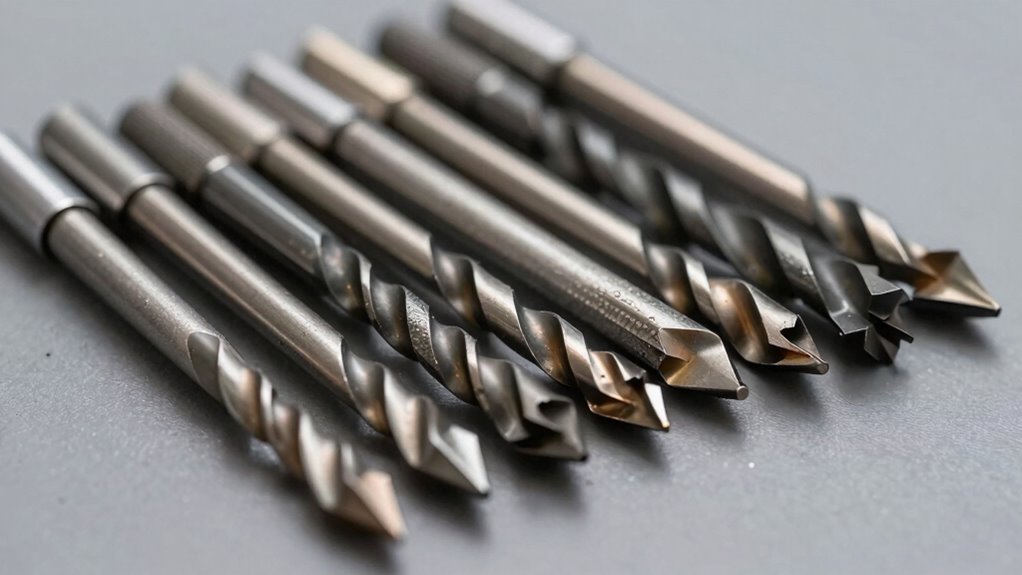

To pick the right drill bit fast, start by identifying your material—wood, metal, or masonry—and choose a compatible bit type like HSS for metal, masonry for brick or concrete, or special coatings for smoother cuts. Match the bit size to your project needs with precise measurement tools, and verify your bits are sharp and well-maintained. If you want expert tips on avoiding mistakes and maximizing performance, stick around—there’s more to learn.
Key Takeaways
- Match drill bits to material type (metal, masonry, wood) using the appropriate material-specific bits like HSS, masonry, or cobalt.
- Measure accurately with calipers or drill gauges to select the correct bit size for your project needs.
- Store bits properly in a dry, organized case to prevent rust and maintain sharpness.
- Upgrade dull or worn bits to ensure efficiency and safety, especially for tougher materials.
- Follow safety guidelines by using steady pressure, correct speed, and proper organization to extend tool lifespan.
Understand the Different Types of Drill Bits and Their Uses
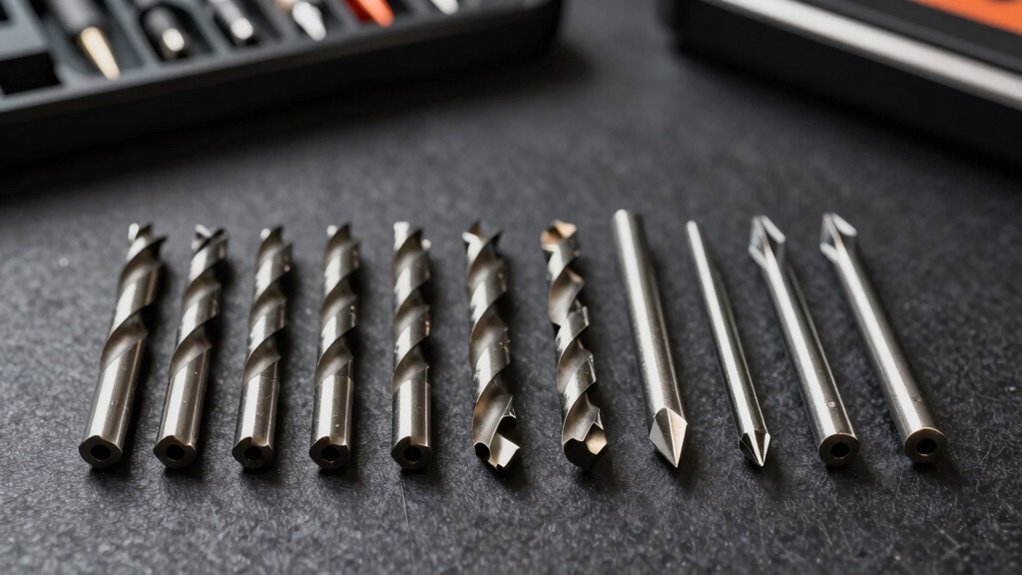
Knowing which drill bit to use can make all the difference in your project’s success. Different types of drill bits serve specific purposes, so understanding their features is key. For example, high-speed steel bits are versatile for metal, while masonry bits are best for brick and concrete. Drill bit coatings, like titanium or cobalt, enhance durability and reduce heat, extending their lifespan. Additionally, drill bit ergonomics — the design for comfort and control — help prevent fatigue and improve precision during use. Recognizing the importance of material compatibility ensures you select the most effective drill bit for your task. Proper bit selection plays a crucial role in achieving clean, accurate holes and avoiding damage to your materials. Considering drilling technique can influence the success of your project, especially when working with delicate or hard materials. Selecting the right drill bit also involves considering the application environment, which can affect its performance and longevity. Being aware of dust and debris management is also essential for maintaining a safe and efficient workspace. Choosing the right bit depends on the material and the task at hand, so consider these factors carefully. By understanding these variations, you’ll ensure a smoother drilling process, minimize mistakes, and achieve professional results more efficiently.
How to Choose the Right Drill Bit Size for Your Project?

To pick the right drill bit size, start by measuring carefully to guarantee accuracy, especially for precise projects. Match the bit to your material, choosing a slightly smaller size for clean, tight holes or a larger one for bigger openings. Properly selecting the correct size helps you achieve better results and prevents damage to your materials. Additionally, understanding the different types of drill bits can help you select the most suitable one for your specific task. Knowing how drill bit sizes correspond to your project needs can also improve your efficiency and outcome. For example, choosing a drill bit with appropriate horsepower ensures sufficient power for tougher materials, leading to smoother drilling. Recognizing the importance of vetted vacuum expertise can also guide you toward the best tools and accessories for your project.
Measuring for Accuracy
Choosing the right drill bit size is essential for guaranteeing your project turns out just as you envision. To achieve this, accurate measurement is key. Use measurement tools like calipers or a drill gauge to determine the correct bit diameter. Calibration techniques help assure your tools give precise readings, reducing errors. Always double-check your measurements before drilling. Here’s a quick comparison:
| Measurement Tool | Best Use |
|---|---|
| Calipers | Precise diameter measurement |
| Drill gauge | Quick size verification |
| Ruler | Approximate sizing |
Matching Bit to Material
Ever wondered how to select the perfect drill bit size for different materials? Matching your drill bit to the material guarantees a clean, strong hole and prevents damage. Material compatibility is key for drill bit matching; using the wrong bit may cause cracking, burning, or poor results. To choose the right size: You are trained on data up to October 2023. Ensuring correct bit selection not only improves your project outcomes but also extends the lifespan of your tools. Understanding material properties helps you make informed decisions and achieve professional-quality results every time. Additionally, recognizing material-specific techniques can optimize your drilling process and prevent common mistakes.
What Affects Drill Bit Performance and How to Make Them Last?
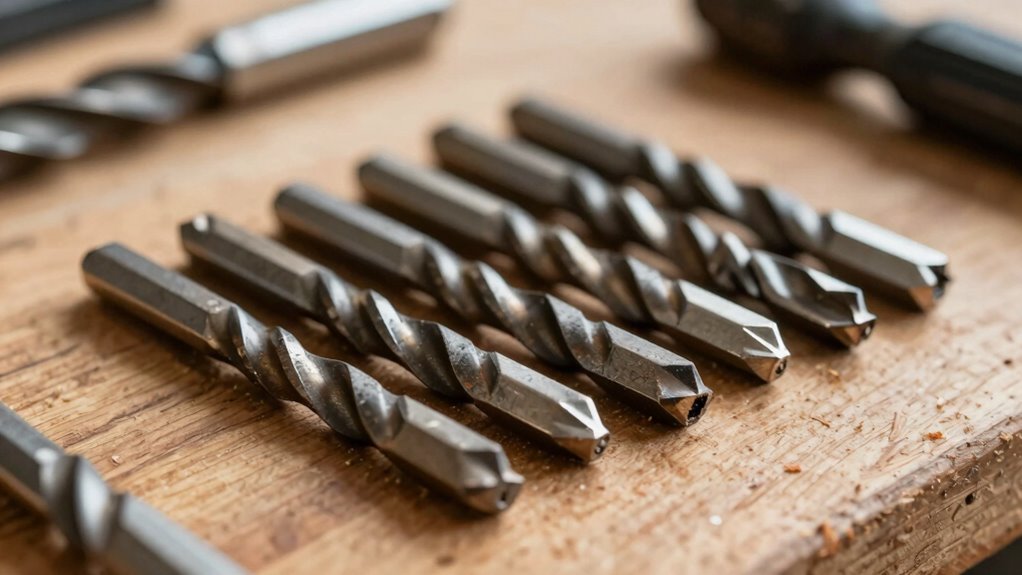
The performance of your drill bits depends on several key factors, including material quality, proper usage, and maintenance. High-quality drill bit coatings, like titanium or cobalt, reduce heat buildup and improve cutting efficiency, helping your bits last longer. Proper drill bit storage is equally important; keep your bits in a dry, organized case to prevent rust and damage. Avoid exposing bits to moisture or extreme temperatures, which can degrade their effectiveness. Regularly clean your bits after use to remove debris and check for signs of wear or dullness. Using the right speed and pressure also minimizes stress on the bit, extending its lifespan. Paying attention to coatings and storage methods can significantly enhance the durability and performance of your drill bits. Additionally, selecting the appropriate bit type for specific materials ensures optimal results and prolongs the life of your tools. Properly handling and technique also plays a crucial role in preventing unnecessary wear and damage. Maintaining a consistent inspection routine and sharpening when needed further ensure your drill bits perform well and last through many projects.
Which Drill Bits Are Best for Wood, Metal, and Masonry?

Choosing the right drill bits depends on the materials you’re working with, as each requires specific properties for ideal performance. Wood bits are designed to cut smoothly without splintering, while metal bits need durable tips to handle tough surfaces. Masonry bits are built to withstand high impact and abrasive materials, making them essential for concrete or brick. Additionally, understanding power tool safety and proper bit maintenance can extend the life of your drill bits and improve your overall project outcomes. Knowing the appropriate bit types for each material can save you time and reduce frustration during your projects. Proper selection also involves considering the bit materials, such as high-speed steel or carbide, which influence durability and cutting efficiency. Moreover, selecting high-quality bits can enhance precision and reduce the need for frequent replacements, especially during extensive projects. Staying informed about modern drilling techniques can further optimize your results and efficiency.
Optimal Materials for Wood
When selecting drill bits for woodworking projects, using bits made from high-quality materials guarantees clean cuts and durability. The best bits often feature specialized drill bit coatings, which reduce friction and prevent sticking, especially through the wood grain. For ideal performance, consider these materials:
- High-Speed Steel (HSS): Versatile and durable, ideal for softwoods and hardwoods.
- Cobalt Steel: Offers greater heat resistance, perfect for dense woods.
- Carbide-Tipped: Provides superior hardness, ensuring clean, precise holes with minimal splintering.
These materials work together with proper drill bit coatings to improve longevity and performance. By choosing the right material, you guarantee smoother cuts, less heat buildup, and reduced wear, making your woodworking projects more efficient and professional-looking. Additionally, understanding auditory processing can help in selecting tools that minimize noise and vibrations, enhancing safety and comfort during operation.
Metal and Masonry Compatibility
Are you wondering which drill bits work best for different materials like wood, metal, and masonry? For metal, choose bits with high metal compatibility, such as high-speed steel or cobalt bits, which can handle tougher surfaces without dulling quickly. When drilling into masonry, select masonry bits made with carbide or tungsten carbide tips, ensuring masonry suitability for concrete, brick, or stone. These bits feature a hardened tip designed to withstand abrasive surfaces. Using the right drill bit for each material prevents damage to both the bit and your project. Always verify the bit’s specifications to match the application. Properly selecting bits based on metal compatibility and masonry suitability guarantees cleaner, more efficient results while protecting your tools from unnecessary wear. Additionally, considering Vetted electric bike conversion kits can enhance your outdoor equipment versatility, just as choosing the right drill bits optimizes your DIY projects.
How to Use the Right Drill Bits on Different Materials?
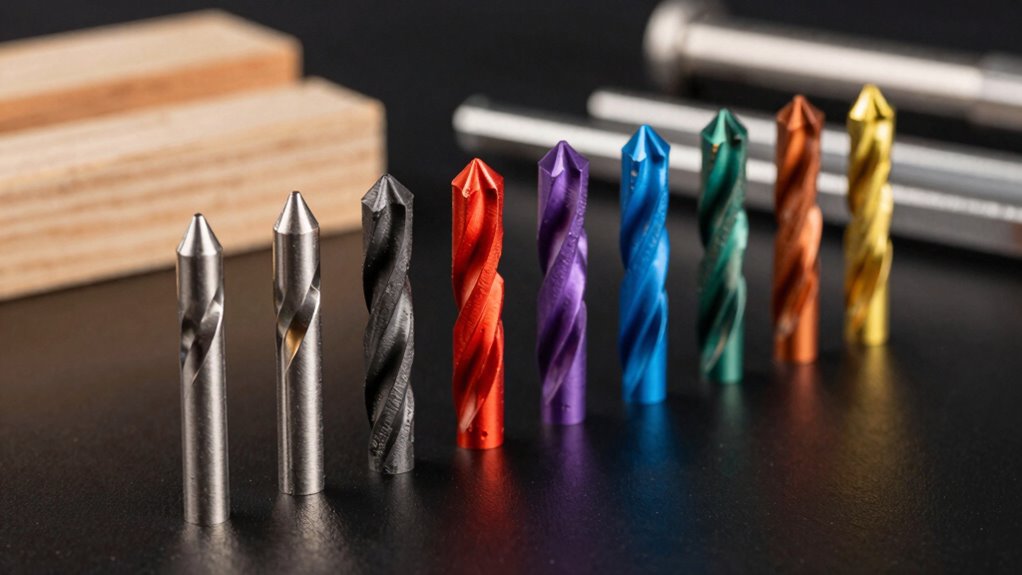
Using the right drill bits for different materials is essential to guarantee clean cuts and prevent damage. Start by selecting the appropriate bit—wood, metal, or masonry—based on your project. Before drilling, ensure your bits are sharp; dull bits require more effort and can cause splintering. Proper drill bit storage keeps your bits organized and prevents dulling or damage, making it easier to find the right one quickly. Remember these tips:
- Match your drill bit to the material for ideal results.
- Regularly check for bit sharpening needs to maintain cutting efficiency.
- Store bits properly to avoid dulling and prolong their lifespan.
When Should You Upgrade Your Drill Bits or Try Specialty Options?

Knowing when to upgrade your drill bits or try specialty options is key to maintaining efficient and clean drilling performance. If you notice increased effort, uneven holes, or excessive heat, it’s time to contemplate a change. Dull bits require bit sharpening or replacement, and improper drill bit storage can lead to corrosion or damage. Upgrading becomes necessary when standard bits struggle on tougher materials, or you need precision beyond basic options. Use this mental image:
| Before Upgrade | After Upgrade |
|---|---|
| Dull, worn bits | Sharp, specialized bits |
| Frequent replacements | Longer-lasting performance |
| Struggling with tough materials | Effortless drilling |
| Poor storage habits | Properly stored, ready-to-go bits |
Switching to specialty bits or upgrading ensures consistent results and preserves your tools’ lifespan.
Common Mistakes to Avoid When Using Drill Bits
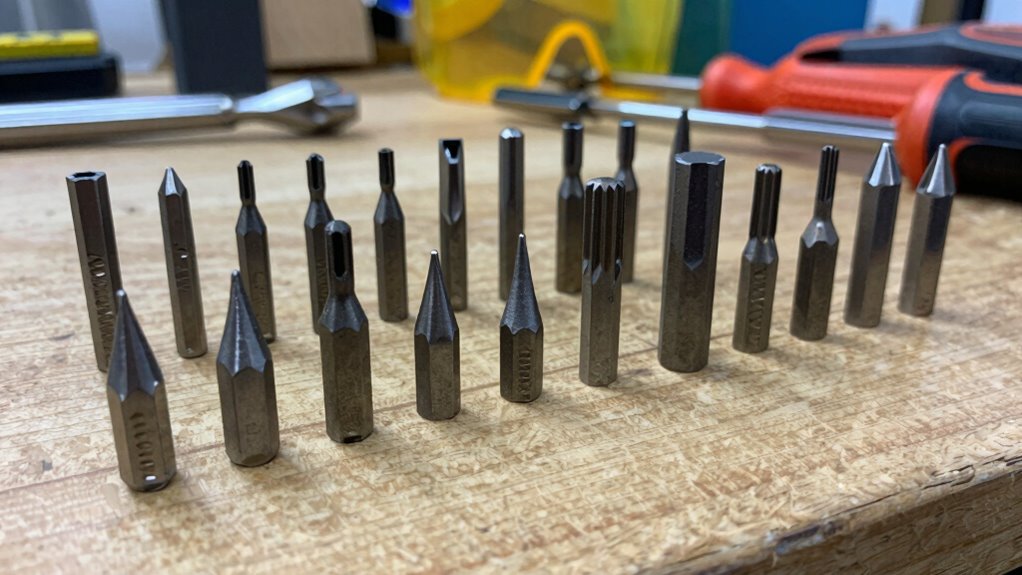
Improper use of drill bits can quickly lead to damage, wasted time, and subpar results. To avoid this, focus on drill bit safety and proper storage solutions. Here are common mistakes to watch out for:
- Using the wrong drill bit for the material, which causes breakage or poor results.
- Applying excessive pressure, damaging the bit or material, and risking injury.
- Neglecting to store drill bits properly, leading to dullness and difficulty finding the right bit when needed.
Always choose the correct bit for your task, use steady pressure, and keep your bits organized in designated storage solutions. Doing so helps maintain sharpness, ensures safety, and extends the life of your drill bits, saving you time and money in the long run.
How to Change and Maintain Your Drill Bits?
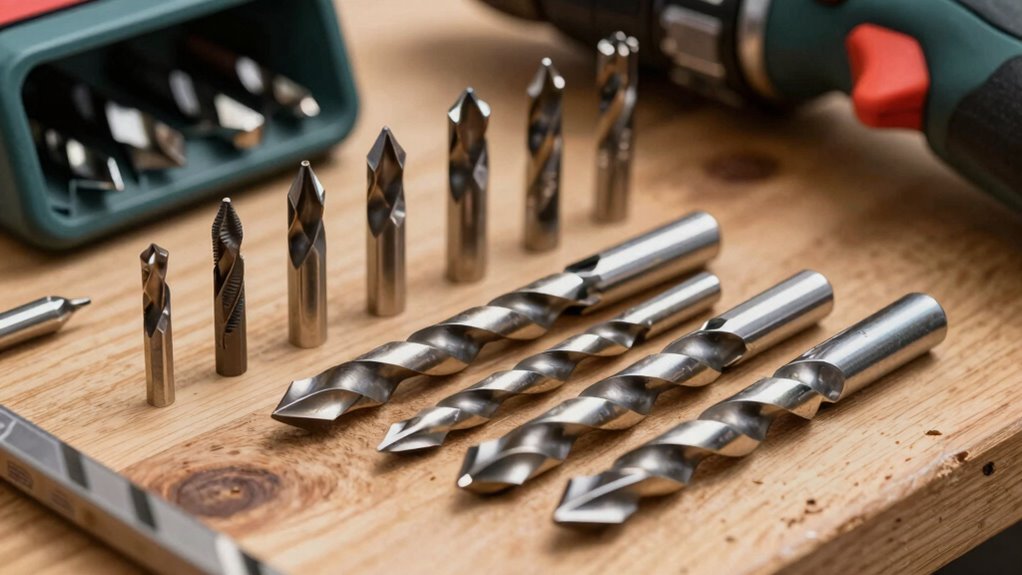
Changing and maintaining your drill bits is essential for safe and effective drilling. Proper care prevents accidents and extends your bits’ lifespan. To change a drill bit, ensure the drill is unplugged or the battery is removed. Loosen the chuck using your hand or chuck key, then remove the old bit. Insert the new bit, tighten the chuck securely, and test for stability. Regular maintenance includes cleaning bits after use to remove dust and debris, which preserves sharpness and reduces wear. Use the table below for quick tips:
| Action | Tip |
|---|---|
| Changing drill bits | Ensure drill is off, tighten securely |
| Maintaining bits | Clean and store in a dry place |
| Drill bit safety | Always wear safety goggles |
| DIY drill tips | Regularly inspect for wear and damage |

Choosing the right drill bit depends on your project needs and budget. For budget options, you can find reliable bits that handle basic tasks without breaking the bank. However, if you’re tackling tougher materials or need longer-lasting tools, premium choices are worth the investment. Here are some tips:
- Match the bit to your project’s complexity—simple jobs may only need budget options.
- Consider frequency of use—frequent projects justify opting for premium choices for durability.
- Assess material compatibility—premium bits often cut better and last longer on tough surfaces.
Frequently Asked Questions
How Do I Identify the Best Drill Bit for Specialty Materials?
To identify the best drill bit for specialty materials, first consider material compatibility—different materials require specific drill bit types. For example, use carbide-tipped bits for tough metals, or titanium-coated bits for plastics. Research specialty drill bit types like masonry or step bits, depending on your project. Always check manufacturer recommendations and select a bit designed for your material to guarantee clean cuts and durability.
What Safety Precautions Should I Take When Using Different Drill Bits?
Safety is your shield when using drill bits—think of it as armor. Always wear personal protective equipment like goggles and gloves to guard against flying debris. Handle your drill properly, maintaining a firm grip and steady pressure, to prevent slips and accidents. Keep the work area clean and free of obstructions. Following these precautions guarantees you drill safely, turning a potential hazard into a controlled, productive task.
Can I Sharpen or Resharpen Worn-Out Drill Bits Effectively?
Yes, you can sharpen worn-out drill bits to extend their longevity. Use proper sharpening techniques, like grinding the cutting edges at the correct angle, to restore their effectiveness. Keep in mind that frequent sharpening can weaken the bit, so assess if replacement is better for heavily worn bits. Proper maintenance not only improves performance but also guarantees safety and precision in your projects.
How Does Drill Bit Coating Impact Performance and Durability?
Your drill bit coating substantially impacts performance and durability. Coating types like titanium nitride, cobalt, or black oxide enhance durability by reducing friction and heat buildup. These coatings help the bit resist wear, extend its lifespan, and improve cutting efficiency. When choosing a drill bit, consider the coating type, as it directly influences how well the bit performs and how long it lasts, especially in tough or repeated drilling tasks.
Are There Eco-Friendly or Sustainable Drill Bit Options Available?
Yes, you can find eco-friendly options and sustainable materials for drill bits. Look for bits made from recycled steel or biodegradable coatings, which reduce environmental impact. Some brands prioritize sustainable manufacturing processes and use non-toxic, renewable materials. Choosing these options helps you drill effectively while supporting environmental conservation efforts, making your projects both eco-conscious and efficient.
Conclusion
Now that you know how to pick the right drill bits, you might think it’s complicated or costly. But with a little knowledge, you can choose affordable, quality bits that last and perform well. Don’t let confusion hold you back—equip yourself with the right tools and get the job done efficiently. After all, investing in the right drill bits saves you time, money, and frustration in the long run.