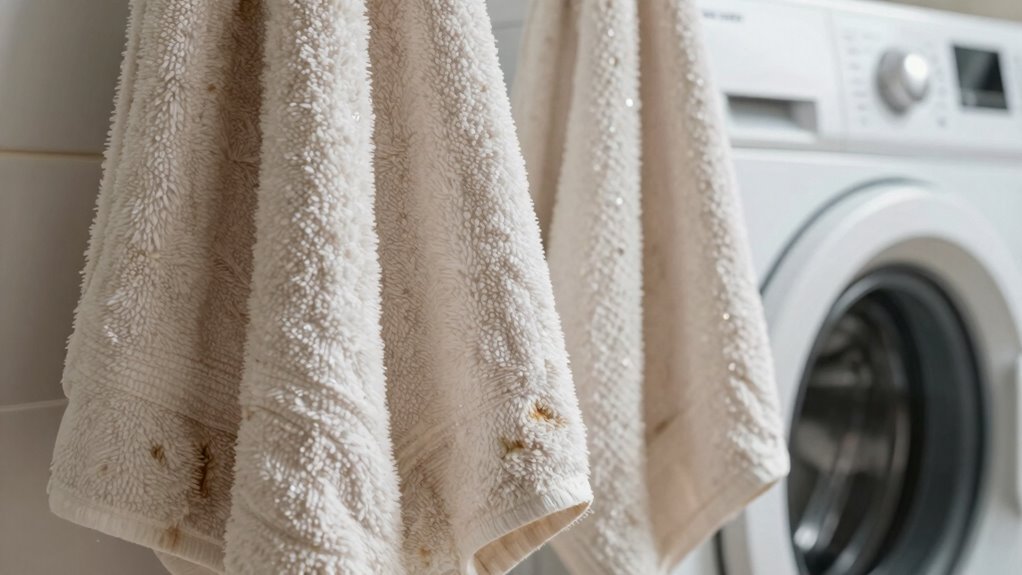

Even after washing, your towels can still smell musty because bacteria, mold, and residual moisture often hide deep in fibers or in poorly ventilated storage areas. Overloading your machine, using too much softener, or drying towels improperly creates a damp environment that promotes odors. To fix this, wash towels in hot water, dry them thoroughly in sunlight or a well-ventilated space, and use natural disinfectants like vinegar. Keep going, and you’ll discover even more effective tips to keep your towels smelling fresh.

Get furniture and decor delivered free with Prime
- Fast, free delivery on millions of items
- Prime Video, Amazon Music and more included
- Member-only deals all year
Key Takeaways
- Residual moisture and poor ventilation in storage areas promote mold and bacteria growth, causing persistent odors.
- Overuse of detergents or fabric softeners can leave residues that trap odors inside towel fibers.
- Inadequate washing temperatures or cycles may fail to kill bacteria and mold, leading to smelly towels.
- Towels not completely dry before storage develop dampness, fostering mold and musty smells.
- Regular maintenance of washing machines and proper drying techniques prevent microbial buildup and odor retention.
antibacterial laundry spray for towels
As an affiliate, we earn on qualifying purchases.
As an affiliate, we earn on qualifying purchases.
Why Do Towels Still Smell Musty After Washing?

Even after washing, towels can still develop a musty smell because mold and mildew thrive in damp, poorly ventilated environments. If you store your linen in a humid closet or hamper, moisture can linger, encouraging odor-causing bacteria. Using fabric softeners might seem helpful, but they can actually trap moisture in the fibers, making the smell worse over time. Proper linen storage is essential; guarantee towels are completely dry before folding and storing them in a well-ventilated space. Avoid overcrowding your linen closet, which can restrict airflow. Additionally, using the right amount of fabric softener and choosing natural alternatives can keep towels fresh. Keeping your linen dry and well-ventilated prevents mold growth and keeps your towels smelling fresh longer. Moreover, understanding the importance of contrast ratio in your home environment can help optimize your storage and drying spaces for better airflow and moisture control. Ensuring your home has good ventilation can further reduce humidity levels and prevent musty odors from developing.
Main Causes of Odor in Towels: Bacteria, Mold, and Moisture

Bacteria, mold, and moisture are the primary culprits behind the unpleasant odors that develop in towels. When you leave damp towels crumpled in a pile, bacteria and mold thrive, producing foul smells. Overuse of fabric softener can also trap residues in fibers, creating a breeding ground for odor-causing bacteria. To combat this, you might consider using antibacterial sprays on your towels, which help eliminate bacteria before they cause smells. Mold growth often results from lingering moisture, so ensuring towels dry completely after each use is essential. Regularly cleaning your washing machine can also prevent the buildup of mold and bacteria that contribute to towel odors. Additionally, using air purifiers in your laundry area can help reduce airborne mold spores and bacteria that may settle on towels during storage. Proper drying techniques, such as hanging towels in a well-ventilated space or using a dryer, are crucial for preventing moisture accumulation that leads to odors. Incorporating proper ventilation in your laundry area can further reduce humidity levels and inhibit mold growth.
How Laundry Habits Contribute to Towels Developing Odor

Your laundry habits play a significant role in whether towels develop odors over time. Using the right detergent selection and managing laundry frequency are key. Washing towels too infrequently allows bacteria and mold to thrive, causing persistent smells. Conversely, washing them too often with harsh detergents can damage fibers and trap odors.
Here’s how different factors influence odor development:
| Laundry Frequency | Detergent Selection | Impact on Towels |
|---|---|---|
| Infrequent washes | Strong, scented detergents | Bacteria buildup, mold growth |
| Frequent washes | Gentle, unscented detergents | Maintains freshness, prevents odor |
| Irregular schedule | Low-quality detergents | Residue buildup, smell |
| Overloading machine | Excess detergent | Ineffective cleaning, odor |
| Proper spacing | Correct detergent amount | Odor-free, fresh towels |
Additionally, water quality can influence how well your towels stay fresh, as minerals and impurities may contribute to odor retention. Using electric appliances like washing machines that are properly maintained can also improve cleaning efficiency and reduce odors. Regularly cleaning your washing machine can prevent the buildup of residues that contribute to towel odors, ensuring a cleaner laundry environment. Moreover, adopting appropriate drying techniques, such as thoroughly drying towels after washing, can help prevent mold growth and lingering smells.
Adjusting your laundry habits guarantees cleaner, smell-free towels.
Do Detergents and Softeners Make Towels Smell Worse?

While detergents and softeners are designed to clean and freshen towels, they can sometimes contribute to lingering odors if used improperly. Incorrect use can hinder detergent effectiveness, leaving residues that trap moisture and bacteria. Fabric softener effects, in particular, can coat fibers, reducing their breathability and trapping odors inside. To avoid this, consider these points:
Overusing detergents and softeners can trap odors and reduce towel freshness.
- Using too much detergent can cause buildup, making towels smell worse over time.
- Fabric softeners may initially smell good but can leave a film that traps odors if not rinsed thoroughly.
- Opt for natural or fragrance-free options if your towels tend to develop persistent smells, ensuring better detergent effectiveness and fewer fabric softener effects.
- Regularly air-drying towels in sunlight can help eliminate trapped bacteria and odors, promoting freshness.
- Additionally, understanding the impact of residual detergent can help you choose the right washing techniques to prevent odor buildup.
- Incorporating Glycolic Acid into your laundry routine in small amounts can assist in breaking down residues and maintaining towel freshness.
Proper use maximizes cleaning power and keeps your towels smelling fresh.
Best Ways to Kill Bacteria and Mold on Towels

To effectively eliminate bacteria and mold from your towels, you need to focus on proper cleaning methods that target these microorganisms directly. Start by washing towels in hot water, ideally above 140°F, to kill most bacteria and mold spores. Using antibacterial sprays on your towels before washing can also help reduce microbial buildup. Additionally, incorporate vinegar rinses into your laundry routine; vinegar acts as a natural disinfectant, breaking down mold and bacteria while neutralizing odors. Adding a cup of white vinegar during the rinse cycle boosts the disinfecting action without leaving harmful residues. Proper laundering techniques are essential for maintaining fresh and hygienic towels. Incorporating antimicrobial properties into your laundry routine can further enhance the effectiveness of your cleaning process. Choosing effective cleaning agents that are designed to target microbes can make a significant difference in towel sanitation. Combining high-temperature washes with antibacterial sprays and vinegar rinses creates an effective strategy to keep your towels fresh, clean, and free from harmful microbes. To further improve sanitation, consider using natural disinfectants like tea tree oil, which has proven antimicrobial benefits and can help eliminate stubborn bacteria and mold. Regularly air-drying your towels in direct sunlight can also help reduce microbial growth due to sunlight’s natural disinfectant properties.
How to Properly Dry Towels to Keep Them Fresh

Proper drying is key to keeping towels fresh and odor-free after washing. To prevent musty smells, make certain towels are thoroughly dry before storage. Here are three tips:
Ensure towels are completely dry before storing to keep them fresh and odor-free.
- Hang towels in a well-ventilated area to promote air circulation, preventing dampness that causes odors. Ensure proper airflow to speed up drying times and reduce the risk of odor development. Using natural drying techniques can also help ensure towels dry completely and stay odor-free. Incorporating proper laundry practices can further enhance odor prevention and towel freshness.
- Avoid overloading your laundry space; proper towel storage keeps them dry and fresh.
- Be cautious with fabric softener effects—using too much can leave a residue that traps moisture, leading to odors. Instead, opt for vinegar or natural alternatives to maintain softness without compromising freshness. Incorporating smart home ventilation systems can improve airflow and drying efficiency in your laundry area, further preventing odors. Additionally, maintaining good indoor air quality can help reduce moisture buildup in your laundry space.
Tips for Maintaining Fresh-Smelling Towels Long-Term

To keep your towels smelling fresh over time, you need to focus on proper washing techniques and regular maintenance. Using the right amount of detergent and avoiding overloads can prevent musty odors from developing. Consistently following these tips helps your towels stay clean and inviting longer.
Proper Washing Techniques
Washing your towels correctly is essential for keeping them fresh and smelling clean over time. Proper techniques prevent odors and extend their lifespan. First, always wash towels in hot water to eliminate bacteria and sweat buildup. Second, avoid using too much fabric softener, as it can coat fibers and trap odors; instead, opt for vinegar or specialized towels detergents. Third, regularly perform washing machine maintenance by cleaning the drum and filters to prevent mold and mildew. Additionally, dry towels thoroughly after each wash to prevent dampness that encourages odor. Using these methods ensures your towels stay fresh longer and maintain their softness. Proper washing techniques combined with good washing machine maintenance will keep your towels smelling fresh and feeling plush. Incorporating a whole-house water filtration system can also help reduce mineral deposits and impurities that contribute to lingering odors on fabrics over time.
Regular Maintenance Tips
Maintaining fresh-smelling towels over the long term requires consistent care beyond just washing them properly. To keep your towels soft and inviting, avoid overloading the washer, which can prevent thorough rinsing and lead to odor build-up. Use a gentle fabric softener occasionally to enhance fabric softness, but don’t overdo it, as it can cause residue that traps odors. Always wash towels in warm water and dry them completely to prevent mustiness. Keep an eye on dye fading—exposure to harsh detergents or frequent bleaching can dull colors; opt for color-safe detergents and occasional vinegar rinses to preserve vibrancy. Regularly revitalizing your towels with these tips helps maintain their plush feel and inviting scent longer, ensuring they stay inviting after every use. Additionally, understanding proper laundry techniques can further optimize your towel maintenance and odor prevention efforts.
When to Replace Old Towels or Use Special Odor-Removing Products

Old towels that consistently retain a musty smell despite regular washing are a clear sign it’s time to replace them. Over time, towel longevity decreases, and odors can become embedded beyond what odor removing products can fix. When you notice this, it’s best to contemplate replacing your towels to prevent bacteria buildup and persistent odors.
Here are three signs to watch for:
- The towel feels rough or thin, indicating wear and tear.
- The smell persists even after multiple washes with odor removing products.
- Stains or discoloration become permanent, suggesting deep fiber damage.
Using odor removing products can help temporarily, but replacing old towels ensures healthier, fresher linen. If your towels are past their prime, it’s time to upgrade for a cleaner, more comfortable experience.
Frequently Asked Questions
Can Adding Vinegar or Baking Soda Prevent Towel Odor?
Adding vinegar or baking soda can help prevent towel odor. Vinegar benefits include neutralizing odors and breaking down residue, while baking soda uses involve absorbing moisture and odors. When you add half a cup of vinegar or baking soda during laundry, it helps eliminate bacteria and soap buildup. This keeps your towels fresh and odor-free, making them smell clean even after multiple washes. Give it a try for fresher, cleaner towels every time.
How Often Should I Wash My Towels to Avoid Smell?
You should wash your towels after every 3 to 4 uses to prevent odors from building up. Thicker towels may need a slightly longer wash cycle, and using dryer sheets can help keep them fresh and soft. Be sure to dry towels thoroughly, as dampness encourages smells. Regular washing and proper drying break down bacteria and mold, keeping your towels smelling clean and fresh for longer.
Do Fabric Types Affect Towel Odor Retention?
When it comes to towel odor retention, you can’t judge a book by its cover. Cotton towels tend to absorb more fabric odor and retain smells longer than microfiber towels, which dry faster and resist odor buildup better. Your choice matters—cotton’s breathability can trap moisture, leading to lingering smells, while microfiber’s quick-drying nature reduces odor absorption. So, pick the right fabric to keep your towels smelling fresh longer.
Are There Natural Remedies for Freshening Smelly Towels?
Yes, you can use natural remedies to freshen smelly towels. Add white vinegar or baking soda to your laundry, which helps break down detergent residues and odors. Use gentle laundry detergents suitable for your towel fabrics, and avoid overloading the washer. These methods work well to eliminate musty smells, leaving your towels fresh without harsh chemicals. Regularly airing towels outside also helps maintain their scent.
Can Storing Towels in Closed Spaces Cause Odors?
Storing towels in closed spaces can definitely cause odors because poor air circulation traps moisture and smells. When towels sit in a cramped, airtight area, bacteria and mold thrive, leading to unpleasant storage odors. To prevent this, make certain good air circulation by leaving the closet door slightly open or using a breathable storage bin. Regularly airing out your towels also helps keep them fresh and odor-free.
Conclusion
Think of your towels as the canvas of your daily routine—once stained by bacteria and mold, they need proper care to stay vibrant. By drying and cleaning them thoroughly, you’re not just removing odors, but restoring their essence. When you nurture your towels, you preserve their purpose—comfort and freshness—like tending to a garden. Keep them fresh, and they’ll continue to be a symbol of your care for yourself and your space.
Halloween Picks
halloween
As an affiliate, we earn on qualifying purchases.