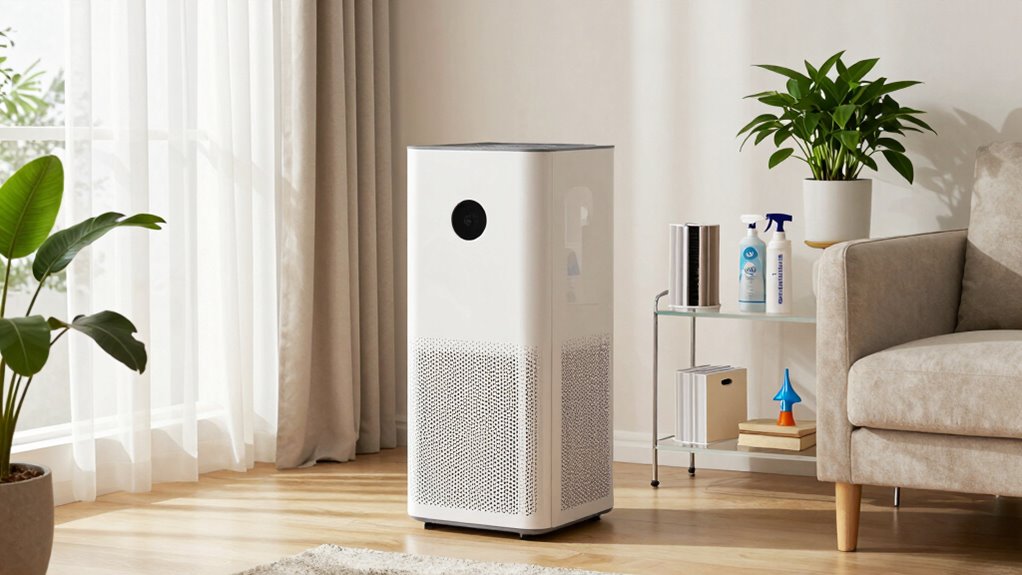

To keep your air purifier running efficiently all year, perform regular maintenance like cleaning exterior parts and changing or cleaning filters according to your manufacturer’s schedule, usually every 3 to 6 months. Manage indoor allergens by vacuuming regularly and controlling humidity levels to prevent mold and dust mites. Keep windows and doors closed during high pollen seasons and monitor for indicator lights that signal filter replacements. Staying proactive guarantees better air quality and longer device life—details to help you maintain peak performance year-round.

Get furniture and decor delivered free — and shop member deals
- Fast, free delivery on millions of items
- Access to Prime Big Deal Days deals on October 6–7
- Prime Video, Amazon Music and more included
Key Takeaways
- Regularly replace or clean filters according to the manufacturer’s schedule to maintain optimal filtration efficiency.
- Perform routine cleaning of external components and vents to ensure good airflow and prevent dust buildup.
- Control indoor humidity and minimize allergen sources like pet dander and mold for sustained purifier performance.
- Keep windows and doors closed during operation to prevent external pollutants from overwhelming the system.
- Schedule periodic maintenance checks and follow manufacturer guidelines to prolong the device’s lifespan and efficiency.

Air purifiers are indispensable for maintaining clean indoor air, no matter the season, but their efficiency depends on proper care and maintenance throughout the year. To maximize their performance, you need to pay close attention to indoor allergen control and establish a reliable filter replacement schedule. Indoor allergens like dust mites, pet dander, pollen, and mold spores tend to accumulate quickly, especially in homes with pets or high humidity. Without regular maintenance, these allergens can build up inside your air purifier, reducing its ability to filter the air effectively. That’s why staying vigilant about indoor allergen control is essential—cleaning surfaces, vacuuming with a HEPA filter, and controlling humidity levels all help reduce the allergen load your purifier has to handle.
A key part of maintaining your air purifier’s efficiency is following a consistent filter replacement schedule. Most models have filters that need changing every three to six months, but this can vary based on usage and air quality. If you rarely change the filters, your purifier will struggle to trap airborne particles, leading to diminished air quality and potential strain on the device. To avoid this, set reminders or mark your calendar to check your filter status regularly. Some purifiers come with indicator lights that signal when it’s time for a replacement—pay attention to these signals and act promptly. When replacing filters, always follow the manufacturer’s instructions to guarantee proper installation and peak performance. Additionally, using high-quality filters can improve overall efficiency and prolong the intervals between replacements filter quality.
Beyond replacing filters, regular cleaning of the purifier’s exterior and pre-filters can extend the life of your device and maintain peak performance. Dust and debris can accumulate on vents and external components, impeding airflow. Use a soft cloth or brush to wipe down these areas every few weeks. If your purifier has a pre-filter, check if it’s washable—clean it according to the manufacturer’s directions. Ensuring good airflow through the unit keeps it running efficiently and reduces the load on your filters. Proper airflow is also influenced by the air quality inside your home, which can fluctuate based on environmental factors and activities. Additionally, keep windows and doors closed when the purifier is operating, especially during high pollen seasons or in dusty environments, to prevent external pollutants from overwhelming the system. Regularly inspecting and maintaining your unit also helps prevent the buildup of airborne particles, which can compromise its effectiveness. Being aware of surrounding environmental factors can help you make adjustments to optimize performance.
Maintaining indoor allergen control and adhering to a consistent filter replacement schedule are essential in keeping your air purifier functioning at its best. Proper maintenance not only improves air quality but also prolongs the lifespan of your device. Incorporating indoor allergen control practices and routine checks can significantly enhance your purifier’s efficiency and your overall indoor environment. By staying proactive and attentive to these simple tasks, you guarantee that your indoor environment remains fresh, healthy, and free from harmful airborne particles year-round.
As an affiliate, we earn on qualifying purchases.
Frequently Asked Questions
Can Air Purifiers Remove All Types of Airborne Toxins?
Air purifiers can’t remove all types of airborne toxins due to their limitations. For example, they excel at filtering dust, pollen, and pet dander, but may struggle with gases, odors, or volatile organic compounds (VOCs). Toxin removal efficiency varies based on the filter type and technology used. To maximize protection, choose an air purifier suited to your specific needs and maintain it regularly for peak performance.
How Often Should I Replace the Air Purifier’s Filter?
They say, “A stitch in time saves nine,” and that holds true for maintaining your air purifier. You should replace the filter when the manufacturer recommends, typically every 6 to 12 months, depending on usage and filter type. Follow your device’s maintenance schedule closely, as a proper filter lifespan guarantees maximum performance. Regular replacement keeps your air clean and your purifier working efficiently year-round.
Do Air Purifiers Consume a Lot of Energy?
Air purifiers don’t consume a lot of energy, especially when you choose models focused on power efficiency. Their energy consumption varies depending on size and settings, but most are designed to run quietly and efficiently. To save energy, use the purifier on lower or auto modes, and turn it off when not needed. Regular maintenance, like replacing filters, also helps guarantee it runs smoothly without wasting power.
Are Air Purifiers Effective Against Viruses and Bacteria?
Think of your air purifier as a guardian, fiercely battling invisible foes. It’s effective against viruses and bacteria, especially with UV sterilization and HEPA filters working together. UV sterilization kills or neutralizes pathogens, while HEPA filters trap tiny particles. Combined, they considerably reduce airborne germs, giving you cleaner, safer air. So yes, your purifier actively fights off harmful microbes, making your environment healthier and more protected against unseen threats.
Can Air Purifiers Be Used in Outdoor Spaces?
You can use air purifiers outdoors, especially those designed for outdoor filtration, to improve air quality in patios, gardens, or events. However, they often aren’t built for continuous outdoor use, and exposure to weather can reduce their lifespan. Keep in mind that outdoor use might have a bigger environmental impact due to increased energy consumption. Choose models specifically designed for outdoor environments to maximize efficiency and minimize environmental effects.
Conclusion
To keep your air purifier running smoothly all year, remember to clean or replace filters regularly and keep the device in a central, unobstructed location. Staying proactive guarantees cleaner, healthier air for you and your loved ones. Don’t you deserve to breathe the freshest air possible every day? By staying attentive to maintenance, you’re investing in your well-being and comfort. Make these small efforts a habit, and enjoy the benefits of consistently purified air.
Fall Picks
fall essentials
As an affiliate, we earn on qualifying purchases.