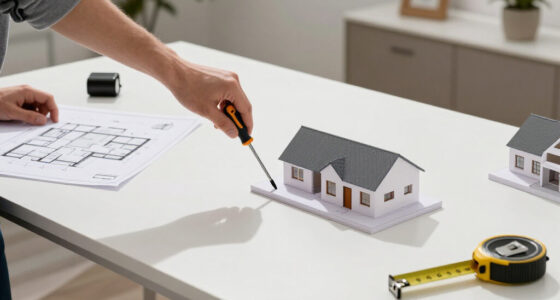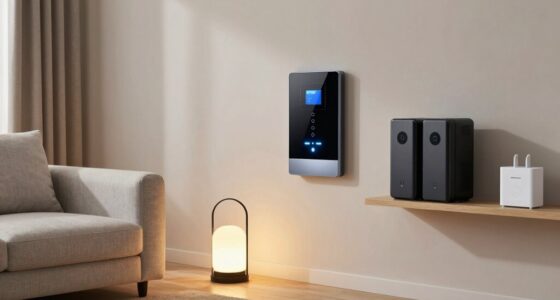

To build a smart home room by room, start with one space, like the living room, and add smart lighting, thermostats, and energy-efficient devices. Gradually include smart appliances, security cameras, or sensors in each area, focusing on your needs. By upgrading step-by-step, you’ll better understand each device and how they work together. Keep going, and you’ll learn how to create a safe, comfortable, and efficient smart home tailored to your lifestyle.

Get furniture and decor delivered free — and shop member deals
- Fast, free delivery on millions of items
- Access to Prime Big Deal Days deals on October 6–7
- Prime Video, Amazon Music and more included
Key Takeaways
- Assess each room’s specific needs to determine suitable smart devices and features.
- Start with essential upgrades like smart lighting and thermostats for foundational comfort and energy savings.
- Implement devices incrementally to manage complexity and ensure proper integration.
- Focus on room-specific solutions, such as smart security in bedrooms and leak sensors in bathrooms.
- Plan for remote control and automation to optimize convenience and system reliability.
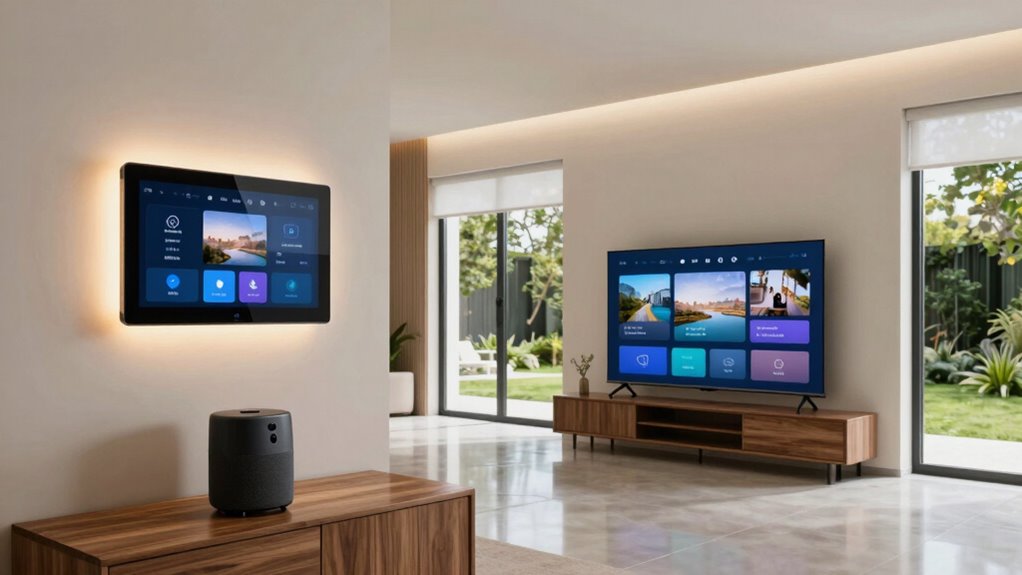
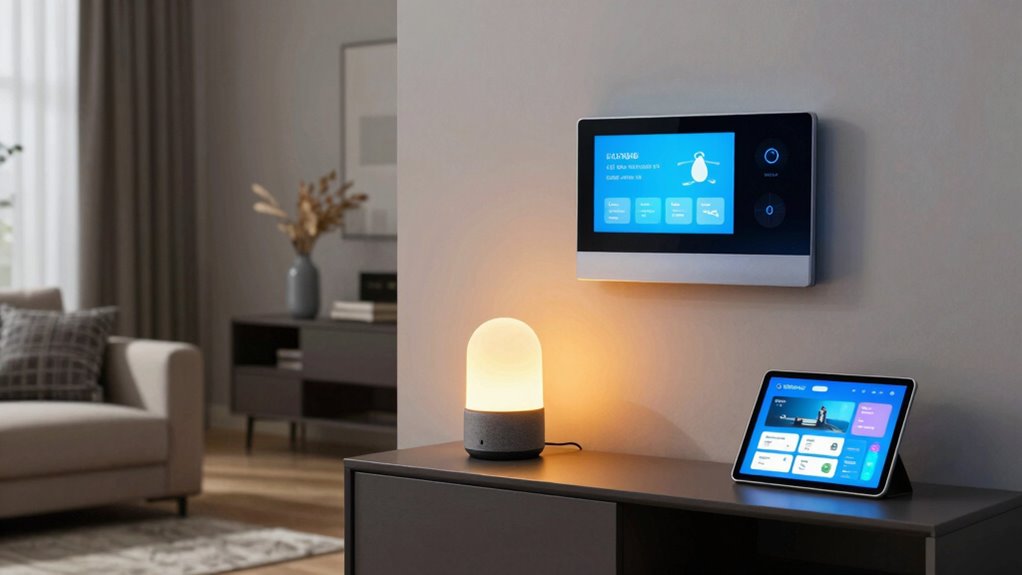
Transforming your home into a smart space can seem overwhelming, but approaching it room by room makes the process manageable and enjoyable. When you focus on one area at a time, you can better understand what devices and systems will make the space more functional and comfortable. For example, in the living room, start with smart lighting that adjusts based on your schedule or mood. These systems not only create ambiance but also enhance energy efficiency by reducing unnecessary electricity use. Smart thermostats can be integrated here to control temperature, ensuring you’re comfortable without wasting energy. With these upgrades, you’ll notice lower utility bills and a more eco-friendly home.
Transform your home gradually with smart tech for comfort, energy savings, and a more eco-friendly lifestyle.
Moving into the kitchen, you have the chance to incorporate smart appliances that streamline your daily routines. A smart refrigerator can track groceries and suggest recipes, while smart plugs can turn regular appliances into connected devices. You’ll save time and energy, making your kitchen more efficient. Security is also a key consideration, so installing smart security cameras or doorbells in this area protects your home and provides peace of mind. These devices allow you to monitor activity remotely and receive alerts if anything unusual happens. As you set up security systems, you’re not just safeguarding your property but also creating a safer environment for your family.
In the bedroom, focus on comfort and energy savings. Smart lighting that gradually dims at night can improve your sleep quality, while smart blinds can open or close based on the time of day or sunlight levels. A smart thermostat in this room can learn your schedule and adjust the temperature to optimize energy efficiency while keeping you cozy. Additionally, integrating security systems like door/window sensors offers an extra layer of protection while you sleep. These sensors alert you to any unauthorized entry and can be linked to your phone, so you stay connected even when you’re away. Exploring home automation options can further enhance convenience and control over your environment.
In the bathroom, consider smart mirrors with built-in lighting and displays for news or weather updates. Smart water sensors can detect leaks early, preventing costly damage. For security, smart locks on bathroom doors can give you control over access, especially if you have guests or household members with specific needs. As you set up each room, remember that the goal is to enhance your home’s efficiency, safety, and convenience. Building a smart home room by room allows you to make thoughtful choices, ensuring each space works perfectly for your lifestyle. Plus, the incremental approach makes the entire process more enjoyable and less intimidating.
As an affiliate, we earn on qualifying purchases.
Frequently Asked Questions
How Much Does a Complete Smart Home Setup Typically Cost?
A complete smart home setup usually costs between $10,000 and $50,000, depending on the system’s complexity and devices. You’ll spend on smart lighting, thermostats, security, and voice control devices that boost energy efficiency and convenience. While initial costs can seem high, investing in energy-efficient devices saves money long-term. Your budget varies based on the number of rooms, brands, and features you choose, making customization key.
Are Smart Devices Compatible Across Different Brands?
Smart devices often face interoperability challenges, making brand compatibility a common concern. You might find that some devices work seamlessly together, while others don’t due to differing protocols or ecosystems. To avoid frustration, choose devices that support popular standards like Zigbee or Z-Wave, or stick to one ecosystem, such as Amazon Alexa, Google Assistant, or Apple HomeKit. This way, you guarantee your smart home functions smoothly across different brands.
What Are the Best Privacy Measures for Smart Home Devices?
You should prioritize adjusting privacy settings on your smart devices to control data sharing. Enable features like two-factor authentication, and regularly review app permissions. Make sure device encryption is active to protect your information during transmission. Keep firmware and software updated to patch security vulnerabilities. Using a separate Wi-Fi network for your smart devices adds an extra layer of privacy, preventing unauthorized access to your main network.
How Can I Ensure Reliable Wi-Fi Throughout My Home?
Think of your Wi-Fi as a trusty knight guarding your castle. To guarantee reliable coverage, you should optimize your network by placing your router centrally, away from obstructions, and updating its firmware regularly. Use wireless security features like WPA3 to protect your network. Consider adding range extenders or mesh systems to eliminate dead zones, ensuring every room gets a strong, stable signal for all your smart devices.
What Is the Average Time to Install a Room’s Smart System?
Installing a smart system in a room typically takes 2 to 4 hours, depending on the complexity and number of devices. During setup, you’ll configure voice control features and optimize for energy efficiency, ensuring seamless operation. You should allocate extra time for troubleshooting or adjusting settings. With a clear plan and reliable Wi-Fi, the process becomes smoother, making your smart room functional and efficient in just a few hours.
Conclusion
Building a smart home room by room empowers you to create a space that’s safer, more convenient, and tailored to your needs. It’s about embracing innovation, enhancing comfort, and gaining control. It’s about transforming your house into a home that responds to your lifestyle, that adapts to your routines, that elevates your everyday experience. So, take the step, plan your design, and enjoy the journey of making your home smarter, one room at a time.
Fall Picks
fall essentials
As an affiliate, we earn on qualifying purchases.