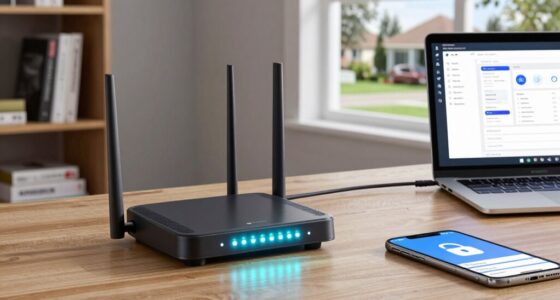
To use smart sensors for a safer home, install devices that detect hazards like smoke, intruders, and environmental risks, and set up instant alerts to respond quickly. Use sensors to monitor temperature, humidity, and energy use, adjusting systems automatically to prevent issues. Regularly check system alerts for maintenance needs and customize notifications to avoid overload. By integrating these sensors with your smart home, you’ll improve safety, efficiency, and peace of mind—learn more about making your home smarter and safer.

Get furniture and decor delivered free with Prime
- Fast, free delivery on millions of items
- Prime Video, Amazon Music and more included
- Member-only deals all year
Key Takeaways
- Install smart sensors in key areas to detect hazards like smoke, intruders, and environmental risks for immediate alerts.
- Set personalized thresholds and alert preferences via connected apps to ensure critical notifications are prioritized.
- Use sensor data to automate safety responses, such as locking doors or activating alarms during emergencies.
- Regularly monitor sensor performance and system alerts to maintain optimal home safety and address issues early.
- Integrate sensors with other smart home devices for comprehensive security, automation, and quick response capabilities.
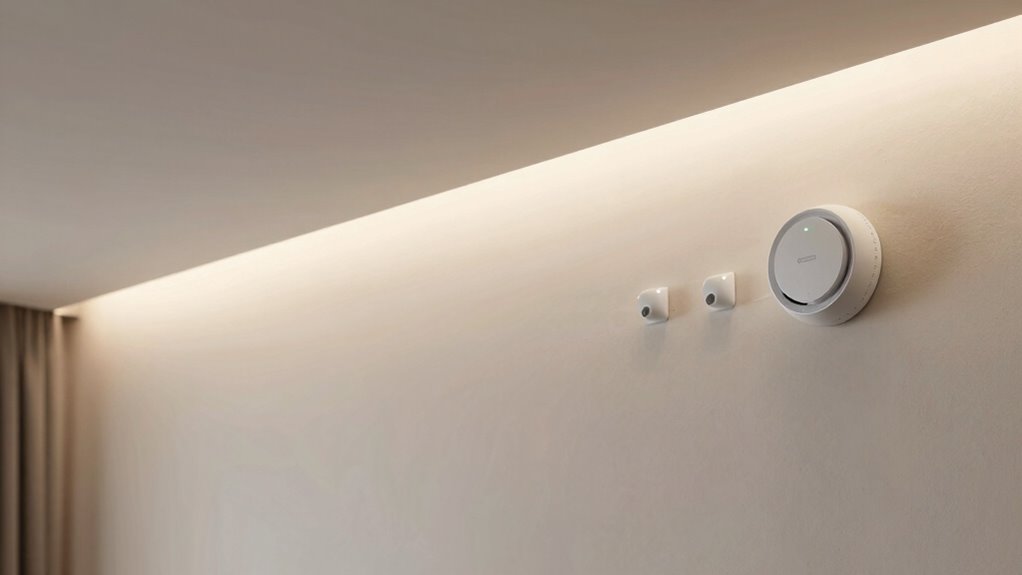
Smart sensors are transforming home safety by providing real-time monitoring and instant alerts, helping you respond quickly to potential hazards. These devices aren’t just about detecting smoke or intruders—they play a crucial role in enhancing your home’s energy use and keeping systems running smoothly through maintenance alerts. When you set up smart sensors correctly, you gain a thorough overview of your home’s environment, making it easier to prevent accidents and reduce unnecessary energy consumption.
Smart sensors enhance safety, energy efficiency, and system maintenance through real-time monitoring and instant alerts.
One of the key benefits of smart sensors is their ability to improve energy efficiency. You can install sensors that monitor temperature, humidity, and light levels across different rooms. With this data, your smart home system adjusts heating, cooling, and lighting automatically, ensuring you’re not wasting energy when spaces are unoccupied or conditions don’t require full power. For example, if a sensor detects that a room is empty, it can signal your thermostat or smart lights to turn off, saving you money on utility bills without sacrificing comfort. Over time, these adjustments help you develop smarter habits, reducing your carbon footprint and supporting sustainable living.
In addition to boosting energy efficiency, smart sensors provide maintenance alerts that keep your home systems functioning effectively. These sensors can monitor appliances, HVAC systems, and plumbing for signs of wear or malfunction. When a sensor detects an issue—like a leak, a rising temperature indicating a potential overheating problem, or a drop in performance—it sends an alert straight to your phone or home hub. This early warning system means you can schedule repairs before small issues become costly or cause damage. For instance, a water leak sensor alert can prevent extensive water damage, while a furnace sensor warning allows for timely servicing before the system breaks down during a cold snap. Incorporating predictive maintenance can further enhance your ability to prevent costly repairs and extend the lifespan of your home systems, especially when combined with smart home integration. Understanding the role of smart sensors in home automation can help you optimize their placement and functionality. Regularly check your sensor data and alerts through your connected app to stay informed. Many systems allow you to customize thresholds and alerts, so you only get notified about what truly matters to you. This ensures you’re not overwhelmed with unnecessary alerts but are still promptly informed about critical issues. Additionally, leveraging sensor data analytics can provide deeper insights into your home’s overall performance and safety. As technology advances, the integration of AI-driven insights can help you further refine your home’s safety and efficiency. Integrating smart sensors into your daily routines empowers you to make smarter decisions regarding energy use, maintenance, and safety, ultimately creating a more secure, efficient, and comfortable home environment.
smart smoke and carbon monoxide detector
As an affiliate, we earn on qualifying purchases.
As an affiliate, we earn on qualifying purchases.
Frequently Asked Questions
How Do Smart Sensors Connect to Home Wi-Fi Networks?
You connect smart sensors to your home Wi-Fi by following their setup process, which usually involves using a smartphone app. First, place the sensors in key areas like entrances or hallways for ideal sensor placement. Then, verify your Wi-Fi network supports wireless protocols like Wi-Fi 802.11 b/g/n. During setup, the app guides you to connect the sensor to your network, making sure it communicates seamlessly for reliable home safety.
Are Smart Sensors Compatible With All Smart Home Systems?
Smart sensors aren’t compatible with all smart home systems, but many are designed for broad home automation integration. You need to check sensor compatibility with your existing devices and platforms before purchasing. Some sensors work best with specific systems like Alexa, Google Home, or Apple HomeKit. Ensuring compatibility helps seamless integration, so your home automation setup functions smoothly and enhances your home’s safety features effectively.
What Is the Typical Battery Life of Smart Sensors?
Did you know that most smart sensors offer a battery longevity of 1 to 3 years? They typically use low-power design features, which optimize power management. Your sensor’s battery life depends on usage and the type of sensor, but you can expect it to last several years with minimal maintenance. To maximize longevity, regularly check the battery status and replace batteries promptly, ensuring your home stays secure without interruption.
Can Smart Sensors Be Installed Without Professional Help?
Yes, you can install smart sensors through DIY installation. Just focus on proper sensor placement for *maximum* coverage, such as near entry points or high-traffic areas. Most sensors come with clear instructions and basic tools, making the process straightforward. You don’t need professional help, but take your time to *guarantee* each sensor is securely installed and connected to your home Wi-Fi for reliable monitoring.
How Secure Are Smart Sensors Against Hacking Threats?
Smart sensors are like vigilant guardians, but they’re not invincible. They face hacking threats, yet strong cybersecurity measures and robust encryption protocols act as digital armor, shielding your home. Regular updates and secure Wi-Fi connections further fortify defenses. While no system is foolproof, staying proactive helps keep your smart sensors resilient against cyberattacks, ensuring your home remains a safe haven rather than a vulnerable target.
Conclusion
By integrating smart sensors into your home, you create a proactive safety net that alerts you to dangers before they escalate. Imagine a sensor detecting a sudden increase in carbon monoxide, sending an immediate alert to your phone—potentially saving lives. In your own home, these devices can monitor smoke, leaks, or intrusions, giving you peace of mind. Embrace smart sensors today, and turn your home into a vigilant, safer sanctuary for everyone inside.
Fall Picks
fall essentials
As an affiliate, we earn on qualifying purchases.