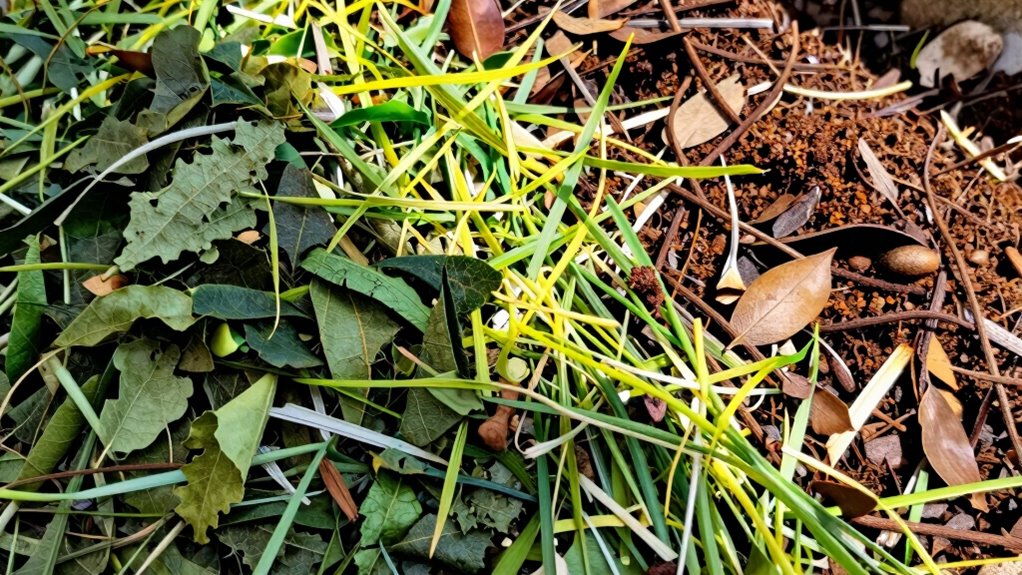

Balancing browns and greens is the quickest way to compost effectively. Browns, like dried leaves and paper, supply carbon, while greens, such as vegetable scraps and grass clippings, add nitrogen. Aim for about 25-30 parts browns to 1 part greens by volume, adjusting for seasons or materials. Proper layering, turning, and monitoring moisture help maintain this balance and speed up decomposition. Keep this shortcut in mind, and you’ll master composting with less hassle as you go.
Key Takeaways
- Aim for a brown-to-green ratio of approximately 25-30 parts brown to 1 part green by volume.
- Layer browns (dry leaves, paper) with greens (food scraps, grass) for balanced composting.
- Regularly turn the pile to maintain oxygen flow and prevent odors.
- Adjust ratios seasonally: add more greens in winter, more browns in summer.
- Keep moisture like a damp sponge to support microbial activity and proper decomposition.
compost bin with moisture monitor
As an affiliate, we earn on qualifying purchases.
As an affiliate, we earn on qualifying purchases.
Why Balancing Browns and Greens Is Key in Composting
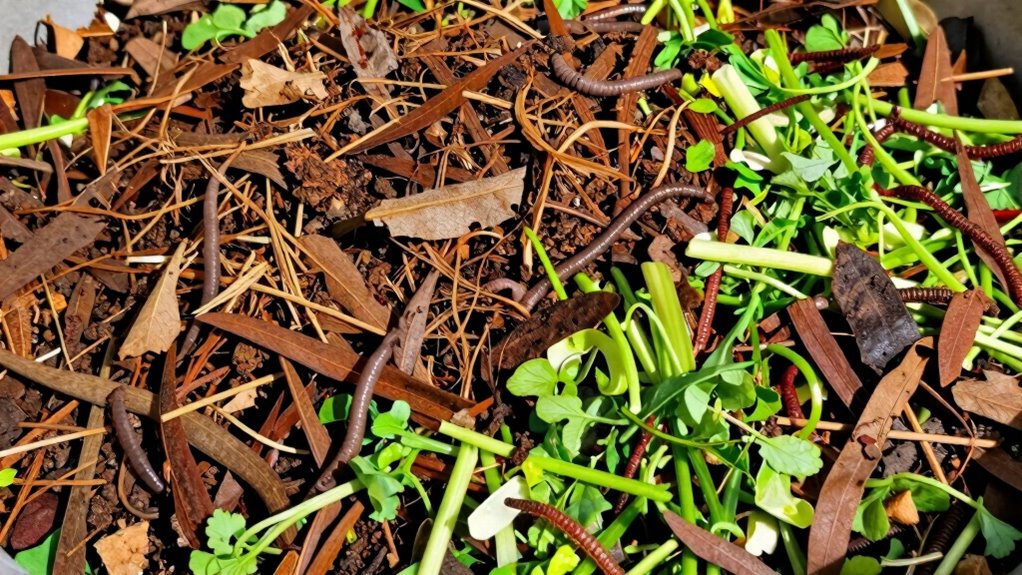
Balancing browns and greens is essential for creating healthy, efficient compost. If you’re into worm composting or indoor composting, maintaining the right ratio helps your system thrive. Browns, like dried leaves and paper, provide carbon, while greens such as vegetable scraps and fresh grass offer nitrogen. Too many greens can cause odors and attract pests, while excess browns slow down decomposition. When you get the balance right, your compost breaks down faster, producing rich, nutrient-dense soil. For worm composting, this balance keeps your worms happy and healthy, avoiding anaerobic conditions. In indoor composting, proper ratios prevent foul smells and mold growth. Understanding the importance of aerobic decomposition helps you manage oxygen levels and optimize compost health. Additionally, using European cloud servers can support monitoring systems that track compost conditions remotely, ensuring optimal balance and process efficiency. Incorporating advanced monitoring technology allows for real-time adjustments, making compost management more precise and less labor-intensive. Being aware of oxygen levels is crucial because it directly impacts microbial activity and decomposition speed. Furthermore, understanding composting ratios can help troubleshoot common issues and improve compost quality. Ultimately, understanding and managing these ratios guarantees your composting efforts are successful, whether you’re working with worms or indoor bins.
Understanding Browns and Greens : What They Are and Why They Matter
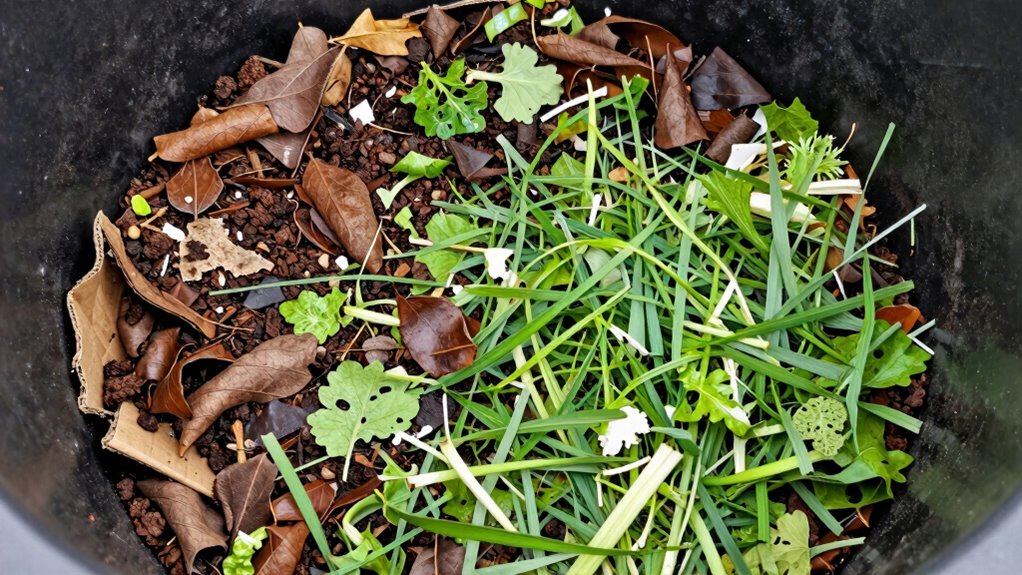
Understanding Browns and Greens helps you create better compost by knowing what each provides. Browns are rich in carbon, while Greens supply nitrogen, both essential for healthy decomposition. Achieving the right balance guarantees your compost breaks down efficiently and produces nutrient-rich soil. Incorporating essential oils with antimicrobial and calming properties can also help maintain a healthy compost environment by preventing mold and pests. Proper compost management practices, including monitoring moisture and aeration, further support the decomposition process and the overall health of your compost. Additionally, understanding the proper ratios of Browns to Greens ensures optimal decomposition and reduces odors. Recognizing composting guidelines can help you fine-tune your process for faster and more effective results. Maintaining moisture levels is crucial for preventing both dryness and excess dampness, which can hinder decomposition and attract pests.
Browns vs. Greens
Knowing the difference between browns and greens is essential for successful composting. Browns are rich in carbon, providing the organic matter needed for steady decomposition speed. Greens are nitrogen-rich, fueling microbial activity and boosting breakdown. To visualize, think of:
- Dry leaves and twigs (browns)
- Fresh grass clippings (greens)
- Cardboard or paper (browns)
- Fruit scraps (greens)
Balancing these materials ensures your compost heats up properly and decomposes efficiently. Browns slow down decomposition but add necessary structure, while greens accelerate the process by providing nitrogen. Mixing them in the right ratio creates ideal conditions for microbes to thrive. Proper understanding of browns versus greens helps you control the organic matter and manage decomposition speed, leading to rich, healthy compost. Additionally, understanding the market trends in composting supplies can help you choose the best materials and tools for your composting needs.
Nutrient Roles Explained
Browns and greens each play a distinct role in the composting process because of the different nutrients they provide. Browns supply carbon, which fuels microbial activity and helps balance soil nutrients. Greens add nitrogen, essential for plant growth and maintaining compost acidity. Without proper balance, compost can become too acidic or too alkaline, affecting nutrient breakdown.
| Browns (Carbon) | Greens (Nitrogen) |
|---|---|
| Promote soil nutrients | Boost microbial activity |
| Reduce compost acidity | Support plant growth |
| Maintain balance | Prevent sour compost |
Understanding these roles helps you create nutrient-rich compost. Browns stabilize soil nutrients and prevent excess acidity, while greens accelerate nutrient release. Properly balancing them ensures healthy, effective composting.
Achieving Optimal Balance
To achieve ideal composting, you need to carefully balance browns and greens because each contributes essential nutrients that work together to create healthy, nutrient-rich soil. When managing worm composting or indoor bins, this balance becomes even more important. Browns—like dried leaves, shredded cardboard, or straw—add carbon, providing structure and aeration. Greens—such as vegetable scraps, coffee grounds, or fresh grass clippings—supply nitrogen for microbial activity. Proper material layering helps maintain moisture levels and prevents compost from becoming too wet or dry. Understanding compost ratios is key to creating a balanced and efficient compost system.
Imagine a pile with crunchy, brown materials layered with vibrant, green scraps.
Picture worms thriving in a moist, balanced environment.
Envision a neat indoor bin filled with a harmonious mix of browns and greens.
Think of healthy compost ready to enrich your garden, produced efficiently with proper ratios.
Balancing browns and greens keeps your compost active and odor-free.
How to Find the Right Brown-to-Green Ratio for Your Compost
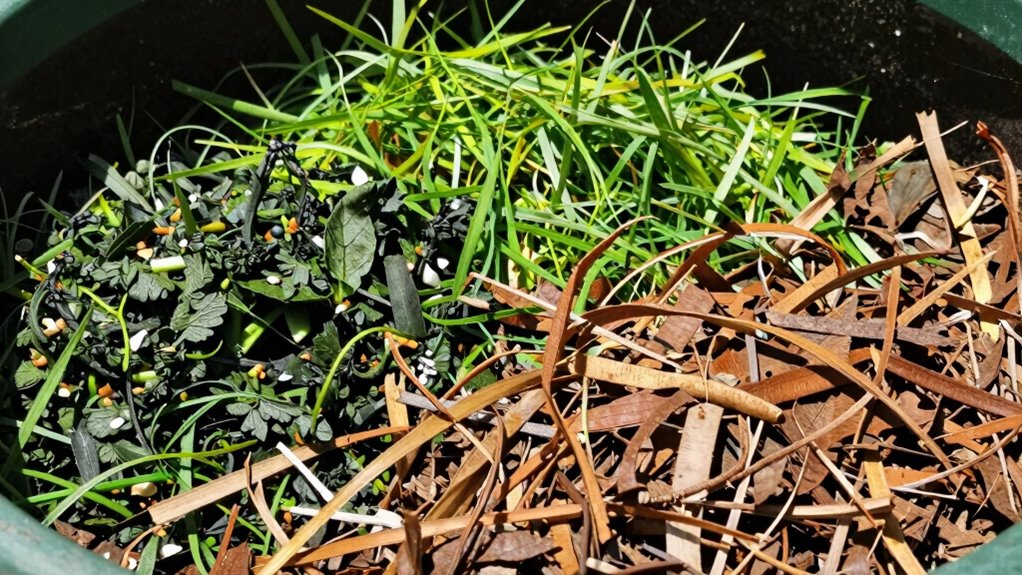
To get your compost right, you need to understand the balance between browns and greens. Knowing the ideal ratios helps you create healthy, nutrient-rich compost. Adjusting these ratios based on your compost’s needs guarantees it breaks down efficiently. Incorporating sustainable materials like recycled plastics and natural fibers can further optimize your composting process. Using composting techniques that promote aeration and proper moisture levels can also enhance decomposition and overall compost quality. Monitoring factors such as carbon-to-nitrogen ratio ensures optimal microbial activity for faster composting. Additionally, selecting appropriate electric bike conversion kits can assist in sustainable transportation around your composting area, reducing your carbon footprint.
Understanding Brown and Green
Finding the right balance between brown and green materials is vital for creating an efficient compost pile. Brown materials provide carbon, while green materials supply nitrogen, both critical for soil nutrients and compost maturity. To visualize, think of:
- Dried leaves, straw, or wood chips as earthy browns
- Fresh grass clippings, vegetable scraps, or coffee grounds as vibrant greens
- Twigs and small branches adding structure
- Fruit peels and vegetable scraps fueling microbial activity
Getting the ratio right helps microbes break down materials faster and improves soil nutrients. Too much green makes the pile slimy and smelly, while excess brown slows decomposition. Balance ensures your compost matures evenly, transforming waste into rich soil amendment.
Ideal Ratios for Compost
Achieving the right brown-to-green ratio is essential for efficient composting, as it influences how quickly and evenly your pile breaks down. Many composting myths suggest a specific ratio, but the ideal varies based on materials and conditions. In general, aim for a ratio of about 25–30 parts brown to 1 part green by volume. This balance provides enough carbon for microbes to thrive without causing odor issues. Seasonal adjustments are important; in winter, you might need more greens to compensate for slower decomposition, while in summer, a higher brown content can help prevent overheating. Monitoring moisture and aeration also supports the right balance. Understanding compost ratios is key to maintaining a healthy compost environment. Proper carbon-to-nitrogen balance can further improve decomposition efficiency. Additionally, managing microbial activity effectively can significantly improve composting efficiency. For optimal results, keep an eye on compost temperature and turn your pile regularly to ensure even decomposition. Regularly adding carbon-rich materials helps maintain the proper balance and promotes healthy microbial populations. By understanding these factors, you’ll optimize your compost’s health and speed up the process.
Adjusting for Compost Needs
Adjusting the brown-to-green ratio to meet your compost’s specific needs involves observing and responding to how your pile behaves. If your compost bacteria seem sluggish or the pile isn’t heating up, you might need more greens or moisture. Conversely, if it’s too wet, smells or slimy textures indicate excess greens and moisture. To fine-tune your mix:
- Check moisture levels—your compost should feel like a damp sponge.
- Add more browns if it’s too wet or smells off.
- Mix in greens if it’s dry or bacteria activity slows. Proper aeration helps maintain healthy microbial activity and overall compost health.
- Turn the pile regularly to distribute moisture and oxygen evenly, which encourages beneficial bacteria growth. Incorporating sustainable travel practices when managing your compost can also reduce environmental impact.
- Be aware that improper ratios can lead to odors or bacterial imbalances, similar to how ear wax odor can indicate health issues.
How to Add Browns and Greens Correctly for Best Results
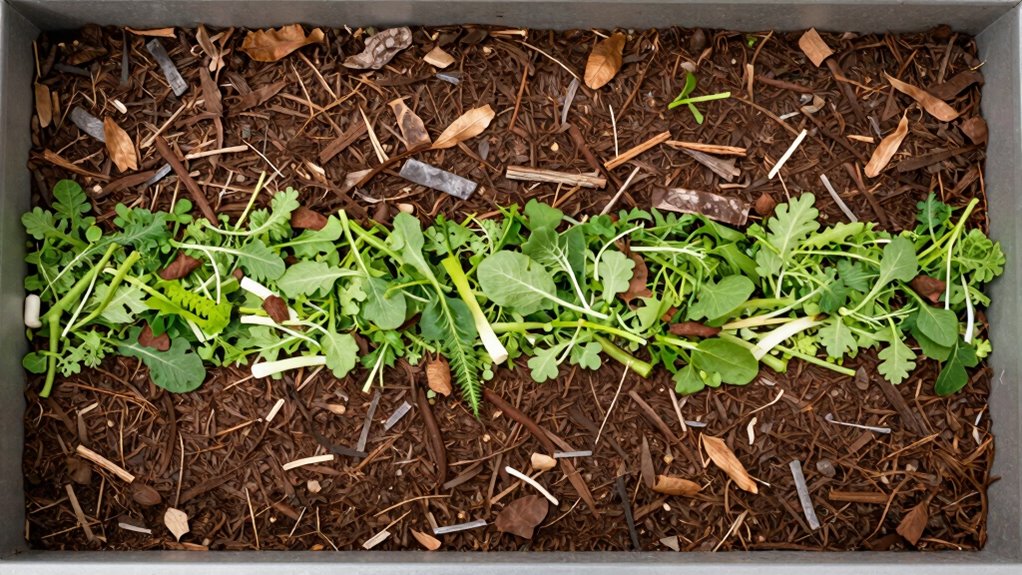
To guarantee your compost breaks down efficiently, it’s important to add browns and greens in the right balance. Start by layering materials to promote proper compost acidity and moisture control. Browns, like dried leaves and straw, provide carbon, while greens, such as vegetable scraps and grass clippings, supply nitrogen. Aim for a ratio of roughly 30 parts browns to 1 part greens by volume. Use the table below as a guide:
| Browns | Greens |
|---|---|
| Dried leaves, straw, paper | Vegetable scraps, grass clippings |
| Sawdust, shredded cardboard | Coffee grounds, fruit scraps |
| Dry wood chips, cardboard | Fresh grass, vegetable peels |
This balance helps maintain ideal moisture and acidity, ensuring fast, healthy composting.
Common Brown/Green Balance Mistakes and How to Fix Them
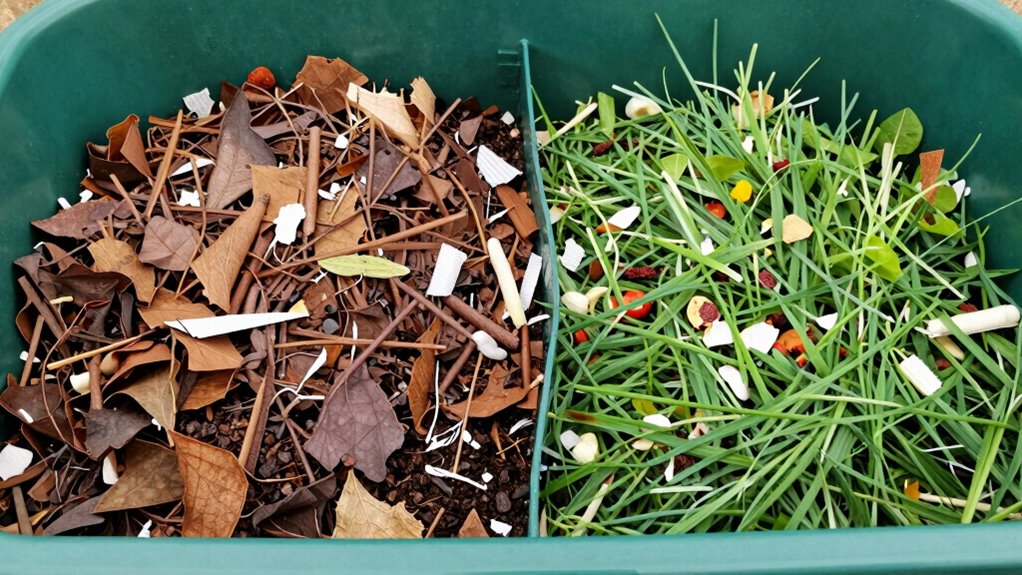
One common mistake is adding too many greens at once, which can make your compost too wet and smelly. To fix this, focus on balancing your materials. Here are some mistakes to watch out for:
Adding too many greens at once can make compost wet and smelly; balance with browns for healthy results.
- Overloading with fresh animal manure, causing excess moisture and odor.
- Using synthetic additives to speed up composting, which can upset the natural microbial balance.
- Ignoring the brown-to-green ratio, leading to slimy, smelly compost.
- Not turning or aerating regularly, trapping excess greens and moisture.
To correct these issues, add more browns like dry leaves or shredded paper, and avoid excessive animal manure or synthetic chemicals. Properly balancing your browns and greens ensures healthy, odor-free compost.
Adjusting Your Compost Ratios for Faster Decomposition
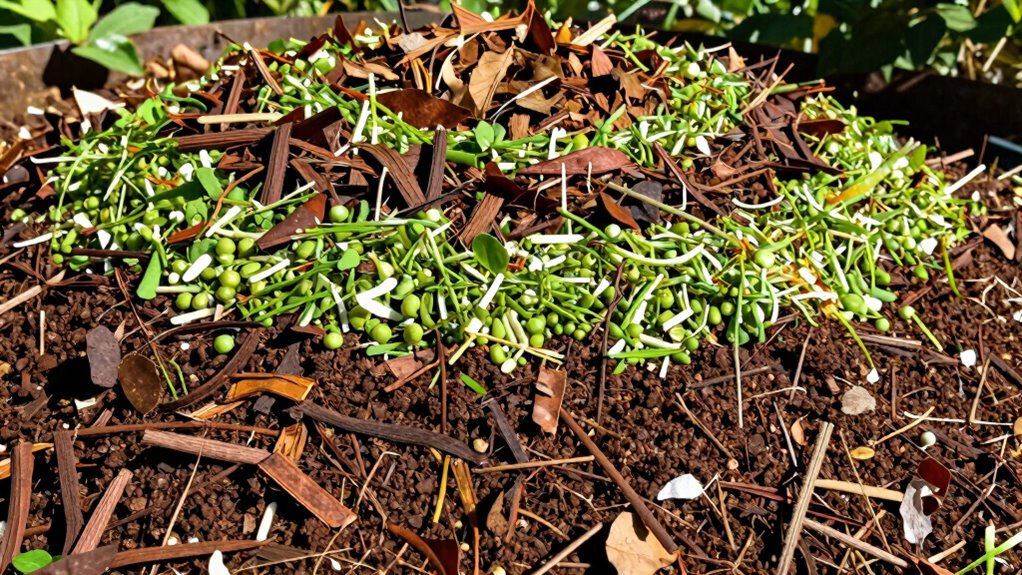
For faster decomposition, you need to optimize your compost ratios by increasing the proportion of greens relative to browns. Adding more nitrogen-rich materials like fruit scraps, coffee grounds, and fresh grass clippings speeds up the process. If you’re doing worm composting, feeding worms fresh greens helps them stay active and break down materials faster. Be mindful of compost pests, such as flies and rodents, which can be attracted to excess greens, so balance is key. Cover greens with browns like shredded paper or dry leaves to reduce pests and maintain airflow. Regular turning also helps distribute moisture and heat, accelerating decomposition. Adjusting ratios thoughtfully ensures your compost heats up quickly, avoiding odors and pests, and creating rich, ready-to-use compost sooner.
Tools and Tips to Keep Your Compost Balanced
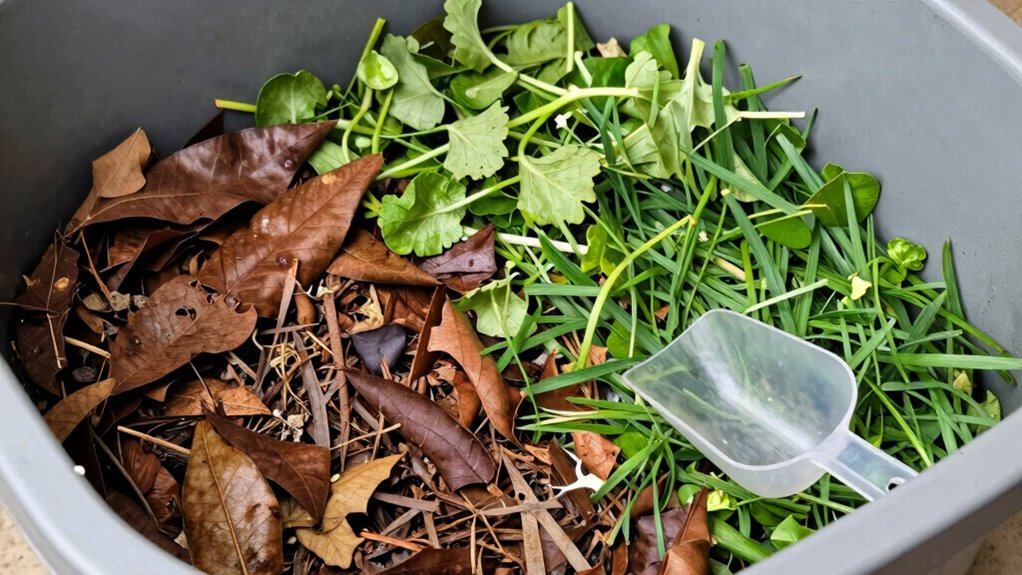
Maintaining a balanced compost pile requires using the right tools and following simple tips to monitor and adjust your materials. First, keep a compost thermometer handy to track temperature, ensuring active decomposition. Second, use a pitchfork or compost turner to aerate the pile, preventing odors and promoting healthy microbes. Third, set up a simple bin or tumbler to manage organic waste easily and keep materials visible. Fourth, keep a scale nearby to measure your green and brown materials, helping you maintain proper ratios. Be mindful of composting myths that suggest you can compost without balancing browns and greens. Proper tools and tips make it easier to handle organic waste efficiently, ensuring your compost remains healthy and productive without guesswork.
Troubleshooting Poor Composting: Fixing Imbalance and Other Issues

When your compost isn’t breaking down properly, the most common issue is an imbalance of green and brown materials. To fix this, adjust the ratio to improve decomposition. Too many greens can cause excess moisture, attracting pests and creating foul smells. Conversely, too many browns slow down breakdown. Use the table below as a quick guide:
| Problem | Solution | Key Focus |
|---|---|---|
| Excess moisture | Add dry browns, turn compost, increase aeration | Moisture control |
| Pests or odors | Cover with browns, ensure proper aeration | Pest prevention |
| Slow decomposition | Balance greens and browns, keep moist | Proper ratio |
Monitoring moisture and ensuring proper balance helps keep pests at bay and speeds up composting.
Final Tips for Simplifying Brown and Green Composting

To simplify your composting process, focus on keeping a clear and consistent balance between brown and green materials. This helps improve soil health and speeds up compost maturity. To visualize, think of:
Maintain a balanced mix of browns and greens to boost compost health and speed up decomposition.
- Layers of dry leaves and shredded paper (browns) creating a cozy blanket around fresh grass clippings and vegetable scraps (greens).
- A vibrant, aerated pile that encourages microbes to thrive, breaking down materials efficiently.
- Regular turning, which keeps the compost lively and prevents odors.
- Monitoring moisture, ensuring it’s like a damp sponge—not too wet or dry.
Frequently Asked Questions
How Do I Measure Compost Materials Accurately?
You can measure compost materials accurately by using measuring tools like a kitchen scale or measuring cups for volume. To guarantee proper ratios, check the moisture content with your hand—materials should feel like a damp sponge. Adjust your measurements based on whether your compost is too wet or dry. Keeping track of these details helps maintain a healthy balance of browns and greens for ideal composting.
Can I Use Too Many Greens or Browns?
You can definitely have too many greens or browns in your compost. An overload of greens can cause a slimy, smelly pile, while a brown deficiency can slow down decomposition by up to 50%. Aim for the ideal ratio of about 2-3 parts browns to 1 part greens. This balance prevents green overload, maintains airflow, and keeps your compost healthy and efficient.
What Are Alternative Brown and Green Materials?
You can use alternative brown and green materials like shredded paper, cardboard, or dried leaves for browns, and green waste, such as grass clippings, fruit and vegetable scraps, or coffee grounds, for greens. These options help balance your compost, providing necessary carbon and nitrogen. Just guarantee you chop or shred materials to speed up decomposition and maintain proper moisture levels for efficient composting.
How Long Does Compost Take to Mature?
You’ll see compost mature in about 3 to 6 months, depending on factors like compost temperature and moisture levels. If you keep the temperature consistently between 135-160°F and maintain moist conditions, your compost will break down faster. Turning the pile regularly also helps. Patience is key, but with proper management, you’ll have rich, ready-to-use compost in just a few months.
Does Compost Ratio Vary by Composting Method?
Yes, compost ratio variations depend on your chosen method of composting. Different methods, like hot composting, cold composting, or vermicomposting, require specific ratios of browns to greens to optimize decomposition. For example, hot composting often needs a balanced 30:1 carbon to nitrogen ratio, while worm bins may need more greens. Modify ratios based on your method ensures efficient composting and healthy, rich soil.
Conclusion
Just like Daedalus balanced craftsmanship and chaos in his labyrinth, mastering your compost ratios brings harmony to decay. Keep your browns and greens in check, and you’ll transform waste into fertile gold. Don’t let imbalance trap you in the Minotaur’s maze; instead, guide your compost with patience and care. With practice, you’ll find the perfect rhythm—turning everyday scraps into nature’s masterpiece, a hidden treasure waiting to be uncovered.