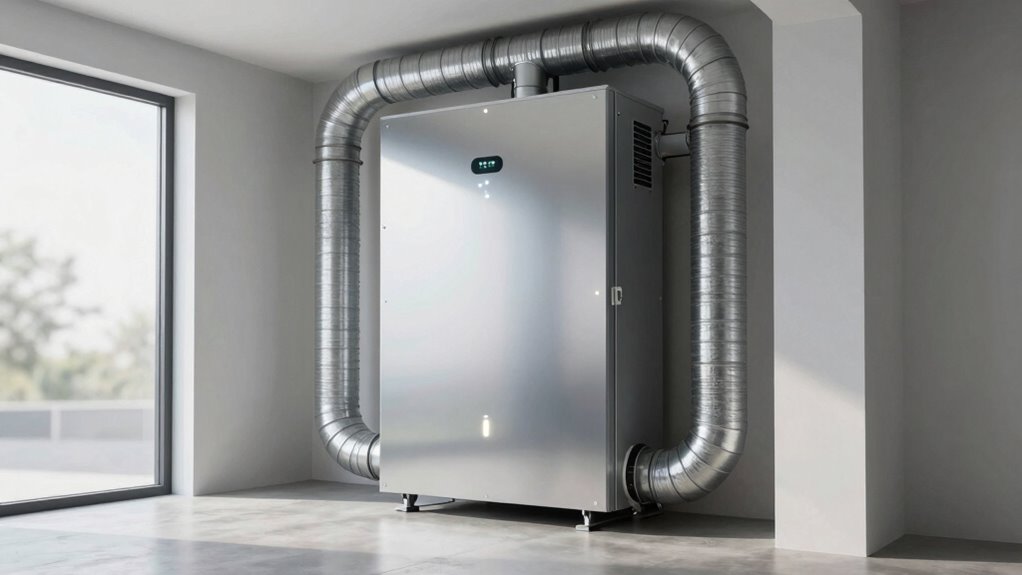
When selecting a whole house ventilation system ERV, it’s essential to balance energy efficiency, ease of installation, and indoor air quality. The Panasonic SelectCycler stands out as the best overall for its reliable performance and smart controls. For those prioritizing quiet operation, the Panasonic WhisperComfort 60 ERV offers excellent ventilation with minimal noise. Meanwhile, the Broan B210E75RS provides a solid mid-range option with good airflow and energy recovery. With tradeoffs around size, complexity, and cost, choosing the right ERV depends on your home’s needs. Continue reading for the full breakdown of these top picks.

Get furniture and decor delivered free — and shop member deals
- Fast, free delivery on millions of items
- Access to Prime Big Deal Days deals on October 6–7
- Prime Video, Amazon Music and more included
Complete the kit


Key Takeaways
- Top-performing models balance energy recovery with ease of installation and maintenance.
- Quiet operation is a key factor for homes in densely populated or noise-sensitive areas.
- Advanced controls and Wi-Fi connectivity are increasingly common in high-end units.
- Size and duct compatibility significantly influence installation complexity and cost.
- Budget options often trade off features like balanced airflow and smart controls for basic functionality.


More Details on Our Top Picks
Panasonic SelectCycler Whole House Ventilation System with Controller, Supply Damper & Wall Switch, 8″ Duct, SACG2K-08
The Panasonic SelectCycler stands out for its versatile control options, supporting multiple ventilation strategies with a programmable controller and accessories. It’s a strong choice for those who want a tailored airflow setup, especially compared to the simpler VENTS-US Frigate ERV 150, which lacks such customization. However, the need for compatible fans and professional installation can be hurdles. Its 8-inch duct compatibility makes it suitable for mid-sized homes, balancing ease of installation with performance. This system excels when paired with high-quality fans like WhisperGreen Select, offering efficient indoor air management. The primary tradeoff is that it depends heavily on compatible components and proper setup, which could increase initial costs.
Pros:- Supports multiple ventilation strategies for tailored indoor air quality
- Includes programmable controller, damper, and wall switch for easy operation
- Compatible with high-quality fans like WhisperGreen Select
Cons:- Requires compatible ventilation fans for full functionality
- Installation may need professional assistance due to complexity
Best for: Homeowners seeking a customizable, energy-efficient whole house ventilation solution with flexible control options.
Not ideal for: Homeowners looking for a plug-and-play system with minimal setup or those with smaller ductwork configurations.
- Duct Size:8 inches
- Includes:Controller, supply damper, wall switch
- Compatible Fans:WhisperGreen Select or any 110VAC ventilation fan
Our verdict“This pick is ideal for those who want a highly adaptable ventilation system that integrates seamlessly with existing fans and controls.”
Panasonic WhisperComfort 60 Energy Recovery Ventilator (ERV), Wall/Ceiling Mount Exhaust Fan, FV-06VE1
The Panasonic WhisperComfort 60 ERV offers balanced fresh air intake and exhaust, making it ideal for maintaining neutral pressure in homes. Its multiple speed settings allow for customizable airflow, similar to the Aprilaire V22BEC but with a more straightforward wall or ceiling mounting option. Compared to the larger VENTS-US Frigate ERV 150, which provides higher CFM, the WhisperComfort is better suited for smaller to medium-sized spaces where precise airflow control is needed. Its HVI certification underscores reliable performance, though proper installation is vital for optimal results. The compact design and flexible mounting make it appealing for retrofit projects, but it might be less effective in very large or highly ventilated homes.
Pros:- Provides balanced fresh air intake and exhaust for neutral pressure
- Multiple speed settings for customizable airflow
- Easy to install on wall or ceiling surfaces
Cons:- Requires proper installation to achieve best performance
- Limited mounting options may restrict placement
Best for: Homeowners who want a balanced, space-efficient ERV with adjustable airflow for moderate indoor air quality improvements.
Not ideal for: Large households or spaces requiring high CFM, where the 60 CFM capacity may be insufficient for effective ventilation.
- Model:FV-06VE1
- Type:Energy Recovery Ventilator (ERV)
- Mounting:Wall/Ceiling
- CFM Range:20-50 CFM (low), up to 60 CFM (boost)
- Energy Certification:HVI certified
Our verdict“This model makes sense for those seeking a straightforward, adaptable ERV for moderate-sized spaces with flexible mounting options.”
Broan B210E75RS AI 206 CFM Wall or Ceiling Mounted Energy Recovery Ventilator
The Broan B210E75RS offers a high-performance ERV core capable of delivering 206 CFM, making it suitable for larger or more demanding spaces. Its wall or ceiling mounting options provide flexibility during installation, especially compared to the Panasonic WhisperComfort, which has more limited mounting choices. However, specific technical details are scarce, and without customer ratings or detailed specs, assessing its performance involves some uncertainty. This unit is a good fit for homeowners who need significant airflow and have the space for a more robust system, but the lack of detailed info could be a concern for cautious buyers. It’s a solid choice if you prioritize high capacity and flexible positioning over detailed product transparency.
Pros:- High airflow capacity of 206 CFM for larger spaces
- Flexible wall or ceiling mounting options
- High-performance ERV core enhances indoor air quality
Cons:- Limited publicly available specifications and reviews
- Potential difficulty in evaluation without detailed data
Best for: Owners of larger homes or spaces needing substantial ventilation capacity with flexible mounting options.
Not ideal for: Small homes or users seeking detailed product specs and straightforward installation guidance.
- Airflow:206 CFM
- Mounting Options:Wall or Ceiling
Our verdict“This unit suits those requiring high airflow capacity and flexible installation but may challenge buyers who prefer transparency and detailed specs.”
VENTS-US Frigate ERV 150 Ventilation System – 180 CFM Whole House Fresh Air Intake and Humidity Exhaust
The VENTS-US Frigate ERV 150 provides a robust 180 CFM, making it suitable for larger homes where balanced ventilation is essential. Its heat and humidity recovery features, along with washable filters, support energy efficiency and low maintenance. Compared to the Panasonic SelectCycler, which emphasizes control and compatibility, the Frigate ERV 150 prioritizes straightforward balanced airflow and humidity management, ideal for homeowners seeking an all-in-one solution. Its slim design demands close wall proximity, which could complicate installation in tight spaces. Nonetheless, its anti-frost protection and energy recovery capabilities make it a reliable choice for maintaining indoor comfort while reducing energy costs.
Pros:- Provides balanced ventilation with heat and humidity recovery
- Includes washable filters for easy cleaning
- Compact, corrosion-resistant steel housing
Cons:- Requires installation close to walls due to slim profile
- May need professional installation for optimal results
Best for: Homeowners desiring a comprehensive, energy-efficient whole house ventilation with humidity control.
Not ideal for: Homes with limited wall space or those needing a more customizable or modular ventilation setup.
- CFM:180
- Sones:1.9
- Depth:9.6 inches
- Filters:Washable MERV 6
- Protection:Anti-Freeze
Our verdict“This system is well-suited for larger homes where energy-efficient balanced ventilation and humidity control are priorities.”
Aprilaire V22BEC Energy Recovery Ventilator (ERV), 120 CFM for Homes up to 6,000 Sq. Ft.
The Aprilaire V22BEC ERV offers a substantial 120 CFM, making it suitable for sizable homes up to 6,000 square feet. Its design emphasizes energy efficiency, helping reduce heating and cooling costs while maintaining good indoor air quality. Compared to the Panasonic WhisperComfort 60, which is better suited for moderate-sized spaces, the V22BEC handles larger areas effectively, especially with its versatile mounting options—wall, ceiling, or floor. Its precise control over airflow and humidity, along with proven durability, make it ideal for homeowners seeking a long-term ventilation solution. The main drawback is that professional installation is often recommended, adding to upfront costs. Nonetheless, it provides a dependable balance of performance and efficiency for large residences.
Pros:- Effective ventilation for large spaces up to 6,000 sq. ft.
- Energy-efficient design reduces utility costs
- Versatile mounting options for flexible installation
Cons:- Installation often requires professional help
- Limited to specific home sizes and configurations
Best for: Owners of large homes up to 6,000 sq. ft. who prioritize energy savings and effective air quality management.
Not ideal for: Smaller homes or those seeking a simple plug-and-play unit without professional installation requirements.
- Airflow:120 CFM
- Suitable for Homes:up to 6,000 sq. ft.
- Type:Energy Recovery Ventilator (ERV)
- Mounting Options:Wall, Ceiling, Floor
Our verdict“This ERV fits large-scale homes needing efficient, customizable ventilation with energy savings in mind.”
VENTS-US Frigate ERV 150 EC Ventilation System – 186 CFM Whole House Fresh Air Intake and Humidity Exhaust with EC Motors for Balanced Indoor Comfort
The VENTS-US Frigate ERV 150 EC stands out as the most comprehensive solution, offering balanced ventilation with heat and humidity recovery, making it suitable for maintaining consistent indoor comfort. Its enthalpic core and electronic defrost ensure reliable operation across seasons, unlike simpler models like the Pioneer 50, which focuses more on space-specific air exchange. The steel construction and anti-corrosion coating add durability but come with higher energy use, especially since it operates continuously. Compared to the Panasonic SelectCycler, it doesn’t integrate as seamlessly with HVAC controls but offers better humidity management. This system is ideal for homes where consistent, year-round ventilation and humidity control outweigh the initial complexity and energy costs.
Pros:- Provides balanced ventilation with effective heat and humidity recovery
- Electronic defrost prevents freezing in cold weather
- Durable steel casing with anti-corrosion coating
Cons:- Installation can be complex, requiring professional help
- Higher energy consumption due to continuous operation
Best for: Homeowners seeking a high-capacity, reliable balanced ventilation system with humidity recovery for all seasons.
Not ideal for: Small or budget-sensitive households that prefer simple, low-energy options or have limited space for installation.
- Air Flow Capacity:186 CFM
- Power Consumption:186 watts
- Voltage:120 volts
- Noise Level:1.9 sones
- Cooling Method:forced air
- Construction:steel with anti-corrosion coating
Our verdict“This pick suits those prioritizing balanced indoor comfort and durability over ease of installation or energy efficiency.”
VENTS-US Frigate ERV 120s Energy Recovery Ventilator – Whole House Ventilation Fan with Freeze Protection and Dual Air Filtration
The Frigate ERV 120s excels in cold climates, offering a steady stream of fresh air with freeze protection and dual air filtration, unlike the more general-purpose Pioneer 50 which lacks these features. Its 162 CFM airflow strikes a good balance between performance and energy use, though installation may demand professional help due to duct and electrical requirements. The washable MERV 6 filters make upkeep straightforward, but the noise level of 1.9 sones could be noticeable in quiet spaces, unlike the quieter Pioneer model. This ERV is ideal for homes in colder regions where freeze protection and continuous air quality are priorities, though it’s less suited for larger spaces or those seeking minimal installation effort.
Pros:- Continuous balanced air exchange improves indoor air quality
- Freeze protection suitable for cold environments
- Includes washable filters for easy maintenance
- Low power consumption with high airflow
Cons:- Installation often requires professional help
- Limited duct compatibility may restrict setup options
- Noise level may be noticeable in quiet environments
Best for: Households in cold climates needing reliable freeze protection and easy-to-maintain filtration.
Not ideal for: Larger homes or spaces requiring higher airflow capacity, or those with limited access for installation assistance.
- Airflow Capacity:162 CFM
- Power Consumption:94 watts
- Voltage:120 volts
- Noise Level:1.9 sones
- Features:freeze protection, dual air filtration
- Material:metal
Our verdict“This model is best for cold-climate homes prioritizing freeze protection and air quality with moderate installation complexity.”
Panasonic SelectCycler Whole House Ventilation System with Controller, Supply Damper & Wall Switch, 4″ Duct
The Panasonic SelectCycler is tailored for those who want an energy-efficient setup that integrates smoothly with existing HVAC and ventilation components. Its programmable controller, motorized damper, and dual operational modes give users flexibility in managing airflow, making it more adaptable than the simpler Pioneer 50. However, its reliance on compatible ventilation fans means it’s less plug-and-play, requiring potentially complex setup and professional installation. The 4-inch duct size limits its use in larger spaces or retrofit projects that demand higher airflow, unlike the Panasonic SACG2K-08 with larger ducts. This system makes the most sense for owners seeking precise control over ventilation with a focus on energy savings and system integration.
Pros:- Supports energy-efficient operation to reduce costs
- Includes comprehensive control and damper components
- Flexible dual-mode operation for customized ventilation
Cons:- Requires compatible fans and professional setup
- Limited duct size may restrict applications
- Complex installation process
Best for: Homeowners who want customizable, energy-efficient ventilation that can be tailored to their existing HVAC setup.
Not ideal for: Those with larger spaces needing high airflow capacity or DIY installers without professional support.
- Duct Size:4 inches
- Includes:controller, damper, switch
- Operational Modes:dual (supply or balanced)
- Power Supply:24VAC
- Mounting:integration with existing ducts
Our verdict“This model is perfect for users seeking a controllable, integrated ventilation solution that prioritizes energy savings over simplicity.”
Wi-Fi-Enabled Pioneer 50 Single-Room Wall-Mounted Energy Recovery Ventilator
The Pioneer 50 ERV offers a compact, wall-mounted solution with remarkable heat recovery efficiency of 97%, making it ideal for individual rooms or small areas. Its Wi-Fi control adds convenience, allowing remote adjustments and monitoring, unlike larger, less connected models like the Panasonic SelectCycler. The quiet operation at just over 32 dB makes it suitable for bedrooms or offices, but the limited airflow of up to 35 CFM constrains its use to smaller spaces, unlike the higher-capacity models. Its higher initial cost reflects its smart features and high efficiency, though installation may require professional assistance due to duct and electrical connections. It’s best suited for those who want advanced control in a single room rather than whole-house ventilation.
Pros:- High heat recovery efficiency of 97%
- Wi-Fi control via smartphone app for convenience
- Quiet operation and low noise levels
- Effective filtration with washable prefilters and MERV13 filters
Cons:- Limited airflow capacity for larger spaces
- Requires professional installation due to electrical and ducting needs
- Higher cost compared to basic models
Best for: Homeowners wanting a smart, quiet, and efficient ventilation solution for individual rooms or small apartments.
Not ideal for: Larger homes or open-plan spaces requiring higher airflow or whole-house ventilation capacity.
- Heat Recovery Efficiency:97%
- Power Consumption:8W (average)
- Airflow:up to 35 CFM
- Filters:MERV13, washable prefilters
- Control:Wi-Fi app, onboard interface
- Dimensions:9-3/8″ x 19-5/8″ x 10-1/8″
Our verdict“This system is best suited for users prioritizing smart controls and effective heat recovery in small or individual rooms.”

How We Picked
I evaluated each product based on performance, ease of installation, build quality, energy efficiency, and user convenience. Priority was given to systems that provide reliable airflow and humidity control while being straightforward to install and maintain. I compared features such as motor efficiency, noise levels, control options, and overall value. Products were ranked to highlight those offering the best combination of performance and usability for typical residential needs, with clear distinctions based on their specific strengths and limitations.Factors to Consider When Choosing Whole House Ventilation System Erv
Choosing the right whole house ventilation system ERV involves considering several key factors beyond initial features. The size of your home, existing ductwork, and climate conditions influence which model will perform best. Budget and installation complexity also play significant roles, especially if you prefer DIY setup or professional installation. Additionally, look for units with good energy efficiency ratings and smart controls if you want to optimize ongoing operation. Being aware of common pitfalls, such as undersized units or noisy fans, can help prevent costly mistakes and ensure lasting satisfaction.Size and Capacity
Matching the ERV’s airflow capacity to your home’s size is critical. An undersized unit will struggle to maintain proper ventilation, leading to stale air and humidity issues, while an oversized model may waste energy and cause drafts. Determine your home’s square footage and consult manufacturer specifications to select a unit with appropriate CFM ratings. Keep in mind that larger homes often benefit from multi-unit or more powerful systems, but professional assessment can help avoid overspending on unnecessary capacity.
Energy Efficiency and Operating Costs
Energy recovery ventilators are designed to save energy by transferring heat and humidity between incoming and outgoing air. Look for models with high heat recovery efficiency ratings—ideally above 70%—to reduce heating and cooling costs. Consider the power draw of the unit’s fans and motors too, especially if you plan to run it continuously. While higher-efficiency models may have higher upfront costs, they typically pay off through lower utility bills over time.
Ease of Installation and Maintenance
Some ERV units are simple wall-mounted systems, while others require more complex ductwork or professional installation. Evaluate your home’s existing duct infrastructure and whether you want a plug-and-play solution or a custom setup. Maintenance requirements, such as filter replacement and motor servicing, should also influence your choice. Units with easily accessible filters and clear maintenance procedures help extend the lifespan and maintain performance without extra hassle.
Smart Controls and Connectivity
Many modern ERVs feature Wi-Fi connectivity and smart controls, allowing remote operation and scheduling. This convenience can optimize performance and energy savings, especially if your home has variable ventilation needs. However, these features often come at a premium. If you prefer a straightforward, no-fuss system, a basic model without smart controls may be more reliable and budget-friendly, though it might lack some convenience features.
Noise Levels
Quiet operation is often overlooked but can significantly affect comfort, especially in bedrooms or living areas. Look for units with low decibel ratings—ideally under 30 dB at typical operation speeds—and check user reviews for real-world noise performance. Some models include noise-reduction features or variable speed fans, which can help maintain indoor peace without sacrificing airflow quality.
Frequently Asked Questions
How do I determine the right size ERV for my home?
Calculating the appropriate size for your ERV involves assessing your home’s square footage, number of occupants, and climate conditions. Most manufacturers provide sizing charts based on CFM requirements per square foot. Larger homes or those in humid or cold climates generally need higher-capacity units to ensure sufficient ventilation without overworking the system. Consulting with a professional can help refine this choice, preventing undersized units that underperform or oversized units that waste energy.
Are ERVs difficult to install myself?
Installation complexity varies significantly depending on the system’s design and your home’s existing ductwork. Some models are designed for DIY installation, featuring straightforward mounting and plug-in power supplies. More advanced units with duct connections and electrical wiring may require professional help to ensure proper placement and sealing. If you’re comfortable with basic home projects and follow manufacturer instructions carefully, some ERVs are manageable; otherwise, hiring a professional can save time and prevent costly mistakes.
What maintenance is required for an ERV system?
Most ERVs require regular filter replacements, typically every 6 to 12 months, to maintain air quality and system efficiency. Some models have washable filters, reducing long-term costs. Additionally, checking the motor and fan operation periodically helps catch issues early. Keeping the unit clean and ensuring no obstructions in the intake or exhaust vents is also important. Well-maintained ERVs last longer and perform more reliably, justifying attention to routine upkeep.
How much can I expect to save on energy bills with an ERV?
Energy savings depend on your home’s size, climate, and the efficiency of the ERV. High-quality units with good heat recovery efficiency can reduce heating and cooling costs by 20-30%, especially in extreme climates where indoor air exchange significantly impacts energy use. While the initial investment might be higher, the reduced utility bills often justify the expense over several years. Proper sizing and operation are key factors in realizing these savings.
Is a Wi-Fi-enabled ERV worth the extra cost?
Wi-Fi-enabled ERVs offer the convenience of remote control, scheduling, and system monitoring, which can optimize ventilation and save energy. They are especially useful for busy households or those wanting to integrate the system into a smart home setup. However, they tend to be more expensive and may require updates or subscriptions for full functionality. If you value remote access and automation, the additional cost can be well justified; otherwise, a basic model may suffice.
Conclusion
For most homeowners, the Panasonic SelectCycler offers the best balance of performance, ease of use, and value, making it the ideal overall choice. If budget is a concern, the VENTS-US Frigate ERV 120s provides reliable operation at a lower price point, suited for smaller homes or those new to ERVs. For those seeking premium features and smart controls, the Wi-Fi-Enabled Pioneer 50 delivers advanced connectivity and convenience. Beginners and DIY enthusiasts will appreciate the straightforward installation of the Panasonic SelectCycler, while those with larger or more complex homes should consider higher-capacity units like the Broan B210E75RS. Ultimately, selecting the right ERV hinges on your specific home size, climate, and comfort priorities.Halloween Picks
halloween
As an affiliate, we earn on qualifying purchases.