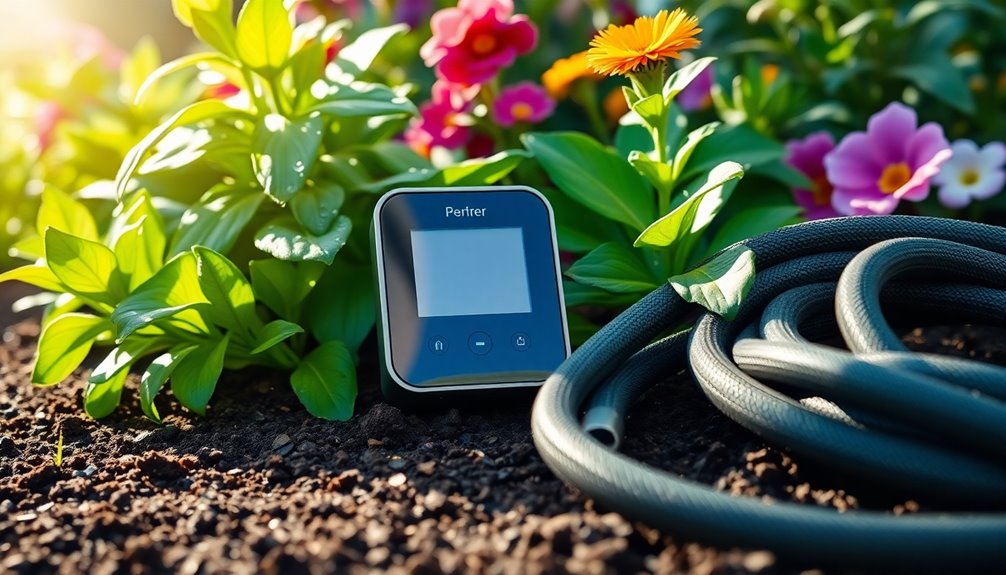

The Orbit B-hyve XD 2-Port is my best overall smart garden water timer pick for gardeners who want app scheduling and two independently managed outlets. The Orbit B-hyve XD 4-Port with Wi-Fi Hub suits larger setups that need more zones and connected control, while the GoveeLife H5901 Wi-Fi is a simpler single-outlet alternative with a gateway. The main tradeoffs are how many hoses you need to control, whether a hub or Wi-Fi connection is required, and how much setup complexity you are willing to take on. A basic hose timer can be easier to manage, but it may lack remote adjustments and smart features. Read on for the full comparison and help matching a timer to your garden.

Get furniture and decor delivered free — and shop member deals
- Fast, free delivery on millions of items
- Access to Prime Big Deal Days deals on October 6–7
- Prime Video, Amazon Music and more included
Complete the kit


Key Takeaways
- Outlet count changes the decision: the Orbit B-hyve XD 1-Port and 2-Port models fit smaller setups, while the 4-Port versions can control more watering lines from one timer.
- A hub affects where smart control works: several picks, including the Orbit 4-Port with Wi-Fi Hub and GoveeLife H5901 Wi-Fi, use a gateway or hub, so check the connection arrangement before buying.
- Wi-Fi, Bluetooth, and RF serve different layouts: the lineup includes direct Wi-Fi options, a Bluetooth GoveeLife model, and long-range RF products; the best match depends on the timer’s distance from your home network and phone.
- Rain delay and manual control matter when plans change: these features appear across multiple models, but buyers should check each product’s specific controls rather than assume all smart timers behave alike.
- Smart features do not automatically make a timer the best fit: the 1-outlet programmable and Insoma manual-mode options may suit simpler watering needs better than a multi-zone connected model.
| Orbit B-hyve XD 2-Port Smart Hose Watering Timer (24632) |  | Best for Weather-Responsive Two-Zone Watering | Model: 24632 | Outlets: 2 | Connectivity: Bluetooth, app controlled | VIEW ON AMAZON | See Our Full Breakdown |
| RAINPOINT WiFi Water Timer for Garden Hose, Smart Sprinkler Controller with Rain Delay |  | Best for Water-Use Tracking | Model: HTV145FRF+HWG023WBRF-02 | WiFi: 2.4GHz only | Gateway range: Up to 250 meters; penetrates 3–4 walls | VIEW ON AMAZON | See Our Full Breakdown |
| Xinfuture Smart WiFi Sprinkler Timer, 3-Zone Water Timer for Garden Hose Irrigation |  | Best for Three Independently Scheduled Zones | Zones: 3 | Connectivity: 2.4GHz WiFi; Bluetooth for setup only | RF range: Up to 984 ft / 300 m | VIEW ON AMAZON | See Our Full Breakdown |
| Programmable Outdoor Garden Hose Timer, 1 Outlet |  | Best for Straightforward Local Scheduling | Outlets: 1 | Watering modes: Automatic, manual, and rain delay | Watering frequency: 1 minute to 23 hours 59 minutes, or every 1–7 days | VIEW ON AMAZON | See Our Full Breakdown |
| Insoma Outdoor Garden Hose Water Timer with Rain Delay and Manual Mode |  | Best for a Durable Hose Connection | Inlet: Brass | Maximum water pressure: 116 PSI | Watering frequency: 1 minute to 23 hours 59 minutes, or every 1–7 days | VIEW ON AMAZON | See Our Full Breakdown |
| Orbit B-hyve XD 4-Port Smart Hose Watering Timer | 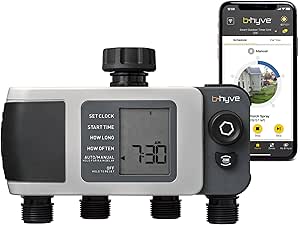 | Best for Nearby Multi-Zone Control | Outlets: 4 independently programmable | Connectivity: Bluetooth | Control: Smartphone app | VIEW ON AMAZON | See Our Full Breakdown |
| Orbit B-hyve XD 4-Port Smart Hose Watering Timer with Wi-Fi Hub (24639) |  | Best for Remote Multi-Zone Control | Model: 24639 | Ports: 4 independent watering ports | Connectivity: Wi-Fi hub and Bluetooth | VIEW ON AMAZON | See Our Full Breakdown |
| Insoma WiFi Sprinkler Timer with Hub, Smart Hose Water Timer |  | Best for Expandable Smart Scheduling | Model: SGW05B | Connectivity: 2.4GHz Wi-Fi via hub, Bluetooth, and RFID | Wi-Fi range: Up to 196 ft | VIEW ON AMAZON | See Our Full Breakdown |
| Shrivee WiFi Water Timer for Garden Hose, Smart Sprinkler Controller with 984ft RF Range, APP/Voice Control, Rain Delay (Brass Inlet) |  | Best for Long-Range Outdoor Connectivity | Model: HCT-633-2-T | RF range: Up to 984 ft (300 m) | Wi-Fi: 2.4GHz | VIEW ON AMAZON | See Our Full Breakdown |
| Wi-Fi Water Timer for Garden Hose with 984 ft Range |  | Best for Simple App-Based Scheduling | Wireless range: Up to 984 ft (300 m) | Wi-Fi requirement: 2.4GHz gateway | Compatible apps: Smart Life and Tuya Smart | VIEW ON AMAZON | See Our Full Breakdown |
| GoveeLife H5901 Smart WiFi Sprinkler Timer with Gateway, 1 Water Outlet |  | Best for Weather-Adaptive Watering | Water outlets: 1 | Gateway range: Up to 1640 ft | Devices per gateway: Up to 64 | VIEW ON AMAZON | See Our Full Breakdown |
| Smart WiFi Sprinkler Timer |  | Best for Hub-Free Setup | Connectivity: 2.4 GHz WiFi | Hub: Not required | Scheduling modes: Normal Schedule; Cycle & Soak | VIEW ON AMAZON | See Our Full Breakdown |
| GoveeLife H5901 Bluetooth Smart Sprinkler Timer |  | Best for Local Bluetooth Control | Connectivity: Bluetooth; WiFi requires separate H5044 gateway | Bluetooth range: Up to 229 ft open air | Watering modes: Continuous, intermittent, custom | VIEW ON AMAZON | See Our Full Breakdown |
| Orbit B-hyve XD 1-Port Smart Hose Watering Timer |  | Best for Weather and Drought Adjustments | Ports: 1 | Connectivity: WiFi and Bluetooth | Water resistance: IPX5 | VIEW ON AMAZON | See Our Full Breakdown |
| smart garden water timer | Connectivity | Model | Rain delay |
|---|---|---|---|
| Orbit B-hyve XD 2-Port Smart H | Bluetooth, app controlled | 24632 | — |
| RAINPOINT WiFi Water Timer for | — | HTV145FRF+HWG023WBRF-02 | 1–30 days |
| Xinfuture Smart WiFi Sprinkler | 2.4GHz WiFi; Bluetooth for setup only | — | 1–7 days with smart rain detection |
| Programmable Outdoor Garden Ho | — | — | 1–7 days |
| Insoma Outdoor Garden Hose Wat | — | — | 1–7 days |
| Orbit B-hyve XD 4-Port Smart H | Bluetooth | 24634 | — |
| Orbit B-hyve XD 4-Port Smart H | Wi-Fi hub and Bluetooth | 24639 | — |
| Insoma WiFi Sprinkler Timer wi | 2.4GHz Wi-Fi via hub, Bluetooth, and RFID | SGW05B | 24, 48, or 72 hours |
| Shrivee WiFi Water Timer for G | — | HCT-633-2-T | — |
| Wi-Fi Water Timer for Garden H | — | — | 1–7 days |
| GoveeLife H5901 Smart WiFi Spr | — | — | — |
| Smart WiFi Sprinkler Timer | 2.4 GHz WiFi | — | 24, 48, or 72 hours |
| GoveeLife H5901 Bluetooth Smar | Bluetooth; WiFi requires separate H5044 gateway | — | — |
| Orbit B-hyve XD 1-Port Smart H | WiFi and Bluetooth | 24511 | — |
More Details on Our Top Picks
Orbit B-hyve XD 2-Port Smart Hose Watering Timer (24632)
The Orbit B-hyve XD 2-Port suits gardeners who want two hoses on separate schedules and automatic adjustments based on local weather. Its WeatherSense drought adjustment can reduce watering when conditions call for it, while the dual outlets let you manage two areas from one timer. Compared with the RAINPOINT WiFi Water Timer, Orbit uses Bluetooth rather than a gateway-connected WiFi setup, so control depends on being near the timer instead of relying on the RAINPOINT’s long-range gateway. That simpler connection may appeal to someone who does not need remote access, but it limits changes when you’re away from home. It also runs on batteries, which need periodic replacement. Choose it for weather-aware control across two hoses; skip it if remote operation is a priority.
Pros:- Two outlets allow separate control of two hoses
- WeatherSense adjusts watering schedules using local weather data
- App control provides a way to manage schedules by Bluetooth
- Weatherproof, battery-powered housing is suited to outdoor placement
Cons:- Bluetooth control requires proximity to the timer
- Batteries need periodic replacement
Best for: Gardeners who want weather-adjusted schedules for two hose zones and usually manage them near the timer
Not ideal for: People who need to check or change watering remotely while away from home
- Model:24632
- Outlets:2
- Connectivity:Bluetooth, app controlled
- Power:Battery
- Weather resistance:Weatherproof housing
- Smart features:WeatherSense drought adjustment and automatic scheduling
- Warranty:2-year limited
Our verdict“Pick the Orbit B-hyve XD 2-Port if weather-responsive watering for two hoses matters more than controlling the timer from afar.”
RAINPOINT WiFi Water Timer for Garden Hose, Smart Sprinkler Controller with Rain Delay
The RAINPOINT WiFi Water Timer is the clearest fit for gardeners who want to monitor consumption alongside scheduling. Its built-in flow meter reports water use with ±5% accuracy, giving you a practical way to spot unexpectedly heavy watering. Up to six schedules, three watering modes, and a rain delay of up to 30 days offer more programming room than the single-outlet programmable timer from B0BRRWPYTG, which sticks to local controls and basic schedule functions. The tradeoff is a more involved setup: this model needs its included gateway and only works with 2.4GHz WiFi. The gateway’s stated range can help reach a timer away from the router, but it adds another device to place and connect. Choose RAINPOINT for tracking and remote connectivity; skip it if you want a simple standalone timer.
Pros:- Flow meter tracks water use with stated ±5% accuracy
- Supports up to six watering schedules
- Rain delay can be set from 1 to 30 days
- Brass inlet and outlet fittings are rated up to 116 PSI
Cons:- Requires the included antenna gateway for connectivity
- Supports 2.4GHz WiFi only
Best for: Gardeners with a WiFi-connected setup who want detailed schedules and a way to track hose water use
Not ideal for: Buyers who want a basic timer without configuring a gateway or relying on 2.4GHz WiFi
- Model:HTV145FRF+HWG023WBRF-02
- WiFi:2.4GHz only
- Gateway range:Up to 250 meters; penetrates 3–4 walls
- Watering schedules:Up to 6
- Watering modes:3 modes and 5 frequency settings
- Rain delay:1–30 days
- Flow meter accuracy:±5%
- Maximum water pressure:116 PSI
- Fittings:Brass inlet and outlet
Our verdict“Choose RAINPOINT if tracking water use and remote scheduling are worth the added gateway setup.”
Xinfuture Smart WiFi Sprinkler Timer, 3-Zone Water Timer for Garden Hose Irrigation
The Xinfuture Smart WiFi Sprinkler Timer stands apart for managing three separate zones, each with its own schedules. That makes it more adaptable than the two-outlet Orbit B-hyve XD 2-Port for a garden split among beds, lawn, or other watering areas. Each zone supports up to five schedules, with misting, manual operation, and a rain delay that can run from one to seven days. The included transmitter has a stated range of up to 984 feet, while app control uses 2.4GHz WiFi through Smart Life or Tuya Smart. This is a feature-rich choice, but its connectivity requirements narrow the audience: Bluetooth is for setup only, and WiFi is required for operation. It makes sense for multi-zone hose irrigation; a simpler single-outlet timer is easier to justify for one watering area.
Pros:- Three independently programmable zones support varied watering needs
- Up to five schedules per zone
- Misting, rain delay, and manual operation add flexibility
- Transmitter range is stated at up to 984 feet
Cons:- Requires WiFi for operation; Bluetooth is only for setup
- Supports 2.4GHz WiFi only
- Multiple zones and schedules may be unnecessary for a small garden
Best for: Gardeners managing three distinct hose-fed areas who want separate schedules and app control
Not ideal for: People with one watering zone or without reliable 2.4GHz WiFi where the timer will operate
- Zones:3
- Connectivity:2.4GHz WiFi; Bluetooth for setup only
- RF range:Up to 984 ft / 300 m
- Compatible apps:Smart Life and Tuya Smart
- Watering duration:1 minute to 24 hours; single mode: 1 second to 11 hours 59 minutes 59 seconds
- Schedules per zone:Up to 5
- Rain delay:1–7 days with smart rain detection
Our verdict“Choose Xinfuture when three separately scheduled zones matter more than keeping setup and connectivity simple.”
Programmable Outdoor Garden Hose Timer, 1 Outlet
This 1-outlet programmable timer is for gardeners who want scheduled watering without an app or a network connection. Its LCD, automatic and manual modes, and 1–7 day rain delay cover the core jobs in a compact hose timer. Compared with the Insoma Outdoor Garden Hose Water Timer, it includes a reducing bushing, thread seal tape, and a quick connector, which may help when matching it to an existing hose setup. Insoma, by contrast, specifies a brass inlet and metal filter, details that may matter more to buyers focused on the water connection. This model has one outlet and runs on two AA batteries, which are not included. Its controls are direct, but there is no stated smart app connectivity or weather-based schedule adjustment. Choose it for practical local control; look elsewhere for remote access or multiple zones.
Pros:- Automatic, manual, and rain-delay modes cover common watering tasks
- Adjustable watering frequency and duration
- LCD and child lock provide direct on-device controls
- Includes a reducing bushing, thread seal tape, and quick connector
Cons:- Single outlet limits it to one hose zone
- Two AA batteries are required and not included
- No app or WiFi connectivity is specified
Best for: Gardeners who want a simple, screen-based timer for one hose and do not need app control
Not ideal for: Buyers who need multiple zones, remote schedule changes, or automatic weather-based adjustments
- Outlets:1
- Watering modes:Automatic, manual, and rain delay
- Watering frequency:1 minute to 23 hours 59 minutes, or every 1–7 days
- Watering duration:1 minute to 23 hours 59 minutes
- Rain delay:1–7 days
- Display:LCD
- Water resistance:IP55
- Battery:2 AA 1.5V alkaline batteries, not included
- Operating pressure:7.25–116 PSI
Our verdict“Pick this timer for one hose and straightforward on-device scheduling without smart connectivity.”
Insoma Outdoor Garden Hose Water Timer with Rain Delay and Manual Mode
The Insoma Outdoor Garden Hose Water Timer favors a sturdy water connection and clear local controls over app-based features. Its brass inlet and metal filter are useful differentiators for gardeners who care about the parts exposed to hose connection and debris. It offers adjustable schedules, automatic and manual watering, and a rain delay that resumes the schedule afterward. Compared with the similar programmable timer B0BRRWPYTG, Insoma calls out its brass inlet and metal filter, while the other model lists included adapters and thread seal tape. Neither description specifies smart connectivity, so these are practical programmable timers rather than remote smart controllers. Insoma also needs two AA batteries, which are not included, though the stated battery life is over six months. Choose it for its specified connection materials; skip it if app control is central to your choice.
Pros:- Brass inlet and metal filter are specified for the hose connection
- Automatic, manual, and rain-delay modes
- Rain delay pauses watering and resumes the schedule automatically
- Large LCD and child lock support direct control
Cons:- Requires two AA batteries, which are not included
- No app or WiFi control is specified
Best for: Gardeners who want a programmable single-hose timer with a brass inlet and metal filter
Not ideal for: People who want WiFi or app scheduling, or who prefer a timer that includes its batteries
- Inlet:Brass
- Maximum water pressure:116 PSI
- Watering frequency:1 minute to 23 hours 59 minutes, or every 1–7 days
- Watering duration:1 minute to 23 hours 59 minutes
- Rain delay:1–7 days
- Watering modes:Automatic, manual, and rain delay
- Power:2 AA 1.5V alkaline batteries, not included
- Battery life:Over 6 months
Our verdict“Choose Insoma for local scheduling and specified brass connection parts, but look to a connected model for remote control.”
Orbit B-hyve XD 4-Port Smart Hose Watering Timer
For a garden with several watering areas and a phone kept nearby, this four-outlet timer offers more zone control than the Orbit B-hyve XD 1-Port Smart Hose Watering Timer. Each port can have its own schedule, which helps separate beds or lawn sections with different watering needs. Bluetooth app control keeps setup and adjustments on a smartphone, while weather-responsive scheduling can reduce watering when local conditions call for it. The tradeoff is reach: the supplied details describe nearby Bluetooth control, so this model is less suited to changes made from indoors or away from home than the Wi-Fi Hub 24639. Its four outlets also make it a larger commitment than a single-zone timer. I’d choose it when independent schedules matter more than remote access.
Pros:- Four independently programmable outlets support separate schedules for different zones
- Smartphone app control makes schedule changes more convenient than manual-only programming
- Weather-responsive adjustments can reduce watering when local conditions make it unnecessary
Cons:- Bluetooth control is described for nearby use, limiting remote access
- Four outlets may be more capacity than a small garden needs
Best for: Gardeners with up to four hose-fed zones who can manage schedules near the timer by Bluetooth
Not ideal for: People who want to adjust watering remotely from outside Bluetooth range or need only one outlet
- Outlets:4 independently programmable
- Connectivity:Bluetooth
- Control:Smartphone app
- Weather response:Adjusts schedules based on local weather conditions
- Warranty:Two-year limited warranty for private use
- Model:24634
Our verdict“Choose this model for nearby app control across several zones; pick the Orbit B-hyve XD 4-Port with Wi-Fi Hub if remote access matters more.”
Orbit B-hyve XD 4-Port Smart Hose Watering Timer with Wi-Fi Hub (24639)
The included Wi-Fi hub is the key distinction between this four-port B-hyve and the Bluetooth-only Orbit B-hyve XD 4-Port Smart Hose Watering Timer. It lets you manage watering from the app remotely, while Bluetooth remains available for local programming. With four independent ports, separate areas can follow schedules suited to their needs; WeatherSense also adjusts schedules using local weather data, including rainfall, temperature, and drought conditions. That combination makes this the more flexible Orbit pick for a yard with several zones and owners who are not always near the hose connection. The tradeoffs are battery replacement and dependence on the app and hub for full smart functionality. Four ports may also be excessive for a small garden. I’d choose it over the nearby-control model when remote changes are a priority.
Pros:- Four independent ports allow customized schedules for separate watering zones
- Included Wi-Fi hub enables remote smartphone control, with Bluetooth for local programming
- WeatherSense adjusts schedules using local weather and drought conditions
- Weatherproof design and two-year limited warranty are specified
Cons:- Battery power requires periodic battery replacement
- Full remote smart control depends on the B-hyve app and Wi-Fi hub
- Four zones can be unnecessary for smaller gardens
Best for: Gardeners managing several watering zones who want app access while away from the timer
Not ideal for: Small gardens with one zone or buyers who prefer a timer that does not depend on a hub and app for remote features
- Model:24639
- Ports:4 independent watering ports
- Connectivity:Wi-Fi hub and Bluetooth
- Power:Battery powered
- Weatherproof:Yes
- Smart feature:WeatherSense automatic schedule adjustment
- Warranty:Two-year limited warranty
Our verdict“Pick this Orbit when remote control and four separate schedules justify the hub and battery upkeep.”
Insoma WiFi Sprinkler Timer with Hub, Smart Hose Water Timer
The Insoma SGW05B is the standout here for a setup that may grow beyond a few hose zones: one hub supports up to 32 timers, far more expansion than the four ports on either Orbit B-hyve XD 4-Port model. Its app supports up to 20 irrigation schedules, and Alexa and Google Assistant control can make routine adjustments easier for households already using those services. A 24-, 48-, or 72-hour rain delay offers simple ways to pause a schedule. Connectivity uses a hub over 2.4GHz Wi-Fi, with Bluetooth as a backup for local control. That setup brings more configuration requirements than the Orbit’s Bluetooth-only 24634, and the supplied details specify spacing among the hub, router, and timer. I’d favor Insoma for planned expansion, but not for a simple, single-timer installation.
Pros:- A hub can support up to 32 timers as the irrigation setup expands
- Up to 20 schedules and three rain delay intervals offer flexible programming
- Compatible with Alexa and Google Assistant for voice control
- Bluetooth is available as a local control backup
Cons:- Requires a 2.4GHz Wi-Fi network and a hub
- The hub, router, and timer have a specified spacing requirement of 3–10 meters
- The supplied details say it is not compatible with tablets
Best for: Gardeners planning multiple timers across a larger property and households using Alexa or Google Assistant
Not ideal for: Buyers seeking a simple single-timer setup, tablet compatibility, or support for Wi-Fi bands beyond 2.4GHz
- Model:SGW05B
- Connectivity:2.4GHz Wi-Fi via hub, Bluetooth, and RFID
- Wi-Fi range:Up to 196 ft
- Bluetooth range:49.2 ft
- Irrigation schedules:Up to 20
- Timers per hub:Up to 32
- Rain delay:24, 48, or 72 hours
- Voice assistants:Alexa and Google Assistant
- Warranty:1 year manufacturer
Our verdict“Choose Insoma if you expect to expand a hub-based system and want voice control with many schedules.”
Shrivee WiFi Water Timer for Garden Hose, Smart Sprinkler Controller with 984ft RF Range, APP/Voice Control, Rain Delay (Brass Inlet)
For a hose connection far from the house, Shrivee’s dedicated gateway and stated 984 ft RF range make it a distinct alternative to the Insoma SGW05B, whose specified Wi-Fi range is shorter. Smart Life or Tuya app control and Alexa or Google Assistant support add remote and voice options, while timed, weekly, mist, rain delay, and manual modes cover different watering patterns. The brass inlet, built-in filter, and IP55 housing are practical details for outdoor use, though the listing does not establish how these compare under particular conditions. A gateway is still required, and the timer works with 2.4GHz Wi-Fi only. The one-year warranty is shorter than the two-year limited warranties listed for the Orbit B-hyve XD models. I’d consider it when signal reach and watering modes matter more than avoiding a hub.
Pros:- Dedicated gateway has a stated RF range of up to 984 ft through walls
- Smart Life and Tuya app compatibility plus Alexa and Google Assistant support
- Timed, weekly, mist, rain delay, and manual watering modes
- Brass inlet, built-in filter, and IP55 water-resistant housing
Cons:- Requires a separate gateway for connectivity
- Limited to 2.4GHz Wi-Fi
- One-year warranty is shorter than the listed two-year Orbit warranties
Best for: Gardeners whose hose timer is far from the router and who want voice control plus mist and rain delay modes
Not ideal for: People avoiding a separate gateway or needing Wi-Fi compatibility beyond 2.4GHz
- Model:HCT-633-2-T
- RF range:Up to 984 ft (300 m)
- Wi-Fi:2.4GHz
- Compatible apps:Smart Life and Tuya
- Voice assistants:Alexa and Google Assistant
- Inlet material:Brass
- Water resistance:IP55
- Watering duration:1 minute to 24 hours
- Warranty:1 year
Our verdict“Pick Shrivee for a distant hose connection and varied watering modes if a gateway and 2.4GHz Wi-Fi fit your setup.”
Wi-Fi Water Timer for Garden Hose with 984 ft Range
This timer covers the core remote-control tasks—custom schedules, rain delays, and manual watering—without the larger expansion claims of the Insoma SGW05B. Its Smart Life and Tuya Smart app support, plus Alexa and Google Assistant voice control, may suit a household already using those services. The stated range is up to 984 ft with a 2.4GHz gateway, but the description does not say whether that gateway is included; that uncertainty makes setup planning harder than with the Shrivee timer, which lists a gateway among its included items. Irrigation records add a way to review watering activity, and the IP55 rating is specified for outdoor use. I’d choose this for straightforward app scheduling if gateway details are confirmed, rather than for a system that may grow to dozens of timers.
Pros:- Smart Life and Tuya Smart apps plus Alexa and Google Assistant voice control
- Custom schedules, rain delay, and manual watering cover common timer tasks
- Irrigation records provide a log of watering activity
- IP55-rated design is specified for outdoor use
Cons:- Requires a 2.4GHz Wi-Fi gateway, but its included status is unspecified
- The recommended connections are limited to up to four timers
Best for: Gardeners who want app or voice scheduling, rain delays, and watering records for a small connected setup
Not ideal for: Buyers who need a clearly specified included gateway or plan to control more than four connected timers
- Wireless range:Up to 984 ft (300 m)
- Wi-Fi requirement:2.4GHz gateway
- Compatible apps:Smart Life and Tuya Smart
- Voice control:Alexa and Google Assistant
- Watering duration:1 minute to 24 hours
- Rain delay:1–7 days
- Recommended timer connections:Up to 4
Our verdict“Choose this for app-based scheduling and records if you can verify gateway availability before setup.”
GoveeLife H5901 Smart WiFi Sprinkler Timer with Gateway, 1 Water Outlet
The GoveeLife H5901 with gateway suits gardeners who want watering to respond to changing outdoor conditions. Its weather-adaptive feature adjusts for rain, light, temperature, and humidity, giving it an edge over the Smart WiFi Sprinkler Timer, which offers rain delay but no stated automatic weather adjustment. The gateway’s 1640-foot range and capacity for 64 devices can also help connect a larger smart garden setup. There are tradeoffs: this is a single-outlet timer, and setup depends on 2.4 GHz WiFi plus a compatible app version and gateway firmware. Its broad pressure range may not resolve problems with low-pressure supplies or thin hoses. I’d choose it for weather-responsive control and a durable outdoor build, rather than for multi-zone watering.
Pros:- Weather-adaptive watering responds to rain, light, temperature, and humidity
- Gateway range reaches up to 1640 feet and supports up to 64 devices
- Dual brass inlets, IP67 protection, and a UV-stabilized shell suit exposed installations
- Offers up to 10 schedules and Alexa and Google Assistant control
Cons:- Controls only one water outlet
- Gateway works with 2.4 GHz WiFi, not 5 GHz
- Compatibility requires app version 7.5.1 and a gateway firmware update
Best for: Gardeners who want one hose zone to adjust watering automatically to local rain and temperature conditions
Not ideal for: People who need multiple independently controlled outlets or rely on 5 GHz WiFi
- Water outlets:1
- Gateway range:Up to 1640 ft
- Devices per gateway:Up to 64
- WiFi:2.4 GHz only
- Watering modes:Continuous, intermittent, custom
- Maximum schedules:10
- Operating pressure:7.25–116.03 PSI
- Battery life:Up to 2 years
- Voice control:Alexa and Google Assistant
Our verdict“Choose this GoveeLife if weather-based adjustments and long gateway range matter more than controlling several watering zones.”
Smart WiFi Sprinkler Timer
For gardeners who want app scheduling without adding a separate gateway, this hub-free WiFi timer keeps the setup relatively direct: connect over 2.4 GHz, set a schedule, and use rain delay or manual watering when plans change. Its Cycle & Soak mode can split watering into intervals, which is useful where a single long run causes runoff. Compared with the GoveeLife H5901 with gateway, it has no stated weather-adaptive adjustments or long-range gateway network, but it also avoids a hub requirement. The tradeoff is a more basic stated feature set and reliance on four AA batteries, which are not included. Its IP55 protection is also below the GoveeLife model’s IP67 rating for wet outdoor exposure.
Pros:- Connects to 2.4 GHz WiFi without a hub
- Cycle & Soak mode can divide watering into intervals
- Rain delay and manual watering are available through the app
- Brass female thread and built-in metal filter support a durable hose connection
Cons:- Four AA batteries are required and not included
- IP55 protection is less robust than the GoveeLife H5901’s IP67 rating
- Only 2.4 GHz WiFi is supported
Best for: Gardeners who want remote schedules and cycle-and-soak watering without installing a gateway
Not ideal for: People seeking automatic weather-based watering, stronger water protection, or a setup that works on 5 GHz WiFi
- Connectivity:2.4 GHz WiFi
- Hub:Not required
- Scheduling modes:Normal Schedule; Cycle & Soak
- Rain delay:24, 48, or 72 hours
- Voice assistants:Alexa and Google Assistant
- Power:4 AA batteries, not included
- Battery life:Over 6 months
- Water and dust protection:IP55
- Connector and filter:Brass female thread; built-in metal filter
Our verdict“Pick this timer if you want app control and cycle-and-soak scheduling without adding a gateway.”
GoveeLife H5901 Bluetooth Smart Sprinkler Timer
The GoveeLife H5901 Bluetooth is a good fit for a garden where the timer can be reached from nearby, and where phone control matters more than remote access. Its stated 229-foot open-air Bluetooth range, up to 10 schedules, and three watering modes cover flexible local management. Compared with the gateway-equipped GoveeLife H5901, this version costs the buyer the gateway’s WiFi connection and weather-adaptive features; WiFi requires a separate H5044 gateway. In return, it retains the brass inlets, IP67 protection, UV-stabilized shell, and long battery life described for the model. The practical limitation is range: walls and garden layout can reduce Bluetooth reach, and the timer may not perform well with low-pressure supplies or thin hoses.
Pros:- Bluetooth control reaches up to 229 feet in open air
- Three watering modes and up to 10 customizable schedules
- Brass inlets, IP67 waterproofing, and a UV-stabilized shell suit outdoor use
- Battery life can reach up to 2 years in long battery life mode
Cons:- WiFi requires a separately sold H5044 gateway
- Bluetooth range can limit control from indoors or farther parts of a property
- May not work properly with low-pressure supplies or thin hoses
Best for: Gardeners who can manage watering from within Bluetooth range and want a rugged timer with flexible schedules
Not ideal for: People who need remote WiFi control out of range or automatic weather adjustments without buying a gateway
- Connectivity:Bluetooth; WiFi requires separate H5044 gateway
- Bluetooth range:Up to 229 ft open air
- Watering modes:Continuous, intermittent, custom
- Maximum schedules:10
- Battery life:Up to 2 years in long battery life mode
- Water pressure range:7.25–116.03 PSI
- Inlet and outlet material:Brass
- Water protection:IP67
Our verdict“Choose this version if local Bluetooth scheduling is enough and you do not need the included gateway features of its WiFi counterpart.”
Orbit B-hyve XD 1-Port Smart Hose Watering Timer
The Orbit B-hyve XD 1-Port earns its place for gardeners who want watering decisions to account for local weather, drought conditions, and watering restrictions. That focus sets it apart from the GoveeLife H5901 Bluetooth, which offers several scheduling modes but needs a separate gateway for WiFi. The Orbit supports WiFi or Bluetooth, while its EPA WaterSense certification applies when paired with a WiFi hub. That hub condition matters if certification is part of the buying decision. The supplied product details give less information about schedules, power, and connector materials than the GoveeLife options, so buyers have fewer stated specifications to compare. Its IPX5 water resistance also sits below GoveeLife’s IP67 rating, making the Orbit’s weather-based control its clearest reason to choose it.
Pros:- Offers WiFi and Bluetooth control
- Uses local weather and drought conditions to adjust watering amounts
- Can account for local watering restrictions
- EPA WaterSense certified when used with a WiFi hub
Cons:- WaterSense certification requires a WiFi hub
- IPX5 water resistance is below the GoveeLife H5901 models’ IP67 rating
- Product details provided do not specify battery life or scheduling capacity
Best for: Gardeners who want watering adjustments tied to local weather, drought conditions, and municipal restrictions
Not ideal for: Buyers who need the strongest stated water protection or want WaterSense certification without adding a WiFi hub
- Ports:1
- Connectivity:WiFi and Bluetooth
- Water resistance:IPX5
- WaterSense certification:Applies when used with a WiFi hub
- Model:24511
- Weather adjustment:Uses local weather data
- Drought adjustment:Accounts for drought conditions
- Watering restrictions:Can account for local watering restrictions
Our verdict“Choose the B-hyve XD if local weather and watering restrictions guide your schedule and you are prepared to use a WiFi hub for WaterSense certification.”
How We Picked
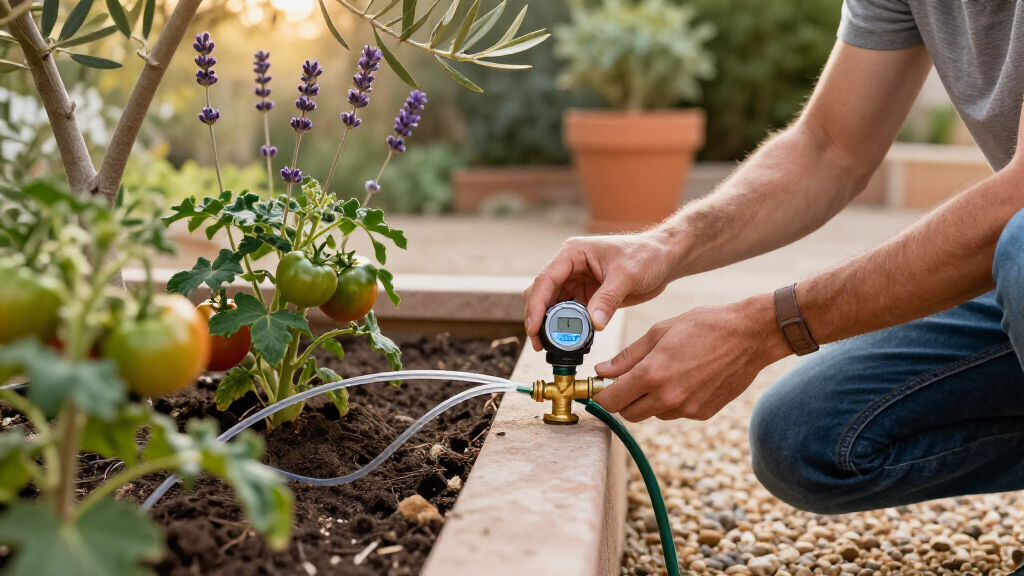
I compared these timers by the jobs they can handle: the number of outlets or zones, the kind of connection they use, and the controls available for scheduling or adjusting watering. I also weighed practical setup needs, including whether a hub is part of the system, and features such as rain delay and manual operation. These details affect whether a timer fits a single hose, several watering lines, or a garden where the faucet sits beyond reliable Wi-Fi range.
The ranking gives priority to a useful balance of capacity, connected control, and ease of matching the timer to a real garden layout. The Orbit B-hyve XD 2-Port leads as a flexible choice for multiple lines; the 4-Port models rank higher for larger setups but ask the buyer to manage more connections. Single-outlet and simpler programmable timers rank better for focused needs, while Bluetooth, Wi-Fi, and RF models serve different connectivity situations. Product names alone do not establish compatibility or performance, so buyers should confirm their own network, faucet, and hose requirements against the manufacturer’s specifications.
Factors to Consider When Choosing Smart Garden Water Timer
Choosing a smart hose timer starts with your garden layout, then moves to connectivity and the level of control you will actually use. These factors can prevent a mismatch that is difficult to spot from a product name alone.
Count watering lines before choosing outlet count
Count the hoses or irrigation lines you want to run independently, not just the faucets in your yard. Separate outlets can let you schedule beds, containers, or lawn sprinklers differently, while a single outlet keeps a compact setup simple. A multi-port timer does not necessarily mean every outlet can run at the same time, so verify its operating limits in the product specifications. Also check whether the timer needs adapters for your hose fittings. Buying more outlets than you need can add setup complexity without improving watering. If you may expand later, leave room for that growth when comparing one-, two-, three-, and four-zone designs.
Match the connection to the timer’s location
Smart timers do not all connect to a phone or home network in the same way. Wi-Fi models may need a strong signal at the faucet, while hub-based systems require a suitable place for the gateway and a working link between it and the timer. Bluetooth can suit close-range adjustments, but it may be less convenient when you want to change a schedule from indoors or away from home. RF range claims describe a connection path, but walls, structures, and interference can affect practical reach. Check whether the product needs a particular network band or app setup before you commit. A timer with fewer smart functions can be the calmer choice if your outdoor connection is unreliable.
Decide how much control your schedule needs
Write down when each area needs water and whether those schedules differ by day, duration, or season. A basic programmable timer can cover a steady routine without requiring app-based adjustments. Smart scheduling is more useful when weather changes, travel, or different plant needs lead you to revise watering often. Check how many schedules and zones the model supports, along with any limits on run time or frequency. Do not assume that an app gives every outlet a separate schedule. A clear match between the timer’s controls and your routine matters more than a long feature list.
Treat rain delay as a convenience, not a weather guarantee
Rain delay gives you a way to pause watering, but the name alone does not tell you whether the timer detects rain or waits for a manual command. Read the feature description to learn what triggers a pause and how long it lasts. If the system depends on a separate weather service or sensor, check whether that component is included and supported in your area. Manual rain delay can still be useful when you see rain in the forecast or notice wet soil. Set a reminder to resume the schedule if the timer does not restart automatically. The goal is to avoid watering by habit when local conditions have changed.
Check outdoor durability and maintenance requirements
A timer sits at a faucet where sun, moisture, and seasonal temperature changes can take a toll. Review the manufacturer’s guidance for weather exposure, operating temperatures, and winter storage rather than assuming an outdoor label covers every condition. Take the timer off before freezing weather if its instructions call for it, and consider whether you can reach the unit easily to replace batteries or inspect fittings. A brass inlet, as listed for one Shrivee model, may appeal to buyers comparing connection materials, but confirm the full construction details in the listing. Keep hose connections clean and check for leaks after installation. Low-maintenance fit starts with choosing a unit that suits the faucet and climate you have.
Pay for capacity or connectivity you will use
More outlets and a hub can make one system serve a larger garden, though they also add components and setup steps. For a single container line or small bed, a one-outlet timer may cover the actual need with less to configure. Paying extra for smart access makes more sense when remote schedule changes or multiple independently managed zones would save real effort. Before buying, compare what is included in the box with what the system needs to operate, especially hubs and gateways. Consider how you would handle a network outage or a dead phone battery; accessible manual controls can help. Choose the smallest setup that supports your routine, with a little capacity for likely changes.
Frequently Asked Questions
Do I need a hub for a smart garden water timer?
That depends on the model: some timers connect over Wi-Fi, while others are sold with a separate hub or gateway. The Orbit B-hyve XD 4-Port with Wi-Fi Hub, Insoma WiFi timer with hub, and GoveeLife H5901 Wi-Fi listing indicate that a hub is part of their setup. Check whether it is included and whether it must connect to your router or sit within a specified range of the timer. A hub-based system can help when the faucet is away from the house, but it adds another device to place and power. Confirm the full connection path before choosing.
Can one timer water several garden areas on different schedules?
It can if the timer has multiple outlets or zones and supports independent scheduling for them. The Orbit B-hyve XD models include one-, two-, and four-port options, and the Xinfuture listing describes a three-zone timer. Still, outlet count alone does not confirm that each line can run on its own schedule or operate simultaneously. Check the product’s scheduling and flow specifications for your intended use. If areas need very different watering times, independent control is more useful than simply splitting one hose connection.
Will a smart timer work if my outdoor faucet has weak Wi-Fi?
Possibly, but connection type and layout matter. A direct Wi-Fi timer may struggle when the faucet is beyond the router’s reliable signal, while a hub system may place its gateway closer to the timer or use a separate link. The Shrivee and other 984-foot RF listings advertise long-range connections, but stated range does not account for every wall or interference source. Bluetooth models are generally aimed at nearby phone control rather than broad remote access. Check the manufacturer’s requirements and test your signal near the faucet before relying on app control.
Is a rain delay the same as automatic rain detection?
No. A rain-delay feature may let you manually pause a schedule, while automatic rain response requires a sensor or weather-based service that can detect or report conditions. The product name or feature summary may not clarify which kind is included. Check whether an extra sensor, hub, subscription, or internet connection is needed for automatic adjustments. If the timer only offers a manual delay, it can still help when you know rain is coming, but you will need to activate it yourself. Choose based on how much automation you expect.
Should I choose a smart timer or a basic programmable hose timer?
Choose a smart model when remote changes, app scheduling, multiple zones, or connected controls solve a recurring problem in your garden. A programmable one-outlet timer can be a better fit for a steady routine that rarely changes, especially if you prefer fewer setup steps. Compare the control method and schedule options with how often you adjust watering during the season. Think about who will maintain the system if the app or network connection changes. The best choice is the one whose controls fit your habits and outdoor setup.
Conclusion
For the best overall balance, I would start with the Orbit B-hyve XD 2-Port: it offers more flexibility than a single-outlet timer without the footprint of a four-port setup. The best value for a simple routine is the programmable one-outlet hose timer, provided app control is not a priority. For a larger garden, the best premium fit is the Orbit B-hyve XD 4-Port with Wi-Fi Hub, while the best beginner option is a straightforward one-outlet model with controls that match a fixed schedule. If your faucet is far from the router, compare the RF-range Shrivee and similar listing with hub-based alternatives; if you want nearby phone control, consider the GoveeLife Bluetooth model. Match the outlet count and connection method to your garden before deciding.
Halloween Picks
halloween
As an affiliate, we earn on qualifying purchases.