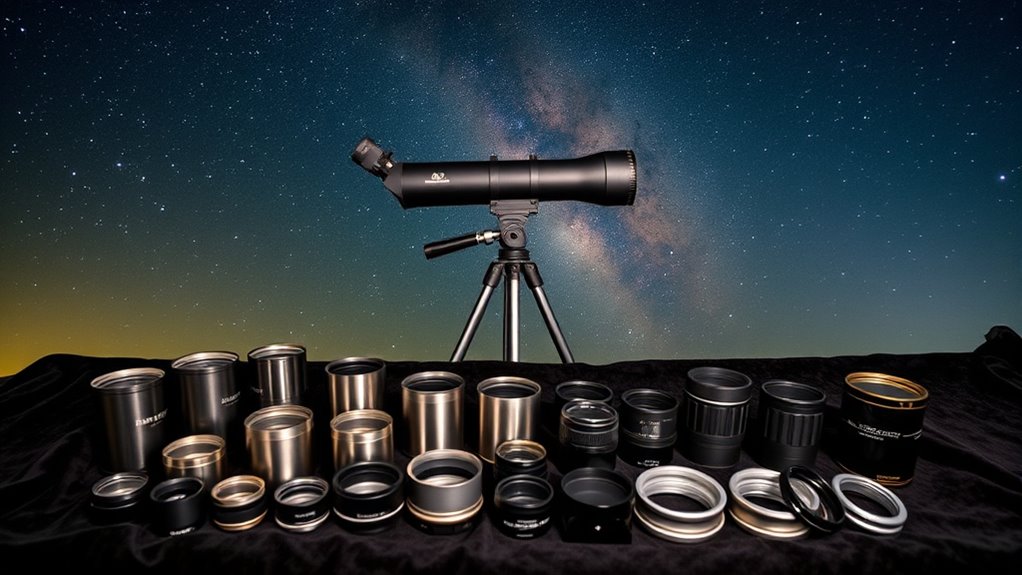

Choosing a field flattener for a refractor telescope can dramatically improve image sharpness across the entire field of view, especially for astrophotography. The best options, like the SVBONY SV209 Field Flattener, are designed to correct optical distortions, but they vary widely in compatibility, build quality, and price. More affordable models may deliver decent results but often sacrifice ease of use or versatility. Premium flatteners provide superior correction but come at a higher cost and complexity. Continue reading for a detailed comparison to help you find the right fit for your telescope and imaging goals.

Get furniture and decor delivered free — and shop member deals
- Fast, free delivery on millions of items
- Access to Prime Big Deal Days deals on October 6–7
- Prime Video, Amazon Music and more included
Complete the kit


Key Takeaways
- The top-ranked flatteners excel at providing consistent, sharp images across large fields, which is essential for astrophotography.
- Compatibility and size are critical — not all flatteners fit every telescope, so matching your scope’s specifications is key.
- Premium options often include additional features like focal reducers, but they demand more precise setup and calibration.
- Budget-friendly flatteners can be effective but may introduce some optical distortions or vignetting if not chosen carefully.
- Ease of installation and build quality significantly influence long-term reliability and image quality.
| SVBONY SV48P Telescope, 90mm Aperture F5.5 Refractor OTA for Beginners and Astronomy Enthusiasts |  | Best Overall Refractor Field Flattener for Versatility and Ease of Use | Aperture: 90mm | Focal Length: 500mm | Focusing System: Double speed rotatable focuser (1:10 gear ratio) | VIEW ON AMAZON | See Our Full Breakdown |
| SVBONY SV503 Refractor Telescope, 70mm ED, F6.78, with Field Flattener |  | Best Value for Compact, High-Quality Astrophotography with Built-in Field Flattening | Aperture: 70mm | Focal Ratio: F6.78 | Optical Design: Refractor ED | VIEW ON AMAZON | See Our Full Breakdown |
| SVBONY SV550 APO Telescope Bundle with SV209 Field Flattener, 122mm F7 Triplet Apochromatic Refractor and 0.8X Focal Reducer |  | Best for High-Quality Astrophotography with Focal Reduction and Field Flattening | Aperture: 122mm | Focal Ratio: F7 | Focal Length: 854mm | VIEW ON AMAZON | See Our Full Breakdown |
| SVBONY SV209 Field Flattener for SV550 122mm Refractor Telescope (0.8X) |  | Best Dedicated Field Flattener for Wide-Field, Edge-to-Edge Sharpness | Compatibility: SV550 122mm APO | Focal Length: 683.2mm | Focal Reducer Magnification: 0.8x | VIEW ON AMAZON | See Our Full Breakdown |
| 80ED Telescope 1.0x Flattener for Refractor Astrophotography |  | Best for Flat-Field Correction in APS-C Imaging with Triplet ED Design | Lens Type: Triplet ED | Back Focus: 55mm | Filter Thread: M48×0.75 2-inch | VIEW ON AMAZON | See Our Full Breakdown |
| SVBONY SV209 Field Flattener for SV550 80mm APO Telescope |  | Best for Specific Compatibility and Image Correction | Connection: M63x1 | Focal Ratio: F6 | Field of View: Supports half-frame and full-frame cameras | VIEW ON AMAZON | See Our Full Breakdown |
| SVBONY SV503 Refractor Telescope, 102mm F7 Extra Low Dispersion Achromatic Refractor OTA with SV193 Focal Reducer |  | Best for Bright Wide-Field Views and Versatility | Objective Lens Diameter: 102mm | Focal Ratio: F7 | Focal Reducer: SV193 | VIEW ON AMAZON | See Our Full Breakdown |
| HOTECH 2 Inch Field Flattener for Refractor Telescopes |  | Best for General Use and Versatility | Condition: Like-new | VIEW ON AMAZON | See Our Full Breakdown | ||
| SVBONY SV503 Upgraded ED Refractor Telescope, 80mm F7 with Field Flattener and Focal Reducer |  | Best for Deep-Sky Imaging with Versatile Correction | Aperture: 80mm | Focal Length: F7 | Focal Reducer: 0.8X | VIEW ON AMAZON | See Our Full Breakdown |
| SVBONY SV193 0.8X Focal Reducer Field Flattener for SV503 102mm Telescope |  | Best for Wide-Field and Finer Star Points | Magnification: 0.8X | Compatibility: SV503 102mm Telescope | Filter Thread: 2″ | VIEW ON AMAZON | See Our Full Breakdown |
| SVBONY SV503 Refractor Telescope with Built-in Field Flattener and SV305C Pro Camera |  | Best All-in-One for Compact Planetary Imaging | Aperture: 70mm | Focal Ratio: F/6.78 | Built-in Field Flattener: Yes | VIEW ON AMAZON | See Our Full Breakdown |
| SVBONY SV550 Telescope, 80ED F6 Triplet Apochromatic Refractor for Deep Sky Astrophotography |  | Best for Professional-Grade Deep Sky Imaging | Apochromatic Refractor: Yes | Optics Structure: Triplet ED with S-FPL51 glass | Focal Length: 480mm (F6) | VIEW ON AMAZON | See Our Full Breakdown |
More Details on Our Top Picks
SVBONY SV48P Telescope, 90mm Aperture F5.5 Refractor OTA for Beginners and Astronomy Enthusiasts
The SVBONY SV48P stands out for offering a large 90mm aperture combined with a versatile focal ratio of F5.5, making it ideal for both deep sky imaging and visual observation. Its fully multi-coated lenses maximize light transmission, producing bright, sharp images, while the rotatable focuser adds precision—an advantage over smaller or fixed-focus models like the SV503. However, the absence of a finderscope and manual focusing limit automation and quick targeting, which can be frustrating for beginners or those seeking faster setups. Compared to specialized field flatteners, this telescope’s integrated features offer convenience but at the expense of advanced control options. This pick is best for amateur astronomers wanting an all-in-one package that balances aperture, portability, and ease of use.
Pros:- Large 90mm aperture provides bright, detailed images
- Rotatable focuser allows precise focusing and flexible camera positioning
- Fully multi-coated lenses maximize light throughput and clarity
- Suitable for both visual and astrophotography use
Cons:- No included finderscope, requiring extra accessories
- Manual focusing can slow down quick adjustments
- Limited automation limits fast target acquisition
Best for: Beginners and casual astronomers seeking a versatile, user-friendly refractor for general astrophotography and observation.
Not ideal for: Advanced astrophotographers needing motorized mounts or extensive automation, due to its manual focus and lack of motorized controls.
- Aperture:90mm
- Focal Length:500mm
- Focusing System:Double speed rotatable focuser (1:10 gear ratio)
- Lens Coating:Fully multi-coated
- Field of View:1.02 degrees
- Mount Type:Altazimuth & Equatorial
Our verdict“This telescope offers a balanced entry point for beginners and enthusiasts who prioritize aperture and convenience over automation.”
SVBONY SV503 Refractor Telescope, 70mm ED, F6.78, with Field Flattener
The SVBONY SV503 delivers high-quality images with its ED glass, reducing chromatic aberration and ensuring sharp views of nebulae, galaxies, and star clusters. Its built-in field flattener guarantees wide, distortion-free views, surpassing basic achromats like the 80ED without additional accessories. The dual-speed focuser provides fine control, essential for precise astrophotography. Yet, its relatively narrow aperture and shorter focal length limit deep-sky imaging compared to larger models like the SV550. It also requires compatible adapters for camera use, adding some setup complexity. This model excels for amateurs prioritizing portability and high image quality in a compact form.
Pros:- ED glass minimizes chromatic aberration for crisp images
- Built-in field flattener ensures distortion-free wide views
- Dual-speed focuser allows precise focusing
- Compact and lightweight for travel
Cons:- Limited aperture reduces capability for faint deep-sky objects
- Requires additional adapters for certain camera setups
- Less suitable for heavy astrophotography rigs
Best for: Beginner to intermediate astrophotographers seeking a portable, high-performance refractor with integrated field flattening.
Not ideal for: Deep-sky astrophotographers needing larger apertures or more extensive accessories for advanced imaging.
- Aperture:70mm
- Focal Ratio:F6.78
- Optical Design:Refractor ED
- Field Flattener:Built-in
- Focuser:Dual-speed
- Mounting Components:2-inch CNC
Our verdict“This telescope offers excellent optical quality and portability, making it ideal for enthusiasts wanting sharp images without bulk.”
SVBONY SV550 APO Telescope Bundle with SV209 Field Flattener, 122mm F7 Triplet Apochromatic Refractor and 0.8X Focal Reducer
Compared with the smaller SV503, the SV550 offers a larger 122mm aperture and a premium triplet apochromatic lens that significantly reduces chromatic aberration, ensuring sharper planetary and deep-sky images. The included SV209 field flattener and 0.8x focal reducer expand the field of view and improve edge-to-edge sharpness—crucial for wide-field astrophotography. Its portable design suits travel needs better than larger, heavier scopes like the 80ED. On the downside, its weight and manual focus may pose challenges for some users, and the accessories might require careful handling. This setup is best for dedicated astrophotographers seeking high image quality and flexibility in a portable package.
Pros:- Aperture and triplet design deliver sharp, high-contrast images
- Includes field flattener and focal reducer for wider, flatter images
- Lightweight and portable for travel
- High-quality ED glass minimizes chromatic aberration
Cons:- Manual focusing can be time-consuming for quick shots
- Relatively heavy for portable setups
- Limited included accessories may require additional purchases
Best for: Intermediate to advanced astrophotographers looking for a high-performance, portable refractor with integrated field flattening and focal reduction.
Not ideal for: Beginners or those requiring motorized focusing or extensive automation, due to manual control and weight considerations.
- Aperture:122mm
- Focal Ratio:F7
- Focal Length:854mm
- Lens Type:Triplet apochromatic with ED glass
- Included Accessories:SV209 field flattener, 0.8x focal reducer
- Weight:6.44kg / 14.18lb
Our verdict“This refractor combines high optical quality with portability, perfect for serious amateurs seeking versatile astrophotography capabilities.”
SVBONY SV209 Field Flattener for SV550 122mm Refractor Telescope (0.8X)
The SV209 is designed explicitly for the SV550 122mm APO refractor, providing a critical upgrade for astrophotographers demanding sharp, distortion-free images across the frame. Its 0.8x focal reducer shortens the effective focal length to 683mm, enabling faster imaging and wider fields—an advantage over longer focal lengths like the F7 setup. While it effectively corrects field curvature, its compatibility is limited strictly to the SV550, requiring precise threading and sometimes additional adapters. Its FMC coating improves light transmission, but improper mounting can introduce vignetting or uneven illumination. This flattener is ideal for dedicated users of the SV550 seeking maximum edge-to-edge clarity.
Pros:- Effectively corrects field curvature for sharp edges
- Reduces focal length for wider, faster imaging
- Improves overall image quality at the edges
- Reduces exposure times for deep-sky imaging
Cons:- Requires proper threading and connection to the telescope
- Limited compatibility restricts flexibility
- Additional accessories may be necessary for perfect fit
Best for: Serious astrophotographers using the SV550 122mm refractor aiming for high-quality, wide-field images.
Not ideal for: Owners of other telescopes or those seeking a universal solution, due to its specific compatibility.
- Compatibility:SV550 122mm APO
- Focal Length:683.2mm
- Focal Reducer Magnification:0.8x
- Thread Size:Metric 63×1
- Field of View:360°
- Focus Type:Manual
Our verdict“This dedicated flattener is essential for SV550 owners aiming for professional-quality, wide-field astrophotography.”
80ED Telescope 1.0x Flattener for Refractor Astrophotography
The 80ED 1.0x flattener provides a significant upgrade for astrophotographers using the popular 80ED triplet refractor, especially with APS-C sensors. Its design minimizes field curvature at the native f/7 focal ratio, ensuring stars stay pinpoint across the frame—an advantage over longer focal length or non-flat field setups. The built-in filter thread and 360° camera rotator add convenience for framing and filter use. However, it doesn’t alter the native focal ratio, limiting its use for faster imaging setups. Its relatively lightweight construction makes it easier to mount, but it may not be suitable for heavier, more complex rigs. This flattener is perfect for dedicated astrophotographers who want high-quality images without changing the scope’s native focal length.
Pros:- Provides a flatter field for sharp stars across the frame
- Built-in filter thread and camera rotator for convenience
- Lightweight and easy to install
- Maintains the native f/7 focal ratio for consistent imaging
Cons:- Does not change the native focal length or speed
- Limited to APS-C sensors, not full-frame
- Compatibility may require precise threading
Best for: Astrophotographers using the 80ED triplet with APS-C cameras seeking a simple, effective flat-field correction.
Not ideal for: Users with full-frame cameras or those needing focal length reduction, as it maintains the native focal ratio and focal length.
- Lens Type:Triplet ED
- Back Focus:55mm
- Filter Thread:M48×0.75 2-inch
- Weight:0.42 kg
- Compatibility:80ED Triplet
- Focal Ratio:f/7
Our verdict“This flattener is ideal for APS-C astrophotographers wanting to improve star sharpness without altering their scope’s native focal ratio.”
SVBONY SV209 Field Flattener for SV550 80mm APO Telescope
The SVBONY SV209 stands out for its tailored design to the SV550 80F6 OTA, providing effective correction of field curvature for sharper images across the frame. Unlike more universal options like the HOTECH 2 Inch Field Flattener, this model excels when paired with its intended telescope, but its limited compatibility makes it less suitable for users with different setups. Its inclusion of an extension tube and filter thread enhances astrophotography versatility, yet the absence of a focus mechanism means users must rely on their telescope’s focus system, adding a layer of complexity. Compared to the HOTECH flattener, which offers broader compatibility but less integrated accessories, the SV209 ensures precise correction for a specific system. This pick is ideal for owners of the SV550 80F6 seeking a dedicated, high-quality correction solution, but it may disappoint those with other refractors or requiring a focus mechanism.Pros:- Effectively corrects field curvature for sharper images
- Supports both half-frame and full-frame cameras
- Includes extension tube and filter mounting thread
Cons:- Limited compatibility to SV550 80F6 OTA
- No focus mechanism included, fixed focus only
Best for: Owners of the SV550 80F6 OTA who want optimized field correction for astrophotography.
Not ideal for: Users with different telescope models or seeking a universal flattening solution, due to its specific design.
- Connection:M63x1
- Focal Ratio:F6
- Field of View:Supports half-frame and full-frame cameras
- Extension Tube:Included
- Adapter Ring:M48 included
- Filter Mount:Built-in 2-inch filter thread
- Effective Field of View:45mm
Our verdict“This flatener is best suited for dedicated SV550 80F6 owners prioritizing image clarity over versatility.”
SVBONY SV503 Refractor Telescope, 102mm F7 Extra Low Dispersion Achromatic Refractor OTA with SV193 Focal Reducer
The SVBONY SV503 offers a generous 102mm aperture coupled with an F7 focal ratio, making it excellent for capturing bright, wide-field images. Its multi-coated optics ensure high contrast and clarity, similar to the SV503 80ED but with a larger aperture for more detailed deep-sky imaging. The inclusion of a focal reducer, SV193, enhances speed and field coverage, ideal for astrophotographers aiming for expansive shots. However, its weight may challenge portability, and users will need to acquire additional accessories like mounts or cameras for full functionality. Compared to the smaller SV503 80ED, this telescope delivers brighter images but at the expense of added weight and complexity. It’s well suited for dedicated astrophotographers who prioritize image brightness and field size over portability, but less so for those seeking a lightweight, all-in-one travel setup.Pros:- Large 102mm objective for bright, detailed images
- Multi-coated optics for high contrast
- Compatible with filters and cameras
Cons:- Heavy for portable use
- Requires additional accessories for full setup
Best for: Astrophotographers needing a large aperture for wide-field imaging and high contrast images.
Not ideal for: Travelers or casual observers who prefer lightweight, easy-to-carry telescopes without extensive accessory needs.
- Objective Lens Diameter:102mm
- Focal Ratio:F7
- Focal Reducer:SV193
- Filter Thread:2″
- Back End Thread:M48x0.75
- Body Material:Aluminum
Our verdict“This telescope is perfect for dedicated deep-sky astrophotographers seeking high brightness and wide-field capabilities, despite its weight.”
HOTECH 2 Inch Field Flattener for Refractor Telescopes
The HOTECH 2 Inch Field Flattener emphasizes simplicity and broad compatibility, ensuring sharp, flat images across various refractors. It offers a straightforward solution for astrophotographers wanting consistent edge-to-edge sharpness, but the limited detailed specifications make it less appealing for users requiring precise control or specialized setups. Its fixed design and lack of detailed focus features mean it’s more suited for those who prioritize ease of use and compatibility over fine-tuning. Compared with the SVBONY models, which are more tailored and accessory-rich, this flattener provides a more universal, no-frills option. It’s best for hobbyists and casual astrophotographers who want reliable correction without complex adjustments, but less ideal for advanced setups demanding precise focus control.Pros:- Ensures sharp, flat images across the field
- Suitable for astrophotography and detailed observations
- In like-new condition
Cons:- Limited detailed specifications provided
- Less adaptable for different setups
Best for: Amateur astronomers seeking a reliable, easy-to-use flattening solution for various refractors.
Not ideal for: Advanced astrophotographers who need detailed focus mechanisms or highly specific optical corrections.
- Condition:Like-new
Our verdict“This flatener offers a dependable, straightforward correction for hobbyists needing versatility and ease of use.”
SVBONY SV503 Upgraded ED Refractor Telescope, 80mm F7 with Field Flattener and Focal Reducer
The SV503 ED refractor combines an 80mm aperture with a focal reducer and a field flattener, making it a compelling choice for deep-sky astrophotography. Its high-contrast imaging with low chromatic aberration, thanks to S-FPL51 ED glass, benefits those capturing galaxies and nebulae. The 0.8X focal reducer speeds up imaging, while the dual-speed focuser ensures precise focus. Compared to the SV503 102mm model, this smaller telescope offers greater portability but slightly less light-gathering power. Its primary drawback is the need for additional accessories for a complete setup, which could be a hurdle for beginners. Compared to the SV193 focal reducer, this setup offers a more integrated solution for deep-sky work, but less flexibility for general observation. It’s best for dedicated deep-sky enthusiasts who want sharp, high-contrast images in a portable package, but less suited for planetary observation or casual use.Pros:- High-contrast, low-chroma imaging with ED glass
- Fast 0.8X focal reducer for quicker imaging
- Precise dual-speed focuser for sharp focus
- Lightweight and portable
Cons:- Requires additional accessories for full setup
- Designed primarily for deep-sky imaging, less ideal for planets
Best for: Deep-sky astrophotographers seeking a portable, high-contrast imaging setup with correction and reduction.
Not ideal for: Beginners or planetary observers who require a more straightforward, all-in-one telescope without additional accessories.
- Aperture:80mm
- Focal Length:F7
- Focal Reducer:0.8X
- Focuser:2-inch dual-speed
- Weight:2.5kg / 5.51lb
- Glass Type:S-FPL51 ED
Our verdict“This telescope is ideal for deep-sky astrophotographers prioritizing image quality and portability, despite needing extra gear for complete use.”
SVBONY SV193 0.8X Focal Reducer Field Flattener for SV503 102mm Telescope
The SV193 0.8X focal reducer enhances the SV503 102mm telescope by broadening its field of view and sharpening star points, making it an appealing upgrade for astrophotographers seeking wider, more detailed images. Its multi-coated optics ensure high optical quality, while the aluminum body adds durability. Compared with the generic HOTECH flattener, the SV193 offers better compatibility with the SV503, but installation may challenge beginners unfamiliar with camera threading and mounting. This accessory is well-suited for those focused on deep-sky imaging who want to maximize their telescope’s imaging area without sacrificing image quality. Compared to the larger aperture models, this reducer is optimized for portable, high-contrast deep-sky work. It’s recommended for intermediate users who want to expand their field of view without complex adjustments, but less suitable for those new to astrophotography or seeking universal compatibility.Pros:- Provides wider field of view for astrophotography
- High-quality multi-coated optics for clear images
- Durable aluminum construction
Cons:- Requires compatibility with specific telescope models
- Installation can be complex for beginners
Best for: Astrophotographers aiming to widen their field of view and improve star sharpness in their SV503 setup.
Not ideal for: Beginners or users with different telescope models, due to installation complexity and limited compatibility.
- Magnification:0.8X
- Compatibility:SV503 102mm Telescope
- Filter Thread:2″
- Back End Thread:M48x0.75
- Material:Aluminum
- Coatings:Multi-coated
Our verdict“This focal reducer is best suited for intermediate astrophotographers wanting wider, sharper images with their SV503, despite installation challenges.”
SVBONY SV503 Refractor Telescope with Built-in Field Flattener and SV305C Pro Camera
This model stands out for integrating a built-in field flattener directly into a compact 70mm refractor, making it an appealing choice for those who want a streamlined setup. Compared with the SV550 80ED, which requires separate accessories like the SV209 flattener, the SV503 offers a more user-friendly, ready-to-go experience—though it sacrifices some aperture size for convenience. Its high-sensitivity IMX662 sensor excels at planetary imaging in low light, providing sharp, detailed views without needing additional equipment. However, the setup process involves calibration for best results, and the limited aperture restricts deep-sky exploration. This pick makes the most sense for amateur astronomers focused on planetary and bright object imaging within a compact setup, who don’t mind a bit of technical tweaking.
Pros:- Built-in field flattener simplifies setup and reduces additional accessories
- High-sensitivity IMX662 sensor captures detailed planetary images in low light
- Compact design enhances portability and ease of use
Cons:- Requires calibration and some technical skill for optimal performance
- Limited aperture size restricts deep-sky observation and imaging
Best for: Beginners and intermediate astronomers seeking an all-in-one planetary imaging solution in a portable form factor
Not ideal for: Deep-sky enthusiasts aiming for large aperture and extensive nebula or galaxy imaging, who may find the small aperture limiting
- Aperture:70mm
- Focal Ratio:F/6.78
- Built-in Field Flattener:Yes
- Camera:SV305C Pro
- Sensor:IMX662
- Low Readout Noise:0.7e-
Our verdict“This telescope is ideal for planetary observers and astrophotographers who prioritize portability and an integrated setup over deep-sky capabilities.”
SVBONY SV550 Telescope, 80ED F6 Triplet Apochromatic Refractor for Deep Sky Astrophotography
The SV550 80ED F6 triplet refractor makes a clear statement for serious astrophotographers with its high-contrast, chromatic aberration-free optics, surpassing simpler systems like the SV503 in image quality. Its inclusion of a dedicated field flattener, the SV209, ensures flat, distortion-free images across full-frame cameras—an upgrade over the built-in flattener on the SV503, which may not fully eliminate edge distortion at higher magnifications. The dual-speed focus mount allows precise focusing essential for detailed astrophotography. On the downside, its setup can be complex for newcomers, and the price may be a barrier for casual users. This telescope is best suited for experienced amateurs or professionals who need optimal image quality for deep-sky targets and can handle a more involved setup process.
Pros:- High-quality triplet ED optics for sharp, true-color images
- Includes a dedicated field flattener for full-frame imaging
- Dual-speed focus for fine control and sharp focus
Cons:- Setup complexity may deter beginners or those less technically inclined
- Higher price point limits accessibility for casual hobbyists
Best for: Advanced astrophotographers seeking high-precision, chromatic aberration-free images with premium accessories
Not ideal for: Casual observers or beginners who prefer quick, straightforward setups and less technical complexity
- Apochromatic Refractor:Yes
- Optics Structure:Triplet ED with S-FPL51 glass
- Focal Length:480mm (F6)
- Focus Mount:Dual-speed 2.5-inch
- Field Flattener:SV209
- Back Focal Length:55mm
Our verdict“This telescope is well suited for dedicated astrophotographers who demand top-tier image quality and are prepared for intricate setup procedures.”

How We Picked
The products in this roundup were evaluated based on their optical performance, ease of use, build quality, compatibility with various refractor models, and value for money. Priority was given to flatteners that deliver consistent correction across the entire field of view, especially for astrophotography applications. We also considered user reviews and manufacturer reputation to ensure reliable long-term operation. The final ranking balances performance with practical factors like price and ease of installation, helping enthusiasts from beginners to advanced users find suitable options.Factors to Consider When Choosing Field Flatteners For Refractor Telescopes
Selecting the right field flattener involves understanding several key factors that influence image quality, compatibility, and usability. A well-chosen flattener will minimize optical distortions and vignetting, providing sharp, flat images from edge to edge. However, buyers must consider their telescope size, focal length, and imaging setup to avoid mismatched accessories that can lead to subpar results or damage. This guide highlights the most important considerations to help you make an informed purchase beyond just reading product specs.Compatibility with Your Telescope
Ensuring the flattener properly fits your refractor is essential. Many flatteners are designed for specific diameters or focal lengths, so mismatched sizes can cause vignetting or image distortions. Always check the product’s compatibility with your scope’s aperture and focal ratio. Investing in a flattener that matches your telescope’s specifications reduces the need for additional adapters and simplifies setup, leading to more consistent results.
Optical Performance and Correction Range
The main purpose of a field flattener is to correct field curvature and distortions. Look for models that specify their correction capabilities and whether they are optimized for your focal length. Higher-quality flatteners tend to produce flatter fields with minimal aberrations, which is especially critical for astrophotography where edge distortions can ruin images. Consider whether the flattener includes a focal reducer if you want a wider field of view combined with flatness.
Ease of Use and Installation
Some flatteners are straightforward to install, featuring simple threaded connections, while others require precise adjustments or additional adapters. Ease of setup can save significant time and frustration, particularly for users who frequently switch between telescopes or imaging setups. Read user reviews to gauge how intuitive the installation process is and whether the product includes comprehensive instructions or tools.
Build Quality and Durability
Since field flatteners are used in demanding outdoor environments, durability matters. Look for models made from high-quality, corrosion-resistant materials with precise threading and optical components. A well-built flattener maintains alignment over time, ensuring consistent image correction. Cheaper units might be prone to misalignment or damage, which can compromise image quality and longevity.
Price and Value
Prices for flatteners vary widely, reflecting differences in optical performance, build quality, and features. While budget options can be tempting, they may require more careful handling and calibration. Premium models offer better correction and durability but come at a higher cost. Determine your imaging needs and budget to find a balance — investing in a higher-quality flattener often pays off through improved image quality and reduced frustration.
Frequently Asked Questions
How do I know if a field flattener is compatible with my refractor telescope?
Compatibility depends on matching the flattener’s diameter, thread type, and focal length to your telescope’s specifications. Most manufacturers list compatible models or specifications, so checking those details carefully is essential. Measuring your scope’s diameter and focal ratio helps ensure you select a flattener designed for your specific setup. When in doubt, consult the manufacturer or user forums for advice on fitting your particular model.
Can I use a field flattener with my existing astrophotography camera?
Yes, most flatteners are designed to work with standard camera adapters, but compatibility depends on the thread sizes and spacing. Ensure that the flattener’s optical design is suitable for your camera’s sensor size, especially if you’re using full-frame or larger sensors. Proper back focus distance is critical—exceeding or not reaching the recommended spacing can reduce correction quality. Always double-check the specifications or seek advice if unsure.
Is it better to choose a flattener with a focal reducer included?
Including a focal reducer can be convenient, saving space and simplifying your setup, especially if you want a wider field of view. However, combining a reducer with a flattener may require precise calibration to avoid vignetting or optical distortions. Separate, dedicated flatteners often provide better correction, but a combined unit can be more compact and cost-effective if it matches your telescope’s focal length and imaging goals.
How much does installation complexity affect my choice of a field flattener?
Installation ease can significantly influence your overall experience, especially if you frequently switch equipment. Some flatteners come with detailed instructions and simple threaded connections, making setup quick and straightforward. Others require fine adjustments or additional adapters, which can be frustrating and time-consuming. Consider your comfort level with optical setups and whether you prioritize quick setup or maximum correction performance.
Are premium field flatteners worth the extra cost?
Higher-priced flatteners generally provide superior correction, build quality, and durability, which can lead to noticeably sharper images. They tend to be more forgiving of minor misalignments and often include additional features like focal reducers. If you’re serious about astrophotography or working with large sensors, investing in a premium model can significantly improve results and reduce post-processing time. For casual imaging, a mid-range option may be sufficient without the higher investment.
Conclusion
For most amateur astrophotographers, the SVBONY SV209 Field Flattener represents the best overall choice, offering a solid balance of performance, compatibility, and price. Beginners who prioritize ease of use might prefer more straightforward, budget-friendly options like the SVBONY SV503 series. Those seeking top-tier correction and durability should consider premium models such as the HOTECH 2 Inch Flattener or specialized units with integrated focal reducers. For specific needs like wide-field deep-sky work, selecting a flattener with a focal reducer feature can maximize your imaging potential without sacrificing flatness. Ultimately, matching your telescope’s specifications and imaging goals will lead to the best results.
As an affiliate, we earn on qualifying purchases.Halloween Picks
halloween