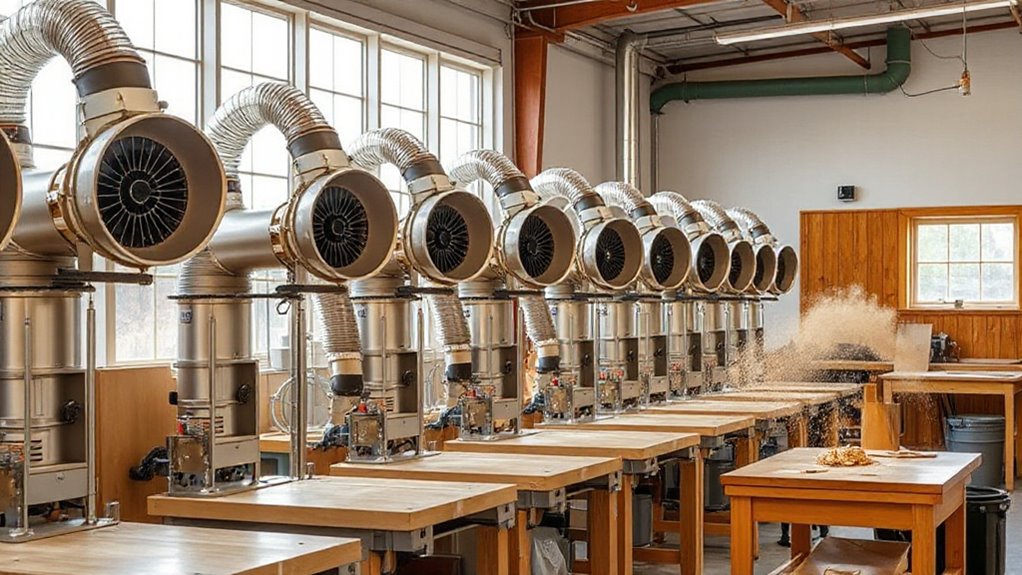

Choosing a dust collector for a woodworking shop involves balancing power, capacity, and ease of use. The BUCKTOOL 1HP Wall-mount Dust Collector stands out as the best overall due to its strong airflow and remote control features. For those prioritizing capacity and filtration, the BUCKTOOL 1-1/2 HP Dust Collector offers high CFM and advanced dust filtering. Meanwhile, the WEN DC1300 provides a large 50-gallon bag ideal for bigger projects. Most options trade off between size, power, and budget, so continue reading for a detailed breakdown of what suits different needs.

Get furniture and decor delivered free with Prime
- Fast, free delivery on millions of items
- Prime Video, Amazon Music and more included
- Member-only deals all year
Complete the kit


Key Takeaways
- High CFM ratings correlate directly with better dust pickup and overall cleaning efficiency.
- Filtration quality, especially micron ratings, significantly impacts air quality and health in the workshop.
- Capacity matters most for larger projects; smaller units require more frequent emptying.
- Mobility features like wheels or wall-mount options improve usability in limited spaces.
- Price ranges vary widely, but investing in a more powerful unit often pays off through reduced maintenance and better filtration.


| dust collector for woodworking shop | Motor Power |
|---|---|
| BUCKTOOL 1HP 6.5AMP Wall-mount | 1 HP |
| WEN Woodworking Dust Collector | 5.7 amps |
| WEN Woodworking Dust Collector | 7.4 amps |
| Tabletop Dust Collector with T | — |
| BUCKTOOL 1-1/2 HP Dust Collect | 1.5 HP |
| CNC Machine Dust Collector wit | — |
| SHOPMAX 20 Gal. 6.3 Amp Dust C | 6.3 amps |
| WEN DC1300 1,300 CFM 14-Amp 5- | 14 amps |
More Details on Our Top Picks
BUCKTOOL 1HP 6.5AMP Wall-mount Dust Collector with Remote Control and 2-micron Dust Filter Bag, 550 CFM, Model DC30A-1
The BUCKTOOL DC30A-1 excels in delivering robust dust collection with a 1HP motor and 550 CFM airflow, making it suitable for serious woodworking shops. Its wall-mount option combined with wheels offers flexible placement, unlike the more portable WEN models that lack mounting options. The remote control adds convenience during operation. However, at 43.1 pounds, it’s heavier than other wall-mount options like the WEN wall-mount unit, which might be a concern for some setups. This model is ideal for workshops that need powerful, versatile dust control without sacrificing mobility. Its 2-micron filter bag ensures finer dust is captured efficiently, improving air quality. Still, the weight and installation complexity may be drawbacks for smaller shops or DIYers.Pros:- Powerful 1HP motor with high airflow (550 CFM)
- Remote control for easy operation from a distance
- Versatile mounting options and mobility with wheels
- Includes a 2-micron dust filter bag for fine dust capture
Cons:- Relatively heavy at over 43 pounds, challenging for some setups
- Requires wall mounting or dedicated space for mobility
- May be overkill for occasional or small projects
Best for: Medium to large woodworking shops requiring powerful, versatile dust collection with remote operation.
Not ideal for: Small hobbyists with limited space or those seeking a lightweight, purely portable unit.
- Motor Power:1 HP
- Current:6.5 AMP
- Air Flow:550 CFM
- Voltage:120 volts
- Weight:43.1 pounds
- Dimensions:47.24 x 19.69 x 22.09 inches
Our verdict“This dust collector is best suited for serious woodshops that need high power, flexibility, and remote operation, despite its weight and installation needs.”
WEN Woodworking Dust Collector, 5.7-Amp Motor, 12-Gallon Capacity, Mobile Base, Wall Mount Option
The WEN 12-gallon dust collector offers a solid balance of power and portability, featuring a 5.7-amp motor that provides 660 CFM—more than some smaller units like the tabletop model but less than larger systems like the BUCKTOOL. Its compact design with lockable swivel casters makes it easy to move and store, setting it apart from heavier options like the BUCKTOOL. The optional wall mount adds flexibility for space-saving setups. However, it’s limited to indoor use and single-speed operation, which could hinder performance in larger workshops. This pick makes the most sense for hobbyists or small shops that value mobility and versatility without sacrificing too much airflow. It’s less suitable for heavy-duty, dust-intensive environments.Pros:- Compact and portable with lockable swivel casters
- Includes a large 12-gallon collection bag
- Optional wall-mount for space efficiency
- Relatively lightweight at 17 pounds
Cons:- Limited to indoor use only, not weatherproof
- Single speed operation may limit control
- Less power for large or dust-heavy projects
Best for: Small woodworking shops or hobbyists needing a portable, space-efficient dust collector.
Not ideal for: Large professional shops requiring high airflow and continuous operation, as the 5.7 amps may limit capacity.
- Motor Power:5.7 amps
- Capacity:12 gallons
- Air Flow:660 CFM
- Dust Port:4 inches
- Dimensions:34.25 x 13 x 14.2 inches
- Warranty:2 years
Our verdict“This model is ideal for small shops or hobbyists prioritizing mobility and simplicity over maximum airflow capacity.”
WEN Woodworking Dust Collector with 7.4-Amp Motor and 15-Gallon Bag
The WEN 15-gallon model punches above its weight with a 7.4-amp motor and 600 CFM airflow, making it suitable for workshops with moderate to heavy dust loads. Its 9-inch impeller boosts airflow, outperforming smaller models like the tabletop unit. Mobility is facilitated via swivel casters and optional wall mounting, offering flexible setup options. Compared to the 12-gallon WEN, this unit’s larger capacity reduces the frequency of emptying, making it more convenient for longer sessions. However, at over 41 pounds, it’s quite heavy, and the space required for setup could be a concern for smaller shops. This collector suits woodworkers who need more power and capacity without moving into industrial-grade systems.Pros:- Powerful 7.4-amp motor with high airflow (600 CFM)
- Large 15-gallon collection bag reduces emptying frequency
- Mobility with swivel casters and wall-mount options
- Designed for effective dust and debris removal
Cons:- Heavy for some users, over 41 pounds
- Requires sufficient space for setup and storage
- Limited to woodworking dust, not suitable for other materials
Best for: Medium-sized workshops needing a balance of power, capacity, and mobility for regular dust collection.
Not ideal for: Small hobbyists or shops with limited space who don’t require such high airflow or capacity.
- Motor Power:7.4 amps
- Impeller Size:9 inches
- Air Flow:600 CFM
- Dust Port:4 inches
- Collection Bag Capacity:15 gallons
- Weight:41.1 pounds
Our verdict“This dust collector offers high capacity and power for medium workshops, with mobility options, though its weight and size require consideration.”
Tabletop Dust Collector with Timer for Woodworking Shops
The tabletop dust collector offers a compact, highly portable design with a built-in timer, making it ideal for small workshops or renovation projects where space is limited. Its high-efficiency motor paired with a MERV-13 filter ensures effective dust filtration, comparable to larger units like the BUCKTOOL but on a smaller scale. The timer adds automated operation, freeing users from constant manual control. Its dimensions and electrical requirements make it suitable for small setups, but the filter needs replacement every six months, adding ongoing cost. This unit is perfect for hobbyists or small shops that prioritize automated, space-saving dust collection, though it may struggle with larger, dust-heavy tasks.Pros:- Portable with a sturdy handle for easy transport
- Effective dust filtration with MERV-13 filter
- Timer function allows automated operation
- Built-in safety features like circuit breaker
Cons:- Filter replacement needed every 6 months
- Limited to 2 speed settings
- Dimensions may be bulky for very tight spaces
Best for: Hobbyists or small workshop owners needing an automated, space-efficient dust collector.
Not ideal for: Large shops or professional environments with high dust loads, where larger, more powerful systems are necessary.
- Dimensions:14.57”×9.45”×11.81”
- Speed Settings:2 (580 CFM, 780 CFM)
- Electrical Requirements:115V, 0.9A
- Timer:up to 120 minutes
- Filter:MERV-13
- Safety Features:Circuit breaker
Our verdict“This compact, automated dust collector is excellent for small spaces and hobbyist use, with some ongoing maintenance considerations.”
BUCKTOOL 1-1/2 HP Dust Collector with 1100 CFM Airflow, 98% 2-Micron Filtration, Dual 4-Inch Ports, 6-Inch Main Inlet, and Mobile Base
This BUCKTOOL model stands out for its impressive 1100 CFM airflow, making it ideal for larger, demanding workshops. Its powerful 1.5HP motor and dual 4-inch ports enable efficient suction across multiple machines simultaneously, outperforming smaller units like the WEN models in capacity. The 98% filtration of 2-micron particles ensures cleaner air, crucial for health and safety. Its internal dust baffle improves efficiency, and the mobile base makes positioning flexible. However, it’s heavier and bulkier, which could be a challenge for those with limited space or needing frequent relocation. This system is well-suited for professional shops or serious hobbyists with extensive dust collection needs.Pros:- High airflow capacity (1100 CFM) for maximum efficiency
- Excellent filtration capturing 98% of 2-micron dust
- Multiple port options for versatile machine connection
- Mobile base for easy repositioning
Cons:- Heavy and large, challenging to move frequently
- Requires significant space to operate comfortably
- Potentially noisy during operation
Best for: Large workshops or serious hobbyists who require maximum airflow, filtration, and flexibility in setup.
Not ideal for: Small shops or DIYers with limited space and less demanding dust collection requirements.
- Motor Power:1.5 HP
- Airflow:1100 CFM
- Filtration Efficiency:98% 2-micron
- Ports:Dual 4-inch
- Main Inlet:6 inches
- Additional Features:Internal dust baffle, mobile base
Our verdict“This high-capacity, high-filtration system is perfect for large-scale or professional workshops, with the tradeoff of size and weight.”
CNC Machine Dust Collector with Air Filtration, 6000Pa Suction, 2.8L Large Bin, Compatible with 775 RPM/500W Spindle Motors
The TWOTREE M1 excels at collecting dust directly from CNC engraving machines, making it ideal for detailed carving work. Its advanced air filtration system significantly improves air quality, which is a critical advantage over smaller, less sophisticated options like the Tabletop Dust Collector. While its 2.8-liter bin is small, this is a tradeoff for its compact size and automatic vibration sensor that activates suction when needed. Compared to larger shop vacs like the WEN DC1300, it’s more specialized, but less suited to large-volume dust collection. This pick suits users who prioritize cleanliness during CNC engraving but don’t require high-capacity dust storage or heavy-duty airflow.
Pros:- Effective debris capture directly from CNC machines
- Advanced filtration enhances workshop air quality
- Automatic vibration sensor for convenient operation
- Transparent bin for quick debris checks
Cons:- Limited dust bin capacity may require frequent emptying
- Restricted to indoor use, not suitable for larger workshops
- Requires compatible CNC machine for optimal performance
Best for: CNC hobbyists or small workshop operators focused on precision carving and clean air quality
Not ideal for: Woodworkers with large, continuous dust production who need high-capacity, all-around shop dust collection
- Capacity:2.8 liters
- Recommended Uses For Product:Desk
- Number of Speeds:2
- Power Voltage:24 volts
- Item Weight:4.2 pounds
- Item Dimensions:11.61″L x 9.06″W x 11.02″H
Our verdict“This device makes the most sense for CNC operators seeking precise dust collection and cleaner air without the need for large-capacity systems.”
SHOPMAX 20 Gal. 6.3 Amp Dust Collector
The SHOPMAX 20-gallon dust collector stands out for its impressive airflow of 677 CFM and large capacity, making it better suited for extensive woodworking projects compared to the smaller CNC Machine Dust Collector. Its 20-gallon bin minimizes the frequency of emptying, which is a significant advantage in busy workshops. However, it’s heavier and less portable, especially when full, which can be a drawback if mobility is a priority. While its 120 V operation might limit some users with different outlets, its five hose adapters provide excellent versatility across multiple tools. This model is ideal for serious hobbyists or small professional shops that need continuous, high-volume dust collection without sacrificing capacity.
Pros:- High airflow capacity for large volume dust collection
- 20-gallon bin reduces frequent emptying
- Multiple hose adapters for flexible tool connections
- Portable with wheels and handle for repositioning
Cons:- Heavy when full, making it cumbersome to move
- Limited to 120 V, requiring nearby outlets
- Durability concerns reported by some users
Best for: Medium to large woodworking shops needing high airflow and large debris capacity
Not ideal for: Small hobbyists or users with limited outlet availability, due to its weight and size
- Motor Power:6.3 amps
- Impeller Size:12 inches
- Airflow Capacity:677 CFM
- Dust Capacity:20 gallons
- Voltage:120 V
- Included Components:Bag
Our verdict“This dust collector is best for larger workshops that demand high airflow and large storage capacity, accepting some tradeoffs in portability.”
WEN DC1300 1,300 CFM 14-Amp 5-Micron Woodworking Dust Collector with 50-Gallon Collection Bag and Mobile Base
The WEN DC1300 offers powerful airflow of 1,300 CFM, making it a top choice for busy workshops handling multiple tools simultaneously. Its large 50-gallon collection bag greatly reduces emptying frequency, outpacing smaller units like the SHOPMAX 20-gallon in capacity. The mobile base with swivel casters simplifies repositioning, although its weight and size can be a concern for tight spaces. Assembly complexity may be a hurdle for less experienced users, but the high-performance motor and dual inlets make it a versatile option for large woodworking setups. This model is tailored for shops where heavy dust loads and multiple tool connections are routine, accepting the tradeoff in size and complexity.
Pros:- Exceptional airflow capacity for demanding dust loads
- Huge 50-gallon collection capacity reduces frequent emptying
- Dual inlets for connecting multiple tools simultaneously
- Mobile base with swivel casters for easier repositioning
Cons:- Heavy and bulky, requiring ample space
- Assembly can be complex for less experienced users
- Requires significant space for operation
Best for: Professional or large hobbyist shops that require high-capacity, multi-tool dust collection
Not ideal for: Small workshops or DIYers with limited space, due to its size and weight
- Airflow:1,300 CFM
- Motor Power:14 amps
- Impeller Size:10 inches
- Collection Capacity:50 gallons
- Inlet Size:4 inches
- Impeller RPM:3450 RPM
Our verdict“This model is ideal for large, professional workshops where maximum airflow and capacity outweigh concerns over size and setup complexity.”
How We Picked
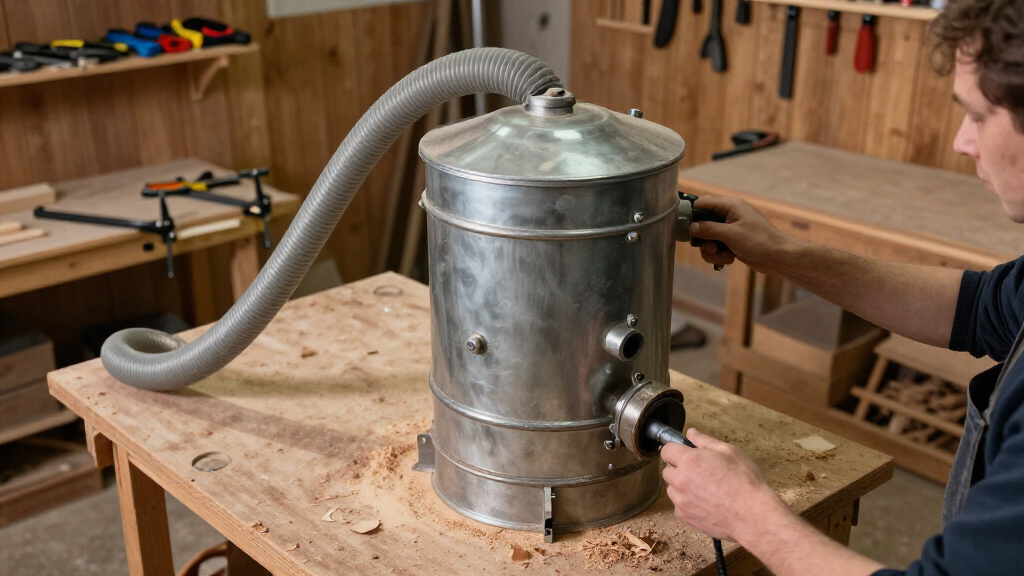
These dust collectors were selected based on a combination of airflow performance (CFM), filtration efficiency, capacity, ease of use, build quality, and value for money. We prioritized models with proven reliability, positive user feedback, and features that enhance safety and convenience. The ranking reflects a balance between power, capacity, and affordability, aiming to meet different workshop sizes and user expertise levels. Each product was evaluated for its ability to handle typical woodworking dust while maintaining ease of operation and maintenance.Factors to Consider When Choosing Dust Collector For Woodworking Shop
When choosing a dust collector for a woodworking shop, it’s vital to consider factors beyond just initial cost. Proper airflow capacity, filtration quality, and size influence how well the unit cleans your space and how often you’ll need to empty it. Understanding these factors helps avoid common pitfalls like undersized units that can’t handle your workload, or overly complex models that complicate maintenance. The right model depends on your workshop size, project scope, and budget, so weigh each feature carefully.Airflow Capacity (CFM)
The cubic feet per minute (CFM) rating indicates how much air the dust collector can move. For most woodworking shops, a minimum of 400 CFM is recommended, but larger or more dust-intensive setups benefit from 600 CFM or higher. Higher airflow improves dust pickup efficiency and reduces dust accumulation on surfaces. However, very high CFM units tend to be more expensive and bulkier, so consider your workshop size and layout before opting for maximum power.
Filtration Efficiency
Filtration ratings, often expressed in microns, determine how fine the dust particles captured are. A 1-micron filter traps smaller dust particles that can harm respiratory health, while 2- or 3-micron filters are common for general use. Better filtration reduces airborne dust and improves air quality but may come with higher maintenance costs. For shops with sensitive users or prolonged use, investing in high-quality filtration makes a noticeable difference.
Capacity and Size
Capacity, measured in gallons, influences how often you need to empty the collection bin. Larger capacities, like 30 or 50 gallons, support extended use without interruption but require more space and can be heavier to move. Smaller units are more maneuverable and suitable for hobbyists or small workshops but may need frequent emptying during intensive projects. Consider your typical workload and storage space before choosing a size.
Mobility and Space Requirements
Features like wheels and wall-mounting options significantly affect usability. Compact models or those with mobile bases are easier to reposition, especially in multi-use spaces. Conversely, wall-mounted units free up floor space but may limit airflow capacity. Ensure your workshop layout supports your preferred mobility features, and be mindful of space constraints that can influence installation and operation.
Price and Long-term Value
While budget models may seem attractive initially, they often compromise on power, filtration, or durability. Investing in a higher-quality unit can reduce maintenance costs, improve air quality, and last longer, which benefits serious woodworkers. Balance your budget with the features that matter most for your safety and workflow. Sometimes, paying more upfront results in a more reliable, effective dust collection system over time.
Frequently Asked Questions
How do I determine the right CFM for my woodworking shop?
Choosing the right CFM depends on the size of your workshop and the number of machines used simultaneously. For small hobbyist shops, 400-500 CFM may suffice, while larger or commercial setups should target 600 CFM or more. Consider the total duct length and number of connected machines, as these factors can reduce effective airflow. A higher CFM rating ensures better dust pickup and cleaner air, especially in busy workshops with multiple tools running at once.
Is a higher micron filtration always better?
Higher micron filtration captures finer dust particles, which improves air quality and reduces health risks. However, filters with smaller micron ratings tend to clog faster and may require more frequent maintenance. Balancing filtration quality with ease of upkeep is key. For most woodworking shops, filters rated at 1-2 microns offer a good mix of efficiency and practicality, especially if you’re concerned about respiratory health or working with fine dusts like MDF.
Should I prioritize a larger capacity or portability?
This decision hinges on your workshop size and workflow. Larger capacity units are ideal for extensive projects and reduce downtime, but they can be cumbersome and require more space. Portable units, especially those with wheels, offer flexibility and are suitable for smaller or multi-purpose workshops. If space is limited, wall-mounted or compact models may be more practical, even if they have smaller bags or lower airflow capacities.
What maintenance should I expect with a dust collector?
Regular maintenance includes emptying the collection bag or bin, cleaning or replacing filters, and inspecting hoses and connections for leaks. High-quality units tend to have easier-to-access filters and larger bags, which reduce downtime. Proper maintenance ensures consistent performance and prolongs the lifespan of your dust collector. Keep in mind that better filtration systems might require more diligent cleaning but offer significant health benefits.
Can I add ducting to connect multiple machines?
Yes, most dust collectors are designed to support ducting to connect multiple tools, which improves efficiency and reduces clutter. However, long duct runs and multiple connections can decrease airflow, so selecting a higher CFM unit helps compensate for this loss. Properly designed duct systems with smooth bends and appropriate diameters also play a vital role in maintaining optimal performance. Planning your duct layout carefully ensures your dust collector can handle the entire workshop load effectively.
Conclusion
For most serious woodworkers seeking a reliable all-around option, the BUCKTOOL 1-1/2 HP Dust Collector offers a compelling balance of power, capacity, and filtration. Beginners or hobbyists with smaller spaces might prefer the more compact Tabletop Dust Collector with Timer for its ease of use. Those prioritizing maximum capacity and filtration, especially for large or dust-heavy projects, should consider the WEN DC1300. Budget-conscious buyers will find good value in models like the SHOPMAX 20 Gal. Dust Collector. Ultimately, your choice depends on your workshop size, project scope, and safety priorities—match the unit to your specific needs for the best results.
Halloween Picks

Jenaai 5.3-Foot Motion-Activated Halloween Animatronic Skeleton

HOPOCO Halloween Pumpkin Fog Machine with 12 LED Colors & Remote Control

Star Wars Yoda and R2-D2 Inflatable Halloween Decor, 6 ft with LEDs, Indoor/Outdoor
As an affiliate, we earn on qualifying purchases.