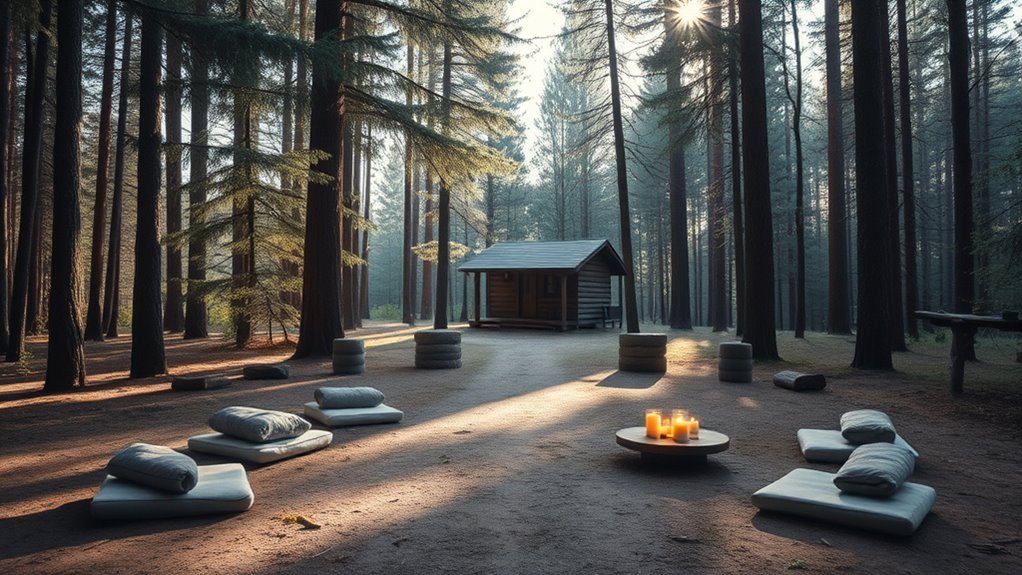

To run a silent retreat, select a peaceful natural setting and establish clear rules around silence and mindfulness practices. Prepare participants beforehand with guidelines on meditation, diet, and expectations. Offer wholesome, simple meals and guarantee comfortable accommodations to support reflection. Maintain minimal communication during the retreat to foster tranquility, and create designated spaces for meditation and outdoor activities. Focus on cultivating awareness and inner peace—if you’d like to explore more steps, keep exploring ways to deepen the experience.
Key Takeaways
- Select a tranquil, natural location and establish clear silence guidelines to create a peaceful environment.
- Design simple, consistent mindfulness routines like meditation and mindful walking to deepen awareness.
- Prepare nutritious, vegetarian meals and communicate dietary needs to support a calming atmosphere.
- Provide pre-retreat materials and set expectations to help participants arrive rested and open-minded.
- Foster a nurturing environment with minimal communication, emphasizing inner peace and self-reflection.
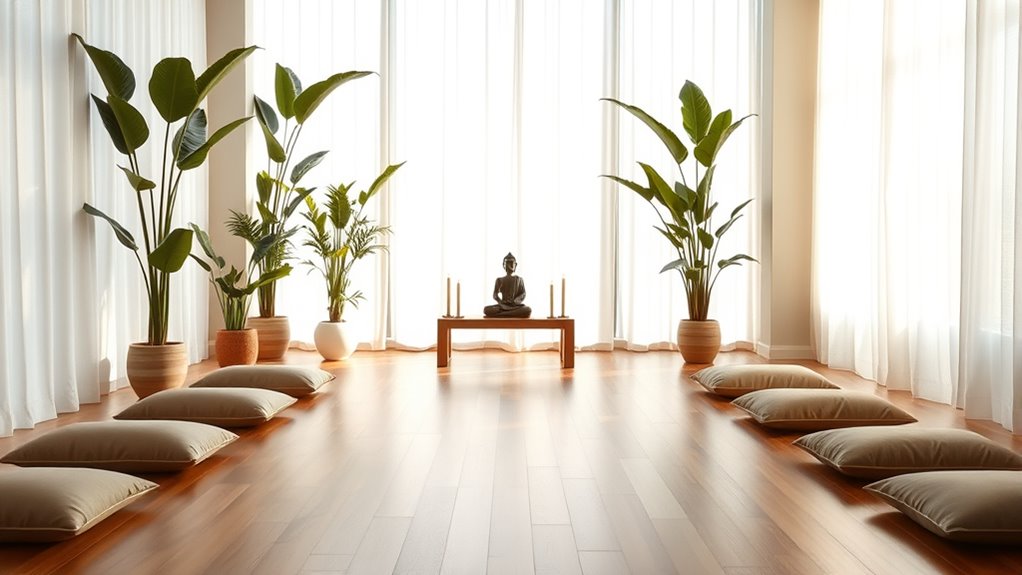
Running a silent retreat can be a transformative experience, but it requires careful planning and preparation. One of your main priorities should be establishing a clear structure around mindfulness practices. These practices are the core of the retreat, helping participants cultivate awareness and presence. Decide whether you’ll include meditation sessions, mindful walking, breathing exercises, or a combination of these. Keep the schedule simple and consistent to help participants settle into their silence and deepen their practice. Providing guidance on how to approach mindfulness during daily activities can also be beneficial, encouraging participants to stay present even outside formal sessions.
Establish a simple, consistent mindfulness routine to deepen silence and cultivate awareness during your retreat.
Equally important are dietary considerations. You want to offer meals that support the retreat’s contemplative atmosphere and promote well-being. Focus on nutritious, wholesome foods that are easy to digest, such as fruits, vegetables, nuts, and whole grains. Consider providing vegetarian or vegan options to align with the calming, non-stimulating environment. It’s best to keep meal times simple and predictable, reducing distractions and allowing participants to fully engage in their silence. Be mindful of any dietary restrictions or allergies, and communicate clearly about meal options well in advance. Offering light, nourishing snacks between meals can help maintain energy levels without disrupting the tranquility of the retreat.
Creating a peaceful environment is essential, so choose a quiet, natural setting that minimizes external noise and distractions. Guarantee that the accommodations are comfortable and conducive to reflection. Set clear guidelines for silence, including when and where silence should be maintained, and inform participants about the purpose behind these rules to foster understanding and cooperation. Consider having designated areas for meditation and reflection, as well as space for walking or outdoor activities if appropriate.
Preparing your participants is vital. Provide them with pre-retreat materials that introduce mindfulness practices they might already be familiar with and outline dietary considerations. Encourage them to arrive rested and with an open mind, ready to embrace silence and self-awareness. Throughout the retreat, gently remind participants of the importance of mindfulness and the role it plays in their experience. Keep communication minimal but supportive, and be attentive to their needs. With careful planning around mindfulness practices and dietary considerations, you’ll create a nurturing environment that promotes inner peace, clarity, and transformation.
Frequently Asked Questions
What Are the Benefits of Attending a Silent Retreat?
Attending a silent retreat boosts your mindfulness practice, helping you become more present and aware in daily life. It also fosters emotional healing by giving you space to reflect and process feelings without distractions. You’ll find deeper clarity, reduced stress, and enhanced self-awareness. Silence encourages inner growth, allowing you to reconnect with yourself. Overall, it’s a powerful way to recharge mentally, emotionally, and spiritually.
How Should I Prepare Mentally for a Silent Retreat?
To prepare mentally for a silent retreat, start practicing mindfulness regularly to build your focus and awareness. Cultivate emotional resilience by acknowledging your feelings without judgment, which helps you handle challenges during silence. Set clear intentions for your retreat, and gradually reduce distractions beforehand. Visualize a peaceful experience, and remind yourself that this time is for self-care and growth. This mental prep will help you fully embrace the retreat’s benefits.
What Types of Activities Are Included During the Retreat?
Think of the retreat as a peaceful garden where your mind blooms. During this time, you’ll engage in meditation techniques and mindfulness exercises that nurture inner calm. Activities include guided silent meditations, walking in stillness, and gentle yoga to deepen your awareness. These practices act like sunlight and water, helping you cultivate clarity, presence, and tranquility in a serene, distraction-free environment.
How Do I Handle Unavoidable Communications During Silence?
During a silent retreat, handle unavoidable communications by setting clear boundaries for digital detox and emergency communication. Let participants know that they should minimize digital use and only check messages in case of emergencies. Provide a designated, discreet way to communicate emergencies without breaking silence, such as a trusted staff member or emergency contact system. This approach maintains the retreat’s peaceful atmosphere while ensuring safety and necessary communication.
Can I Attend a Silent Retreat if I Have Health Issues?
Sure, you can attend a silent retreat with health issues—if you’re prepared to negotiate your health considerations and request medical accommodations. Just remember, silence isn’t a magic cure-all for health problems. Speak with the organizers beforehand, clarify your needs, and verify they can support your health considerations. That way, you’ll enjoy the serenity without turning your retreat into a medical emergency.
Conclusion
Running a silent retreat can be a life-changing experience if you plan carefully and stay committed. Remember, patience is key, and sometimes the hardest part is simply sticking with it. Trust the process and let the silence work its magic—it’s often in stillness that we find clarity. Keep your focus, embrace the journey, and don’t forget, Rome wasn’t built in a day. With persistence, you’ll create a retreat that leaves lasting peace and insight.