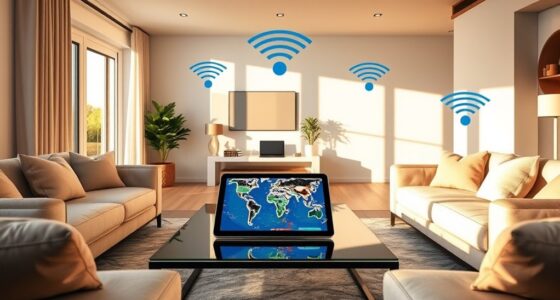
In a smart home, hubs act as the central controllers that connect all your devices and make communication smooth. You’ll encounter protocols like Wi-Fi for high-bandwidth tasks, and Zigbee or Z-Wave for low-power sensors and switches. Familiar terms help you understand how devices work together, making your home smarter and more efficient. If you keep exploring, you’ll discover how these components create a seamlessly integrated, personalized living environment tailored to your needs.
Key Takeaways
- Hubs act as central controllers connecting various smart devices and enabling communication across different brands and protocols.
- Common smart home protocols include Wi-Fi for high-data devices, Zigbee and Z-Wave for low-power sensors and switches.
- Voice control allows hands-free operation and integration with smart speakers, enhancing convenience and automation.
- Automation routines enable devices to respond automatically based on user preferences or schedules.
- Understanding key terms and protocols ensures seamless device integration, reliable performance, and an optimized smart home experience.
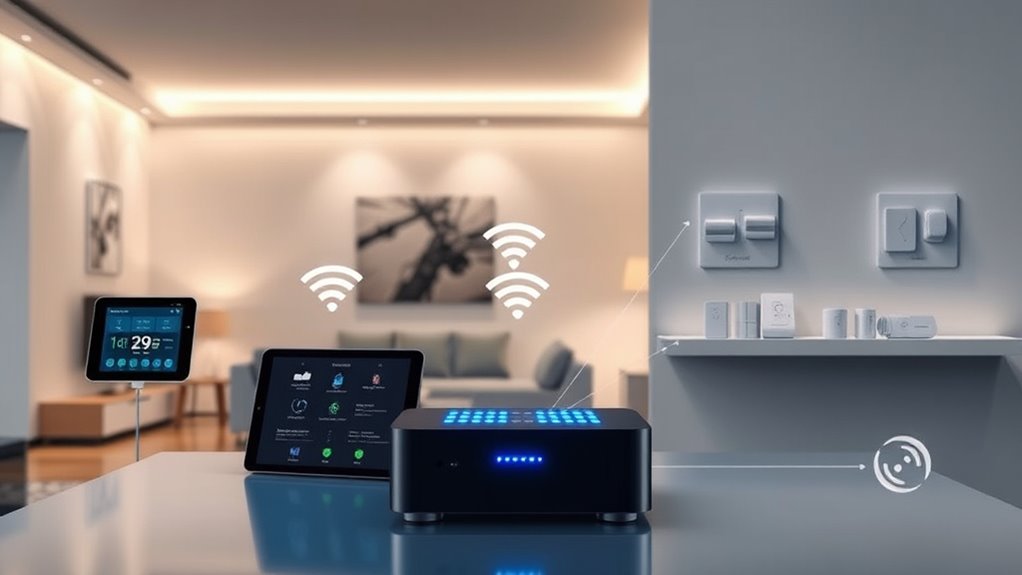
Have you ever wondered how your home can become smarter and more efficient? It’s easier than you think, especially when you understand the basics of smart home technology. At the core are devices that communicate through hubs, protocols, and terms you might hear daily. These elements work together to create a seamless experience, making your home more comfortable, secure, and energy-efficient. One of the most popular features is voice control, which allows you to operate your devices hands-free. Whether it’s asking your smart speaker to turn on the lights or adjust the thermostat, voice control simplifies your interactions. It’s often integrated with automation routines that make your home respond automatically based on your preferences or schedules. For example, you can set a routine so that when you say “Good morning,” your smart blinds open, your coffee maker starts brewing, and the thermostat adjusts to a comfortable temperature. This combination of voice control and automation routines creates a personalized environment, saving you time and effort. Additionally, understanding asset division laws can help you better plan and protect your assets should your home become part of a legal process.
Understanding the role of hubs is vital. Think of a hub as the brain that connects all your smart devices, enabling them to communicate smoothly. Popular hubs like Amazon Alexa, Google Home, or Apple HomeKit act as centralized controllers. They interpret your commands and coordinate actions across various devices, regardless of their brand or protocol. Speaking of protocols, these are the methods by which devices talk to each other. Common protocols include Wi-Fi, Zigbee, and Z-Wave, each with its strengths. Wi-Fi offers high bandwidth and is great for streaming or high-data devices, while Zigbee and Z-Wave are low-power, reliable options for sensors and switches. Choosing the right protocol guarantees your devices work harmoniously without interference or lag.
Frequently Asked Questions
How Secure Are Smart Home Devices Against Hacking?
Smart home devices can be quite secure if you take proper precautions. They use encryption protocols to protect your data, but firmware vulnerabilities can pose risks if updates aren’t timely. You should regularly update your devices and change default passwords. Avoid connecting devices to unsecured networks, and use strong, unique passwords. By staying vigilant and maintaining your devices, you reduce the chances of hacking and keep your smart home safer.
Can I Integrate Multiple Smart Home Ecosystems Easily?
Yes, you can integrate multiple smart home ecosystems easily by focusing on cross platform compatibility. Many devices now support popular protocols like Zigbee, Z-Wave, or Wi-Fi, making ecosystem integration smoother. Use a universal hub or smart home platform that connects different protocols, allowing you to control everything from a single app. This approach simplifies managing your devices and creates a seamless smart home experience across different ecosystems.
What Is the Average Cost of Setting up a Smart Home?
Oh, the joys of budget planning for a smart home—expect to spend anywhere from $200 to over $2,000, depending on how many devices you want. You’ll need to contemplate device compatibility, as mismatched gadgets can hike costs or complicate setups. While setting up a smart home might seem affordable, the real expense often comes from choosing quality devices that work seamlessly together, making your investment well worth it.
How Energy-Efficient Are Smart Home Systems?
Smart home systems are quite energy-efficient, helping you reduce overall energy consumption. By automating lighting, heating, and cooling, you can achieve significant power savings, especially when systems adjust based on occupancy or time of day. These devices optimize energy use without sacrificing comfort, making your home more eco-friendly and cost-effective. Overall, smart home tech supports better energy management, saving you money while lowering your environmental impact.
Are Smart Home Devices Suitable for Elderly Users?
Over 80% of elderly users find smart home devices suitable because of their user interface and accessibility features. You’ll appreciate how simple controls, voice commands, and large buttons make daily tasks easier. These devices can enhance safety and independence, especially with features like fall detection or emergency alerts. As long as you choose devices designed with accessibility in mind, smart home tech can be a valuable addition to your home.
Conclusion
Understanding smart home basics bridges the gap between complexity and convenience. While hubs and protocols may seem technical, they’re the foundation of seamless living. Just as a well-orchestrated symphony combines individual instruments into harmony, your smart home combines devices into a unified experience. Embrace this balance of technology and ease, and you’ll find that what once felt complicated now feels natural—an effortless blend of innovation and everyday comfort.