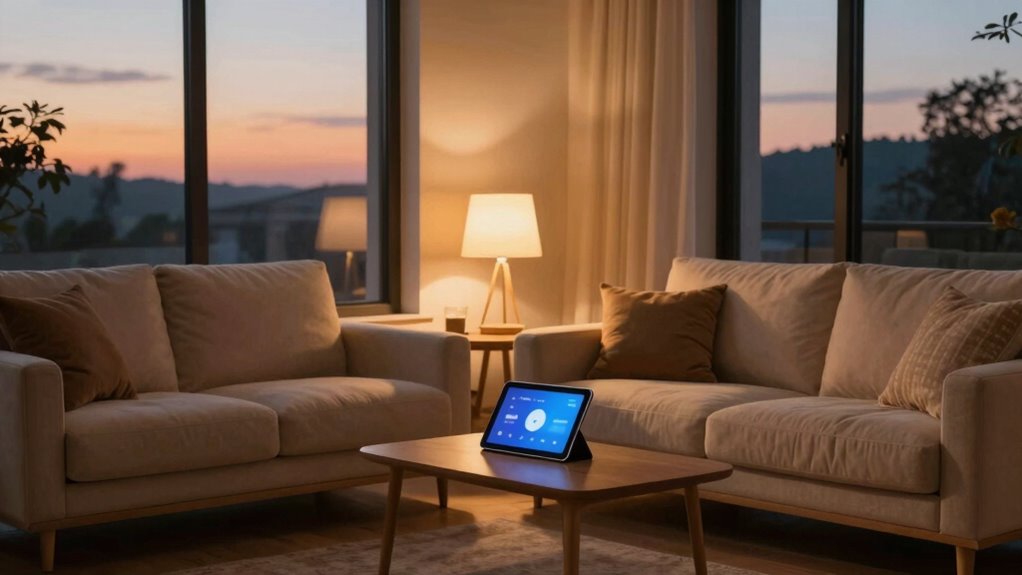

To make lighting automation feel natural at home, integrate voice control with your routines and interconnected devices. Use smart technology that adapts to your daily habits—like dimming lights at bedtime or brightening when you arrive. Create personalized routines and guarantee all devices work together seamlessly for a smooth, intuitive experience. When your setup responds effortlessly to your natural activity, it feels less like automation and more like an extension of your home. Keep exploring to discover how to perfect this harmony.
Key Takeaways
- Use voice commands to control lighting naturally and seamlessly integrate with daily speech habits.
- Create adaptive routines that respond to presence, time, and habits for a more intuitive experience.
- Ensure all smart devices are interoperable to enable smooth, cohesive automation across systems.
- Synchronize lighting with other home functions like security and climate for fluid, natural transitions.
- Focus on personalized settings that align with daily routines to make automation feel invisible and effortless.

Voice control options play a huge role in making lighting automation feel intuitive. With voice commands, you don’t have to reach for a phone or a switch; instead, you can turn lights on or off, dim them, or change their color with a few words. Using popular voice assistants like Alexa, Google Assistant, or Siri, you can create routines that activate your preferred lighting scenes automatically. For example, you could say, “Good morning,” and your lights gradually brighten, mimicking sunrise, or say, “Movie time,” to dim the lights to just the right level. When voice control feels natural, it’s like your lights become an extension of your voice, blending seamlessly into your daily habits.
Voice commands make lighting automation seamless, turning lights on, off, or dimming with just your voice.
To enhance that feeling of natural interaction, consider setting up automation routines that match your schedule and preferences. Instead of manually adjusting lights every evening, you can program them to turn on softly as you arrive home or gradually dim at bedtime. The key is to avoid overly rigid schedules that make your system feel mechanical. Instead, aim for adaptive routines that respond to your presence and habits, creating a sense of harmony rather than control. Incorporating home automation technology can further improve the overall experience by enabling more complex and intuitive interactions. Additionally, choosing devices with interoperability ensures your systems work together smoothly without compatibility issues. This interoperability allows for a more cohesive and seamless smart home experience.
Another tip is to use smart bulb integration with other smart home devices. When your lights can sync with your security system, blinds, or climate controls, everything feels more fluid. For example, your lights could turn off automatically when you lock the door or adjust based on the time of day. This interconnectedness makes the automation feel less like a series of commands and more like a natural part of your lifestyle. Incorporating smart technology can help make these interactions even more seamless and intuitive. Ultimately, making lighting automation feel natural involves choosing the right technology, setting up personalized routines, and leveraging voice control options. When these elements work together smoothly, your smart lighting system becomes an invisible but essential part of your home, enhancing comfort and convenience without any fuss.
smart voice controlled lighting system
As an affiliate, we earn on qualifying purchases.
As an affiliate, we earn on qualifying purchases.
Frequently Asked Questions
Can Lighting Automation Be Customized for Different Moods?
Yes, lighting automation can be customized for different moods by using voice control and adjusting settings based on your user preferences. You can create specific lighting scenes for relaxing, working, or entertaining, and activate them effortlessly with voice commands. By tailoring brightness, color, and timing, you make your home feel more natural and suited to your current mood, enhancing comfort and ambiance seamlessly.
How Does Natural Light Influence Automation Settings?
Natural light dramatically influences your automation settings, though you might wish your smart lights could perfectly mimic a sunrise. You should adjust color temperature and enable daylight integration, so your lights match the changing ambient light. This creates a seamless experience, making your home feel more natural. When you let natural light guide your automation, it’s like your lights are in on the secret to a cozy, sunlit environment—no artificial tricks needed.
Is There a Way to Prevent Automation From Disrupting Daily Routines?
Yes, you can prevent automation from disrupting your routines by customizing manual controls and setting clear user preferences. You should regularly review and adjust automation schedules to match your daily patterns. Using smart app settings, you can easily override or pause automation when needed, ensuring your lighting remains flexible. This way, your home adapts seamlessly to your lifestyle, maintaining comfort without unnecessary interruptions.
What Are the Best Sensors for Natural-Feeling Lighting Adjustments?
Oh, surely, your quest for the perfect sensor is akin to searching for the holy grail. Opt for sensors with advanced ambient detection and precise calibration, like Philips Hue or Lutron’s occupancy sensors. These devices excel at sensing subtle changes in light and motion, ensuring your home’s lighting adjusts seamlessly. The key is regular sensor calibration, so your automation feels intuitive rather than intrusive. After all, nobody wants their lights to judge them.
How Can I Ensure My Lighting Feels Consistent During Power Outages?
To keep your lighting consistent during power outages, you should have a manual override option on your system, allowing you to control lights directly when automation fails. Additionally, investing in backup power, like a UPS or generator, guarantees your smart lighting remains operational even when the main power goes out. This combination helps maintain a seamless, natural lighting experience, no matter the situation.
Conclusion
By blending brightness with balance, you create a cozy, comforting corner that feels truly natural. Thoughtful timing and tuned-together tech turn your lighting into a seamless, soothing symphony. When you embrace the art of automation, you’re not just controlling lights—you’re cultivating comfort, clarity, and calm. So, start small, stay synchronized, and let your home’s lighting gently evolve into an effortless, enchanting environment that feels both fresh and familiar every day.