To make geofencing automations work, focus on precise location targeting combined with personalized, timely messages. Automate follow-ups after visits to build loyalty, and integrate your geofence efforts with rewards programs to boost sales. Use real-time data to deliver relevant offers at the perfect moment, and continuously measure performance to optimize results. Stay transparent about data use to build trust, and explore strategies that turn location data into powerful marketing tools—there’s more to discover beyond this overview.
Key Takeaways
- Use accurate location detection and regular calibration to ensure precise targeting and reduce false triggers.
- Automate personalized, timely follow-ups post-visit to boost engagement and encourage repeat business.
- Integrate geofencing with loyalty programs for real-time, location-based incentives that drive conversions.
- Maintain transparency and privacy compliance by informing users about data collection and obtaining opt-in consent.
- Continuously monitor and analyze engagement metrics to optimize campaigns and improve overall effectiveness.
Targeted Location-Based Promotions That Drive Engagement

Targeted location-based promotions leverage geofencing technology to deliver timely offers when customers are nearby. By combining beacon marketing with spatial analytics, you can identify the *best* moments to engage potential buyers directly. When a customer enters your geofenced area, your system can trigger personalized messages or discounts, increasing the chance of a sale. Beacon marketing enhances this strategy by providing precise, real-time data on customer location and behavior. Spatial analytics helps you analyze movement patterns and foot traffic, allowing you to refine your promotions for maximum impact. This targeted approach ensures your marketing efforts are relevant and timely, boosting engagement, driving foot traffic, and ultimately increasing conversions. It’s a powerful way to connect with customers right when they’re most receptive. Additionally, tools like Turn YouTube Into MP3 in Seconds can help create engaging content to support your campaigns.
Personalization Strategies for Enhanced Customer Experience
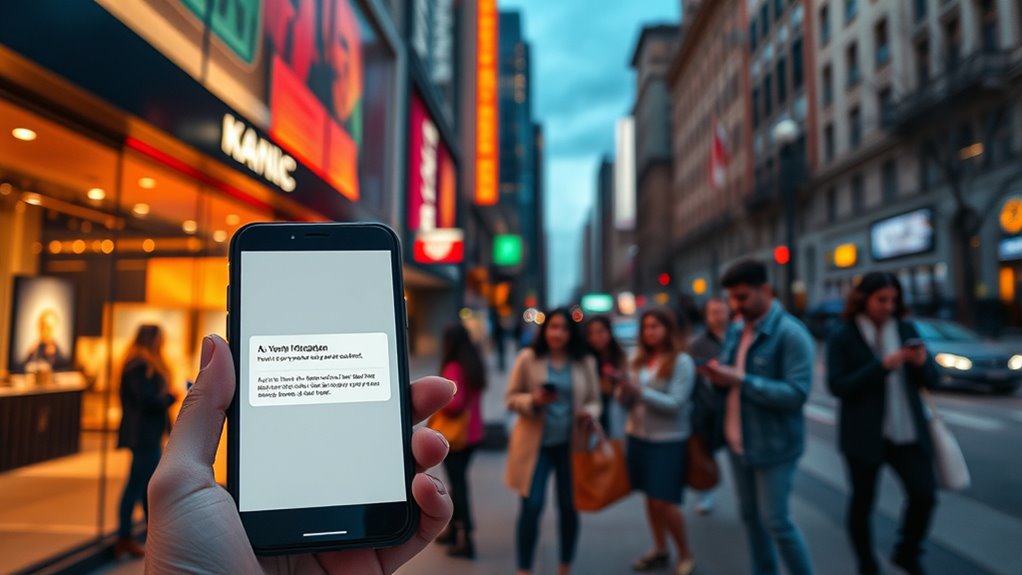
To deliver a truly personalized customer experience, you should focus on location-based content delivery that matches their immediate environment. Incorporating behavior-driven messaging guarantees your messages resonate based on how customers interact with your brand. Using dynamic personalization tactics allows you to adapt offers and content in real-time, making every interaction more relevant and engaging. Incorporating exotic fruit blend inspirations can also add a refreshing and unexpected twist to your marketing content, capturing customer interest effectively.
Location-Based Content Delivery
Have you ever noticed how some apps or stores send you personalized offers when you’re nearby? That’s location-based content delivery in action. It uses geofencing automation to target you with relevant messages based on geographic data precision. But it’s vital to ensure geofencing privacy; you want to make certain your data is protected and your preferences respected. When implemented correctly, this strategy delivers timely, location-specific content that enhances your experience without feeling intrusive. Retailers and marketers rely on precise geographic data to send offers, event alerts, or product recommendations exactly when you’re near a store or specific venue. This targeted approach boosts engagement and conversions, making your interactions feel more relevant and seamless. Effective location-based content delivery depends on balancing personalization with respecting user privacy and data accuracy. Incorporating privacy policies and consent management ensures that user trust remains intact while leveraging geofencing technology.
Behavior-Driven Messaging Strategies
Behavior-driven messaging strategies personalize your customer interactions by leveraging real-time data about their actions, preferences, and behaviors. Using contextual triggers, you can send targeted messages based on specific customer behaviors, like browsing certain products or abandoning a cart. Audience segmentation allows you to group customers by shared traits, ensuring your messages are relevant and timely. When a customer interacts with your brand, these strategies deliver personalized content that resonates, increasing engagement and conversion rates. Instead of generic outreach, you respond to their current state and interests, creating a more meaningful experience. By combining contextual triggers with audience segmentation, you ensure your messaging feels natural and appropriate, strengthening customer relationships and fostering loyalty. Incorporating antique elements can also enhance the authenticity of your brand story, making your automations more effective and conversion-driven.
Dynamic Personalization Tactics
Dynamic personalization tactics harness real-time data to tailor your customer experiences on a granular level. By leveraging geofence calibration, you can deliver highly relevant messages based on precise location data. This approach enhances engagement and increases conversions. However, it’s vital to consider privacy considerations, ensuring transparency and compliance with regulations to build trust. Effective calibration minimizes false triggers and refines targeting accuracy. Use the table below to understand key strategies:
| Strategy | Benefit |
|---|---|
| Precise geofence setup | Reduces irrelevant notifications |
| Real-time data updates | Improves message relevance |
| Privacy safeguards | Builds customer trust |
| Adaptive messaging | Increases engagement rates |
| Ongoing calibration | Maintains targeting accuracy |
Implementing these tactics helps you create personalized experiences that respect privacy while maximizing geofence effectiveness. Incorporating glycolic acid products into skincare routines exemplifies how targeted, data-driven personalization can improve results and customer satisfaction.
Automating Follow-Ups Post-Visit for Better Retention
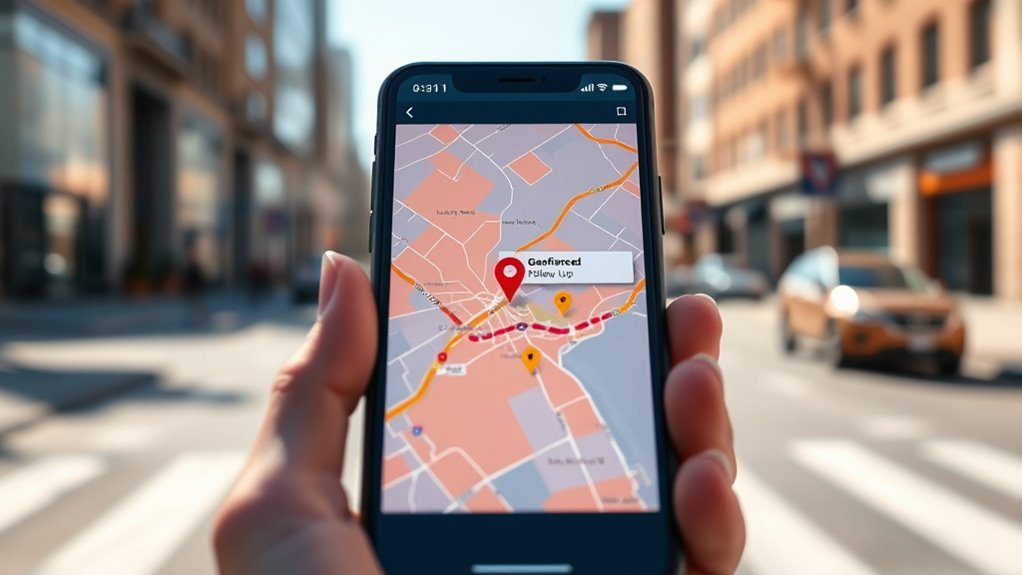
To improve customer retention, automating follow-up communications after a visit is essential. Post visit engagement keeps your brand top of mind and encourages repeat business. Using retention automation, you can send personalized messages, surveys, or special offers shortly after a customer leaves. These automated follow-ups demonstrate you value their experience and gather valuable feedback. Implement triggers based on location or visit duration to ensure timely communication. By automating this process, you save time while maintaining consistent contact, increasing the chances of future visits. Effective follow-ups nurture loyalty and help identify areas for improvement. Incorporating personalized skincare tips based on customer preferences can further enhance engagement. Remember, the key is to make your post-visit interactions relevant and timely, turning satisfied customers into loyal advocates.
Integrating Geofencing With Loyalty Programs for Increased Sales
When you combine geofencing with loyalty programs, you can offer location-based incentives that motivate customers to visit more often. Real-time engagement strategies allow you to send personalized offers the moment customers are nearby, increasing the chance of a sale. By delivering tailored deals based on their location and preferences, you create a more compelling shopping experience that drives loyalty and revenue. Incorporating wall organization systems can further enhance the overall customer experience by creating inviting and organized spaces that encourage repeat visits.
Location-Based Incentives
Integrating geofencing with loyalty programs enables businesses to deliver targeted incentives precisely when customers are near or inside their stores. This approach boosts engagement and sales by offering relevant rewards at the right moment. However, be aware of geo fencing myths—such as overestimating customer reach or ignoring privacy concerns—that can hinder success. To ethically leverage location-based incentives, consider these strategies:
- Clearly communicate how customer data is used and obtain consent.
- Limit incentives to avoid perceived intrusive behavior.
- Regularly review your geofencing practices to ensure compliance with privacy laws.
- Incorporate accurate location detection techniques to improve targeting precision and reduce errors.
Real-Time Engagement Strategies
Real-time engagement strategies leverage geofencing to connect with customers at the perfect moment, boosting loyalty and sales. By integrating geofencing with your loyalty programs, you can deliver timely messages, offers, or updates when customers are nearby. However, it’s vital to consider geofencing ethics and address privacy concerns to maintain trust. Be transparent about how you collect and use location data, and ensure customers opt in willingly. Respecting privacy not only aligns with regulations but also fosters a positive brand image. When executed ethically, real-time engagement through geofencing creates a seamless experience that encourages repeat visits and strengthens customer loyalty, ultimately increasing sales. Remember, responsible use of geofencing is key to long-term success. For example, understanding privacy considerations is crucial when deploying these technologies.
Personalized Offers Delivery
Have you considered how personalized offers delivered through geofencing can substantially boost your loyalty program’s effectiveness? By targeting customers based on their location, you can deliver relevant incentives that encourage repeat business. To succeed, guarantee your approach respects customer privacy, clearly communicating data use and offering opt-outs. Also, prioritize device compatibility so offers reach all users seamlessly. Here are three key strategies:
- Segment audiences based on purchase history and preferences for tailored incentives.
- Use real-time notifications to enhance immediacy and relevance.
- Integrate with existing loyalty platforms to automate personalized offers effortlessly.
Additionally, understanding how personality traits influence consumer behavior can help tailor your messaging to resonate better with different customer segments. This approach not only increases engagement but also strengthens customer trust, leading to higher conversion rates and sustained loyalty.
Real-World Examples of Successful Geofencing Campaigns
Many businesses have seen remarkable results by deploying geofencing campaigns that target customers within specific locations. One prime example is a retail chain using geofence security to send tailored offers when customers enter shopping centers. This approach increased foot traffic and sales considerably. Another success story involves a restaurant chain that integrated geofencing with their loyalty app, delivering timely promotions to nearby potential diners. These campaigns relied on seamless technical integration, ensuring messages triggered instantly and accurately. By focusing on precise location targeting, these companies boosted engagement and conversion rates. These real-world examples demonstrate how effective geofence security, combined with robust technical integration, can turn location data into powerful marketing tools that deliver measurable results.
Tips for Measuring and Optimizing Geofencing Automation Performance
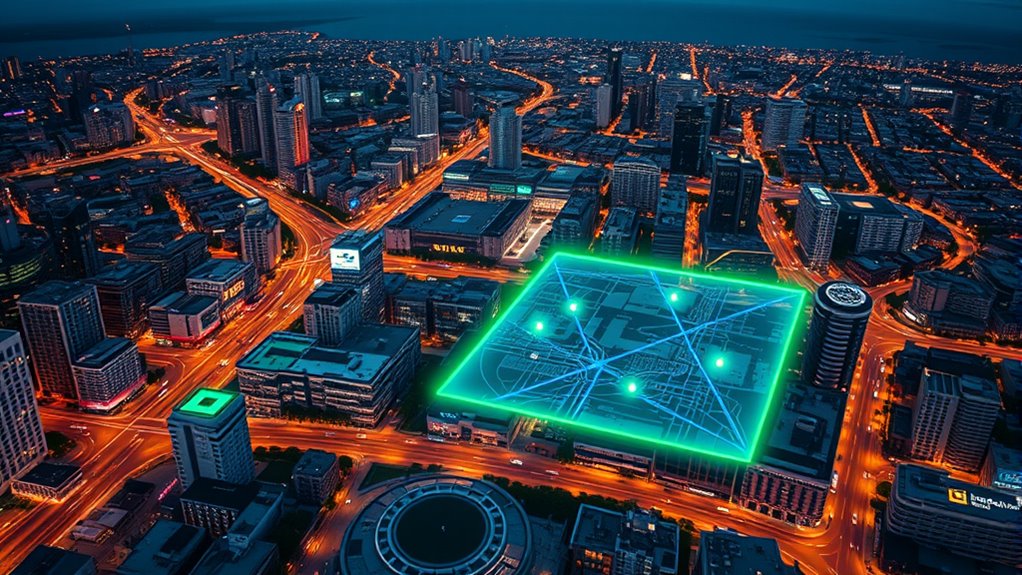
To effectively measure and optimize your geofencing automation, you need to establish clear key performance indicators (KPIs) that align with your marketing goals. Tracking relevant metrics helps you identify what’s working and where improvements are needed. Be mindful of privacy concerns, ensuring compliance with regulations to maintain user trust. Technical challenges, such as inaccurate geolocation data, can skew results, so regularly audit your setup. Consider these steps:
- Monitor conversion rates to gauge campaign effectiveness.
- Analyze engagement metrics like click-through and dwell time.
- Evaluate data accuracy and address technical issues promptly.
Frequently Asked Questions
How Accurate Is Geofencing Technology in Different Environments?
You wonder how accurate geofencing technology is in different environments. Indoors, accuracy can vary due to obstacles like walls and furniture, which interfere with signals. Urban interference from tall buildings and dense signal traffic can also reduce precision outdoors. Generally, geofencing works well with clear signals, but expect some variation depending on environment conditions. So, your experience might differ in indoor versus urban settings, affecting how reliably geofencing detects your location.
What Are Common Pitfalls When Setting up Geofencing Automations?
Setting up geofencing automations is like drawing a map—if your boundaries are misconfigured, you risk false triggers or missed actions. You might think you’ve set a perfect perimeter, but tiny misalignments can cause your system to activate prematurely or not at all. Always double-check your boundaries, test thoroughly, and avoid overly tight or vague zones. This way, your automations stay reliable, avoiding false triggers and ensuring smooth operation.
How Do Privacy Laws Impact Geofencing Marketing Strategies?
You need to understand that privacy laws critically impact your geofencing marketing strategies. Ensuring privacy compliance means you must transparently inform users about data collection and obtain proper consent. Protecting data security is also essential to prevent breaches that could lead to legal issues. By prioritizing these aspects, you can build trust, avoid penalties, and create effective campaigns that respect user privacy while leveraging geofencing technology.
Can Small Businesses Effectively Implement Geofencing Automations?
You can definitely implement geofencing automations effectively for your small business. Focus on local marketing to target nearby customers and boost customer engagement. Use clear, compelling messages that resonate with your audience. Keep your geofences precise to avoid privacy concerns and optimize your campaigns regularly. With the right strategy, geofencing becomes a powerful tool to attract foot traffic and enhance your business’s growth.
What Are the Best Tools for Managing Geofencing Campaigns?
Did you know that 78% of marketers find geofencing accuracy vital for campaign success? To manage your geofencing campaigns effectively, you should choose automation tools that prioritize precise location targeting. Tools like Google Ads, Reveal Mobile, and Bluedot offer robust features for creating, monitoring, and optimizing geofences. These automation tools help you deliver timely, relevant messages, increasing engagement and conversions. Focus on selecting platforms that guarantee high geofencing accuracy for the best results.
Conclusion
By implementing these geofencing automations, you’ll unleash the power to turn simple location data into a marketing masterpiece. Imagine your campaigns soaring like fireworks, engaging customers at just the right moment and turning foot traffic into loyal fans. With strategic targeting, personalization, and continuous optimization, you’ll transform your marketing efforts into an unstoppable force that drives engagement and revenue—making your business the talk of the town!