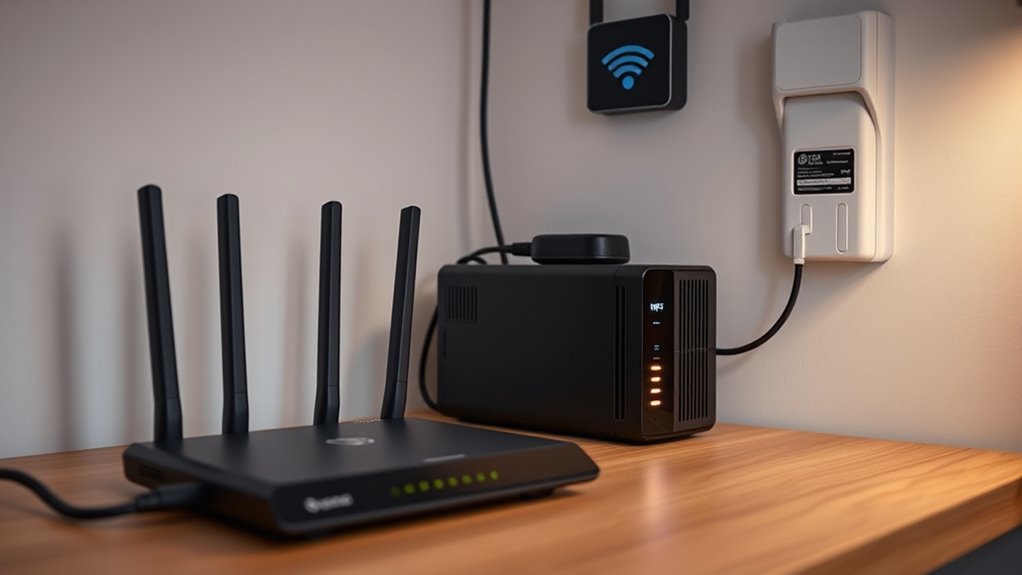

To keep your home network running during outages, consider a combination of backup power options like uninterruptible power supplies (UPS) and renewable energy sources such as solar panels with batteries. Adding surge protectors safeguards your devices from power surges when electricity returns. For longer outages, hybrid systems that combine solar power and batteries provide extended runtime. Staying aware of these solutions can help you maintain a reliable, protected network—more details await you.
Key Takeaways
- Use uninterruptible power supplies (UPS) to keep routers and modems running during outages.
- Integrate renewable energy sources like solar panels to provide sustainable backup power.
- Install surge protectors to safeguard networking equipment from power surges and fluctuations.
- Combine batteries with renewable systems for extended backup duration during prolonged outages.
- Consider hybrid solutions that mix solar, wind, and battery storage for reliable, eco-friendly home network power.

When power outages strike unexpectedly, having reliable backup power options can keep your essential devices running and prevent disruptions. Your home network, which keeps you connected to work, loved ones, and critical information, needs a dependable power source to avoid downtime. One effective strategy is to think about renewable sources like solar panels or wind turbines. These options harness natural energy, reducing reliance on the grid and lowering your carbon footprint. Solar-powered backup systems, in particular, are popular because they can store energy in batteries that activate during outages, ensuring your Wi-Fi, routers, and modems stay operational. Wind turbines can also supplement your energy needs if your location is suitable, providing an eco-friendly and sustainable way to maintain power during blackouts. Integrating renewable sources with your backup system not only enhances sustainability but can also reduce long-term energy costs.
However, even with renewable energy, power surges can occur, especially when power is restored after an outage. These sudden spikes can damage sensitive electronics in your network. To prevent this, you should invest in power surge protection devices. Surge protectors act as barriers, absorbing excess voltage and safeguarding your equipment. Look for surge protectors specifically designed for networking gear, as they provide multiple outlets with built-in surge suppression. Installing surge protection at key points—such as where your power enters your home and directly on your network devices—can considerably extend the lifespan of your equipment and prevent costly repairs. Combining renewable energy systems with high-quality surge protection creates a robust defense against unpredictable power fluctuations and outages. Additionally, power management systems can help optimize energy use and improve overall reliability during outages.
Another essential aspect to consider is the capacity and runtime of your backup system. For critical devices like your router and modem, a small, dedicated UPS (Uninterruptible Power Supply) might suffice. These units can provide power for several hours, giving you enough time to save work or shut down safely. For broader coverage, larger battery systems or hybrid solutions that incorporate renewable sources can offer longer-lasting power. Keep in mind that the initial investment in renewable backup systems and surge protection is offset by increased reliability and peace of mind, especially during severe weather events or extended outages. By focusing on renewable energy options and integrating comprehensive surge protection, you ensure that your home network remains operational, secure, and protected from the unpredictable nature of power failures.
Frequently Asked Questions
How Long Can a Typical UPS Power a Home Network?
A typical UPS can power your home network for about 5 to 30 minutes, depending on its battery runtime and the power outage duration. If you have a smaller setup with minimal devices, you might get closer to 30 minutes, but larger systems with more equipment will likely only last 5 to 10 minutes. Planning for longer outages may require a higher-capacity UPS or additional backup solutions.
Are Solar-Powered Backup Systems Effective for Home Internet?
Yes, solar-powered backup systems can be effective for your home internet, especially if you maintain the solar panels regularly to guarantee efficiency. They provide a clean energy source and can keep your network running during outages. Don’t fall for backup power myths that they’re unreliable—proper maintenance and a good system design make them a dependable choice. With consistent solar panel upkeep, you’ll enjoy uninterrupted connectivity when you need it most.
What Is the Cost Difference Between Generators and UPS Units?
Generators typically cost between $1,000 and $5,000, depending on size and features, with higher installation expenses. UPS units are more affordable, usually ranging from $50 to $500, but offer shorter backup times. The cost comparison shows generators are a bigger investment upfront, especially considering installation expenses, while UPS units are cheaper and easier to set up, making them suitable for short-term power backup.
Can Backup Power Protect Against Power Surges?
You might not realize that over 80% of electrical damages are caused by power surges. Backup power alone doesn’t protect against surges; you need surge protection devices like surge protectors or power strips. These tools offer surge protection and power stabilization, safeguarding your devices from voltage spikes. So, while backup power keeps your network running during outages, surge protection is essential to prevent damage from sudden power surges.
How Often Should Backup Power Systems Be Maintained or Replaced?
You should perform regular battery maintenance on your backup power system, checking for corrosion or leaks every 6 to 12 months. Replacement intervals typically range from 3 to 5 years, depending on the battery type and usage. Keep an eye on performance, and replace batteries promptly if you notice reduced runtime or other issues. Regular maintenance guarantees your system stays reliable and ready when you need it most.
Conclusion
When you’ve got backup power, your home network becomes an unstoppable fortress—resisting blackouts like a superhero with an invincible shield. No more lost emails, missed Zoom calls, or frozen gaming sessions. With the right backup option, your internet stays alive through even the worst storms, turning your home into an untouchable digital sanctuary. So, gear up now—because a power outage shouldn’t stand a chance against your network’s newfound superpowers!