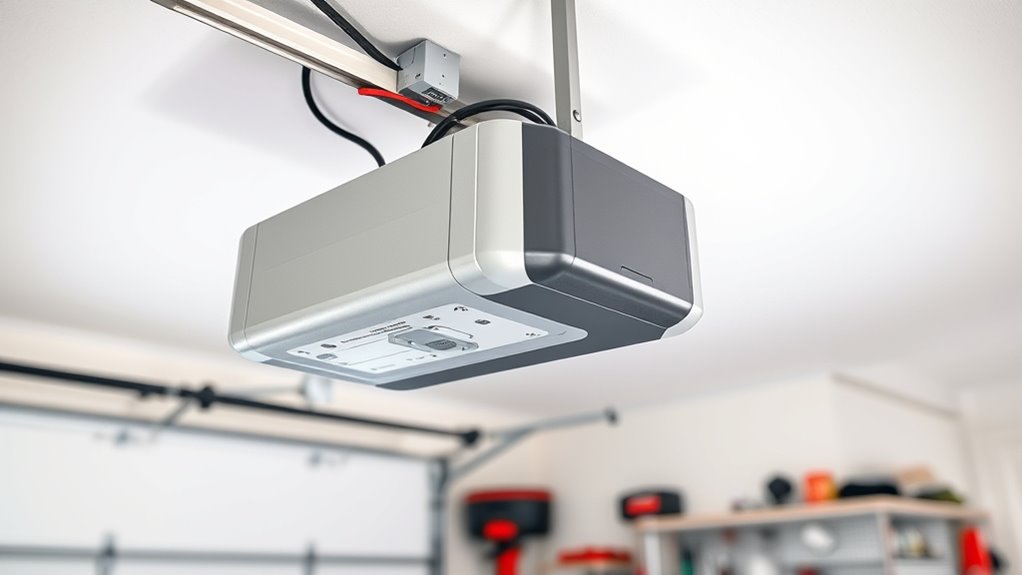
To set up a smart garage door opener safely, first confirm that it’s compatible with your existing door and prepare accordingly. Make certain your Wi Fi connection is strong and stable before installation. Follow the manufacturer’s instructions carefully, turning off power and attaching the device securely. Use the app to finish setup and test the system. Don’t forget to update security settings and firmware regularly. Keep going for more tips to ensure a smooth, secure installation.

Get furniture and decor delivered free with Prime
- Fast, free delivery on millions of items
- Prime Video, Amazon Music and more included
- Member-only deals all year
Key Takeaways
- Verify garage door compatibility with the smart opener before installation.
- Ensure a strong Wi Fi signal in the garage to maintain reliable connectivity.
- Turn off power and carefully remove manual components prior to mounting the device.
- Follow manufacturer instructions precisely during wiring and setup within the app.
- Set up secure access controls and update firmware regularly to protect your system.
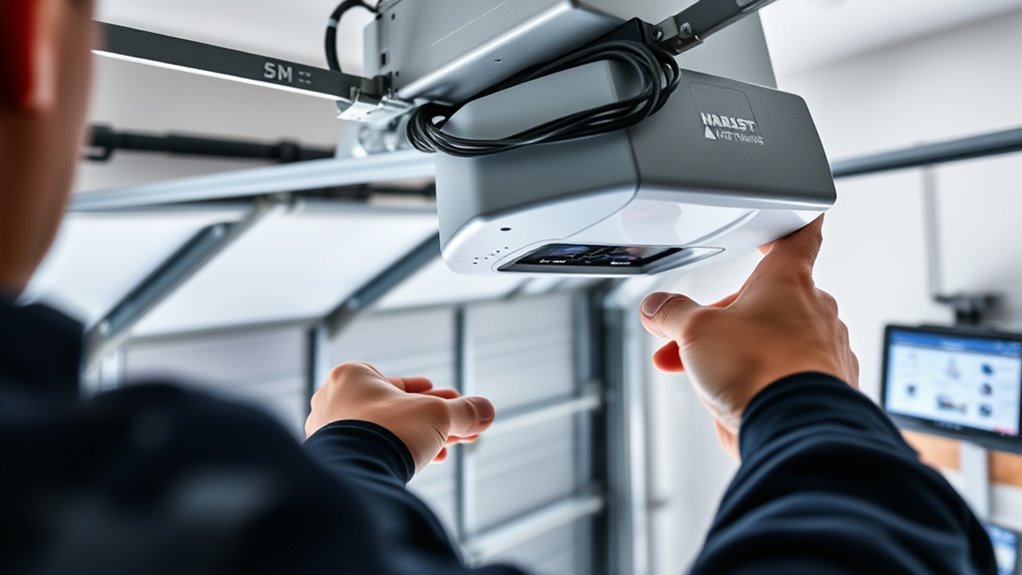
Setting up a smart garage door opener is a straightforward process that can greatly enhance your home’s convenience and security. One of the key benefits is improved garage security, giving you peace of mind whether you’re home or away. To start, guarantee your garage door is compatible with the smart opener you’ve chosen. Most models are designed to fit standard garage doors, but checking compatibility beforehand saves you time and frustration.
Ensuring garage door compatibility is the first step to a successful smart opener setup.
Next, you’ll want to establish a solid Wi Fi connection. Reliable Wi Fi connectivity is essential for seamless operation and real-time control of your garage door through a smartphone app. Before installation, test your Wi Fi signal strength in your garage area. If the signal is weak, consider relocating your router or adding a Wi Fi extender. A strong, stable connection guarantees your smart garage door opener functions smoothly and reduces the risk of disconnection or delays when operating remotely.
Once you’ve confirmed your Wi Fi connection, turn off the power to your garage door opener and remove the existing manual control. Follow the manufacturer’s instructions to install the smart opener onto your garage door. Typically, this involves attaching a mounting bracket, connecting the device to the door’s track or arm, and wiring it to your existing garage door opener system. Be cautious during this step to avoid damaging any components and to adhere to safety guidelines.
After physically installing the device, power it on and download the corresponding app on your smartphone. Follow the app’s guided setup process, which usually involves connecting the device to your Wi Fi network. Make sure to select your home network and enter the correct password. This step is vital for enabling remote control and ensuring your garage security is maximized through encrypted, secure communication.
Once connected, test the smart garage door opener by opening and closing the door via the app. Check if the status updates correctly and if notifications are enabled for any activity. Many systems also allow you to set up access codes or share control with family members, further enhancing your garage security. Always change default passwords and enable two-factor authentication if available, to prevent unauthorized access.
Finally, keep your firmware updated regularly. Manufacturers often release updates that improve performance, fix bugs, and enhance security features. Maintaining your smart garage door opener’s software helps protect your garage security and ensures reliable operation. Additionally, positive thinking can help you approach technology setup with patience and confidence, making the process smoother and less stressful. With these simple steps, you can confidently set up your smart garage door opener, enjoying the convenience of remote access and the peace of mind that comes with enhanced security and dependable Wi Fi connectivity.
Products Worth Considering

Ring Alarm 14-Piece Wireless Security System Kit

Philips Hue Large Smart Light Tube, Black – White and Color Ambiance LED Color-Changing Light – 1 Pack

Sonos Era 100 Wireless Smart Speaker, Black
As an affiliate, we earn on qualifying purchases.
Frequently Asked Questions
Can I Install a Smart Garage Door Opener Without Professional Help?
Yes, you can do a DIY installation of a smart garage door opener if you’re comfortable with basic tools and electrical work. Make sure to check hardware compatibility with your existing garage door system before starting. Follow the manufacturer’s instructions carefully, and guarantee safety precautions are in place. If you’re unsure about wiring or mounting, consider consulting a professional to avoid potential issues or harm.
What Safety Features Should I Look for in a Smart Garage Door Opener?
They say safety comes first, and that’s true for your smart garage door opener. Look for features like sensor placement, which prevents the door from closing on objects or people, and an emergency shutdown button for quick control during emergencies. These safety features protect you and your loved ones, ensuring the system works reliably. Always verify these elements before installation to keep your garage safe and secure.
Will My Existing Garage Door Be Compatible With a Smart Opener?
Your existing garage door can usually work with a smart opener, but check the garage door materials first, as some older or specialized doors may not support smart home integration easily. Confirm your door’s opener has compatible features or upgrade if needed. Most modern openers seamlessly integrate with smart systems, but verify compatibility with your door type and materials to ensure smooth operation and safety.
How Do I Secure My Smart Garage Door Opener From Hacking?
To safeguard your smart garage door opener from hacking, you should enable strong encryption protocols and use robust user authentication methods. Regularly update the firmware to patch security vulnerabilities, and create unique, complex passwords for your account. Avoid sharing access codes and disconnect the device from Wi-Fi when not in use. These steps help protect your smart garage door from unauthorized access and ensure your home stays secure.
What Should I Do if My Smart Garage Door Opener Stops Working?
If your smart garage door opener stops working, don’t panic. First, troubleshoot errors by checking the Wi-Fi connection and ensuring the device is powered. Then, perform a firmware update—this often fixes glitches and improves performance. If issues persist, reset the system and reconfigure it. Staying calm and systematic helps uncover the problem, so your smart garage door can work smoothly again, keeping your home secure and convenient.
Conclusion
Now that your smart garage door opener is set up, think of it as opening a new chapter—your home’s welcoming gate swinging wide with ease and confidence. With every tap, you’re revealing more than just a door; you’re opening a pathway to convenience and security. Trust in this modern gateway, knowing it’s as dependable as the sunrise, ready to greet you each day with smooth, silent assurance, transforming your home into a smarter, safer sanctuary.