To winterize your outdoor space in just one weekend, start with a thorough inspection of plants, furniture, and drainage systems. Protect sensitive plants by bringing them indoors or covering them, and apply mulch around garden beds. Insulate decks and structures with sealants or foam boards. Clean and cover patio furniture, and make certain outdoor lighting and tools work properly. Planning spring cleanup now will facilitate your shift smoother later. Keep exploring for more tips to make your winter preparation even easier.
Key Takeaways
- Inspect, clean, and cover outdoor furniture, plants, and drainage systems to prevent winter damage.
- Protect and insulate outdoor plants and garden beds with mulch, covers, and proper watering before freeze conditions.
- Seal outdoor structures with insulation materials like foam boards and sealants for added winter resilience.
- Drain and insulate outdoor plumbing, and clear snow or ice from walkways for safety.
- Perform seasonal maintenance such as pruning, mulching, and planning spring cleanup tasks to ensure a smooth transition.
How Do I Know If My Outdoor Space Is Ready for Winter?

To determine if your outdoor space is ready for winter, you should start by inspecting key elements like your plants, furniture, and drainage systems. Check if your garden lighting is functioning properly and consider installing timers or covering fixtures to prevent damage from snow or ice. Proper outdoor pest control is also essential; look for signs of pests that may overwinter in your yard and address any infestations now. Ensure furniture is cleaned, stored, or covered to avoid weather damage. Clear out gutters and drainage areas to prevent water buildup, which can freeze and cause damage. Additionally, proper winterization techniques can help safeguard your outdoor items and structures from harsh weather conditions. Regular maintenance like protective coverings and sealing gaps can further enhance resilience against winter elements. Incorporating sauna and cold plunge systems into your outdoor space can enhance your winter wellness routine and provide year-round relaxation. Understanding how outdoor climate control impacts your space can guide you in choosing the right protective measures. Properly insulating pipes and water features is also crucial to prevent freezing and cracking during the colder months. By taking these steps, you’ll identify potential issues and prepare your outdoor space for the colder months, making winter maintenance easier and more effective.
How Can I Protect My Plants and Garden This Winter?

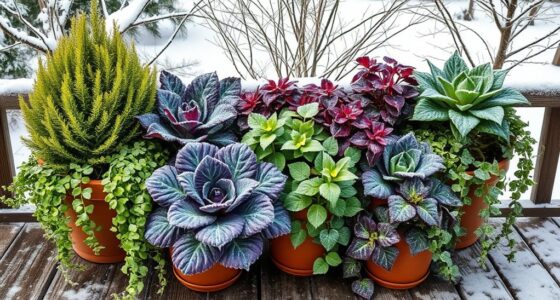
To protect your plants and garden this winter, start by bringing sensitive plants indoors or covering them to shield them from harsh weather. Applying mulch around your garden beds helps insulate roots, while covering plants with burlap or blankets provides additional warmth. Remember to water your plants thoroughly before a freeze to prevent dehydration and damage during cold snaps. If you have electric tools or outdoor lighting, consider winterizing those as well to ensure they remain functional in the colder months, similar to how electric dirt bikes are prepared for seasonal use. Additionally, incorporating natural pools with natural filtration systems can help maintain a healthy garden environment without relying on chemicals. Properly winterizing outdoor equipment ensures longevity and optimal performance when the warmer season returns. For added protection, installing durable truck bed covers can help shield your outdoor gear and tools from the elements during the winter months. Understanding how sound insulation works can also be beneficial if you’re setting up outdoor spaces for entertaining during the winter, helping to reduce noise pollution and create a cozy environment.
Protect Sensitive Plants Indoors
When cold weather approaches, safeguarding sensitive plants indoors becomes essential to guarantee they survive the winter. Start by bringing in your indoor greenery, especially potted plants that can’t tolerate freezing temperatures. Choose a suitable spot with bright, indirect light and good airflow. To protect your plants further, use plant insulation—wrap pots with bubble wrap or burlap to shield roots from cold drafts. Keep the temperature consistent and avoid placing plants near heating vents or drafts. Regularly check for signs of stress or pests, and water only when the topsoil feels dry to prevent overwatering in a less active environment. Properly insulating and positioning your plants indoors ensures they stay healthy through the winter, ready to thrive again when spring arrives. Additionally, understanding indoor gardening technologies can help you create optimal conditions for your plants during the colder months, especially with climate-controlled environments that mimic outdoor conditions. Incorporating energy-efficient solutions like smart thermostats can further optimize indoor temperatures for your plants. Utilizing modern grow lights can also support plant health when natural sunlight is limited. Exploring humidity control options can help prevent issues like leaf drop or disease caused by excessively dry indoor air.
Apply Mulch and Coverings
After confirming your sensitive plants are indoors or well-protected, adding mulch and coverings around your garden helps shield roots and soil from freezing temperatures. Mulch insulates the soil, maintaining consistent soil moisture and preventing rapid temperature fluctuations that can harm roots. Be sure to apply a 2-3 inch layer of organic mulch, like straw or wood chips, around your plants, avoiding direct contact with stems. Coverings such as burlap or frost cloth can further protect delicate plants from harsh winds and frost. Additionally, check your drainage system to ensure excess water won’t accumulate around roots, which could lead to rot during winter freezes. Proper mulching and coverings create a barrier against cold, helping your garden survive the winter months intact. Incorporating proper quality assessment techniques can ensure your protective measures are effective for your specific plants and climate. Maintaining good soil health through proper mulching can also improve moisture retention and plant resilience during winter.
Water Before Freeze
Water your plants thoroughly before a hard freeze, as moist soil can help protect roots from freezing temperatures. Make sure you’re following a consistent watering schedule in the days leading up to the freeze to keep the soil adequately moist. Avoid overwatering, but don’t let the soil dry out completely. Proper watering helps insulate roots and reduces the risk of damage. Additionally, check your outdoor plumbing for any leaks or vulnerabilities, as frozen pipes can cause serious issues. If you have potted plants, water them well and consider moving them to sheltered locations. By watering in advance, you create a barrier against cold temperatures and prevent dehydration of roots during the winter months. Staying informed about plant hardiness zones can help you better determine the appropriate winter care for your plants. Understanding climate variations can also help you adapt your winterizing strategies effectively. Knowing the net worth of gardening influencers can also motivate and inspire your seasonal preparations. Incorporating proper drainage practices can further prevent water accumulation around roots, reducing potential frost damage.
How Do I Seal and Insulate Decks and Outdoor Structures?
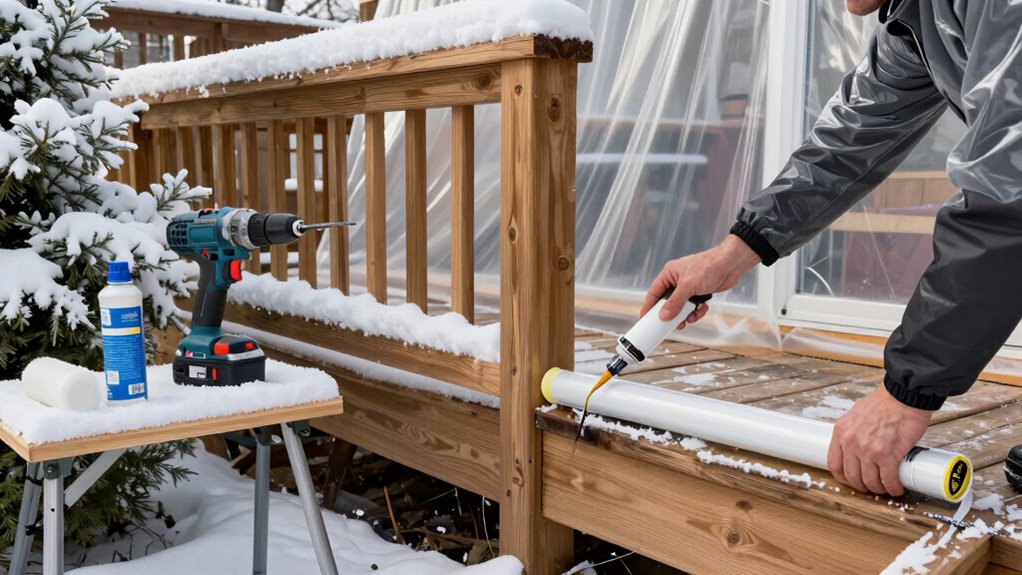
Sealing and insulating your decks and outdoor structures is essential to protect them from cold temperatures and moisture damage. Proper deck sealing prevents water from seeping into wood, which can cause rot and warping. Outdoor insulation helps maintain internal warmth and reduces energy loss. To get started, choose weather-resistant sealants and insulation materials suited for outdoor use. Here’s a quick comparison:
| Material | Benefits |
|---|---|
| Rubberized Sealant | Durable, waterproof, flexible |
| Foam Board Insulation | High R-value, easy to install |
Applying these materials before winter ensures your outdoor space stays protected and ready for the cold months. Additionally, selecting appropriate insulation can further enhance your outdoor area’s resilience. Incorporating architectural solutions can also help improve the durability of outdoor structures and extend their lifespan. Using proper ventilation techniques can prevent moisture buildup and mold issues inside enclosed outdoor areas. Remember, the right combination of deck sealing and outdoor insulation keeps your structures in top shape year-round.
How Can I Prepare My Patio Furniture and Surfaces for Cold Weather?

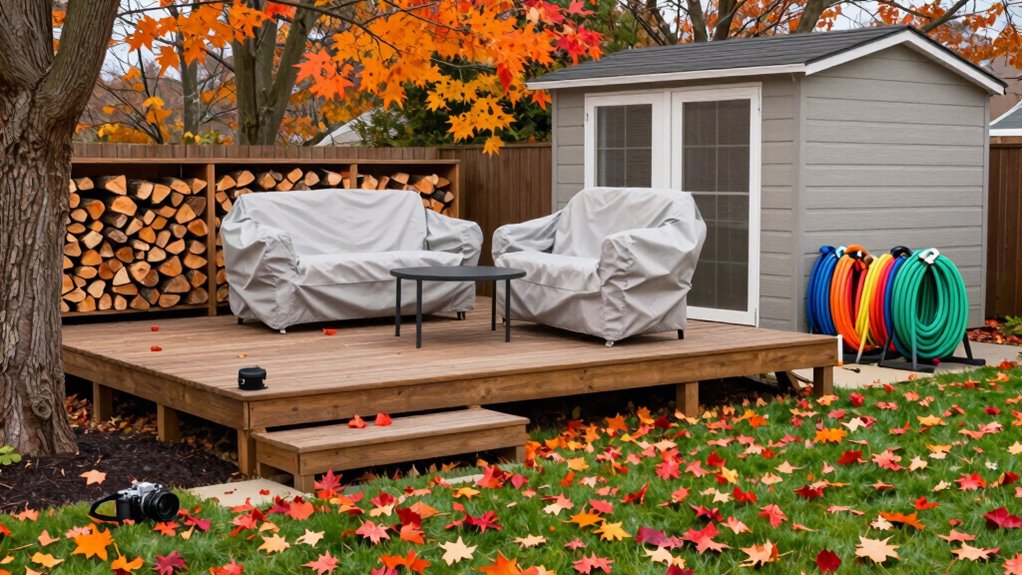
Preparing your patio furniture and surfaces for cold weather is essential to guarantee they stay in good condition through the winter months. Start by cleaning your patio furniture thoroughly, removing dirt, dust, and debris. Consider using a mild soap and water or a gentle cleaner suited for your furniture type. Once clean, apply a protective coat or cover it with weather-resistant furniture covers to prevent damage from snow and moisture. For surfaces like decks, porches, or patios, use surface protection products such as sealants or waterproofing sprays to create a barrier against water and cold. Elevate furniture off the ground if possible, to avoid moisture absorption. Proper surface protection and maintenance now will save you time and money on repairs or replacements come spring.
What’s the Best Way to Plan Spring Cleanup During Your Winter Weekend?

Start by scheduling your cleanup tasks now so you can stay organized when spring arrives. Gather the supplies you’ll need, like gloves, tools, and compost bins, to streamline the process. Then, assess your garden’s needs to prioritize what should be addressed first for a fresh start.
Schedule Cleanup Tasks
Planning your spring cleanup during the winter weekend can save you time and stress when the season changes. Start by creating a schedule that prioritizes tasks like removing garden debris and lawn trimming. Break down the work into manageable chunks, such as dedicating one day to clearing fallen leaves and another to trimming overgrown branches. Set realistic goals and allocate specific time slots for each task, so you stay organized and avoid feeling overwhelmed. Consider the order of projects—tackle cleanup areas that will benefit the most from early attention. By planning ahead, you’ll ensure that your outdoor space is ready for the upcoming season, making spring maintenance much smoother. A clear schedule keeps you focused and helps you accomplish everything efficiently during your winter weekend.
Gather Necessary Supplies
Gathering all the necessary supplies before you begin your spring cleanup guarantees a smooth and efficient process. Start by assembling tools like gloves, pruning shears, rakes, and garbage bags. Don’t forget to gather supplies for seasonal plant care, such as fertilizers or soil amendments, to prepare your garden beds. If you’re planning to update your outdoor decor, have new planters, decorative lighting, or furniture covers ready. Having everything on hand saves time and prevents multiple trips outdoors. Check your supplies list carefully, ensuring you have everything needed to handle debris, prune plants, and refresh your outdoor space. This preparation makes your winter weekend productive and sets the stage for a successful spring cleanup. Being organized now pays off later.
Assess Garden Needs
To effectively assess your garden’s needs during your winter weekend, take a close look at each area to identify what requires attention. Start with soil testing to determine nutrient levels and pH, helping you plan for spring fertilization. Conduct a pest inspection to spot any lingering infestations or damage that need addressing. Next, evaluate plant health—look for dead or diseased branches and consider pruning. Finally, check for debris, such as fallen leaves or tangled branches, that could harbor pests or rot.
Here are four key steps:
- Conduct soil testing for nutrient balance.
- Perform pest inspection to catch issues early.
- Assess plant health and prune accordingly.
- Clear debris to prevent pests and prepare for spring.
Tips for Maintaining Your Outdoor Space Throughout Winter

Winter can be tough on your outdoor space, but with proactive maintenance, you can protect your lawn, plants, and furniture from harsh weather. Focus on seasonal plant care by trimming dead or damaged branches and mulching exposed roots to insulate against cold temperatures. Keep outdoor lighting functional by checking bulbs and wiring, ensuring pathways are well-lit and safe. Consider installing timers or motion sensors to conserve energy and enhance security. Regularly clear snow and ice from walkways to prevent damage and accidents. Cover or store outdoor furniture to prevent weather-related deterioration. These simple steps help maintain your outdoor space’s integrity, making it easier to enjoy when spring arrives. Staying vigilant throughout winter preserves your landscape’s beauty and longevity.
Frequently Asked Questions
When Should I Start Winterizing My Outdoor Space Each Year?
You should start winterizing your outdoor space in early fall, typically when temperatures drop consistently below 50°F. This timing schedule allows you to complete seasonal planning comfortably, avoiding last-minute rushes. Prepare your space before heavy frosts arrive, usually in late October or early November. Starting early guarantees you protect plants, clean gutters, and secure outdoor furniture, making your shift into winter smooth and stress-free.
How Do I Prevent Wildlife From Damaging My Garden During Winter?
To prevent wildlife from damaging your garden during winter, you should implement wildlife deterrents and garden protection strategies. Install fencing or mesh around vulnerable plants, and use motion-activated lights or sprinklers to scare off animals. You can also place natural repellents like chili powder or animal-specific deterrent sprays. Regularly inspect your garden for signs of intrusion, and promptly address any damage to keep your plants safe all winter long.
Are There Eco-Friendly Options for Winterizing Outdoor Furniture?
Imagine your outdoor furniture cloaked in eco-friendly protection as winter winds whisper through the trees. You can do this by choosing biodegradable cleaners that clean without harming nature, and opting for recycled furniture covers or cushions made from sustainable materials. These options preserve the beauty of your space while reducing environmental impact. Embrace eco-conscious choices to keep your outdoor haven pristine and ready for spring, knowing you’re caring for the planet.
What Are Common Mistakes to Avoid When Winterizing Outdoor Spaces?
When winterizing your outdoor space, avoid rushing the process or neglecting garden pests and irrigation issues. Make sure to thoroughly clean and store furniture to prevent damage, and check for pests that could seek shelter in your garden. Don’t forget to drain and disconnect irrigation systems to prevent freezing. Overlooking these steps can lead to costly repairs or pest infestations come spring, so take your time and be thorough.
How Can I Efficiently Store Outdoor Tools and Equipment for Winter?
Imagine you’re a pioneer settling a new land; start by gathering your garden storage and tools. Clean and dry each item thoroughly to prevent rust, then organize them by type—shovels with shovels, rakes with rakes—in labeled bins or wall-mounted hooks. Use a sturdy outdoor cabinet or shed to keep everything protected from weather. This efficient tool organization makes winter storage simple and keeps your outdoor space tidy.
Conclusion
By tackling these winterizing tasks this weekend, you’ll turn your outdoor space into a cozy fortress against the cold. Think of it as giving your yard a warm blanket—ready to weather any storm. With a little effort now, you’ll enjoy a stress-free spring, and your outdoor area will thank you for the care. So, roll up your sleeves and make your outdoor space a winter-ready haven—it’s worth every minute!