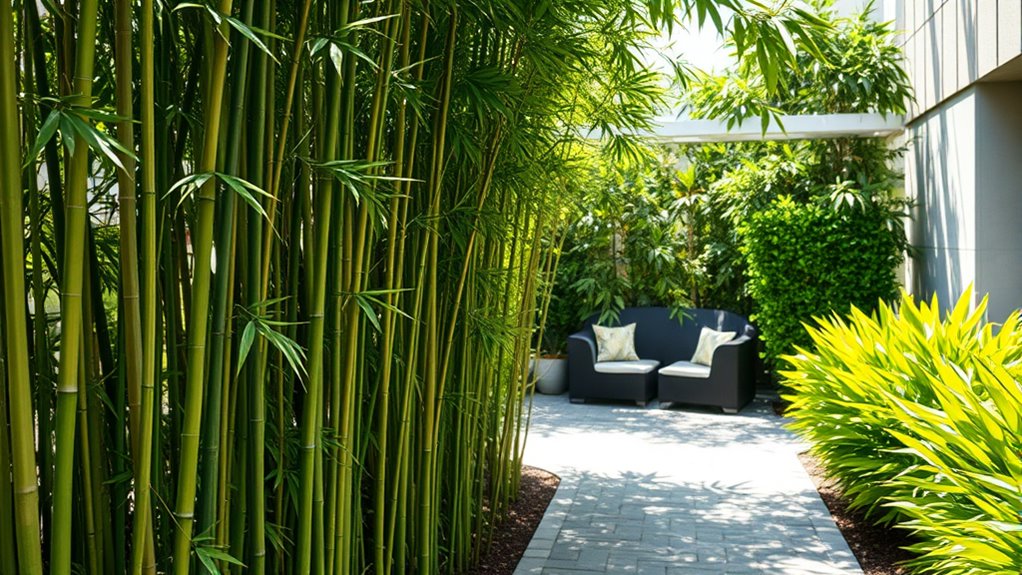

To design effective windbreaks and privacy screens, you should combine sturdy materials with strategic plantings. Use durable options like pressure-treated wood, metal, or vinyl panels for structure, and incorporate evergreen shrubs or fast-growing plants such as bamboo for natural coverage. Pairing these elements creates a resilient, attractive barrier that blocks wind and enhances privacy year-round. Choosing the right combination depends on your climate and maintenance preferences—continue to explore for tailored tips to perfect your outdoor space.
Key Takeaways
- Select durable, weather-resistant materials like pressure-treated wood, metal, or vinyl for long-lasting privacy screens.
- Incorporate evergreen plants such as arborvitae or holly to provide year-round wind and privacy protection.
- Combine sturdy structural elements with fast-growing or dense plants to balance strength and quick coverage.
- Ensure proper spacing and height to maximize windbreak effectiveness while maintaining aesthetic appeal.
- Plan maintenance access for pruning, cleaning, and repairs to preserve both function and visual attractiveness.

Windbreaks and privacy screens are practical solutions for creating a more comfortable and secluded outdoor space. When designing these barriers, your choices in plant selection and material durability play a vital role in ensuring long-lasting effectiveness and aesthetic appeal. Selecting the right plants means considering their growth habits, climate adaptability, and maintenance needs. Hardy evergreen shrubs or trees, such as arborvitae or holly, are excellent options because they provide year-round coverage and require minimal upkeep once established. If you prefer a more natural look, fast-growing bamboo or tall grasses can quickly create a dense barrier, but keep in mind their invasiveness and maintenance requirements. Your goal should be to choose plants that will thrive in your specific environment, resist pests, and require minimal pruning to stay neat and effective.
Material durability is equally important when constructing or installing physical windbreaks and privacy screens. Whether you opt for wood, metal, vinyl, or composite materials, you need to think about how well they withstand the elements over time. For example, pressure-treated wood or cedar are popular choices because they resist rot and insects, extending the lifespan of your barrier. Metal panels or lattice made from powder-coated steel or aluminum also offer durability and a modern look, while being resistant to rust and weather damage. Vinyl screens are low-maintenance and resistant to fading, cracking, or warping, making them suitable for harsh climates. When selecting materials, consider your local weather conditions, exposure to sun and moisture, and how much upkeep you’re willing to perform. Investing in high-quality, durable materials may cost more upfront but will save you time and money on repairs or replacements later.
Balancing plant selection with material durability creates a cohesive, resilient design. For example, pairing sturdy wooden posts with evergreen shrubs can give your privacy screen a natural yet structured appearance. Alternatively, combining metal frames with climbing plants like ivy or clematis can provide both strength and greenery. Think about accessibility for maintenance—plants need pruning, and materials should be easy to clean or repair. Additionally, consider how your chosen plants and materials complement your overall outdoor aesthetic, ensuring your windbreak or privacy screen enhances your space rather than detracts from it. By carefully selecting plants that grow reliably and choosing durable materials suited to your environment, you can create an effective, attractive barrier that provides privacy, wind protection, and beauty for years to come.
Frequently Asked Questions
What Are the Best Plant Species for Windy Locations?
For windy locations, you should choose wind-resistant shrubs like junipers and lilacs, which withstand harsh conditions. Hardy evergreen trees such as pine, spruce, and cedar also work well, providing sturdy, year-round protection. These plants help block wind and create a natural barrier. Make sure to plant them densely and at the right spacing to maximize their wind-breaking ability, giving you a more comfortable and protected outdoor space.
How Tall Should a Privacy Screen Be for Optimal Privacy?
For ideal privacy, you should aim for a privacy screen that’s at least 6 to 8 feet tall, depending on your needs. Height considerations are key, as taller screens offer better privacy impact by blocking sightlines effectively. Keep in mind your local regulations and the surrounding environment, ensuring your screen provides sufficient coverage without overwhelming the space. Adjust height based on your privacy goals and the level of visibility you want to block.
Can Windbreaks Be Installed in Urban Areas?
Did you know that about 80% of urban residents experience wind-related discomfort? Yes, windbreaks can definitely be installed in urban areas, acting as effective city wind protection. You can use tall trees, fences, or green walls to create urban barriers that reduce wind speed and noise. By incorporating these solutions, you enhance comfort and privacy, making city living more enjoyable without disrupting the urban landscape.
What Maintenance Is Required for Natural Windbreaks?
You should regularly maintain natural windbreaks by pruning techniques to keep them healthy and effective. Pruning helps control growth, remove dead or diseased branches, and maintain airflow. Additionally, you need to monitor soil health by mulching and avoiding soil compaction, which supports root vigor. Consistent care ensures your windbreaks remain strong, lush, and capable of providing the intended protection and privacy over time.
Are There Eco-Friendly Materials for Constructing Privacy Screens?
Think of your privacy screen as a shield of nature’s integrity. You can choose eco-friendly materials like sustainable fencing and biodegradable options, which symbolize respect for the environment. These materials break down naturally, reducing waste and pollution. By opting for such options, you create a barrier that not only offers privacy but also reflects your commitment to greener living, turning your space into a sanctuary of harmony with the earth.
Conclusion
By choosing the right windbreaks and privacy screens, you create a sanctuary where your outdoor space breathes easier and feels more private. Think of these barriers as gentle shields, whispering secrets and guarding your peace like loyal sentinels. With thoughtful planning, you’ll turn your yard into a haven—protected from gusts and prying eyes—where every breeze and glance feels just right. Your outdoor retreat will stand tall, a quiet fortress of comfort and serenity.