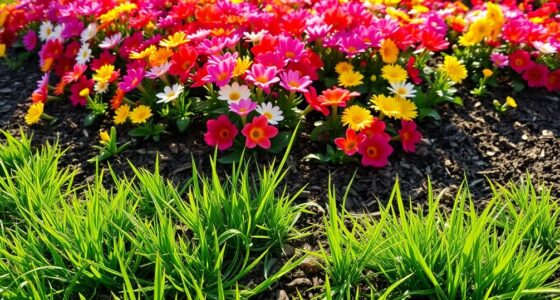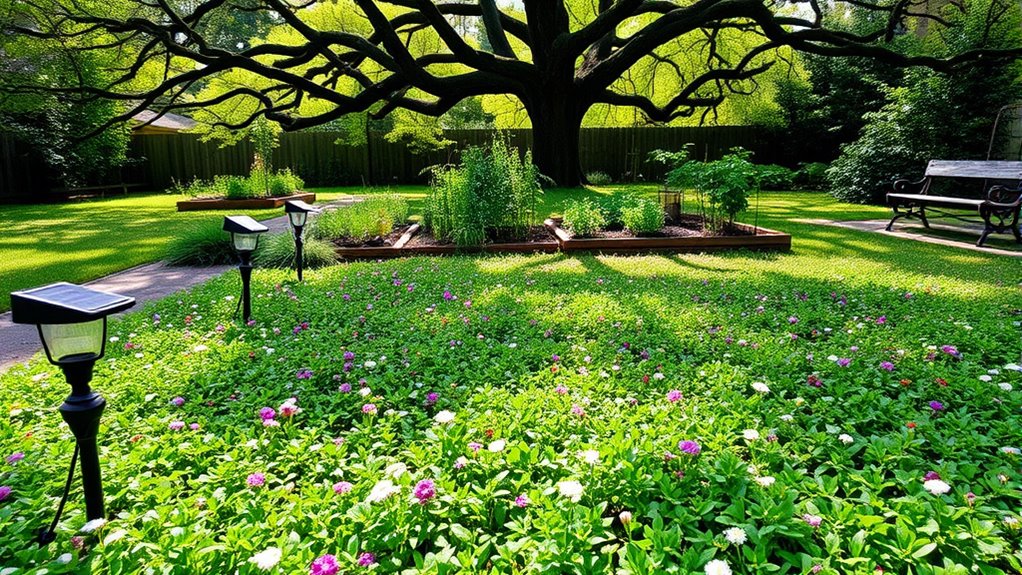

Sustainable lawn alternatives focus on creating low-water, low-maintenance landscapes that support local ecosystems. You can replace traditional grass with native, drought-tolerant plants and incorporate smart design strategies like grouping plants by water needs and using efficient irrigation systems. Mulching and soil improvements also help retain moisture and reduce chemical use. These choices help conserve water, attract pollinators, and lower your yard’s environmental impact. Keep exploring to discover more ways to make your landscape eco-friendly.
Key Takeaways
- Replace traditional lawns with drought-tolerant native plants to reduce water use and maintenance.
- Implement xeriscaping principles by grouping plants with similar water needs and improving soil health.
- Use mulch and drip irrigation systems to conserve moisture and optimize water efficiency.
- Incorporate low-maintenance ground covers and alternative landscaping materials like gravel or rocks.
- Create habitats supporting pollinators and wildlife while minimizing chemical and water dependencies.
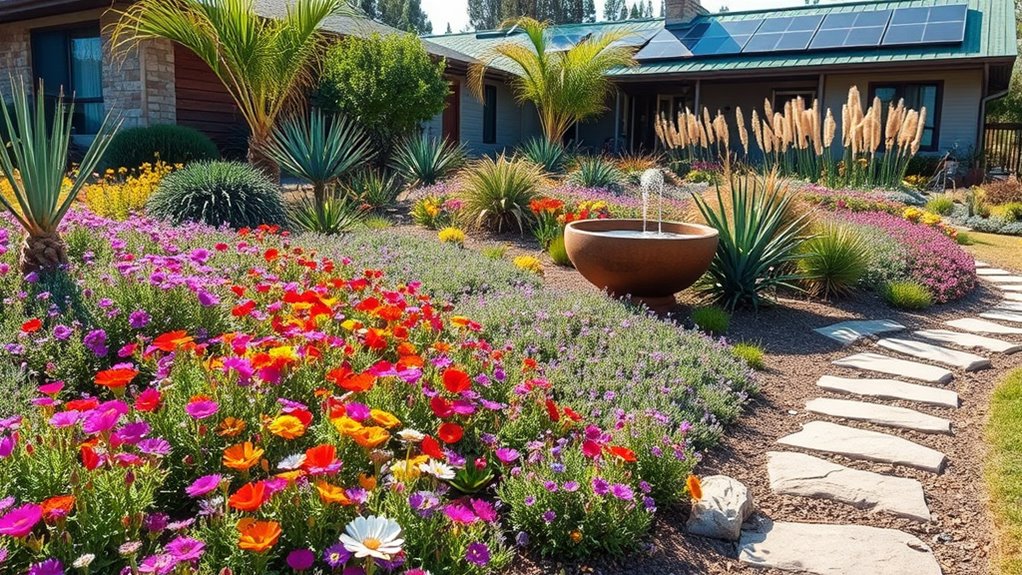
Many homeowners are seeking sustainable lawn alternatives to reduce water use, minimize maintenance, and promote environmental health. One effective approach is xeriscaping, a landscaping method rooted in principles designed to conserve water while creating attractive, low-maintenance outdoor spaces. By understanding xeriscaping principles, you can develop a landscape that thrives with minimal irrigation and fertilizers. These principles emphasize smart planning, efficient irrigation, soil improvement, and the strategic use of drought-tolerant plants. Instead of a traditional lawn that demands frequent watering, you can replace it with hardy, native plants that are adapted to your area’s climate. Incorporating climate-appropriate plant choices ensures your landscape remains sustainable and resilient over time.
Native plant selection plays an essential role in creating a sustainable landscape. Native plants are well-suited to your local environment, requiring less water, fewer pesticides, and minimal fertilization. They tend to resist pests naturally, reducing the need for chemical treatments, and often flourish with the natural rainfall of your area. When choosing native plants, consider their growth habits, sunlight needs, and water requirements to guarantee they thrive together in your landscape. Incorporating a diverse mix of these plants not only supports local ecosystems but also creates a visually appealing and resilient yard.
Implementing xeriscaping principles involves thoughtful planning. Start by analyzing your site’s sunlight, soil type, and drainage patterns. Group plants with similar water needs together to optimize irrigation efficiency. Use mulch around plants to retain soil moisture and suppress weeds, reducing maintenance and watering needs even further. Installing efficient drip irrigation systems ensures water is delivered directly to the roots, preventing waste and promoting healthy growth. By prioritizing native plant selection, you encourage biodiversity and create a landscape that’s inherently adapted to your region’s conditions.
Transitioning to a sustainable landscape might seem intimidating at first, but focusing on xeriscaping principles and native plant selection simplifies the process. You’ll spend less time on lawn care, watering, and chemical treatments, freeing you up to enjoy your outdoor space. Over time, your yard will become a haven for local wildlife, such as pollinators and birds, further enriching your environment. Embracing these strategies helps you contribute to water conservation efforts and reduces your carbon footprint, all while maintaining a beautiful outdoor area. In the end, adopting sustainable lawn alternatives benefits both your property and the planet, making your yard a model of eco-friendly gardening.
The Drought-Defying California Garden: 230 Native Plants for a Lush, Low-Water Landscape
As an affiliate, we earn on qualifying purchases.
As an affiliate, we earn on qualifying purchases.
Frequently Asked Questions
What Are the Best Native Plants for Sustainable Lawns?
You should consider native plants like buffalo grass, blue grama, and creeping red fescue for a sustainable lawn. These native plants offer numerous benefits, including requiring less water, fertilizers, and pesticides, making them eco-friendly choices. They thrive naturally in your area, reducing maintenance and supporting local ecosystems. By choosing native plants, you promote eco-friendly landscaping and enjoy a lush, resilient lawn that benefits both your property and the environment.
How Much Maintenance Do Alternative Lawns Require?
You might find that alternative lawns require less maintenance than traditional grass. Mowing frequency drops considerably because many native plants grow slower or don’t need mowing at all, and watering needs are lower since these plants are adapted to local conditions. Coincidentally, the less time you spend on upkeep, the more you enjoy your outdoor space. These natural choices reduce your effort and environmental impact, making your yard both beautiful and sustainable.
Are There Any Local Regulations for Replacing Traditional Lawns?
You should check your local zoning restrictions and watering ordinances before replacing your traditional lawn. Many areas have rules about landscaping changes, especially if they affect drainage or property lines. Some municipalities also have watering restrictions that limit how often you can water new or alternative lawns. Contact your city or county planning office to get detailed information and make certain your new lawn complies with all local regulations.
What Are the Cost Differences Between Traditional and Sustainable Lawns?
The cost comparison between traditional and sustainable lawns varies, but sustainable options often have higher upfront lawn installation costs due to specialized plants or materials. However, you save money long-term through lower water, fertilizer, and maintenance expenses. While traditional lawns may be cheaper initially, sustainable lawns can offer economic benefits over time, making them a smart investment for eco-conscious homeowners seeking to reduce ongoing costs.
How Do Sustainable Lawns Impact Local Biodiversity?
Imagine a gentle boost to your local ecosystem—sustainable lawns support pollinators and promote soil health enhancement. By choosing eco-friendly options, you create a welcoming habitat for bees, butterflies, and other beneficial insects, enriching biodiversity. Your thoughtful lawn care nurtures the environment, fostering thriving ecosystems right in your yard. This simple change can make a meaningful difference, helping nature flourish while you enjoy a lush, resilient outdoor space.

TJJFMM 230FT Drip Irrigation System for Garden with 40 Nozzles & Emitters, Garden Watering System with 1/2" & 1/4" Tube and Barbed Fittings – Adjustable Sprinklers Kit for Greenhouse, Lawn, Raised Bed
【Upgraded Tube Design & Water Saving】 Our adjustable garden watering system is upgraded to 1/2” diameter to support…
As an affiliate, we earn on qualifying purchases.
As an affiliate, we earn on qualifying purchases.
Conclusion
Switching to sustainable lawn alternatives not only benefits the environment but also saves you time and money on maintenance. Some might worry they’ll lose the lush look of a traditional lawn, but many options like native grasses or ground covers can be just as beautiful and resilient. By making the switch, you’ll create a eco-friendly space that requires less water and chemicals, proving that a sustainable yard can be both functional and attractive without extra effort.

Brut Organic Aspen Mulch 10 QT – Natural Moisture Retainer & Root Protector – Odor-Free, Nutrient-Rich Bark Mulch for Landscaping, Garden Beds & Potted Plants
NATURAL GARDEN COVER: Creates a clean, polished garden surface while helping minimize weed growth naturally. This organic mulch…
As an affiliate, we earn on qualifying purchases.
As an affiliate, we earn on qualifying purchases.
The Drought-Defying California Garden: 230 Native Plants for a Lush, Low-Water Landscape
As an affiliate, we earn on qualifying purchases.
As an affiliate, we earn on qualifying purchases.