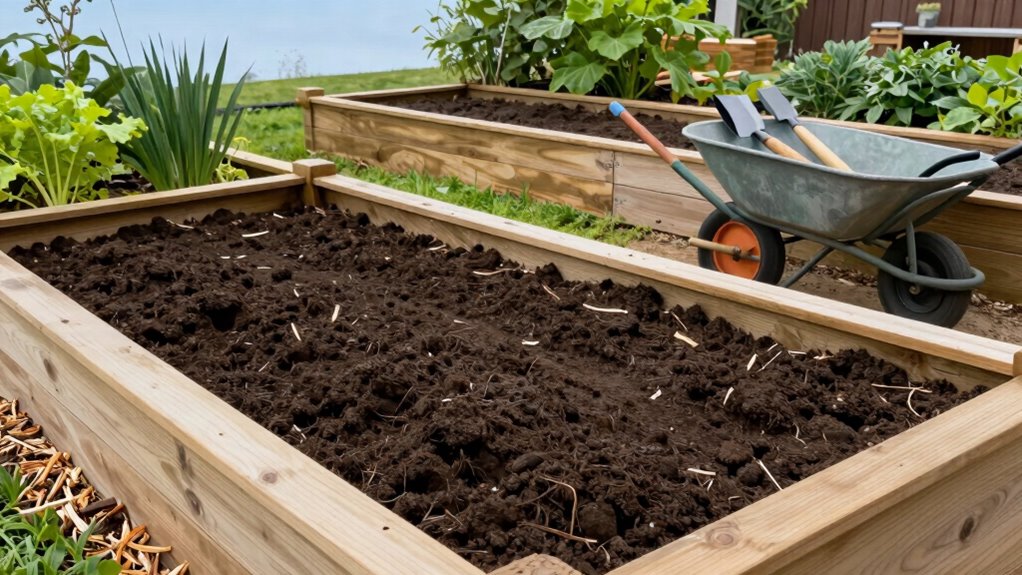

Start by testing your soil to check nutrient levels and pH balance, then amend it as needed with compost, organic matter, or specific nutrients like bone or kelp meal. Incorporate these amendments into the soil and cover the beds with mulch to retain moisture and suppress weeds. Allow a few weeks for the soil to settle and microbes to flourish before planting. If you’re curious about how to optimize your beds further, there’s more to explore.

Get furniture and decor delivered free — and shop member deals
- Fast, free delivery on millions of items
- Access to Prime Big Deal Days deals on October 6–7
- Prime Video, Amazon Music and more included
Key Takeaways
- Conduct soil testing to identify nutrient deficiencies and pH imbalances before planting.
- Incorporate compost and organic amendments to improve soil fertility and structure.
- Adjust soil pH with lime or other amendments based on test results.
- Cover beds with mulch to retain moisture, suppress weeds, and promote microbial activity.
- Plan crop rotation and prepare planting schedules using soil health insights.
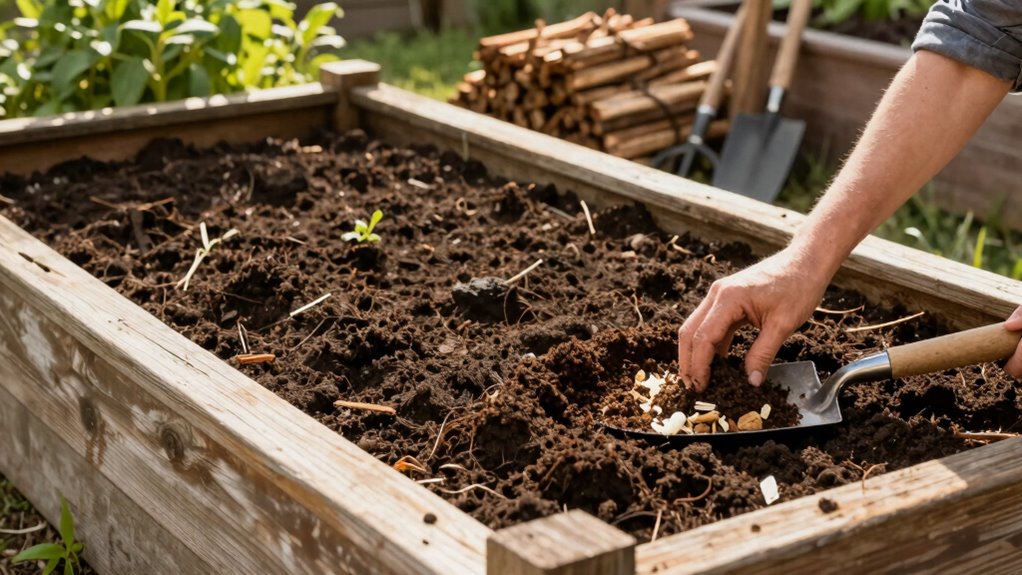
As the current growing season winds down, it’s the perfect time to prepare your raised beds for next year’s planting. You want to start by evaluating the soil’s health, which means soil testing should be your first step. Testing helps you understand nutrient levels, pH balance, and any deficiencies or imbalances that might hinder plant growth. With this information, you can make targeted amendments, ensuring your soil remains fertile and productive. Once you have the test results, you can decide whether to add lime to adjust acidity or incorporate specific fertilizers to replenish nutrients like nitrogen, phosphorus, and potassium.
Next, focus on compost application. Adding compost is essential to rejuvenate your soil and improve its structure. Spread a generous layer of high-quality compost over the surface of each raised bed. This not only supplies organic matter but also encourages beneficial microbial activity that supports plant health. Work the compost into the top few inches of soil, either by gently turning it with a garden fork or using a broad rake. This process helps integrate nutrients and organic matter into the soil, making it more hospitable for the upcoming planting season. Incorporating soil amendments based on your test results can further optimize soil conditions and support healthy plant growth. Additionally, understanding soil health can guide you in making more effective amendments for long-term productivity.
In addition to compost, consider other soil amendments based on your soil test results. For example, if your soil is lacking in certain nutrients, you might add specific organic amendments like bone meal or kelp meal. If the pH levels are off, use appropriate amendments to correct the balance. Regularly conducting soil testing can help you monitor changes and ensure your soil stays in optimal condition. Keep in mind that the goal is to create a well-balanced, nutrient-rich environment that supports healthy root development and vigorous plant growth throughout the season.
After incorporating compost and amendments, it’s wise to cover your beds with mulch or a protective layer of organic material. Mulching helps retain moisture, suppress weeds, and slowly adds organic matter as it decomposes. Before planting, give the soil a few weeks to settle and stabilize. This period allows beneficial microbes to flourish, creating a thriving ecosystem for your plants. Utilizing mulching techniques can enhance soil moisture retention and weed suppression, contributing to overall soil health.
Finally, plan your crop rotation and planting schedule. Use the insights from soil testing and your observations from previous seasons to choose the right plants for your raised beds. Properly prepping your beds now ensures a healthier, more productive garden next year. With thoughtful soil management, compost application, and strategic planning, you’ll set the stage for a successful growing season ahead.
As an affiliate, we earn on qualifying purchases.
Frequently Asked Questions
When Is the Best Time to Prepare Raised Beds for Planting?
You should prepare your raised beds in early spring or late fall, depending on your planting schedule. This timing allows you to incorporate seasonal planting needs and practice crop rotation, which helps prevent soil depletion and pests. By prepping beds ahead of time, you guarantee the soil is ready for new crops, giving you a healthy start for the upcoming growing season. Proper timing makes all the difference for successful gardening.
How Do I Remove Old Plant Debris Safely?
Removing old plant debris is like clearing the clutter from your mind; it’s essential for a healthy garden. Carefully pull out dead plants, roots, and fallen leaves, avoiding spreading pests or disease. Compost application helps break down debris quickly, enriching your soil. Make sure you discard any diseased material to prevent pest control issues and future problems, keeping your raised beds clean and ready for new planting.
What Are the Signs of Soil Exhaustion in Raised Beds?
You’ll notice soil exhaustion when plants struggle to grow, show poor health, or produce fewer yields. You might see yellowing leaves or stunted growth. To confirm, do a soil testing to check nutrient levels. If deficiencies are detected, nutrient replenishment becomes necessary. Add compost, organic fertilizers, or other amendments to restore soil vibrancy, ensuring your raised beds are ready for healthy, vigorous plants in the next season.
Should I Add Compost or Fertilizers During Bed Preparation?
You should add compost and organic amendments during bed preparation. Start with soil testing to identify nutrient gaps, then enrich your soil with compost to boost organic matter. Organic amendments like kelp meal or fish emulsion can provide essential nutrients. This approach improves soil health, enhances fertility, and supports healthy plant growth. Regularly maintaining these amendments guarantees your raised beds stay productive and resilient for the next season.
How Do I Prevent Weed Growth in Prepared Beds?
Think of your raised bed as a garden fortress. To prevent weed growth, you should apply mulch generously, like a blanket, to block sunlight and stop weeds from sprouting. Using a weed barrier underneath the mulch adds extra protection, ensuring weeds struggle to break through. Regularly inspecting and replenishing mulch keeps your fortress strong against invading weeds, giving your plants more room to thrive.
Conclusion
Now that you’ve prepared your raised beds, you’re all set for a successful season. With a little dirt, dedication, and diligent care, you’ll enjoy abundant harvests and beautiful blooms. Remember, patience and persistence pay off, turning your garden into a lush, lively paradise. So, stay steadfast, tend thoughtfully, and watch your efforts blossom into bountiful beauty. Happy gardening!
Fall Picks
fall essentials
As an affiliate, we earn on qualifying purchases.