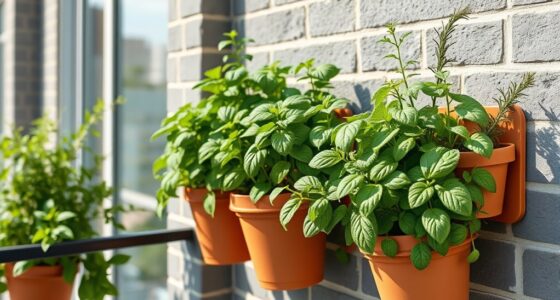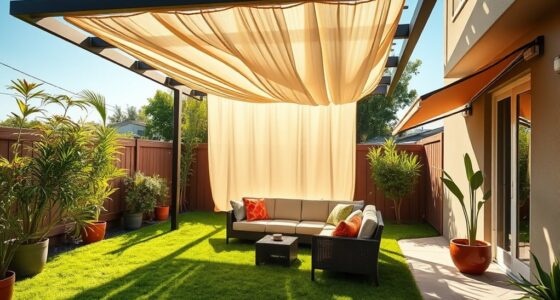

To build privacy with tall plants and screens, start by choosing dense, evergreen species like arborvitae or Leyland cypress for year-round coverage. Plant them close together in staggered layers for a seamless barrier, and prune regularly to keep it thick. For quick solutions, add natural or manufactured screens or fencing, integrating them with your plants. Mixing different materials and plant types can create a more attractive, effective enclosure. Keep exploring to discover how to perfect your privacy oasis.

Get furniture and decor delivered free with Prime
- Fast, free delivery on millions of items
- Prime Video, Amazon Music and more included
- Member-only deals all year
Key Takeaways
- Select dense, tall evergreen plants like arborvitae or Leyland cypress for year-round privacy.
- Plant in close proximity, layering taller plants at the back and shorter ones in front for a natural barrier.
- Regularly prune and maintain plants to ensure dense foliage and effective screening.
- Combine living plants with additional barriers like privacy panels or screens for enhanced privacy.
- Incorporate a variety of plant species and materials to create a visually appealing, effective privacy solution.

Building privacy in your outdoor space doesn’t have to rely solely on traditional fences. Instead, you can use tall plants and screens to craft a more natural and appealing barrier. This approach works especially well if you’re interested in urban landscaping, where space might be limited but incorporating greenery remains a priority. Tall plants and screens not only provide privacy, but they also add visual interest and blend seamlessly into your outdoor environment, making your yard feel more inviting and secluded.
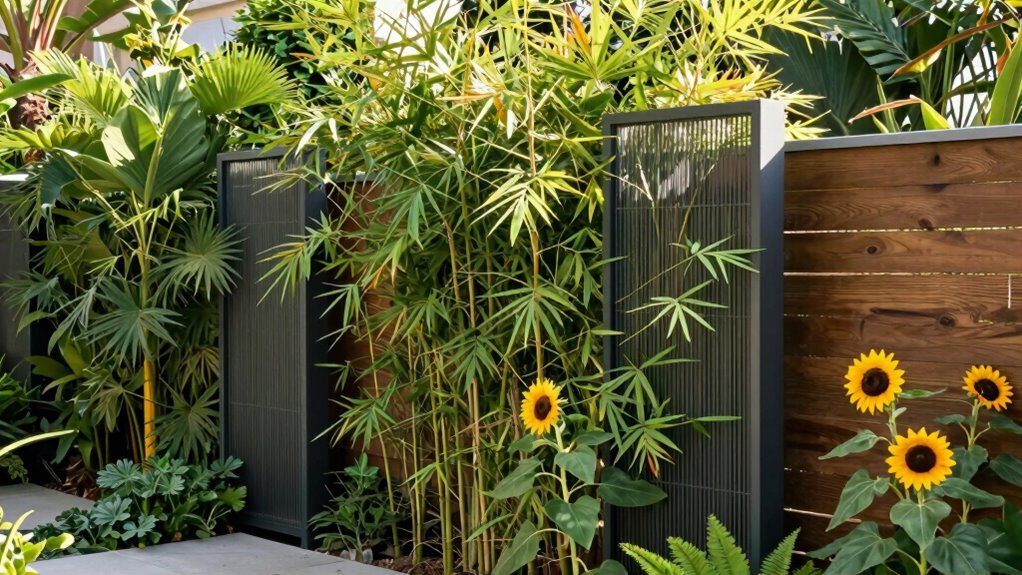
When choosing your plants, opt for species that grow tall and dense, creating a natural barrier that blocks views and reduces noise. Evergreen trees or shrubs, like arborvitae or Leyland cypress, are excellent choices because they stay lush year-round, ensuring your privacy remains intact regardless of the season. These plants help establish a living wall that’s both functional and aesthetically pleasing, especially if you want to soften the hard lines of urban landscaping. Tall grasses or bamboo can also serve as quick-growing screens, offering privacy and a touch of greenery in a compact space.
Planting your greenery strategically is key. You want to create a layered effect, with taller plants at the back and shorter ones in front. This not only maximizes coverage but also adds depth and texture to your outdoor design. Space your plants closely enough to form a continuous barrier but avoid overcrowding, which can hinder growth and health. Regular pruning encourages dense foliage, making your natural barriers more effective over time. Incorporating living walls or natural barriers can also enhance the privacy and visual appeal of your space by integrating the plants into your overall landscape design. Additionally, choosing the right plant placement helps ensure that your privacy screen remains effective and healthy as it matures. Proper maintenance practices are essential to keep your privacy barrier thriving and attractive throughout the year. Incorporating biodiversity-friendly planting strategies can further strengthen your landscape, attracting beneficial insects and supporting local ecosystems.
In addition to planting, consider installing screens made of materials like wood, metal, or privacy panels. These can complement your urban landscaping efforts while providing quick privacy solutions. Using natural materials for screens also enhances the organic feel of your yard, blending in with your plants rather than competing with them. When paired with tall plants, screens help fill in gaps and create a more complete enclosure. Combining different types of barriers can help you customize your privacy level and aesthetic to suit your preferences. Ultimately, building privacy with tall plants and screens allows you to craft a secluded retreat without sacrificing style. It’s an approach that emphasizes natural barriers, integrating greenery into your outdoor space in a way that feels harmonious and inviting. With proper planning, thoughtful plant selection, and regular maintenance, you’ll develop a lush, private oasis that enhances your outdoor living experience while harmonizing with your surroundings.
As an affiliate, we earn on qualifying purchases.
Frequently Asked Questions
How Do I Choose the Best Plants for Privacy in My Climate?
To choose the best plants for privacy in your climate, focus on plant selection that’s compatible with your local conditions. Research which species thrive in your area’s temperature, sunlight, and moisture levels. Opt for hardy, fast-growing plants suited to your climate, like evergreen trees or dense shrubs. By selecting climate-compatible plants, you’ll guarantee they grow healthy and tall, providing lasting privacy without extra maintenance or replacement.
What Maintenance Is Required for Tall Privacy Screens?
To maintain your tall privacy screens, you’ll need regular plant pruning to keep them dense and healthy. Additionally, soil preparation is essential; guarantee your soil stays well-drained and enriched with compost. Water your plants consistently, especially during dry spells, and monitor for pests or diseases. Proper pruning and soil care promote vigorous growth, helping your screens stay tall, lush, and effective at providing privacy year-round.
Are There Affordable Options for Tall Plant Privacy Solutions?
Yes, there are budget-friendly options for tall plant privacy solutions. You can explore DIY planting tips, like using fast-growing, inexpensive plants such as bamboo or tall grasses, which you can easily propagate yourself. Planting in inexpensive containers or repurposed materials also helps save costs. By planning carefully and choosing resilient, low-maintenance species, you can create an effective privacy screen without breaking the bank.
How Can I Prevent Tall Plants From Becoming Invasive?
To keep tall plants from becoming invasive, you need to stay one step ahead. Choose non-invasive species and regularly monitor their growth. Use root control barriers to prevent roots from spreading into unwanted areas. Prune your plants consistently to maintain control and avoid them taking over. By staying vigilant and managing root systems, you’ll enjoy lush privacy screens without the risk of invasive species taking over your landscape.
What Are the Legal Considerations for Planting Privacy Screens?
You need to check local legal regulations before planting privacy screens, as rules can vary. Some areas require obtaining planting permits, especially for tall or invasive species. You should consult your city or county’s zoning office to understand restrictions, height limits, and setback requirements. Following these guidelines helps you avoid fines or legal issues. Always guarantee your privacy screen doesn’t encroach on neighbors’ property rights or violate community standards.
Conclusion
Think of your garden as a castle, where tall plants and screens are your mighty walls and watchtowers. They stand strong against prying eyes, creating a sanctuary just for you. By choosing the right greenery and positioning it wisely, you’re building a fortress of privacy that invites peace and tranquility. So, plant your defenses carefully—your private oasis awaits behind these natural walls, as secure and serene as a castle hidden in a lush, green kingdom.
Halloween Picks
halloween
As an affiliate, we earn on qualifying purchases.