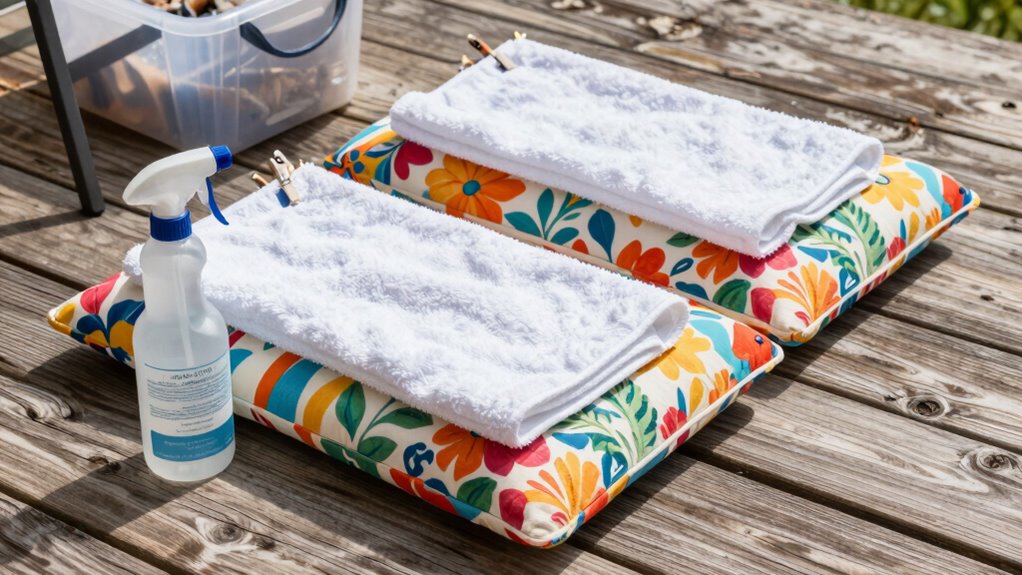

To prepare your patio cushions for off-season storage, start by removing loose debris with a brush or vacuum. Clean the fabric with a mild detergent and warm water, then gently scrub and rinse thoroughly. Make sure cushions are completely dry in a well-ventilated, sunlit area. Before storing, inspect for damage and repair small tears. Wrap cushions in breathable covers or use sealed containers with moisture absorbers to prevent mold, ensuring they stay in great shape until next season.

Get furniture and decor delivered free with Prime
- Fast, free delivery on millions of items
- Prime Video, Amazon Music and more included
- Member-only deals all year
Key Takeaways
- Clean cushions thoroughly and ensure they are completely dry before storage.
- Inspect for damage, repair minor issues, and replace severely worn covers or cushions.
- Protect cushions by wrapping in breathable covers or storing in sealed containers with moisture absorbers.
- Choose a cool, dry, shaded storage location away from direct sunlight and temperature fluctuations.
- Conduct regular checks during storage to prevent mold, pests, and moisture buildup.

As the outdoor season winds down, it’s vital to properly prepare your patio cushions for off-season storage to keep them in good condition. The first step is to thoroughly clean them to prevent dirt, mold, and mildew from damaging the fabric during storage. Use effective cleaning techniques by removing loose debris with a brush or vacuum. For fabric cleaning, mix mild detergent with warm water and gently scrub the cushions with a soft brush or sponge. Rinse thoroughly with clean water and allow them to air dry completely in a well-ventilated area, preferably in direct sunlight. Making sure they are fully dry is essential to prevent mold growth while stored.
Once your cushions are clean and dry, inspect them carefully for any signs of damage or wear. If you notice tears, loose seams, or worn-out fabric, now’s the time to perform cushion repair tips to extend their lifespan. Small tears can be mended with a fabric patch and a strong, outdoor-safe adhesive or sewing kit. Reinforce seams that are coming apart with heavy-duty stitches. Addressing these issues early prevents worsening damage during storage, which could make repairs more difficult or costly later. If cushions are severely damaged beyond simple repairs, consider replacing the covers or cushions altogether to guarantee your outdoor setup remains inviting next season.
Before storing, it’s a good idea to protect your cushions from dust and pests. You can do this by wrapping them in breathable fabric covers or placing them in sealed plastic containers with moisture absorbers, like silica gel packs, to prevent humidity buildup. Avoid airtight plastic bags that trap moisture, as this can promote mold growth. Store your cushions in a cool, dry, and shaded location—such as a basement, garage, or shed—away from direct sunlight and temperature fluctuations, which can weaken fabric fibers over time. Additionally, proper storage practices are essential to maintaining their longevity. Using moisture absorbers can further help prevent mold and mildew during storage. Including regular checks throughout the off-season allows you to catch potential issues early, like moisture infiltration or pest activity, ensuring your cushions stay in prime condition. When it’s time to bring your cushions back out, give them a quick inspection, clean if needed, and air them out before placing them back on your patio. Properly preparing your cushions this way guarantees they stay in great shape, ready to enhance your outdoor space again when the warm weather returns.
As an affiliate, we earn on qualifying purchases.
Frequently Asked Questions
Can I Store Cushions Outdoors During Winter?
You shouldn’t store cushions outdoors during winter. Cold, moisture, and snow can damage them, leading to mold and deterioration. Instead, bring your cushions indoors or use protective covers if outdoor storage is your only option. Make sure covers are waterproof and breathable to prevent moisture buildup. Proper indoor storage keeps your cushions in good shape, ensuring they stay comfortable and vibrant for many seasons to come.
Are Waterproof Cushions Easier to Store?
Aren’t waterproof cushions like a shield, making storage simpler? Yes, they’re easier to store because they resist moisture and prevent mold. Still, fabric protection is essential—use sturdy storage containers to keep them dry and clean. Waterproof cushions reduce the need for extra covers, but always make certain your storage containers are airtight. This way, you safeguard your cushions from pests and dirt, making spring retrieval effortless.
How Do I Prevent Mold on Cushions?
To prevent mold on your cushions, guarantee they are completely dry before storing. Apply fabric treatments with mold prevention properties to create a barrier against moisture. Store cushions in a cool, dry, well-ventilated space, and consider using breathable storage bags to allow airflow. Regularly check on your cushions during off-season storage, and if you spot any signs of mold, clean immediately with a mixture of mild detergent and vinegar.
Should Cushions Be Cleaned Before Storage?
Think of your cushions as a blank canvas waiting for a fresh start. Yes, you should clean them before storage to remove dirt, stains, and allergens. Use fabric treatments to protect against moisture and pests. After cleaning, give your cushions a good fluffing to keep their shape. Proper cleaning and preparation *guarantee* they stay fresh and inviting when you take them out next season.
What’s the Best Way to Store Cushions Long-Term?
To store cushions long-term, first make sure they are thoroughly cleaned and dried. Cushion drying is essential to prevent mold and mildew. Then, place them in airtight storage containers or large plastic bins to protect against dust and pests. Label the containers for easy identification. Store them in a cool, dry place, like a basement or closet, to keep your cushions in good shape for next season.
Conclusion
By taking these simple steps, you’ll guarantee your patio cushions stay pristine and protected through even the harshest seasons. Proper storage prevents mold, fading, and damage, keeping your cushions in tip-top shape for years to come. Think of your effort as a tiny investment that safeguards your outdoor oasis from becoming a forgotten, battered relic. With just a little care now, you’ll enjoy fresh, cozy cushions whenever you’re ready to lounge again—your outdoor space will thank you!
Columbus Day / Indigenous Peoples' Day Picks
long weekend sales
As an affiliate, we earn on qualifying purchases.