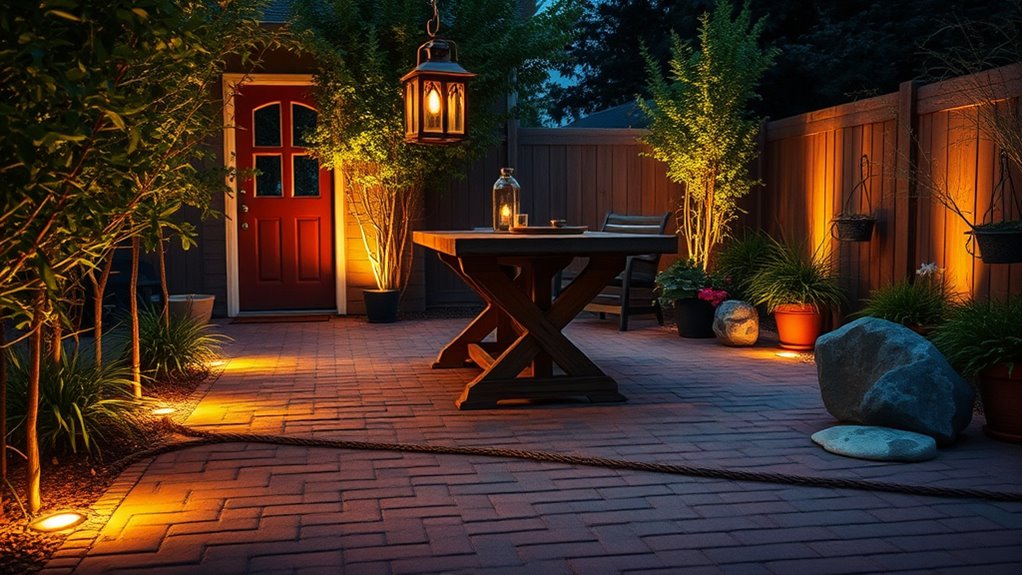

To add outdoor lighting to your paths and patios, focus on safety and ambiance by placing lights along walkways with 3-4 feet spacing and highlighting key features like gardens or water elements. Use solar fixtures for eco-friendly, easy-to-install options that shed a warm glow without glare. Layer different styles, such as string lights or spotlights, to create depth and inviting atmospheres. Keep in mind lighting placement and adjustment to make certain a well-lit, beautiful outdoor space—discover more tips to perfect your setup.
Key Takeaways
- Use solar-powered fixtures for eco-friendly, low-maintenance illumination along walkways and patios.
- Place lights 3 to 4 feet apart to ensure even and safe pathway lighting.
- Layer different lighting types, like path lights and accent fixtures, to create depth and ambiance.
- Position fixtures in sun-exposed areas, avoiding shadows from trees or structures for optimal brightness.
- Select fixtures that match your outdoor decor to enhance aesthetic appeal and safety.

Are you ready to transform your outdoor space with effective lighting? If so, understanding the basics of outdoor lighting for paths and patios can make a significant difference in both aesthetics and safety. One of the simplest ways to enhance your landscape is by incorporating solar fixtures, which harness sunlight during the day to provide eco-friendly illumination at night. These fixtures are easy to install, cost-efficient, and require minimal maintenance, making them popular choices for illuminating walkways and patio areas. When planning your landscape design, consider the placement of solar path lights along walkways to create a guiding line that not only looks attractive but also ensures safe passage after dark. Solar fixtures come in various styles, from sleek modern designs to rustic lanterns, allowing you to match your outdoor lighting with your existing decor.
Effective outdoor lighting begins with a thoughtful landscape design. You want your lighting to highlight key features without overwhelming the space or causing glare. For paths, aim for a spacing that provides consistent illumination without creating dark spots. Typically, placing solar fixtures about 3 to 4 feet apart works well, but you can adjust based on the brightness of your chosen lights and the width of your walkway. For patios, focus on creating ambient lighting that invites relaxation and socializing. String lights or small, low-voltage fixtures can add a warm glow that enhances the overall ambiance. When integrating solar fixtures into your landscape design, think about layering different types of lighting—such as spotlights for focal points, pathway lights for safety, and accent lights for decorative elements—to create depth and visual interest. Additionally, considering the types of lighting available can help you choose the best fixtures for your needs and style.
Positioning your solar fixtures strategically is key to maximizing their effectiveness. Place them in areas where they can get direct sunlight during the day, avoiding shade from trees or structures that might diminish their brightness. Keep in mind that many solar fixtures have adjustable heads, allowing you to direct the light precisely where you want it. When designing your outdoor lighting, consider the overall layout and flow of your space. A well-planned arrangement not only improves safety but also accentuates your landscape’s best features, such as a water feature, garden bed, or architectural element. Remember to test your lighting setup after installation to ensure it provides adequate illumination and creates the desired atmosphere. With a little planning and the right fixtures, your paths and patios can become inviting, safe, and visually stunning nightscapes that complement your outdoor lifestyle.
Frequently Asked Questions
What Are the Best Energy-Efficient Outdoor Lighting Options?
You should choose energy-efficient outdoor lighting options like solar lights and LED technology. Solar options harness sunlight during the day, reducing electricity use and costs, making them eco-friendly and easy to install. LED lights consume less energy and last longer than traditional bulbs, providing bright illumination without high energy bills. Combining solar-powered LEDs gives you an effective, sustainable lighting solution for your paths and patios, saving you money and energy.
How Do I Prevent Glare From Outdoor Lights?
To prevent glare from outdoor lights, focus on proper fixture placement and glare control techniques. Position fixtures so they direct light downward or at an angle away from eye level, reducing harsh reflections. Use fixtures with shields or diffusers to soften the light and limit glare. Adjusting the height and angle of your lights also helps, ensuring illumination enhances your space without causing discomfort or visual disturbance.
Can Outdoor Lighting Be Installed in Rainy or Humid Weather?
Yes, you can install outdoor lighting in rainy or humid weather if you use weatherproof fixtures. These fixtures are designed to withstand moisture and prevent water damage. However, it’s best to plan installation during dry conditions or when rain is not imminent, as wet installation can cause electrical issues or delays. Properly sealing connections and choosing appropriate fixtures guarantees your outdoor lighting remains durable and safe in any weather.
What Are the Maintenance Requirements for Outdoor Lighting Fixtures?
Think of your outdoor lighting as a garden’s heartbeat, needing regular care. You’ll want to check your fixtures periodically, cleaning away dirt and debris, to keep them shining brightly. When bulbs flicker or dim, replace them promptly to maintain ambiance. Regular fixture cleaning prevents buildup and corrosion, ensuring longevity. With consistent maintenance, your outdoor lights stay vibrant, guiding your pathway and patio with dependable brilliance.
How Do I Choose Lighting That Enhances Landscape Features?
To enhance landscape features, choose lighting that highlights focal points like trees, sculptures, or water features. Use different lighting color temperatures—warm for cozy areas, cool for modern looks—to create the desired mood. Position fixtures carefully to draw attention without overwhelming the scene. Adjust angles and brightness to accentuate textures and shapes, making your landscape visually appealing at night and emphasizing its most attractive elements.
Conclusion
By now, you’re well-equipped to brighten up your paths and patios with confidence. Remember, proper outdoor lighting not only enhances your space’s beauty but also keeps it safe. Don’t wait for darkness to fall before realizing you’re in the dark—get started today. With a little planning and the right fixtures, you’ll have a welcoming, well-lit outdoor haven in no time. Light up your life and turn your outdoor areas into the envy of the neighborhood!