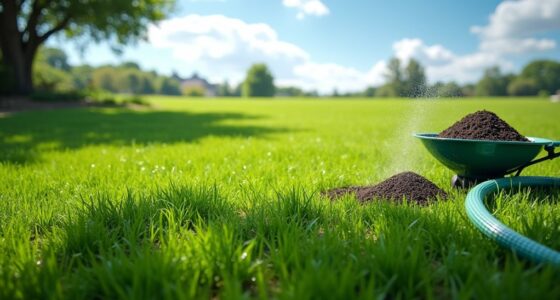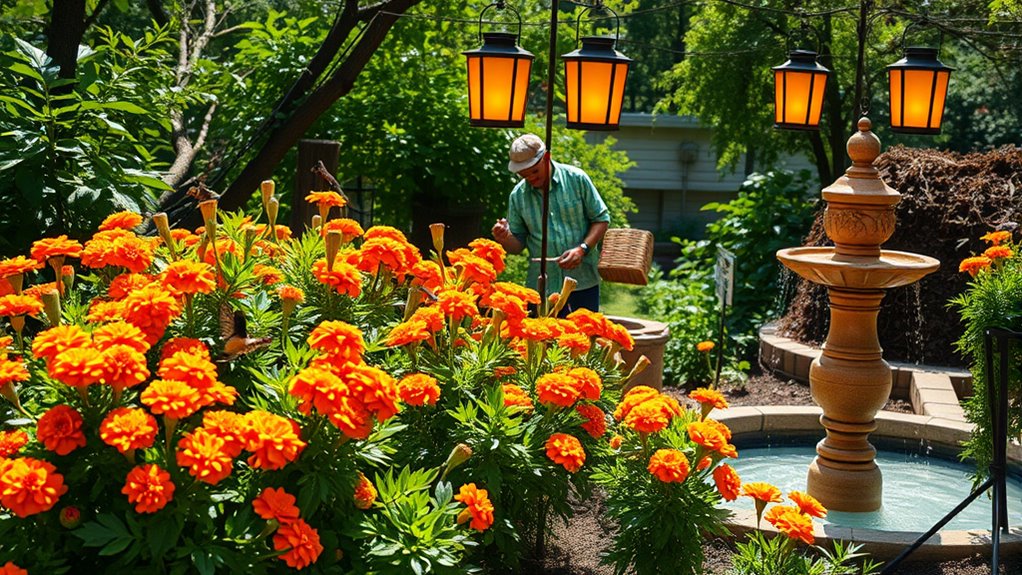

To control mosquitoes naturally, focus on habitat modification by removing or treating standing water where they breed, such as emptying containers or fixing drainage. Introduce biological agents like mosquito-eating fish or natural larvicides such as Bti to target larvae safely. Maintain your yard with proper drainage, plant native vegetation, and keep water moving in features. Combining these eco-friendly methods creates a healthier environment and reduces mosquito numbers—you’ll find more effective tips as you explore further.
Key Takeaways
- Use mosquito-eating fish and biological larvicides like Bti for eco-friendly larval control.
- Regularly eliminate or cover standing water to prevent mosquito breeding sites.
- Enhance drainage and landscape features to reduce stagnant water accumulation.
- Incorporate native plants that absorb excess water and promote yard health.
- Combine biological agents with habitat modifications for a sustainable, chemical-free mosquito management approach.
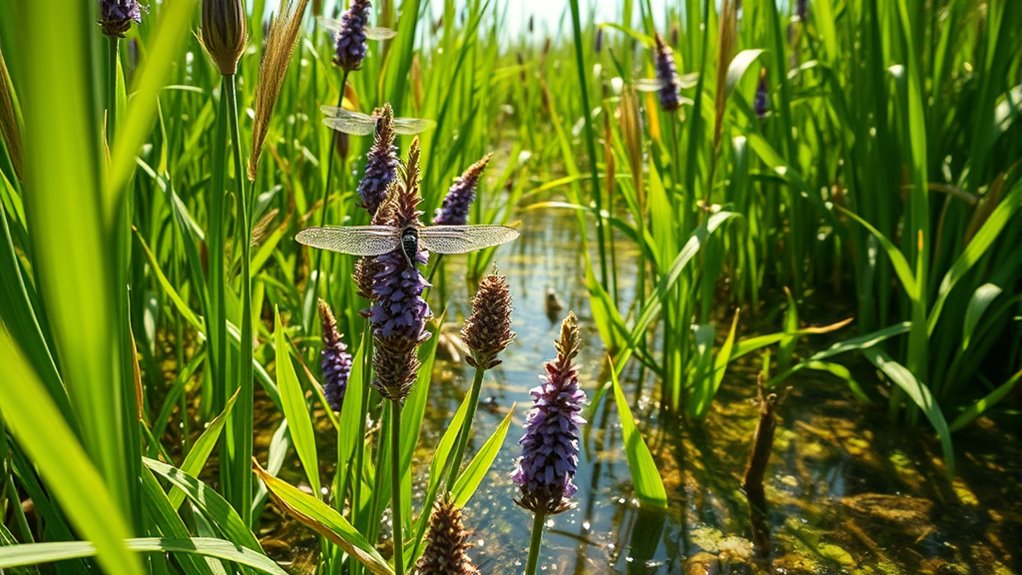
Alongside biological agents, habitat modification plays a vital role in natural mosquito control. Mosquitoes need stagnant water to breed, so reducing or eliminating these breeding sites can drastically lower their numbers. You should regularly empty or clean items that collect water, such as buckets, planters, birdbaths, and old tires. If you have a pond or water feature, consider installing aeration devices or fountains to keep the water moving, preventing it from becoming stagnant. Covering or draining areas with standing water is one of the simplest yet most effective ways to discourage mosquito breeding. You can also modify your landscape to improve drainage, ensuring that water doesn’t pool after rain. Planting native vegetation can help absorb excess water and reduce standing pools. These habitat modifications not only reduce mosquito breeding sites but also improve the overall health of your yard and garden. Additionally, understanding the lifecycles of mosquitoes can help you target specific stages and implement more effective control measures.
Implementing biological agents and habitat modification together creates a thorough, eco-friendly approach to mosquito control. By introducing mosquito-eating fish or applying larvicides like Bti, you target mosquito larvae directly and safely. Simultaneously, by removing standing water and redesigning your landscape, you eliminate the environments where mosquitoes thrive. This dual approach minimizes the need for chemical repellents or sprays, making your outdoor space safer for your family, pets, and beneficial insects. Natural mosquito control methods like these are sustainable, cost-effective, and reliable, giving you peace of mind knowing you’re taking proactive steps to protect your health while respecting the environment.
Frequently Asked Questions
Are Natural Methods Effective Against All Mosquito Species?
Natural methods can be effective against some mosquito species, but their success depends on species adaptability and regional effectiveness. You might find certain natural repellents or habitat modifications work well for local species, but others are more resilient and less affected. It’s important to contemplate the specific mosquito species in your area and adapt your control strategies accordingly. Natural methods are a useful part of an integrated approach, but they may not eliminate all species completely.
Can Natural Control Strategies Be Used Indoors Safely?
Yes, you can use natural control strategies indoors safely, but you should consider indoor air quality and chemical interactions. Natural methods like citronella candles or essential oils can help reduce mosquito presence without harmful chemicals. Still, guarantee good ventilation and avoid overuse, as some oils might irritate your air quality or cause allergic reactions. Always follow product instructions for safe, effective mosquito control inside your home.
How Long Do Natural Mosquito Repellents Typically Last?
Natural mosquito repellents usually last anywhere from a quick 30 minutes to around 2 hours, but it really depends on the product and conditions. The lifespan duration can feel like an eternity or just a blink, but their effectiveness longevity is generally shorter than chemical options. To keep bugs at bay, reapply frequently, especially if you’re sweating or it’s windy. Always follow product instructions for the best results.
Are There Any Environmental Impacts From Natural Mosquito Control?
Yes, natural mosquito control has minimal environmental impacts. It helps maintain ecological balance by avoiding harmful chemicals that can disrupt local wildlife and water quality. Using natural methods reduces chemical runoff, protecting plants, insects, and aquatic life. You’ll find that these eco-friendly strategies support a healthier environment while effectively controlling mosquito populations, ensuring you enjoy outdoor spaces without compromising the ecosystem’s integrity.
Can Natural Methods Completely Eliminate Mosquito Populations?
You can’t completely eliminate mosquito populations with natural methods alone, but biological control can markedly reduce them. Strategies like introducing natural predators or using biological larvicides help manage numbers effectively. While chemical alternatives may be needed in some cases, relying solely on natural methods often isn’t enough to fully eradicate mosquitoes, especially in large or heavily infested areas. Combining approaches provides the best chance for effective control.
Conclusion
By adopting natural mosquito control strategies, you can protect your environment and health without harmful chemicals. For example, planting mosquito-repelling herbs like citronella or introducing fish that eat larvae can make a real difference. Imagine a community where residents work together, reducing mosquito populations naturally and enjoying fewer bites and disease risks. Taking simple, eco-friendly steps not only benefits you but also helps preserve the local ecosystem for everyone’s safety and comfort.