
TL;DR
A Veranda writer says cape plumbago planted in front-door containers began producing new blooms within weeks. The South African shrub is described as sun-loving and low-maintenance, but the report is a personal, early-season account, not proof that it is foolproof in every climate or setting.
A Veranda writer says cape plumbago planted in front-door containers began producing new blooms within a few weeks, making the South African shrub a promising option for sunny, warm entryways. The account is an early personal report, however, and does not establish that the plant will thrive without care or suit every climate.

Get furniture and decor delivered free with Prime
- Fast, free delivery on millions of items
- Prime Video, Amazon Music and more included
- Member-only deals all year
The writer selected Plumbago auriculata, commonly called cape plumbago, after looking for a flowering plant that could tolerate sun and heat and would not need frequent watering. The report describes it as a deer-resistant shrub with clusters of blue flowers that attract pollinators. It can grow as a shrub, climb with support, or be planted in a container.
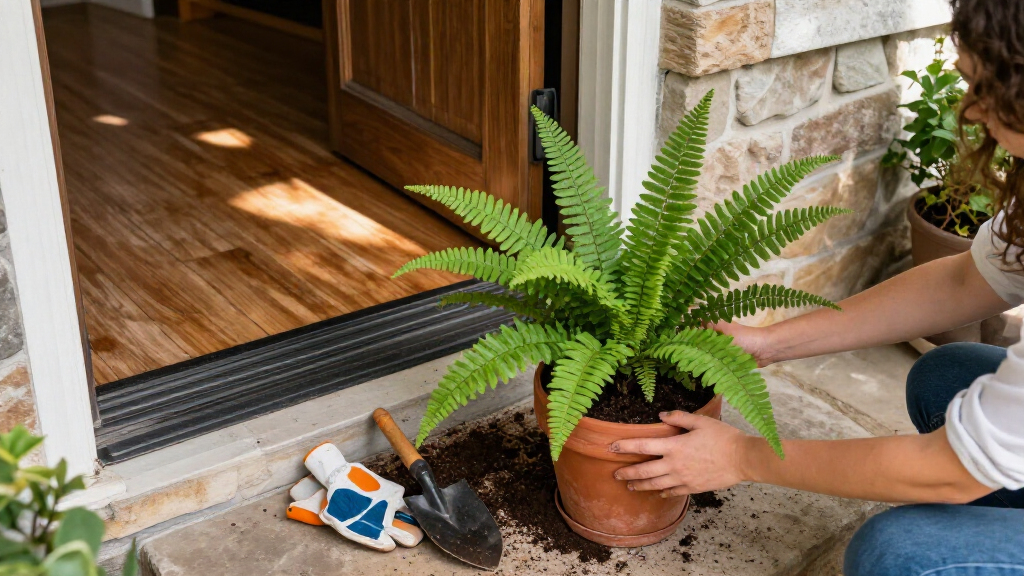
For the planting, the writer bought two one-gallon plants and four pint-sized plants, along with potting mix. She removed some old soil from the containers, loosened the roots, and set each plant into a space about twice the width and depth of its root ball. She then backfilled with potting mix and added balanced, slow-release fertilizer near the base, taking care not to put it directly against the stems.
After a few weeks, the plants were producing blooms almost daily and beginning to grow upward and spill over the container edges, according to the report. Because the writer’s area had received steady rain, she had watered them with a hose only once. The article says watering should generally be one to two times a week depending on how dry the soil surface is; that guidance is not a fixed schedule for every location or pot.
A Promising Option for Sunny Entries
For people choosing flowers for a front porch, the report offers a practical candidate that can add blue blooms and trailing growth without requiring daily watering in the conditions described. Its flexibility also means gardeners can use it in a container or train it upward on a support, rather than treating it only as a conventional shrub.
The main qualification is that “low-maintenance” does not mean maintenance-free. Water needs depend on rainfall, soil, container size, and heat. The writer says she plans to watch for dry soil, consider additional fertilizer, and prune if needed. Her experience may help readers decide what to try, but it is not a guarantee of results in other gardens.
Products Worth Considering

Ring Floodlight Cam 4K Pro (2nd Gen) Outdoor Security Camera

Philips Hue Play Gradient Light Tube, Large, Black

Samsung 55-Inch S90H OLED 4K UHD Smart TV Bundle with Full-Motion Mount and Surge Protector
As an affiliate, we earn on qualifying purchases.
What the Growing Guide Says
The Veranda report says cape plumbago is suited to USDA hardiness zones 8–11 and can tolerate winter temperatures that dip to roughly 20–25°F. Those figures describe the plant’s reported climate tolerance; they do not mean it will perform identically in every zone, microclimate, or exposed container.
The writer’s plan is still unfolding. She planted the flowers in spring and says they had started to bloom and spread within weeks. She has not yet established whether the potted plants will continue flowering into fall or reach their reported potential height of at least six feet. She has bought obelisks for the plants to climb as they grow.
Season-Long Results Are Still Pending
The report covers only the first few weeks after planting. It does not confirm whether the plants will flower through fall, reach six feet in containers, or require more fertilizer or pruning as the summer progresses. Those outcomes depend on growing conditions, and the writer says she will continue monitoring the plants.
The article also does not provide a location-specific care plan or test how the shrub performs across different climates and container setups. Its watering observation reflects a rainy period in the writer’s area. Readers should not assume that one watering per season will be enough; the source’s guidance is to check soil dryness and adjust watering accordingly.
Watch for Growth Through Summer
The writer plans to monitor the containers through summer, water as conditions require, and assess whether the plants need additional fertilizer or pruning. She will also see whether the shoots use the obelisks and whether flowering continues into fall. The next useful update would be a report on those longer-term results; none is included in the account provided.
Key Questions
What is cape plumbago?
Cape plumbago (Plumbago auriculata) is a flowering shrub from South Africa. The report describes it as a plant with blue flower clusters that can grow as a shrub, climb with support, or be kept in a container.
How often should cape plumbago be watered?
The report gives one to two waterings per week as general guidance, depending on how dry the soil is at the top. Rainfall and container conditions affect the need, so the writer’s single watering during a rainy stretch should not be treated as a standard schedule.
Can cape plumbago grow in a pot?
Yes. The Veranda writer planted cape plumbago in front-door containers and reported early blooms and growth spilling over the sides. Her account covers only the first few weeks, so the plants’ eventual size and season-long performance remain unconfirmed.
What climate is cape plumbago suited to?
The report lists USDA zones 8–11 and says the plant can tolerate temperatures around 20–25°F. That information does not guarantee survival in every location, particularly for plants growing in exposed containers.
Source: veranda.com