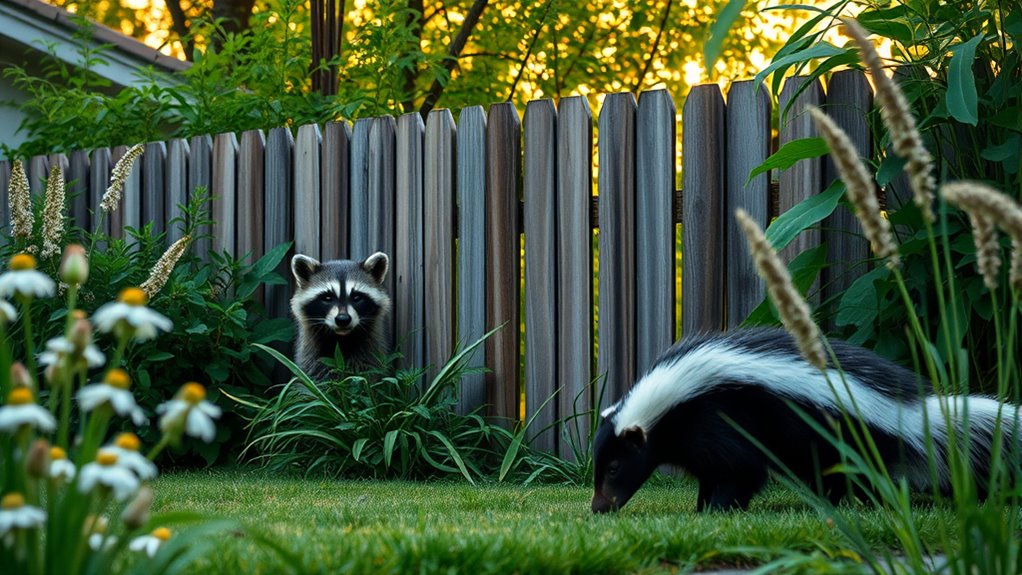

To keep raccoons and skunks out of your backyard humanely, start by removing attractants like open trash cans, uncovered bird feeders, and compost piles. Install fences at least four feet high and bury them slightly underground to prevent digging under. Use motion-activated sprinklers or scents like garlic or ammonia to deter these animals naturally. Maintaining a tidy, clutter-free yard reduces hiding spots, helping you create a safe outdoor space—discover more tips to keep wildlife at bay peacefully.

Get furniture and decor delivered free with Prime
- Fast, free delivery on millions of items
- Prime Video, Amazon Music and more included
- Member-only deals all year
Key Takeaways
- Install sturdy, tall fences buried underground to prevent raccoon and skunk entry and digging.
- Secure trash cans with tight-fitting lids and enclose compost bins to eliminate food sources.
- Use motion-activated sprinklers and natural repellents like garlic or ammonia-soaked rags to deter animals humanely.
- Remove dense shrubs, clutter, and open compost piles to reduce hiding spots and attractants.
- Regularly clean bird feeders and manage spills to minimize food cues for wildlife.

Your backyard is more than just a space for gardening or relaxation—it’s a vibrant habitat teeming with wildlife. Whether you’re into urban gardening or simply enjoy bird feeding, your outdoor area can attract a variety of creatures, both charming and challenging. Raccoons and skunks often find their way into backyards, drawn by food sources and the promise of easy foraging. While they’re part of the natural ecosystem, having them rummage through your space can quickly become problematic. The key is learning how to keep these animals away humanely, without causing harm or disrupting their natural behaviors.
Your backyard is a lively wildlife habitat that requires humane, thoughtful deterrents to keep unwanted animals at bay.
Urban gardening is a popular way to bring nature into city life, but it can unintentionally attract raccoons and skunks. If you’re planting vegetables, fruits, or even flowers with edible parts, you might be creating an open invitation. Bird feeding, while a delightful activity, can also serve as a tempting snack bar for these animals. Spilled birdseed or uncovered feeders can easily become a raccoon or skunk’s dinner. To prevent this, use squirrel-proof and raccoon-resistant bird feeders, and clean up any fallen seed regularly. Securing trash cans with tight-fitting lids is another essential step, as these animals are notorious for rummaging through garbage for leftovers.
Creating physical barriers is one of the most effective humane methods to deter unwanted visitors. Installing fences that are at least four feet tall and buried a few inches underground can prevent raccoons and skunks from digging underneath. Avoid leaving open compost piles, as they’re a magnet for these critters. Instead, use enclosed compost bins with secure lids to manage organic waste responsibly. Using humane deterrents** like motion-activated sprinklers** can also effectively discourage animals without causing harm, encouraging them to stay away naturally.
You can also encourage natural deterrents. For example, strong smells like garlic or ammonia-soaked rags can keep raccoons and skunks at bay when placed strategically around your yard. Motion-activated sprinklers are another humane solution—they startle animals without causing harm and deter them from returning. Additionally, trimming back dense shrubs and removing clutter reduces hiding spots, making your yard less inviting for these nighttime visitors.
Ultimately, maintaining a balance between enjoying your backyard and respecting local wildlife is essential. Humane deterrents and thoughtful landscaping go hand-in-hand to keep raccoons and skunks away while preserving the integrity of your outdoor space. With a bit of planning and consistent effort, you can enjoy your urban oasis without unwanted animal visitors disrupting your peace. Your yard can remain a safe, welcoming environment for the creatures you wish to see while keeping the mischievous ones at a respectful distance.
raccoon proof trash cans with secure lids
As an affiliate, we earn on qualifying purchases.
As an affiliate, we earn on qualifying purchases.
Frequently Asked Questions
What Are the Natural Predators of Raccoons and Skunks?
You should know that natural predators of raccoons and skunks include larger predators like coyotes, foxes, and owls, which hunt them mainly at night. Their urban adaptations sometimes help them avoid predators, but their dietary habits also influence vulnerability. Raccoons are more adaptable, while skunks tend to stick to their scent defenses. To keep them away humanely, avoid attracting them with food and secure trash, helping them stay safe without threats.
How Do Raccoons and Skunks Affect Local Ecosystems?
You might notice raccoons and skunks impact local ecosystems by altering food availability, especially as urban expansion encroaches on their habitats. They help control insect and rodent populations, but overpopulation can harm native species and disrupt balance. Their foraging often leads to increased competition for resources, and their presence may influence plant diversity. Managing their activity humanely guarantees ecosystems stay healthy without causing undue harm or imbalance.
Are There Legal Restrictions on Humane Wildlife Removal?
Yes, there are legal considerations when removing raccoons and skunks humanely. You need to check local regulations and often obtain wildlife permits before taking action. Laws are in place to protect these animals and ensure humane treatment, so unauthorized removal could lead to fines or other penalties. Always research your area’s specific rules and consult with wildlife authorities to ensure you’re acting within legal boundaries.
Can Raccoons and Skunks Transmit Diseases to Humans?
Yes, raccoons and skunks can transmit diseases to humans, posing significant human health risks. They carry pathogens like rabies, leptospirosis, and parasites that can infect people through bites, scratches, or contact with contaminated surfaces. You should avoid handling or approaching these animals, especially if they’re acting abnormally. Always use humane methods to keep them away and guarantee your safety by practicing good hygiene and avoiding direct contact with wildlife.
What Are the Signs of Raccoon or Skunk Infestation?
You can spot raccoon or skunk infestations through damage indicators like torn trash bags, chewed wires, or disturbed garden beds. Scent clues such as a strong, musky odor also suggest their presence. If you notice scratched surfaces, footprints, or droppings near your home, it’s a sign they’ve been around. Act quickly to humanely deter these animals and protect your property from further damage.
Conclusion
So, next time your trash cans mysteriously become raccoon rendezvous points or skunks decide your garden’s the latest hotspot, remember—you’ve got options. No need for evil traps or toxic sprays; just a little clever planning and a dash of patience. With these humane tricks, you’ll keep your yard critter-free and your conscience clear. Who knew that living in harmony with wildlife could be so easy—and maybe even a little entertaining?
Halloween Picks
halloween
As an affiliate, we earn on qualifying purchases.