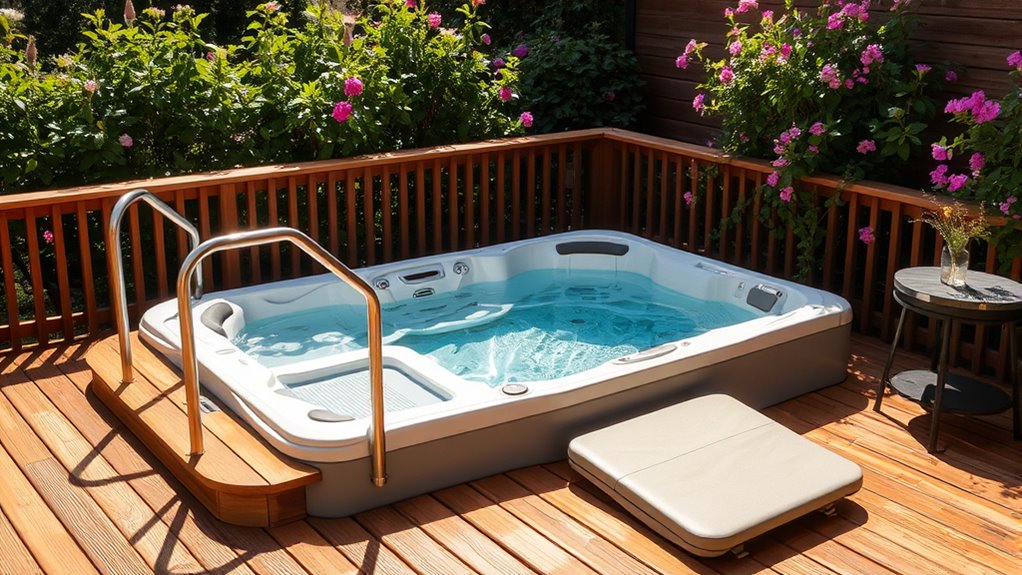

When setting up your hot tub or spa, choose a flat, stable spot free of debris and overhanging branches, and guarantee proper drainage. Safety features like non-slip surfaces, sturdy handrails, and clear pathways help prevent accidents. Keep electrical components compliant with local codes and away from water, and regularly inspect connections and water quality for safe operation. For a secure, enjoyable experience, understanding these site and safety tips is essential before you begin.
Key Takeaways
- Select a flat, stable site with proper drainage, free of debris and obstructions for safety and easy maintenance.
- Ensure electrical wiring is installed by a licensed electrician, meeting local codes and rated for outdoor use.
- Incorporate non-slip surfaces and sturdy handrails to promote safe entry, exit, and prevent slips.
- Regularly inspect water quality, chemical levels, and electrical components to maintain safety and prevent hazards.
- Position the spa for privacy and accessibility, keeping the area free of tripping hazards and ensuring easy access for maintenance.
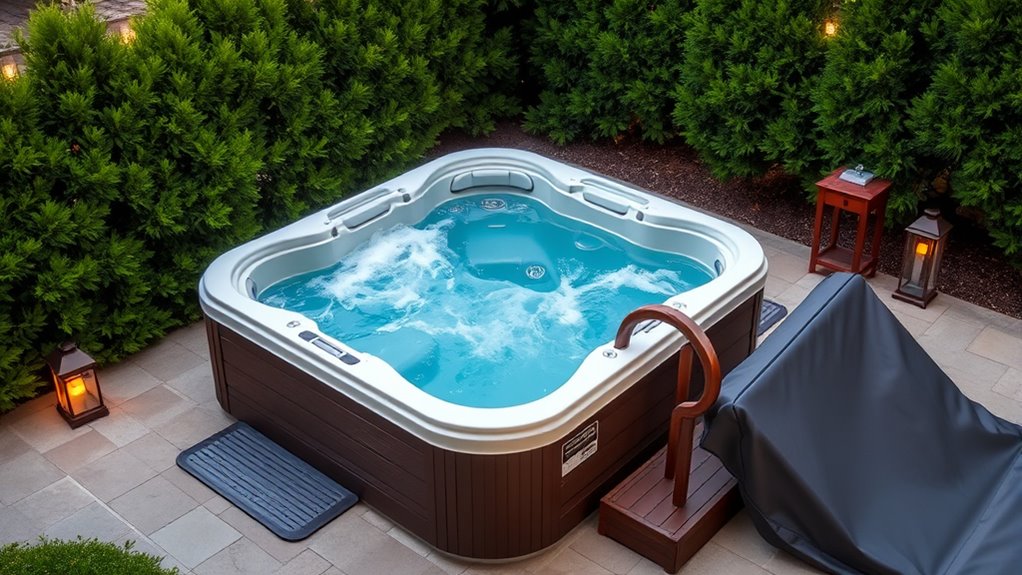
Setting up your spa correctly is essential to guarantee safety and maximum enjoyment. The first step involves ensuring the electrical wiring is properly installed and meets local code requirements. This is not a task to take lightly, as incorrect wiring can lead to dangerous electrical shocks or fire hazards. If you’re not experienced with electrical work, it’s best to hire a licensed electrician. They’ll make sure the wiring is grounded correctly, connections are secure, and the circuit is protected with the right breaker size. Proper electrical setup reduces the risk of malfunction and ensures your spa operates safely for years to come. Always verify that all electrical components are rated for outdoor use and compatible with your spa model.
Proper electrical wiring and professional installation ensure safe, reliable spa operation and compliance with local codes.
Once the electrical wiring is in place, focus on chemical maintenance. Proper chemical balance is key to keeping the water clean, safe, and enjoyable. Regularly testing your spa water with test strips or a testing kit helps you monitor pH levels, alkalinity, and sanitizer concentrations. Keeping the pH between 7.2 and 7.8 prevents corrosion of the spa’s components and helps sanitizers work effectively. Maintaining the right sanitizer levels, whether chlorine or bromine, ensures bacteria and algae don’t thrive in your water. Remember, adding chemicals in the correct order and dosage is vital. Always follow the manufacturer’s instructions, and avoid over- or under-treating the water, which can cause skin irritation or damage to the spa. Additionally, using high-quality test kits can improve the accuracy of your water analysis.
Choosing a proper site for your spa also plays a role in safety and ease of maintenance. Place your spa on a flat, stable surface that can support its weight when filled. Keep the area clear of debris, overhanging branches, and obstacles that could cause tripping hazards or interfere with access for maintenance. Ensure there’s adequate drainage around the spa to prevent water pooling, which could lead to electrical hazards or structural issues.
In addition to electrical wiring and chemical maintenance, consider privacy and accessibility. Position your spa where you can enjoy it comfortably without exposing yourself to neighbors or passersby. Make sure there’s easy access to water and power sources, and install safety features such as non-slip surfaces and sturdy handrails if needed. Regularly inspect your setup for signs of wear or damage, especially to the electrical components and water quality. Staying vigilant with these safety measures helps you enjoy your spa responsibly and extends its lifespan. Proper setup isn’t just about comfort—it’s about creating a safe environment where you can relax and unwind without worry.
Frequently Asked Questions
Can I Install a Hot Tub Indoors Safely?
Yes, you can install a hot tub indoors safely if you guarantee proper ventilation to maintain indoor air quality and prevent humidity buildup. Keep the area well-ventilated to avoid mold and mildew, and use dehumidifiers if needed. Also, seal and inspect the space regularly to prevent pests from entering. Proper installation and ongoing maintenance help create a safe, enjoyable indoor hot tub experience without risking air quality or pest issues.
What Are the Best Tools for Spa Setup?
Did you know that proper spa setup can extend your hot tub’s lifespan by up to 30%? For the best tools, start with a quality wrench set for heater installation, ensuring secure connections. Use a spa filter wrench for easy filter changes, and have a screwdriver and pliers handy for assembly. These tools help you efficiently install and maintain your hot tub, ensuring safety and longevity.
How Often Should I Check Water Chemistry?
You should check your water chemistry at least 2-3 times a week, especially during heavy use or temperature changes. Regular water testing helps you monitor pH, alkalinity, and sanitizer levels, ensuring proper chemical balancing. By staying consistent with testing, you can prevent issues like bacteria growth or corrosion, keeping your hot tub safe and enjoyable. Adjust chemicals as needed based on your tests for ideal water quality.
Are There Any Specific Electrical Codes to Follow?
Think of electrical wiring and grounding requirements as the backbone of your hot tub’s safety. You must follow local electrical codes, ensuring wiring is properly insulated and grounded to prevent shocks. Use GFCI outlets for added protection, and hire a licensed electrician to handle the installation. Ignoring these rules is like leaving your spa vulnerable to electrical storms—dangerous and risky. Always prioritize compliance to keep your relaxation safe and worry-free.
What Maintenance Is Needed for Outdoor Spa Covers?
You should regularly perform cover maintenance by inspecting for tears or damage and replacing it if needed. Cover cleaning is essential; use a mild soap and water or a specialized spa cover cleaner to remove dirt, debris, and mildew. Keep the cover dry and clear of debris to prolong its lifespan. Applying a UV protectant periodically helps prevent cracking and UV damage, ensuring your outdoor spa cover stays in good shape longer.
Conclusion
Now that you’ve got the blueprint for your hot tub and spa setup, think of it as planting a cozy oasis in your backyard. With safety and proper site planning, you’ll create a haven where relaxation flows as freely as a gentle stream. Keep safety top of mind and your space inviting, and your spa will become a sparkling jewel in your outdoor kingdom—an oasis of peace perfectly crafted by your hands.