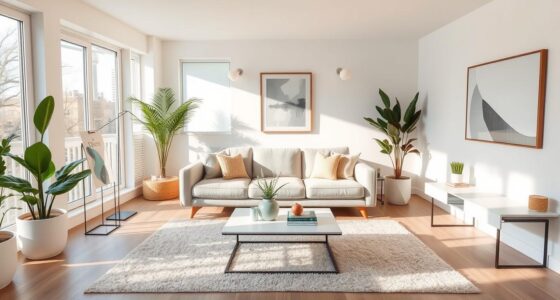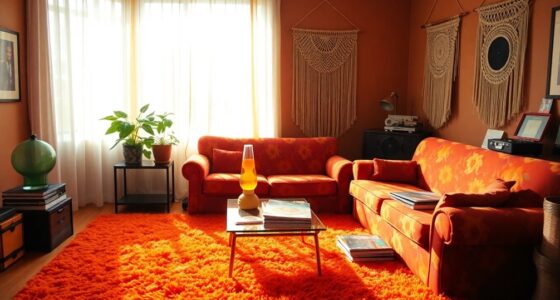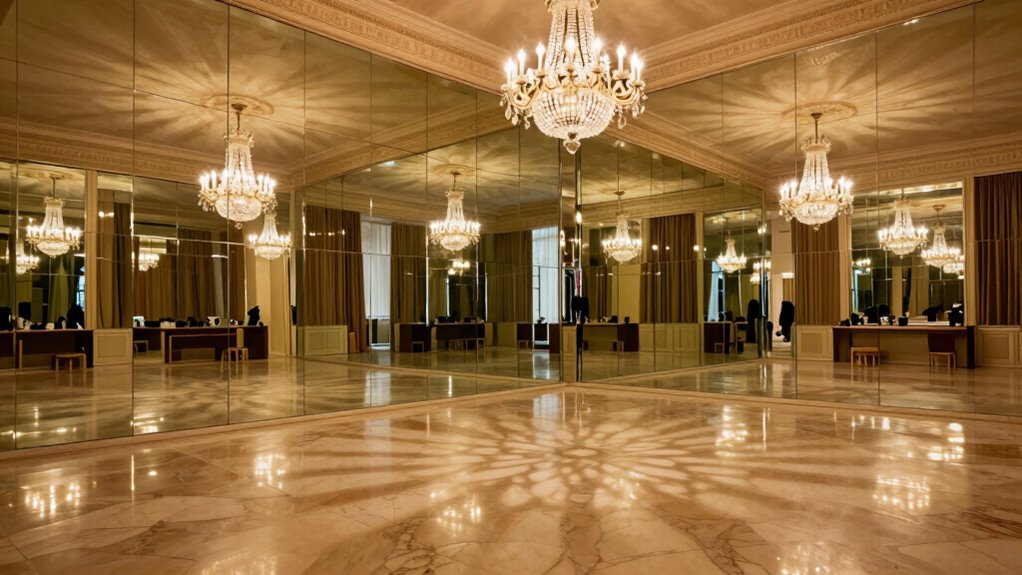

The scale of a large mirror is essential because it affects how light interacts in your space, making it appear more open, bright, and inviting. A properly sized mirror complements your room’s proportions, preventing it from feeling overwhelming or too small. When placed correctly, it reflects natural and artificial light effectively, enhancing the overall mood. If you want to understand how to balance mirror size and lighting for the perfect ambiance, keep exploring the details to create a harmonious environment.

Get furniture and decor delivered free — and shop member deals
- Fast, free delivery on millions of items
- Access to Prime Big Deal Days deals on October 6–7
- Prime Video, Amazon Music and more included
Key Takeaways
- Proper scale ensures the mirror complements room size without overwhelming or underwhelming the space.
- Larger mirrors require strategic lighting to evenly illuminate and prevent glare or shadows.
- Correct scale enhances natural light reflection, making the room appear brighter and more spacious.
- Matching mirror size with lighting fixtures creates visual harmony and cohesive interior design.
- Scale influences the overall ambiance, emphasizing either a statement piece or subtle elegance.

Large mirrors with lighting can dramatically transform any space, making it appear bigger, brighter, and more inviting. The key to achieving this effect is understanding how scale impacts the overall ambiance. When you choose a mirror, its size should complement the room’s dimensions, not overpower or underwhelm the space. Proper mirror placement is essential; placing a large mirror opposite windows or light sources maximizes natural light and creates an illusion of depth. This strategic positioning helps bounce light around the room, making it feel more open and airy. Additionally, considering mirror placement can help optimize the visual impact and lighting balance in your space. Lighting fixtures also play a critical role when working with large mirrors. The right fixtures can enhance the mirror’s effect, emphasizing its scale while providing functional illumination. For a balanced look, avoid harsh, direct lighting that can create glare or shadows. Instead, opt for soft, diffused lighting that complements the mirror’s size and placement. Wall-mounted sconces or LED strips installed along the edges of the mirror can add a subtle glow, emphasizing its scale without overwhelming the space. When selecting lighting fixtures, consider the color temperature; warmer tones tend to create a cozy atmosphere, while cooler tones can make a room feel more modern and crisp. The scale of the mirror also influences how you approach lighting. If the mirror is particularly large, you might need multiple fixtures or a continuous light source to evenly illuminate its surface. This prevents uneven lighting, which can detract from the mirror’s visual impact. Additionally, the height at which you hang the mirror affects how the light interacts with it. Positioning the bottom of the mirror at eye level ensures maximum reflection and light distribution, making the space feel more balanced. Don’t forget that the scale of your mirror should harmonize with the room’s overall design. If your space is minimalist, a large, sleek mirror with integrated lighting fixtures can serve as a statement piece without cluttering the aesthetic. Conversely, in more elaborate rooms, choose a mirror with ornate framing that matches other design elements. Ultimately, the scale of your mirror and the lighting fixtures you select work together to shape the room’s atmosphere. When well coordinated, they create a cohesive look that enlarges the space visually, enhances lighting, and elevates your interior design. To further enhance the visual harmony, consider how the overall scale of accessories and furniture interacts with your mirror to create a balanced environment. Ensuring that the lighting design aligns with your mirror’s scale is crucial for achieving a seamless and harmonious effect. Paying attention to proportionality between furniture, accessories, and mirrors can significantly impact the overall aesthetic. A thoughtful approach to scale considerations can truly elevate your interior styling.
large wall mirror with integrated lighting
As an affiliate, we earn on qualifying purchases.
As an affiliate, we earn on qualifying purchases.
Frequently Asked Questions
How Does Scale Affect Mirror Installation Complexity?
Scale directly impacts mirror installation complexity because larger mirrors require more precise handling and secure mounting. You need to take into account the mirror frame’s size and strength, ensuring it can support the weight. The installation height becomes vital for safety and aesthetics, especially with big mirrors. You’ll need proper tools and possibly extra help to manage the size, making the process more challenging but essential for a secure, visually pleasing setup.
Can Small Mirrors Effectively Mimic Large Mirror Lighting Effects?
A small mirror is like a whisper of a larger reflection, unable to fully mimic the grandeur of a big mirror. It can diffuse light softly, creating a gentle glow, but it lacks the expansive reflection needed to truly imitate large mirror lighting effects. To achieve similar lighting diffusion and mirror reflection, you’d need multiple small mirrors strategically placed, which can complicate setup and reduce the seamlessness of the effect.
What Safety Considerations Are There for Large Mirror Installations?
When installing large mirrors, guarantee mirror durability by choosing high-quality materials and proper safety anchoring to prevent accidents. You should check that the wall can support the weight and use secure, heavy-duty brackets or mounting systems. Regularly inspect the anchoring points for stability, especially in high-traffic areas. Prioritize safety to avoid injuries, and consider professional installation to ensure the mirror remains securely in place over time.
How Does Mirror Scale Influence Room Acoustics?
You might worry large mirrors will amplify noise, but they actually influence room acoustics through acoustic reflection and sound diffusion. The scale of the mirror determines how sound waves bounce and scatter, affecting clarity and echo. Bigger mirrors can enhance sound diffusion, creating a more balanced acoustic environment. Embrace their potential to improve room ambiance, turning a simple mirror into a powerful tool for optimizing sound quality and comfort.
Are There Specific Lighting Types Better Suited for Large Mirrors?
LED illumination works best for large mirrors because it provides bright, even light without glare, enhancing visibility. Natural lighting is also ideal during the day, creating a soft, flattering glow. You should avoid harsh, direct lighting that causes reflections or shadows. Combining LED lights with natural daylight maximizes the mirror’s effectiveness, ensuring you get clear, well-lit reflections whether you’re getting ready or checking your appearance.
Conclusion
Remember, the scale of your mirrors and lighting isn’t just about size — it’s about making a statement that echoes your style. Like a grand symphony, the right proportions create harmony and balance in your space. When you choose wisely, you turn a simple reflection into a mesmerizing focal point. So, don’t just think small; think bold, think big — because the right scale transforms your environment from ordinary to extraordinary.
Halloween Picks
halloween
As an affiliate, we earn on qualifying purchases.