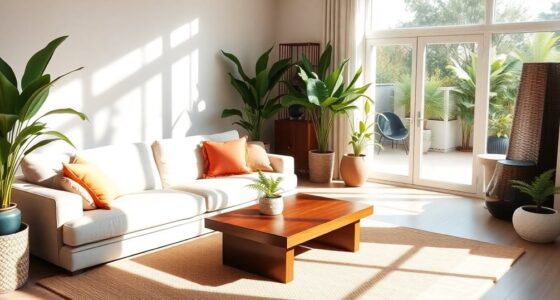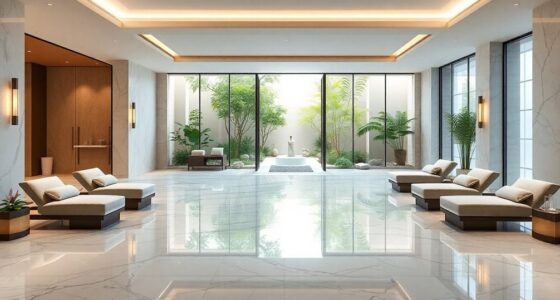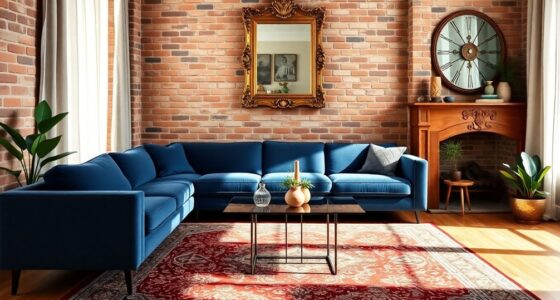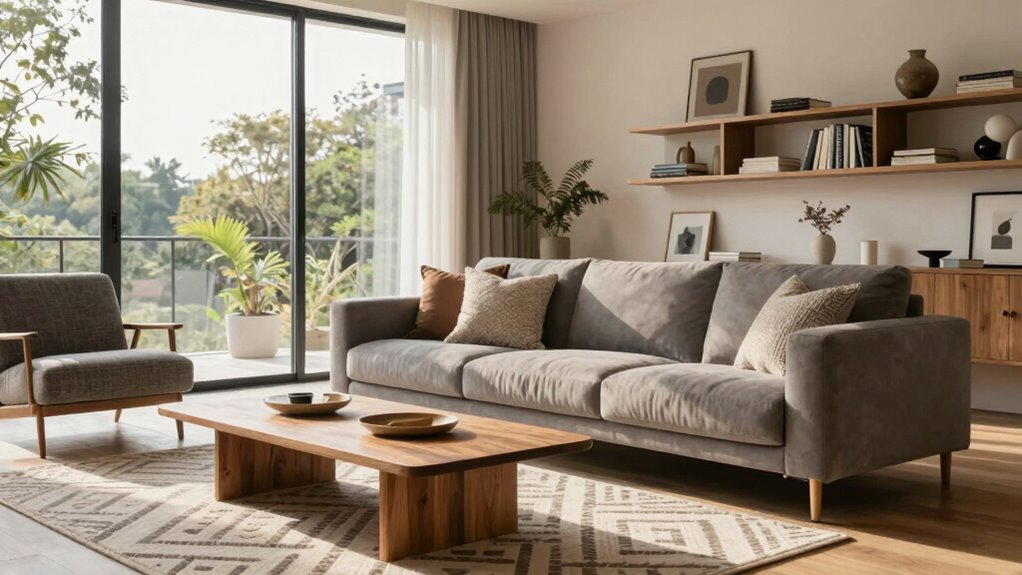
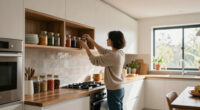
Great decor starts with better function because it guarantees your space is both practical and comfortable. When you prioritize purpose, every element serves a specific need, making your environment more efficient and user-friendly. Good function supports natural movement, reduces clutter, and enhances overall usability. This approach also helps your space stay relevant and adaptable over time. If you want to discover how balancing form and function can transform your space, keep exploring these ideas.

Get furniture and decor delivered free — and shop member deals
- Fast, free delivery on millions of items
- Access to Prime Big Deal Days deals on October 6–7
- Prime Video, Amazon Music and more included
Key Takeaways
- Prioritizing function ensures the space meets users’ daily needs, making decor more practical and effective.
- Good functional design optimizes space, reducing clutter and enhancing overall aesthetic appeal.
- Ergonomic considerations improve comfort and usability, creating a more inviting and user-friendly environment.
- Durable, practical materials support long-term beauty without sacrificing practicality.
- Function-focused design allows for adaptable, timeless decor that remains relevant as needs evolve.

Have you ever considered that prioritizing function over form can dramatically improve your projects? When you focus on the core purpose of a space or object first, your design naturally becomes more effective and satisfying. This approach emphasizes space optimization, guaranteeing every square inch serves a purpose rather than just looking good. By making function your foundation, you create environments that are not only visually appealing but also genuinely practical. This balance is especially important in tight spaces or multi-use areas where efficiency matters most.
Prioritize function to create practical, space-efficient environments that balance beauty and usability.
Ergonomic design plays a vital role here. When you tailor your spaces and furniture to fit human needs and behaviors, you enhance comfort and productivity. Instead of choosing aesthetic features that look nice but hinder movement or cause discomfort, you prioritize elements that support natural body mechanics. This means selecting furniture that promotes good posture, designing workspaces that reduce strain, and arranging elements to allow easy access and flow. When function guides your choices, your space becomes intuitive and user-friendly, encouraging longer use and satisfaction.
Focusing on function first also means paying attention to how your space will be used daily. Think about the activities, routines, and interactions that happen there. Do your furniture arrangements facilitate conversation? Is there enough storage to keep clutter out of sight? Are lighting and airflow optimized for comfort and energy efficiency? Addressing these questions early on helps you avoid costly redesigns later and ensures that your space truly supports its intended purpose. This proactive approach to design leads to a more organized, efficient environment that works with you, not against you. Additionally, understanding the importance of space planning can significantly enhance the overall functionality of your environment. Incorporating ergonomic principles into your design process ensures that your space supports natural movement and reduces fatigue, creating a healthier and more comfortable atmosphere. Recognizing the role of material selection can also contribute greatly to the longevity and practicality of your project.
By prioritizing function, you also make smarter material choices. Durable, easy-to-maintain materials may cost more upfront but save you time and money in the long run. You’ll find yourself less concerned with fleeting trends and more focused on creating a space that stands the test of time because it’s built around actual needs, not just aesthetics. This mindset fosters thoughtful design decisions that improve the overall quality of your project, making it both beautiful and sustainable. Incorporating appropriate technology can further boost the efficiency and adaptability of your space, ensuring it remains relevant as needs evolve.
Ultimately, when you put function first, your design becomes more than just attractive decor. It transforms into a well-thought-out space that maximizes usability, comfort, and efficiency. Incorporating ergonomic design principles ensures your environment supports natural movement and reduces fatigue, ultimately enhancing daily well-being. The result is a environment that genuinely enhances your daily life, proving that great decor often starts with a simple yet powerful principle: prioritize function over form.
ergonomic office chair for back support
As an affiliate, we earn on qualifying purchases.
As an affiliate, we earn on qualifying purchases.
Frequently Asked Questions
How Do I Determine the Most Important Functions for My Space?
To determine the most important functions for your space, start by analyzing how you’ll use it daily. Focus on space optimization and user comfort—think about your activities, storage needs, and flow. Prioritize elements that enhance usability, like seating, lighting, or work areas. Ask yourself what tasks are essential, and design around those needs. This approach guarantees your decor supports your lifestyle, making your space both functional and inviting.
Can Prioritizing Function Limit My Design Aesthetic Options?
Prioritizing function doesn’t lock you into a dull design; instead, it acts like the sturdy frame of a house, supporting your decor dreams. While a decor vs. aesthetics focus might seem like a tug-of-war, blending both creates a harmonious space. When function leads, your aesthetic choices become more intentional, allowing creativity to flourish within practical boundaries. This balance guarantees your space is both beautiful and livable, like art with a purpose.
What Are Common Mistakes When Focusing on Function First?
A common mistake is believing decorating myths that prioritize style over function, which can lead to cluttered or inefficient spaces. You might also overlook space optimization, sacrificing practicality for aesthetics. Focusing solely on function can cause you to ignore personal style, making your home feel sterile. To avoid these pitfalls, balance utility with your decorating vision, ensuring your space is both beautiful and livable.
How Long Should I Plan Before Implementing Functional Design?
You should plan at least a few weeks before implementing functional design, giving you time to optimize space and select the right lighting solutions. This planning period allows you to evaluate how different layouts impact space utilization and ambiance. Rushing these decisions can lead to clutter or poor lighting, so take your time to refine your plans. Proper planning guarantees your decor is both beautiful and highly functional.
Does Better Function Always Mean Less Style or Decor?
No, better function doesn’t mean sacrificing style or decor. In fact, good design balances decor versatility with practical needs, creating spaces that are both beautiful and functional. You can choose stylish furniture that’s also highly adaptable, or add decor elements that serve multiple purposes. This way, you achieve a space that’s visually appealing and flexible, proving that functional design enhances style rather than diminishes it.
Conclusion
Remember, a place that looks good is empty without purpose. Prioritize function first, and style will naturally follow. When your space works for you, it supports your daily life and makes everything feel more effortless. Don’t forget, “form follows function,” so focus on how your space serves your needs. By building on a solid foundation of practicality, you create a beautiful, inviting environment that truly feels like home. Ultimately, good design starts with what works best for you.
Fall Picks
fall essentials
As an affiliate, we earn on qualifying purchases.